
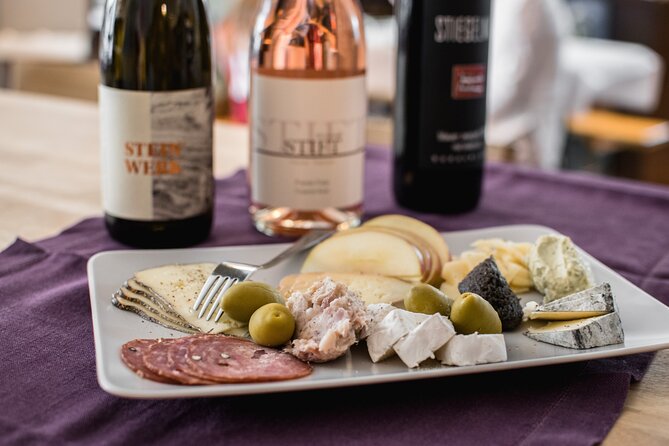
REVIEW · WINE TOURS
Guided Wine Tasting in a Hidden Wine Bar
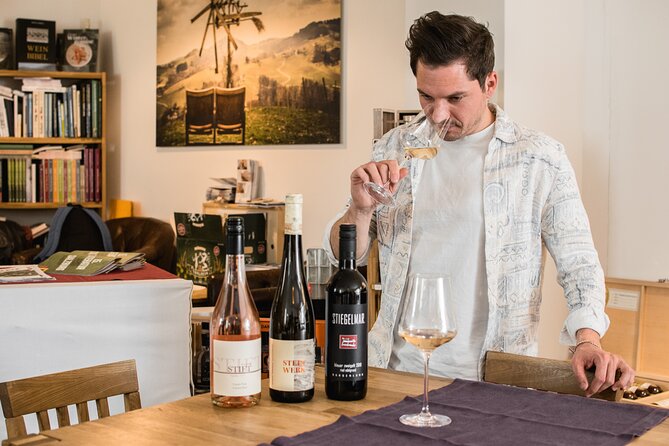
Three glasses, then a real Salzburg story. This guided stop mixes Austrian wine culture with a short, friendly lesson in a local wine bar setting right in the city. You meet up at Wine shop De Gustibus, and a professional wine expert leads you through tastings while you get some context on what you are actually drinking, not just the label.
I like the basic pace and structure. It is about 45 minutes and focused on tasting three wines with regional spreads and small delicacies, so you can fit it between sightseeing without losing your whole afternoon. I also like the small-group feel, max 10 people, which makes it easier to ask questions when the wine expert is explaining flavors and history. One drawback to consider: the experience is billed as a hidden wine bar, but the reality can feel more like a straightforward local shop location, and the level of explanation can vary from day to day.
In This Review
- Key things to know before you go
- Salzburg’s De Gustibus stop, and why the small group matters
- What you actually taste: 3 Austrian wines plus small bites
- Austria’s wine roots, from Roman times to what’s on your glass
- The “hidden wine bar” label, and how to set your expectations
- Premium option: extra wines and a true wine-bar hopping feel
- Price and value: is $45.27 a fair deal?
- Who should book this wine bar tasting in Salzburg?
- How to get more out of your 45-minute tasting
- Should you book this hidden wine bar tasting?
- FAQ
- How long is the guided wine tasting?
- Where does the tour start in Salzburg?
- How many wines are included?
- Is the tour offered in English?
- How much does it cost?
- What is the group size limit?
- What is the minimum drinking age?
- Is there a mobile ticket?
- Is the meeting point near public transportation?
- Are service animals allowed?
Key things to know before you go
- Meeting point is fixed: Wine shop De Gustibus, Bergstraße 14, 5020 Salzburg.
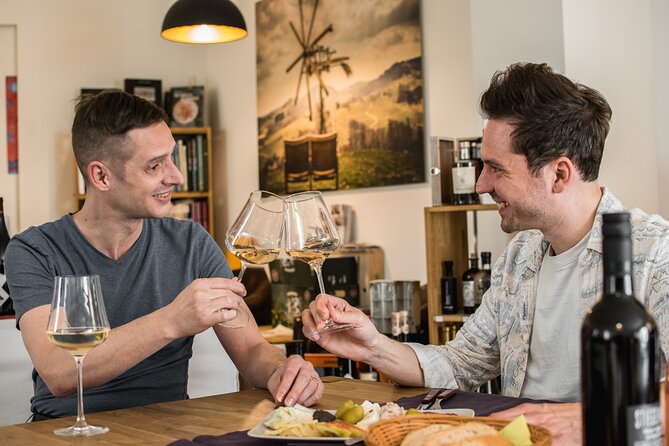
- A small, English-led group: Offered in English, with a maximum of 10 travelers.
- You taste 3 Austrian wines: Each paired with small snacks.
- History is part of the pitch: Expect context on Austria’s wine roots, including Roman-era background.
- Premium adds more pours: Choose the premium option for extra wine bar hopping and three more wines with snacks.
Salzburg’s De Gustibus stop, and why the small group matters
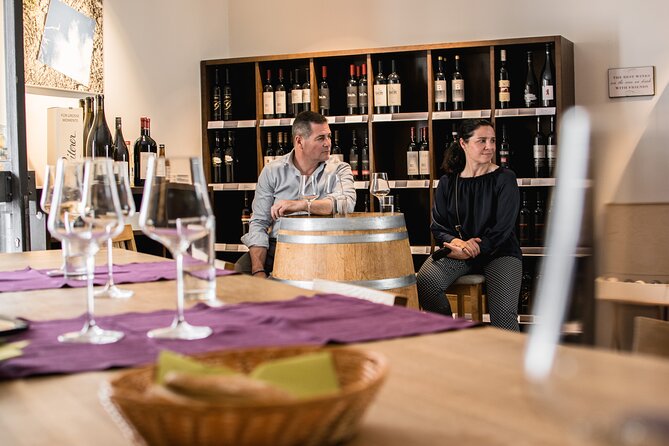
If you want wine without the long, formal sit-down, this is built for you. The experience starts at Wine shop De Gustibus on Bergstraße in Salzburg and ends back at the same place. That matters because you do not have to map out multiple locations on your own just to get through a tasting.
I also appreciate the group size. With up to 10 people, it stays conversational rather than lecture-style. That is a big deal in wine tastings, because the most useful part is often quick questions: What does dry mean here? Why does this taste different from that one? If the group is tiny, you are more likely to get real answers and not just general remarks.
The session is listed at around 45 minutes, so plan it like a bite-sized activity. You can slot it in during a slower part of your day, then return to strolling the old streets with a clearer sense of what you tasted. It is also an easy option for people who want to sample Austrian wines without committing to a full-day tour.
One more practical note: this is for ages 18 and up, and the service allows service animals. If you are someone who likes to keep alcohol to a minimum, you can still enjoy it, but you should know you are tasting multiple wines as part of the format.
More wine tastings around Salzburg:
- Salzburg: Guided Wine Tasting in a Hidden Wine Bar
★ 4.4 · 58 reviews - Vienna: Swarovski House Tour with Champagne & Gift
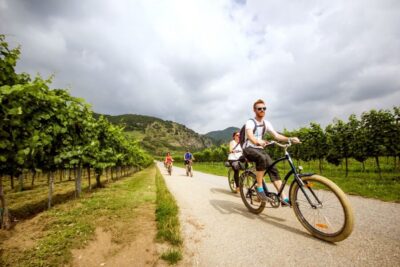
★ 4.6 · 1,132 reviews - Wachau Valley Wine Tasting Bike Tour from Vienna
★ 5.0 · 829 reviews
What you actually taste: 3 Austrian wines plus small bites
The core of the experience is a guided tasting of three different wines. The tour description frames the lineup as a mix: classic regional Austrian wines paired with other Austrian options. In plain terms, you should expect variety, even if the exact grape or style can shift depending on what is available that day.
Your tasting comes with regional spreads and small local delicacies, so the wines are not just poured into you in a vacuum. Snacks help you reset your palate between sips and make it easier to notice differences. That is especially helpful when you move from one style to another, like from a lighter wine to something more structured.
From the way the experience is described and how it plays out in real life, you should also expect some explanation of flavors. The wine expert guides you through what you are tasting and why it might taste the way it does, including notes on flavor character and background. That is where the value lives for most people: you come away thinking, I know what I liked, and I can name why.
Now, the balanced reality check. In a few situations, people report that the session felt less like a guided tasting and more like a host pouring wines with minimal context. Other times, the atmosphere and explanation feel warm and thoughtful. My practical advice: if you care a lot about tasting notes and wine regions, show up ready to ask. A good tasting is two-way.
Austria’s wine roots, from Roman times to what’s on your glass
One reason this kind of tour can work is that it connects flavor to place. The experience includes historical and regional context, and it is not vague. You get the big picture that Austria has grown grapes for a very long time, including roots traced back to Roman times. The description also mentions the scale of Austrian viticulture, about 45,000 hectares of wine-growing land.
Why does that matter for you as a visitor? Because it helps you stop tasting like a tourist who wants to know what grape is trendy, and start tasting like someone learning a region. Even if you do not remember every detail, it changes the way you think about acidity, body, and how wines can reflect climate and soil.
Your guide’s job is to translate that background into the glass in front of you. That means you are not only asked to sip, you are guided to connect what you taste to broader regional styles. In a short 45-minute format, it has to stay focused, so you might get the key ideas most likely to help you later, like what makes one style feel crisp and another feel richer.
One more point: the experience is set in Salzburg, a city where it is easy to get distracted by coffee, cakes, and concerts. A tasting with history can keep you grounded. You leave with a story you can tell at dinner, and you can more easily choose Austrian wines the next day without guessing.
The “hidden wine bar” label, and how to set your expectations
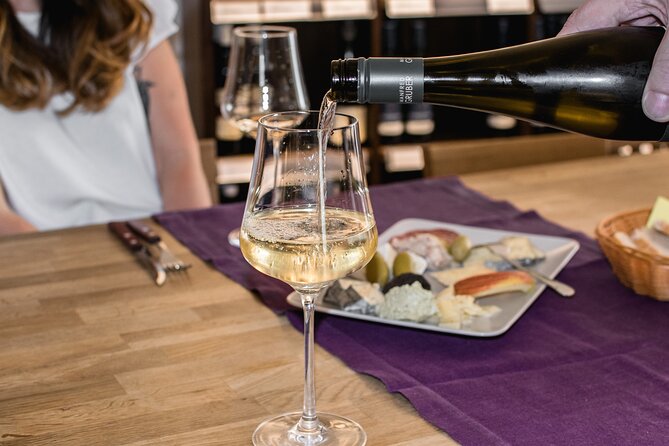
The experience is marketed as a hidden wine bar, and that can create a specific mental image. The practical truth is that you will be meeting at a named address, Wine shop De Gustibus, and you should expect a local shop-and-bar vibe rather than a theatrical underground cellar.
Some people love the welcome and the atmosphere. They describe it as friendly, welcoming, and fun, the kind of place where you might even end up chatting with locals while you wait for the next pour. If your goal is to step into a real Austrian drinking space, not a polished tourist room, this can deliver.
At the same time, a few sessions can feel less distinctive than the marketing suggests. If decor and secrecy are part of what you want, you might find you are not getting that wow factor. Also, the wine selection can vary. Some descriptions line up with classic variety like sparkling, white, and red, but there are also reports of selections that lean more toward white wines.
So here is how I would handle it. Arrive a little early at De Gustibus so you do not feel rushed. If you are expecting a dramatic hidden location, shift your focus to the tasting itself and the conversation. You will get more satisfaction that way. And if the session seems light on explanation, ask direct questions right away, like where the wine is from and what flavors you should be noticing.
More food tours in Salzburg:
- Salzburg: Stiegl Brewery Tour with Beer Tasting
★ 4.7 · 278 reviews - Salzburg: Stiegl Brewery Museum Entry Ticket & Beer Tasting
★ 4.0 · 35 reviews - Salzburg Food Tasting Tour: delicious & fun
★ 4.5 · 29 reviews - Private Austrian Food Tasting Tour in Salzburg’s Old Town
★ 4.5 · 3 reviews
Premium option: extra wines and a true wine-bar hopping feel
If the standard tasting sounds right but you want more time with more pours, the premium option is the lever. It is described as wine bar hopping, with three more wines and more snacks when you choose premium.
This is where the experience can become more than a quick stop. Extra wines mean you can compare styles more sharply. You also get the chance to see how the setting and service change from place to place, which can be useful in Salzburg where there are lots of small wine-friendly corners.
One caution: the listing does not provide a precise extra duration for the premium option. That means you should think of it as adding more energy and time, not just adding one extra glass. If you are trying to keep your evening perfectly planned, leave some buffer.
Is the premium option worth it? For most wine lovers, yes, because the marginal value of an extra tasting is high. You already learned how the guide talks through flavors and history. More wines build on that. Also, if your standard tasting is the one where the lineup feels limited, premium can help balance things out by adding more variety.
If you simply want a quick, low-commitment introduction, stick with the standard format. If you want a fuller afternoon and you like the idea of moving between places, premium is the route that matches that mood.
Price and value: is $45.27 a fair deal?
At $45.27 per person, you are paying for a guided, structured tasting with an expert and snacks. That price can feel high if what you expect is a casual pour with no real commentary. But if you show up wanting wine context plus tasting guidance, the value can click quickly.
Here is how to think about it like a local. You are not just buying three glasses. You are buying the time of a wine expert, the organization of the tasting flow, and the small food pairing that helps you actually taste better. You are also getting a small-group environment, and the whole thing is run in English.
Where value can drop is when the experience feels like it is light on explanation. The most expensive part of any wine tasting is guidance. If you get minimal tasting notes and producers, you could have done a cheaper tasting elsewhere. On the flip side, when the guide is warm and engaged, and the wines are explained clearly, the price starts to feel more reasonable, because you gain knowledge and a better sense of what to buy next.
My practical suggestion: if you are a beginner, do not worry. Wine guides are supposed to translate wine into normal words. If you are more advanced, you might want to ask more pointed questions. The more you engage, the more you get out of the session.
Also remember the group cap of 10. That helps keep attention on you. If you are someone who likes personalized help, that is a plus.
Who should book this wine bar tasting in Salzburg?
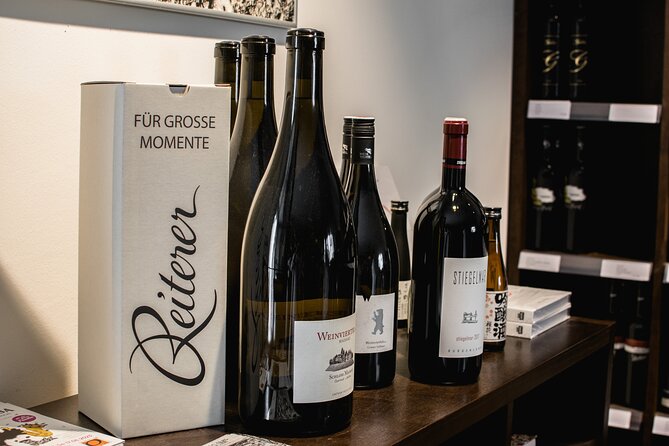
This tour is a great match if you want a compact Salzburg experience that still feels local. It is also a good fit if you are traveling solo or with friends and want an excuse to meet people, because small groups make conversation easier.
It is especially good for:
- First-timers who want a gentle intro to Austrian wine without doing homework
- People who like guided explanations but do not want a long seminar
- Anyone who enjoys small food pairings with drinks
It is less ideal if you mainly want:
- A highly theatrical, secret location vibe
- A guaranteed set of sparkling, red, and white every time
- Deep, academic-level wine lectures in one sitting
And this is important: the tasting should be led by a wine expert, but any short tour depends on the day, the host energy, and the group setup. If you are the type who needs lots of structured education, show up ready to ask questions early, before the pace locks into pouring mode.
The best part is that you can treat it like a tasting lab for your palate. After one or two sips, you start to recognize what you like, whether that is crispness, fruit character, or a more serious, dry finish.
How to get more out of your 45-minute tasting
You will have a better experience if you approach it like an interactive conversation. First, arrive a few minutes early at De Gustibus so you are not scrambling. Second, choose one or two things you want to learn, like what makes Austrian whites taste the way they do, or how to tell dry from off-dry by flavor.
Third, ask follow-up questions as you go. The experience is designed to explain flavors and history, so use that. If the wine is described in terms you do not fully get, ask for a simpler comparison.
Fourth, pace yourself. These tastings can move quickly. Small snacks help, but you still want your palate working. Take a few seconds between wines so you are not just chasing alcohol flavor.
And finally, if you are booking with the premium option, plan for extra time. You are adding more wines and more snack moments, plus wine bar hopping. Bring curiosity, not a strict schedule.
If you do those five things, the chance is much higher that you leave feeling confident about what you tasted, not just happy that you drank wine.
Should you book this hidden wine bar tasting?
I think it is a solid booking if you want a short, guided introduction to Austrian wine in Salzburg, with snacks and an English-speaking expert. The upside is strong when the host is engaged, the explanations are clear, and the variety of wines matches what you came for.
If you are picky about location aesthetics, or you want a very formal, producer-by-producer tasting lecture, keep your expectations flexible. Also, because the lineup can vary and some sessions can feel more casual than fully guided, it helps to go in ready to ask questions early.
My recommendation: book the standard tasting if you want a quick win. Book premium if you want more variety and more time with the wine expert, and you are okay giving up part of your afternoon to bar hopping.
FAQ
How long is the guided wine tasting?
It runs for about 45 minutes.
Where does the tour start in Salzburg?
The meeting point is Wine shop De Gustibus, Bergstraße 14, 5020 Salzburg, Austria.
How many wines are included?
The standard experience includes three different wines. The premium option adds three more wines.
Is the tour offered in English?
Yes, it is offered in English.
How much does it cost?
The price is $45.27 per person.
What is the group size limit?
The activity has a maximum of 10 travelers.
What is the minimum drinking age?
The minimum drinking age is 18 years old.
Is there a mobile ticket?
Yes, it includes a mobile ticket.
Is the meeting point near public transportation?
Yes, it is near public transportation.
Are service animals allowed?
Yes, service animals are allowed.
Fresh on the site in Salzburg
- Wachau, Melk Abbey & Salzburg (Sound of Music & UNESCO)★ 5.0 · 23 reviews
- Private Werfen Ice Cave and Golling Waterfall from Salzburg★ 5.0 · 15 reviews
- Viator Exclusive: ‘The Sound of Music’ Private Tour★ 5.0 · 28 reviews
- Werfen World’s Largest Ice Caves and Golling Waterfalls Tour★ 4.5 · 7 reviews
- Private transfer from Salzburg to Vienna, 2 hours for sightseeing★ 4.5 · 7 reviews
- Private Transfer from Salzburg to Munich with 2 hours for sightseeing★ 5.0 · 8 reviews
- Private Austrian Food Tasting Tour in Salzburg’s Old Town★ 4.5 · 3 reviews
- Salzburg Marionette Theater: The Magic Flute SHORT version (1 hour)★ 5.0 · 11 reviews
Wine Tours, compared.
Wachau Valley Wine Tasting Bike Tour from Vienna
Read our review →
Grape Grazing: Wachau Valley Winery Biking Tour
Read our review →
Wine Tasting Experience in a Private Wine Cellar
Read our review →
Schlumberger Wine Cellar Guided or Self-Guided Tour
Read our review →Browse the lists this tour appears in