
REVIEW · MOZART & CLASSICAL CONCERTS
Mozart’s Salzburg Exploration Game and Tour
Mozart in Salzburg, but make it a game. This self-guided cellphone city adventure turns major sites into puzzle stops, so you’re not just sightseeing, you’re solving a mystery. I especially like that it works offline and lets you start anytime, then pause your walk whenever you want to linger over coffee or photos.
The main thing to consider is the tech part. A few people hit trouble getting the game to run and cited QR code or booking reference mix-ups, so plan a little buffer when you first start, keep your confirmation email handy, and make sure you’re signing into the app with the same details the game expects.
In This Review
- Key things to know before you play
- Mozart’s Salzburg Exploration Game: a fun way to get your bearings fast
- Start at Makartplatz, end near Kapuzinerberg views
- Offline puzzle play, plus what you actually need on your phone
- Stop 1, Mozart Wohnhaus: instruments, family life, and a scavenger hunt mindset
- Stop 2, Mozartsteg: Art Nouveau, a bridge, and a film-famous detail
- Stop 3, Mozart’s Birthplace on Getreidegasse: the address you’ll remember
- Stop 4, Café Tomaselli on Alter Markt: a smart mid-game reset
- Stop 5, Salzburg Cathedral: Baroque grandeur with older roots
- Stop 6, Mozartplatz: a starting point and a reminder for the real family story
- Stop 7, Zeugwartstöckl and the Michaelstor connection: gates that explain the city
- Stop 8, Joseph Mohr House: Silent Night links Salzburg to the wider world
- Stop 9, Kapuzinerberg Nord: finish with forest paths and church settings
- The real value: puzzle structure without a human schedule
- Price and ticket reality: what you pay, and what you might still pay
- Who this is best for, and who might want something else
- Small logistics that make or break the experience
- Should you book Mozart’s Salzburg Exploration Game?
- FAQ
- FAQ
- How long is the Mozart Salzburg Exploration Game?
- Do I need an internet connection to play?
- Where does the game start and end?
- Is there a physical tour guide?
- What ticket costs are included?
- Is admission required at each stop?
- What time can I start the game?
- Is this activity private or shared with others?
- Can I cancel for a refund?
- Are service animals allowed?
- How do I get the game working if I have an issue?
Key things to know before you play
- Offline gameplay means you can explore without hunting for signal.
- Self-paced timing lets you play for about 1.5 hours or stretch it out by sightseeing longer.
- No physical guide and a private format keeps the experience low-stress and avoids crowds.
- Mozart-focused route strings together real locations, from Mozart’s birthplace to the Salzach gates.
- Mix of indoor and outdoor stops means you’ll see old Salzburg on foot, with optional paid entry at some sights.
Mozart’s Salzburg Exploration Game: a fun way to get your bearings fast

Salzburg is one of those places where the streets feel designed for wandering. This Mozart game leans into that. Instead of handing you a map and hoping you read it, it turns walking into a sequence of small challenges that point you toward real landmarks. It’s sightseeing with structure, but without the pressure of keeping up with a group.
At about $7.24 per person, the value is less about buying guided commentary and more about buying your time on the ground. For a low ticket price, you get a full route you can repeat over your own schedule, plus a story thread that nudges you from place to place. If you like puzzles and you want your first day to feel organized, this can be a smart buy.
The runtime is roughly 1 hour 30 minutes, but the real trick is flexibility. The game is designed so you can stop when you want and resume later. That matters in Salzburg, where even a simple walk can stretch once you find a good café, a viewpoint, or a church you want to see longer than planned.
More Classical Concerts in Salzburg
- Salzburg: Mozart Concert at Mirabell Palace
★ 4.8 · 3,498 reviews - Salzburg 2.5-Hour Walking Tour: Mozart, Old Town & More
★ 4.2 · 987 reviews - Salzburg: Mozart Concert with Dinner
★ 4.8 · 835 reviews
Start at Makartplatz, end near Kapuzinerberg views
Your game starts at Makartplatz, 5020 Salzburg and ends at Kapuzinerkloster, Kapuzinerberg 6, 5020 Salzburg. The activity runs daily within the listed hours, roughly 5:00 AM to 9:00 PM. Since you can start at any hour, you can match it to your energy level and the light outside.
Also, you’re not meeting a live guide. This is a private, no-human-contact style experience. That can be a big deal if you hate last-minute group huddles, or if you’re traveling with family and want control over pace.
You’ll be walking through the Old City and toward a hill area at the end. The stops are short, with the game challenge at each site taking about 10 minutes, so you’re not stuck for long at any one point. Still, you should expect a real walking route, so wear shoes you trust on uneven Old Town streets.
Offline puzzle play, plus what you actually need on your phone
The game is designed so you don’t need an internet connection to play. That’s the practical advantage: you can download or start with confidence and then explore without worrying about mobile data.
What you do need, though, is the right access details for your booking. Some access problems were tied to confusion about QR codes and a Viator booking reference number from your confirmation email. My advice is simple:
- Keep your booking confirmation email accessible on your phone
- Give yourself 15 to 20 minutes of wiggle room at your starting point
- If you’re asked to sign in, use the same email tied to your booking instructions
If you’re the type who likes to start smoothly, this helps you avoid that stressful first stop moment when you’re standing outside Mozart’s birthplace thinking, wait, what now?
Stop 1, Mozart Wohnhaus: instruments, family life, and a scavenger hunt mindset
Your first stop is Mozart Residence (Mozart Wohnhaus). This reconstructed home reopened in 1996, after parts of it were damaged during World War II. Inside, the emphasis is on family life and how the house worked as a lived-in place, not just a museum label.
One highlight here is the Dancing Masters’ Hall, where Mozart’s original instruments are displayed. Even if you only skim portions, this is the kind of stop that makes the Mozart story feel human.
During the game, you’ll search around to answer a challenge question that advances you to the next location. You get the sense that the app is nudging you to look closely, not just pass by.
Tip: Since admission is not included, plan on either paying separately for the parts of the residence that require entry, or treating this as a longer external orientation stop depending on your ticket choices. The game challenge suggests you’ll need to look around, so allow extra time if you want to actually see the instruments.
Still the same country, a very different afternoon:
- The Original Sound of Music Tour in Salzburg
★ 4.5 · 6,129 reviews - Salzburg: Original Sound of Music Tour
★ 4.8 · 5,059 reviews - From Salzburg: Half-Day Tour to Hallstatt
★ 4.6 · 3,596 reviews - Salzburg: Hohensalzburg Fortress Admission Ticket
★ 4.6 · 2,236 reviews
Stop 2, Mozartsteg: Art Nouveau, a bridge, and a film-famous detail
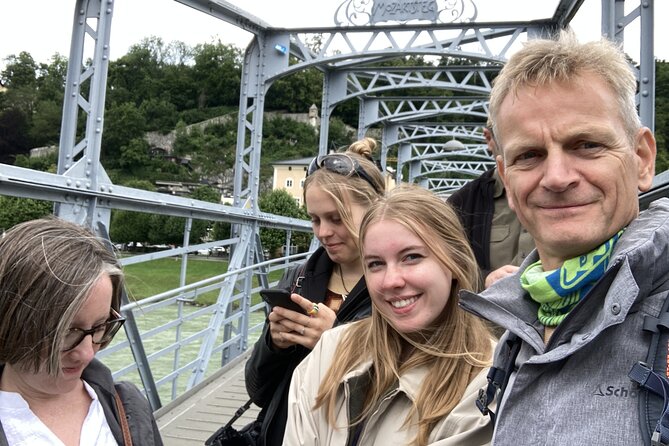
Next comes Mozartsteg, a pedestrian bridge in the city center. It’s known for its tidy Art Nouveau design and became internationally famous after appearing in The Sound of Music. The bridge was completed up to 1903 and was driven by a private association called the Mozartstegverein.
This is a shorter, more street-level stop, and it’s a nice breather after museum-type spaces. You’ll do another brief challenge by looking around and answering the prompt.
The value here is more than the film connection. Salzburg’s bridges are landmarks of movement over the Salzach River, so this stop helps you understand how the city is stitched together and where the major sights tend to “pull” you next.
Admission at this stop is free, which is great when you want a low-cost break in the middle of paid attractions.
Stop 3, Mozart’s Birthplace on Getreidegasse: the address you’ll remember
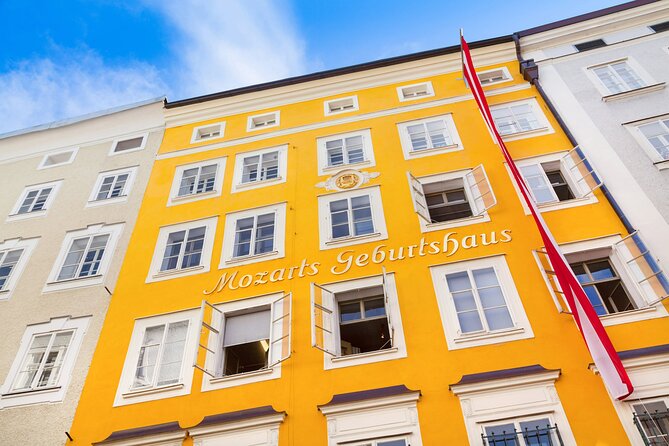
Then you’ll be directed to Mozart’s Birthplace at No. 9 Getreidegasse. This is the actual address where Wolfgang Amadeus Mozart was born on January 27, 1756. The Mozart family lived on the third floor from 1747 to 1773, and Wolfgang was the seventh child of Leopold Mozart, who worked as a musician for the Salzburg Royal Chamber.
This stop is powerful because it’s specific. When you stand here, it stops being abstract. You’re looking at the building tied to the dates and the family story you usually read about in books.
Again, the game gives you a challenge that asks you to look around before moving on. Admission is not included, so how much you can see inside will depend on whether you choose to buy entry or focus on the exterior and the immediate area.
If you’re traveling with kids or teens, this kind of “real location, real name, real date” can make learning stick without feeling like school.
Stop 4, Café Tomaselli on Alter Markt: a smart mid-game reset
Your route then brings you to Café Tomaselli at Alter Markt. It’s in the heart of Old Town and has been run by the Tomaselli family for over 150 years. The café is known for sweet dishes and coffee specialties, and it’s a good place to pause your puzzle walking and reset.
This is one of the most practical stops because you’re halfway through your game and you’re in a spot where it’s easy to keep going without derailing the plan. Since admission isn’t included, you’re likely to treat this as either a quick break or a planned snack stop.
My favorite strategy here: take 20 minutes, drink something warm, then re-start the game with fresh energy. Salzburg can be cool even in good weather, and cafés are part of the city rhythm.
Stop 5, Salzburg Cathedral: Baroque grandeur with older roots
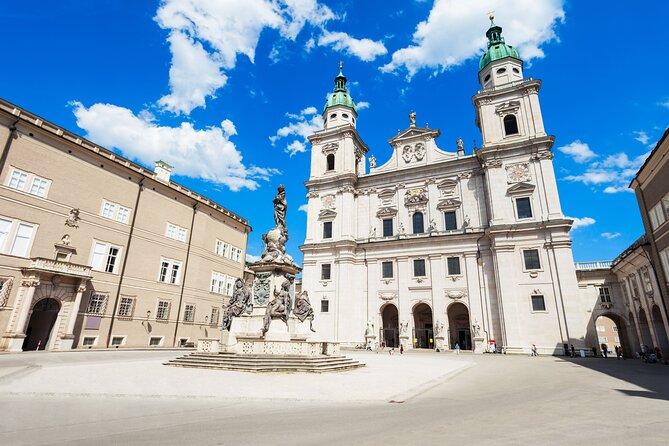
Next is Salzburg Cathedral, dedicated to Saint Rupert and Saint Vergilius. It’s described as a seventeenth-century Baroque cathedral for the Roman Catholic Archdiocese of Salzburg.
What makes it more than a pretty façade is the layering of time. Saint Rupert founded the church in 774 on the remnants of a Roman town. Then the cathedral was rebuilt after a fire in 1181. So when you’re in the space, you’re standing in a long timeline, even if the visible structure is later.
The game challenge here asks you to look around for the answer. Admission is not included, so if you want interior access, be ready for separate entry costs.
Even if you don’t go deep into the interior, this stop gives you a major anchor point for Salzburg. Churches like this function as wayfinding landmarks. Once you’ve seen the cathedral during your route, the rest of your walking feels clearer.
Stop 6, Mozartplatz: a starting point and a reminder for the real family story
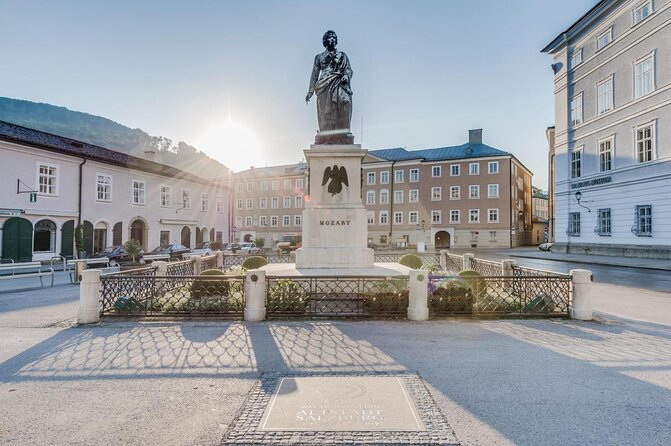
Now you’re at Mozartplatz. It ties directly to Mozart’s life, including the house at No. 8 Mozart Square, where Constanze Mozart-Nissen, Mozart’s wife, once lived. A plaque on the wall marks the connection, and the square today is an ideal starting point for other city tours and a popular sightseeing area in its own right.
This stop works well in the game because it’s open and central. Instead of feeling trapped in a narrow street, you can take in square views and reset your direction.
The game again asks you to search around briefly for the challenge. Admission is not included, so you’re likely focusing on the exterior and the square itself, which is often exactly what you need here.
If you’re doing Salzburg for the first time, Mozartplatz is also where you’ll feel the city’s tourist flow. Knowing it early helps you plan the rest of your day with confidence.
Stop 7, Zeugwartstöckl and the Michaelstor connection: gates that explain the city
Next is Zeugwartstöckl, connected to the Michaelstor. This is part of Salzburg’s fortifications story. The Michaelstor was the first gate built on the left bank of the Salzach in 1620, at the start of the third city fortification under Prince Archbishop Paris Count von Lodron.
In the description, the gate included the Zeugwartstöckl, which has been preserved, while the actual Michaelstor gatehouse was demolished. That “what remains” detail matters. It reminds you that city history is often the survival of fragments, not perfect reconstructions.
You’ll get another 10-minute challenge here, meant to push your attention onto details you might otherwise ignore. And this stop is a nice change from pure Mozart landmarks, because it widens the story from one musical genius to the city’s built environment.
Stop 8, Joseph Mohr House: Silent Night links Salzburg to the wider world
Then the route shifts to a very Salzburg-meets-global-culture stop: the Joseph Mohr House, associated with an annexe of the Wohlfühlhotel Gasthof Hintersee. The house is named after Joseph Mohr, known worldwide for the carol Silent Night, Holy Night.
Joseph Mohr also had a special relationship to the village of Hintersee in the Salzkammergut region, where he served as a vicar from 1827 to 1837. So the story connects Salzburg to nearby places that shaped the man behind the song.
The game has you look around for the answer to move forward. This stop works especially well if your group includes people who enjoy music but might not be Mozart-only. It broadens the musical theme in a grounded way.
Admission is not included, so again, you may need to decide whether to do more than just the immediate look-around depending on what’s accessible at the time.
Stop 9, Kapuzinerberg Nord: finish with forest paths and church settings
Your final stop is Aussicht Kapuzinerberg Nord on Kapuzinerberg, a hill around 640 meters high on the right side of the River Salzach. The dense forest is a popular recreation area for city hikers and people who like outdoor exercise.
Kapuzinerberg is home to churches and an abbey, with meandering hiking paths. Even the wildlife gets a mention, including chamois, so this is more than a flat city finish.
The game challenge here still takes about 10 minutes, but you should treat this finish as an invitation to add a bit of extra time if you want views. Even a short walk beyond the immediate spot can turn the end of the game into a satisfying payoff.
Your listed end point is near Kapuzinerkloster on Kapuzinerberg, so you’ll close the loop with a final setting that feels like Salzburg’s city meets its surrounding hills.
The real value: puzzle structure without a human schedule
In plain terms, this game gives you structure without a rigid itinerary. Each stop is brief, and the app encourages you to look for answers on-site. That style helps learning stick because you’re actively noticing rather than passively reading.
I also like that it’s positioned as the safest way to explore in a private format. No physical tour guide means no group gathering and no pressure to coordinate with strangers. If you prefer your own pace, this fits.
The flexible timing is the other big advantage. Because you can start any hour, you can also avoid the worst crowds at the most popular landmarks by choosing a start time that suits your day. Even if the route is fixed, your timing isn’t.
Price and ticket reality: what you pay, and what you might still pay
At $7.24 per person, you’re paying for the game itself, not for museum access. The tour notes clearly say that admission tickets are not included at several stops, including Mozart Residence and other listed locations.
So the true value depends on your goals:
- If you mainly want the walk, look around, and use the app as your guide, you may pay only for the game.
- If you also want interiors and exhibitions, you’ll likely add separate admission costs.
Group discounts are mentioned too, which can be useful if you’re traveling as a family or small group. And since it includes a mobile ticket, you’re usually not dealing with paper vouchers.
My practical take: budget extra time and some extra money for the parts that require separate entry.
Who this is best for, and who might want something else
I’d book this if:
- You like puzzles and want a playful way to learn Salzburg
- You’re traveling with teens or family and want them engaged without lecturing
- You want to explore with minimal crowds and no guide meeting point chaos
- You plan to walk a lot anyway and can handle short stops at multiple sites
You might choose a different option if:
- You don’t want any phone-based interaction during your city day
- You hate troubleshooting apps at the first stop
- You want a classic narration style tour with a guide explaining everything out loud
This game is at its best when you treat it like a route and a scavenger hunt, not like a substitute for deep guided interpretation.
Small logistics that make or break the experience
Here’s what I’d do to keep things smooth:
- Charge your phone before you start. Offline gameplay still depends on battery life.
- Screenshot or save your confirmation email details before you leave your lodging.
- Arrive at the start location early enough to get going without rushing. That helps if you encounter the access confusion some people reported.
- Plan to pay separate admissions if you want interior access at stops marked as not included.
If you’re watching your schedule, note that the experience is valid within the listed daily hours. And if you decide not to go, free cancellation is allowed up to 24 hours in advance for a full refund.
Should you book Mozart’s Salzburg Exploration Game?
If you want a low-cost, flexible way to get oriented in Salzburg while learning Mozart and the city around him, this is a strong pick. The best part is the balance: you get a story route and small challenges, but you can still stop for cafés, photos, and your own pacing. With offline play and no live guide, it also fits well for people who want to avoid the crowd rhythm.
My only real caution is tech access. Bring your booking confirmation details, start with a little time cushion, and you’ll likely enjoy the whole walk more. If you’re willing to play along with your phone, you’ll come away with a clearer mental map of Salzburg than you’d have from wandering randomly.
FAQ
FAQ
How long is the Mozart Salzburg Exploration Game?
It takes about 1 hour 30 minutes, though you can stop when you want and resume later.
Do I need an internet connection to play?
No. The game can be played offline, so you do not need an internet connection.
Where does the game start and end?
The start point is Makartplatz, 5020 Salzburg. The end point is Kapuzinerkloster, Kapuzinerberg 6, 5020 Salzburg.
Is there a physical tour guide?
No. This is a private city game with no physical tour guide.
What ticket costs are included?
The game is included, but admission tickets for specific stops are not included.
Is admission required at each stop?
Some stops are free, but several locations list admission ticket not included. You may need to pay separately if you want entry where applicable.
What time can I start the game?
You can start at any hour. The experience is available daily within the listed opening hours: 5:00 AM to 9:00 PM.
Is this activity private or shared with others?
It is private. Only your group participates.
Can I cancel for a refund?
Yes. You can cancel for free up to 24 hours in advance for a full refund.
Are service animals allowed?
Yes, service animals are allowed.
How do I get the game working if I have an issue?
Some access problems were linked to QR code and the need to use the booking reference number from your confirmation email. If you have trouble, support is available through their chat and care email listed in the provided info.
Fresh on the site in Salzburg
- Wachau, Melk Abbey & Salzburg (Sound of Music & UNESCO)★ 5.0 · 23 reviews
- Private Werfen Ice Cave and Golling Waterfall from Salzburg★ 5.0 · 15 reviews
- Viator Exclusive: ‘The Sound of Music’ Private Tour★ 5.0 · 28 reviews
- Werfen World’s Largest Ice Caves and Golling Waterfalls Tour★ 4.5 · 7 reviews
- Private transfer from Salzburg to Vienna, 2 hours for sightseeing★ 4.5 · 7 reviews
- Private Transfer from Salzburg to Munich with 2 hours for sightseeing★ 5.0 · 8 reviews
- Private Austrian Food Tasting Tour in Salzburg’s Old Town★ 4.5 · 3 reviews
- Salzburg Marionette Theater: The Magic Flute SHORT version (1 hour)★ 5.0 · 11 reviews
Mozart & Classical Concerts, compared.
Vivaldi’s Four Seasons Concert in Karlskirche
Read our review →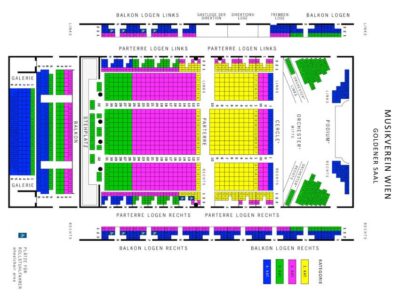
Classical Concert in the World-Famous Musikverein
Read our review →
Mozart Concert at the Musikverein – Golden Hall
Read our review →

Classical Concert in St. Anne’s Church (Annakirche)
Read our review →
Vienna Classical Concert at St. Peter’s Church
Read our review →Browse the lists this tour appears in