
REVIEW · BELVEDERE & KLIMT TOURS
Private Klimt & Vienna Art Walk — From Baroque to Secession
A half-day Vienna tour that hits the key art stops fast.
I like the tight structure, so you get Belvedere and the Secession in one go, without wandering in circles. The guiding style also makes the connections between centuries feel real, not like a museum label quiz.
My second favorite part is the way you move through styles, Baroque to Art Nouveau/Secession, while still seeing big-name places people actually talk about.
One thing to consider: it is a lot of walking on city surfaces, and museum entry depends on you having the admissions not included for the specific sites.
In This Review
- Key highlights you should care about
- Why this Baroque to Secession walk fits Vienna’s time crunch
- Belvedere Museum and Klimt’s Kiss, plus gardens that do the talking
- The Lower Belvedere walk-through: Prince Eugene and Versailles on a smaller scale
- Schwarzenbergplatz and the baroque church mood-setter
- Otto Wagner at Karlsplatz: when Vienna turns toward Art Nouveau
- Wiener Musikverein and the Golden Hall acoustics reputation
- Secession Building: the Art Nouveau manifesto, plus Klimt’s Beethoven Frieze
- Naschmarkt snack break, a 1915-era market vibe
- Pickup, private group size, and the value question
- Who this tour suits best
- Should you book this Klimt and Vienna Art Walk?
- FAQ
- Do you offer pickup in Vienna?
- How long is the tour?
- What time does the tour start?
- Are museum admissions included for Belvedere and the Secession Building?
- Does the tour include skip-the-line entry?
- Are service animals and pets allowed?
- Can I cancel for a full refund?
Key highlights you should care about
- Skip-the-line included for the timed museum stops you hit (you still handle the admissions part)
- Klimt star power at Belvedere (Kiss) and Klimt’s Beethoven Frieze at the Secession Building
- A style timeline on foot, from Prince Eugene’s Baroque gardens toward Vienna around 1900
- Major landmarks beyond painting, like the Wiener Musikverein and Otto Wagner at Karlsplatz
- Flexible start times with both a morning (09:30) and afternoon (14:00) option
- Private pacing for up to 8, so you can slow down for photos, questions, or just standing in awe for a minute
Why this Baroque to Secession walk fits Vienna’s time crunch
Vienna is the kind of city where you can easily spend half a day getting from one famous building to the next, only to arrive exhausted and then rush the art. This tour solves that problem by focusing on fewer targets, but hitting them in a smart order.
You’ll follow a visual story. The route starts with Baroque drama and court power in Belvedere, then pivots toward Vienna around 1900, when Art Nouveau and the Secession movement challenged older rules. That shift matters because it changes how you should look at the buildings, not just the paintings.
You also get a private guide who works at walking speed, not bus-speed. I like that approach because Vienna rewards your feet and your curiosity. You end up noticing small details that a checklist-only itinerary would skip.
More Walking Tours in Vienna
- Vienna: Guided Walking Tour of City Center Highlights
★ 4.7 · 4,989 reviews - Vienna: Vienna Central Cemetery Guided Walking Tour
★ 4.8 · 3,307 reviews - Vienna: Guided Walking Tour of City Highlights & Hidden Gems
★ 4.9 · 2,180 reviews
Belvedere Museum and Klimt’s Kiss, plus gardens that do the talking
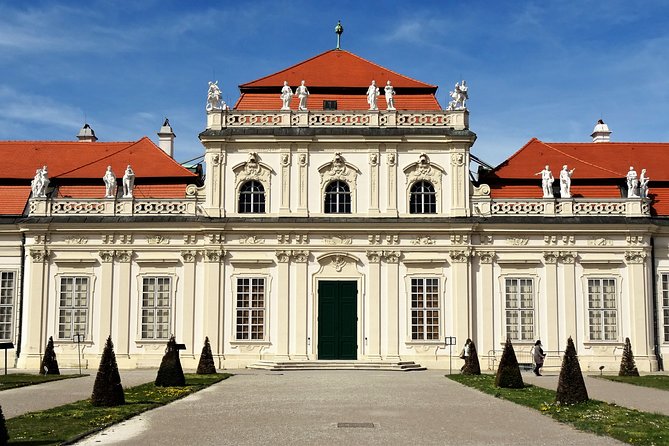
The experience begins at Belvedere, where those wrought-iron gates are the kind of entrance that makes you straighten up before you even buy a ticket. From there, the tour includes skip-the-line access so you can get into the palace and gardens flow without fighting the usual slow-motion crowd.
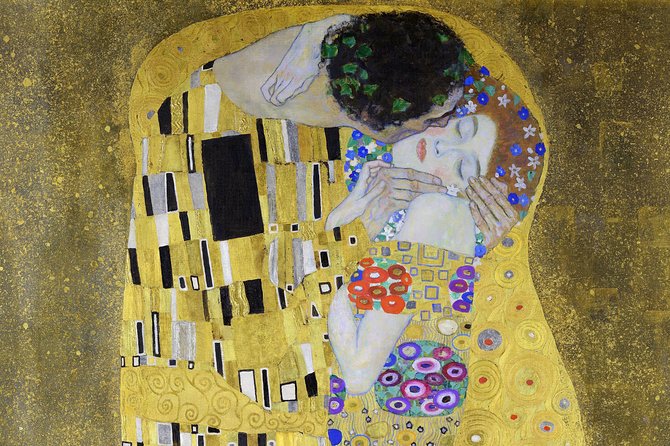
The big art target here is Klimt’s The Kiss, embedded in what’s sometimes described as the Austrian Gallery experience at Belvedere. The tour’s focus is on helping you understand why this painting sits where it does, and how the building and garden setting are part of the meaning.
You’ll also get real time outdoors. The stop is listed at about 40 minutes, which is enough to walk the grounds in a way that feels intentional instead of stamp-and-go. And the tour goes beyond saying it’s pretty. You’ll decipher the three-leveled garden layout and the visual tricks, basically learning how the gardens guide your eye.
Practical tip: admission is not included, so you’ll need to plan that step. But the tour does make your Belvedere visit smoother by handling the guide-led flow and helping you focus your attention once you’re inside.
The Lower Belvedere walk-through: Prince Eugene and Versailles on a smaller scale
After the initial garden introduction, the route continues down toward the Lower Belvedere. This is where you start seeing how Vienna borrowed, adapted, and then re-invented ideas from other European courts.
What I like about this portion is the explanation of the garden room and the honor court, which ties the design to power and prestige. It’s described as Prince Eugene bringing ideas from Versailles to Vienna, but on a miniature scale. That framing helps you stop treating the palace like a random backdrop and start seeing it as a message.
If you’re someone who normally rushes through grounds, slow down here. The garden structure is doing more than decoration. You’re learning how layers, sightlines, and symmetry create drama. Even if you only have one Belvedere visit in your trip, this kind of context makes it feel less like a single room with a famous painting and more like an entire designed world.
Potential drawback: if you’re only interested in the one painting and you want zero detours, this part may feel like a lot. The tour is aiming for atmosphere and meaning, not speed.
Schwarzenbergplatz and the baroque church mood-setter
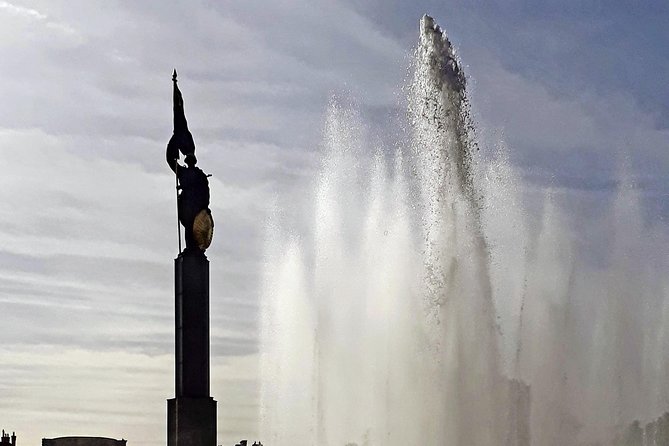
Once you leave Belvedere, the tour moves into city context. A key stop is Schwarzenbergplatz, where you’ll notice the Soviet Memorial dominating the space, surrounded by a mix of buildings tied to Vienna’s boom period at the end of the 1800s.
That contrast is useful because Vienna’s layers are not just artistic. They are political and historical. The tour’s point is to help you read the city as a sequence of eras that still shape what you see today.
Next comes the baroque church stop. The description is clear about the function: it was built to impress from a distance and to stage Austria’s most glorious epoch in the 1700s, with baroque at its best. You’ll get that idea from the way the building sits in the route and how the guide frames what you’re looking at.
I like including stops like this because it prevents the common “art-only tunnel vision.” You get to feel how architecture and public space train your eyes, then you carry that skill toward Klimt and the Secession.
More Belvedere and Klimt tours:
- Entry Ticket Upper Belvedere, Klimt’s Kiss & Permanent Collection
★ 4.5 · 831 reviews - Vienna Belvedere Palace Skip-the-line Tour & Official Guide
★ 4.9 · 390 reviews - Vienna: Belvedere Palace Skip-the-Line Tour
★ 4.9 · 197 reviews - Vienna 3, 4 or 5-Attraction Pass: Schönbrunn, Belvedere, Bus
★ 4.2 · 124 reviews
Otto Wagner at Karlsplatz: when Vienna turns toward Art Nouveau
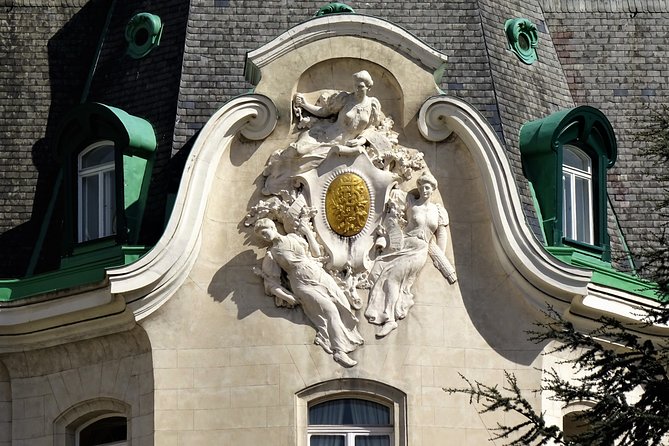
A bright pivot arrives at Karlsplatz with the Otto Wagner metro-station. This is one of those Vienna moments where you realize Art Nouveau was not just for fancy palaces and museums.
The station is presented as a glory period marker around 1900, and that timing is the key. You’re standing inside a different design mindset, one that takes modern life and makes it visually confident. It’s the kind of site where, after a tour explanation, you start seeing the details in the same way you do with ornamented painting.
Why it works in this tour: it connects the Secession story to everyday infrastructure. That connection makes the later stop at the Secession Building feel less like a separate museum event and more like the logical next chapter in Vienna’s visual language.
If you’re sensitive to crowding, this is also a nice stretch because it’s more about a short focused look than a long line.
Wiener Musikverein and the Golden Hall acoustics reputation
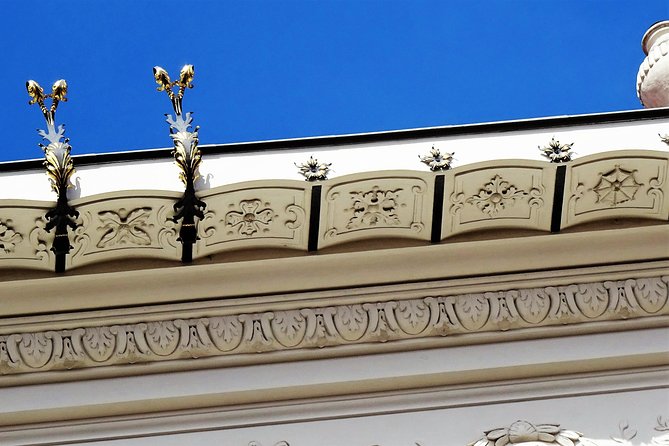
Another major shift in the walk is the Wiener Musikverein, home of the Vienna Philharmonic. You’ll hear about the “Great/Golden Hall,” the Großer Saal, and why it’s considered one of the finest concert halls in the world for acoustics.
This stop may seem off-theme if you’re strictly chasing Klimt. But it’s actually a smart inclusion. Vienna around 1900 treated multiple art forms like serious cultural currency. If you’re learning how Vienna builds meaning, then adding music makes the city’s art logic feel complete.
Even if you do not attend a concert, standing near a venue with that kind of reputation gives you a different lens for everything you’ll see next: the Secession movement and its theatrical, wall-based statements.
One practical note: this portion is more “look and learn” than “sit and listen,” so if you hoped for a performance, you’ll want to plan that separately.
Secession Building: the Art Nouveau manifesto, plus Klimt’s Beethoven Frieze
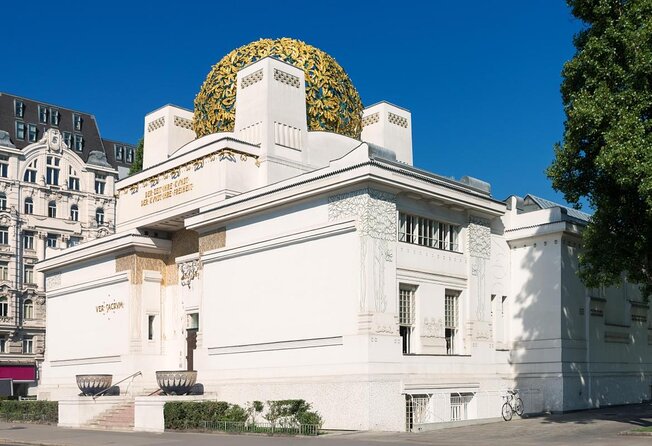
The tour’s second main art highlight is the Secession Building (Secessionsgebaude). The guide frames it as an architectural manifesto for Art Nouveau, built by rebel artists who broke away from a long-established fine art institution.
That idea matters because it changes how you read the building. It’s not only pretty. It’s a disagreement made visible in stone and structure.
Inside the story comes Klimt’s Beethoven Frieze. The details are specific: it was painted for an exhibition celebrating the composer, it was meant for that show only, and it was painted directly on the walls with light materials. The frieze culminates in what’s described as a kiss to the world.
The stop time is about 30 minutes, which is right for this kind of artwork. You need enough time to look closely and hear the meaning, but not so much time that you lose the thread.
Just remember: admissions for Secession are not included. The tour still includes skip-the-line, so you spend your time understanding what you’re seeing, not waiting to enter.
Naschmarkt snack break, a 1915-era market vibe
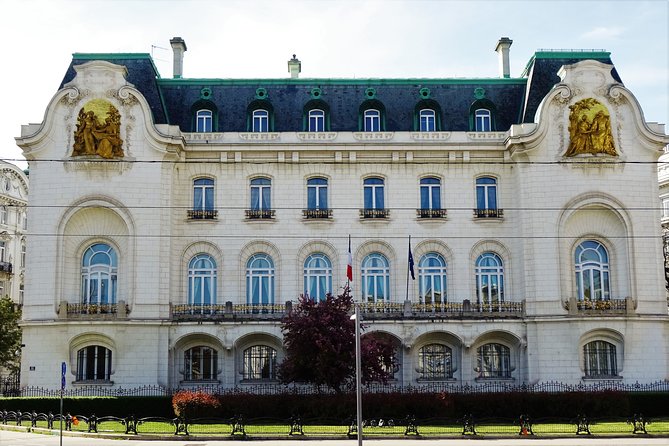
There’s a food and atmosphere stop at the Naschmarkt area. The current, transitional stage is described as dating to 1915, and it’s a mix of market stalls and international food options.
This is the moment to re-fuel without losing your momentum. It’s described as a good choice for an al fresco lunch or a tasty late afternoon snack, depending on whether you take the morning or afternoon start.
Why this works on an art walk: markets are part of Vienna’s day-to-day life. After palace drama and art movements, you get back to the city as a living place where people eat, talk, and browse.
Practical tip: if you’re the type who wants to maximize your art time, consider treating this as a quick bite and then returning your attention to the route.
Pickup, private group size, and the value question
This is priced at $372.47 per group up to 8 people, which is a different value math than per-person tours. For small parties, private guiding can feel like a bargain, especially when you compare it to the time cost of buying tickets, figuring out routes, and lining up at major sites.
You also get pickup from hotels and vacation rentals in town, Reichsbruecke pier, or train stations like Vienna Hbf and Vienna West. That matters in Vienna because getting positioned right at the start can remove stress from the day.
The tour includes live guiding by a licensed Austria Guide, plus skip-the-line. Mobile tickets are offered for the tour itself, but museum admissions for the specific sites (Upper Belvedere and Secession) are not included.
The result is that you pay for interpretation and planning, not for entrance fees. If you already know you want Klimt’s major hits, the included parts are what make the day smoother and faster.
Possible drawback on logistics: public transportation is not included. The tour does offer pickup, and it’s near public transportation, but you should still plan to handle your own museum-admission tickets.
Who this tour suits best
This is a strong fit if you want a guided “Vienna around 1900” thread without turning the day into a frantic checklist.
You’ll likely enjoy it most if you:
- like art history that connects buildings, time periods, and political mood
- want both Klimt highlights and major architectural landmarks
- prefer a flexible pacing within a private group
Keep in mind the physical side. It’s listed for travelers with moderate fitness, and it is a walking tour. If you’re dealing with mobility limits, you might want to ask for the gentlest route options, but you should expect walking surfaces.
For language, it’s offered in English.
On the guide style front, you should know that personal delivery matters. One critique focuses on the guide being more of a lecturer than an engaged conversational style, and humor that may not land for everyone. If you prefer strictly neutral, low-personality commentary, you’ll want to set that expectation before you go.
Should you book this Klimt and Vienna Art Walk?
Book it if you want a focused half-day that makes Klimt and Vienna’s major artistic shifts feel understandable. The combination of Belvedere and the Secession Building, plus the supporting stops at Karlsplatz and the Wiener Musikverein area, gives you a well-rounded view of how Vienna looked and thought across centuries.
Skip it (or at least reconsider) if you only care about one painting and nothing else, or if you dislike walking-heavy tours. Also, because admissions are separate, check that you’re comfortable handling ticket purchase for Upper Belvedere and the Secession.
If you’re traveling with a small group and you want skip-the-line help, pickup, and a guide who ties the whole day together, this is a solid value way to experience Vienna’s art, both polished and rebellious.
FAQ
Do you offer pickup in Vienna?
Yes. The meeting includes pickup at hotels and vacation rentals in town, Reichsbruecke pier, or train stations including Vienna Hbf and Vienna West. Other meeting points can be arranged.
How long is the tour?
The tour lasts about 4 hours.
What time does the tour start?
There are two options: 09:30 and 14:00.
Are museum admissions included for Belvedere and the Secession Building?
No. Admissions are not included for Upper Belvedere and the Secession.
Does the tour include skip-the-line entry?
Yes, skip-the-line is included for the guided stops.
Are service animals and pets allowed?
Service animals are allowed. Pets are not permitted in certain areas visited.
Can I cancel for a full refund?
You can cancel for free up to 24 hours in advance for a full refund. If you cancel less than 24 hours before the start time, the amount paid is not refunded.
Fresh on the site in Vienna
- World War II History Vienna Old Town Private Walking Tour★ 4.8 · 9 reviews
- Vienna/Bratislava: Traunkirchen, Hallstatt & Salzburg Tour★ 4.8 · 53 reviews
- Vienna: Winery and Wine Tasting Tour with a Wine Expert★ 5.0 · 5 reviews
- Vienna: Wine Tasting Tour★ 4.8 · 61 reviews
- Vienna/Bratislava: Day Trip to Hallstatt & Salzburg★ 4.8 · 21 reviews
- Vienna: Wiener Schnitzel and Strudel Cooking Class★ 4.9 · 126 reviews
- Vienna: Waltz into the Ball Season★ 4.7 · 3 reviews
- Vienna: Wine Tasting E-Bike Tour★ 4.9 · 46 reviews
Belvedere & Klimt Tours, compared.
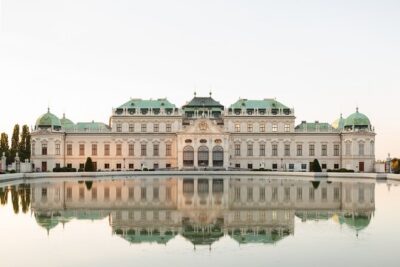
Entry Ticket Upper Belvedere, Klimt’s Kiss & Permanent Collection
Read our review →
Vienna Belvedere Palace Skip-the-line Tour & Official Guide
Read our review →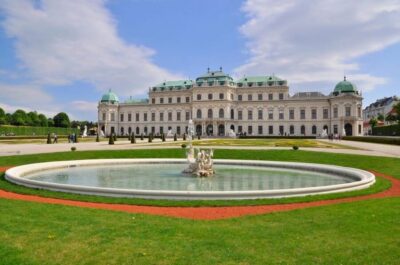
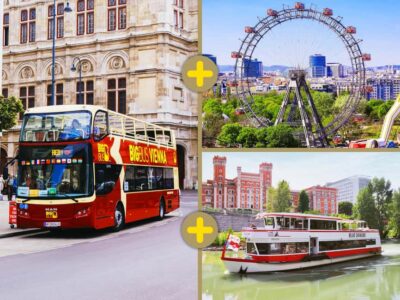
Vienna 3, 4 or 5-Attraction Pass: Schönbrunn, Belvedere, Bus
Read our review →
Klimt Villa (Gustav Klimt Atelier & Museum) Ticket
Read our review →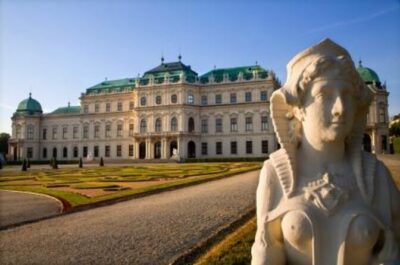
Skip-the-line Upper Belvedere Tickets and Guided Tour Vienna
Read our review →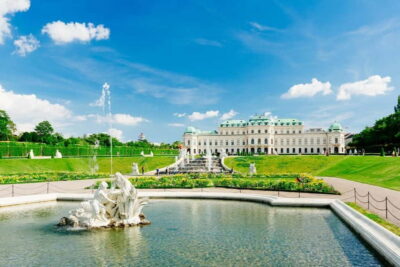
Belvedere Palace & Garden Skip-the-Line Guided Tour
Read our review →Browse the lists this tour appears in