
REVIEW · MOZART & CLASSICAL CONCERTS
Vienna Private Walking Tour including State Opera
Vienna rewards the slow gaze. In this private 3-hour walk, you stitch together Roman ruins, imperial streets, and Vienna’s opera world into one clear route.
I especially like that it centers on Habsburg era sites and then grounds them in real places you can stand in. I also love the focus on classical music connections, from the big names to the opera house itself.
The main thing to watch is the State Opera part. Some versions of the visit may feel more like viewing areas such as the lobby than a full guided inside tour, and timing can shift depending on what the opera is able to offer.
In This Review
- Key Points You Will Care About
- Vienna in 3 Hours, Private Pace That Fits Your Group
- Starting at the Vienna State Opera, History Behind the Music
- Habsburg Power Walk, Hofburg and the Holy Roman Echo
- Mozart Monument and the Court-Music Link You Can Actually See
- Michaelertor to Michaelerkirche, Where the Emperors Looked In
- Roman Vindobona Roots to the Graben, Vienna’s Street-Level Timeline
- Stephansplatz and Stephansdom, The Big Finish at the Heart of Vienna
- World Wars and the Second Republic, Why This Tour Talks About More Than Crowns
- Price and Value for a Private Group Up to 15
- Who Should Book This Tour, and Who Might Want Something Else
- Should You Book This Private Vienna Walk?
- FAQ
- How long is the Vienna Private Walking Tour including State Opera?
- Where do we meet for the tour?
- Is this a private tour?
- What language is the live guide available in?
- What is included, and what is not?
- Is the tour accessible for people with mobility impairments?
Key Points You Will Care About
- State Opera access can vary, so confirm what you will actually enter before you go
- 3 hours is tight, which means smart stops and little wasted walking
- Roman to Habsburg to the Second Republic, explained where it happened on the street
- Music you can point at, with opera history and composer landmarks in the route
- First-time friendly, especially if you want context for Vienna’s famous sights fast
- Private group pacing, ideal for couples, small families, or friends who want control
Vienna in 3 Hours, Private Pace That Fits Your Group
This is the kind of tour that works when you want history and meaning, not just a list of buildings. Because it is private and only 3 hours, the guide can adjust the pace to your questions and interests, instead of rushing everyone along.
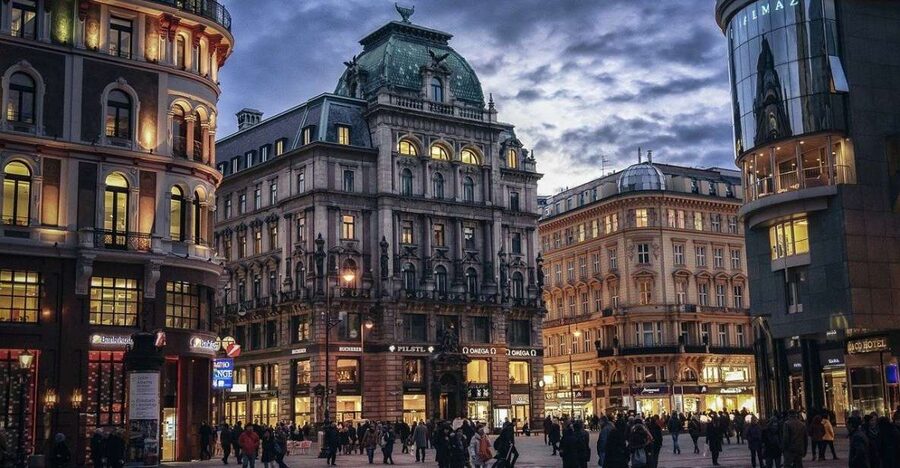
You start in the center at Stephansplatz 8A, 1010 Wien. From there, you move toward the grand opera district and then loop back through the most important historic core sites, ending at or near Stephansplatz with the cathedral area still in your line of sight. It is a compact route, but it covers a lot of time periods in Vienna’s story.
One practical note: it is not designed for mobility impairments. You should expect walking and standing during explanations, so wear shoes that can handle uneven sidewalks and curb cuts.
More Classical Concerts in Vienna
- Vienna: Vivaldi’s Four Seasons Concert in Karlskirche
★ 4.7 · 14,951 reviews - Vienna: Classical Concert in the World-Famous Musikverein
★ 4.6 · 6,673 reviews - Vienna: Mozart Concert at the Musikverein – Golden Hall
★ 4.6 · 5,194 reviews
Starting at the Vienna State Opera, History Behind the Music
The tour begins at the Vienna State Opera House, a serious stop for anyone who loves classical music. The building’s story goes back to the 1860s, when it was called the Vienna Court Opera. Later, in 1920, the Habsburg-led naming was changed as the early Austrian Republic formed, which gives you a neat link between monarchy and the new political reality.
This is also where you connect the idea of Vienna as an opera city to actual productions and the people who ran the stage. The tour highlights works associated with the house such as La Traviata, La Clemenza di Tito, and Verdi’s Don Carlo. It also points to famous directors connected to the opera, including Gustav Mahler, Herbert von Karajan, and Claudio Abbado.
Here is the value for you: instead of treating the opera house as a postcard, you learn how it fits into Vienna’s power structure and cultural prestige. That context makes later performances make more sense, even if you are not going to a show during your trip.
Just be careful with expectations about interior access. The tour says you will visit the State Opera, and the experience description talks about going inside. But the reality can be less dramatic depending on what is available on the day. If your goal is a full guided interior view, confirm the level of access ahead of time, and keep an eye on the note that entrance fees are not included.
Habsburg Power Walk, Hofburg and the Holy Roman Echo
After the opera, the route shifts into Habsburg territory in a way that feels logical. You are not just wandering randomly. You are moving from culture and court life to the actual seat of power.
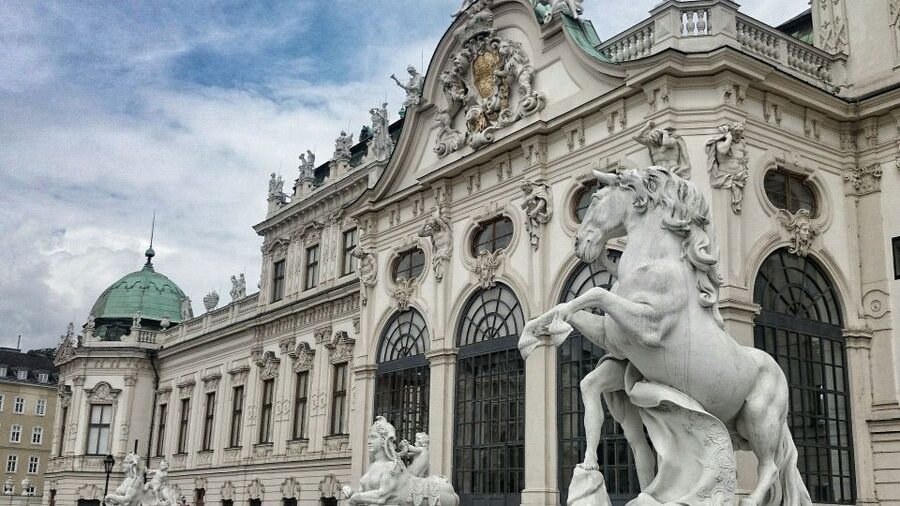
The highlights here include the Hofburg area, the old imperial residence that shaped Vienna for centuries. You also see major cultural landmarks along the way, such as the Art History Museum facades, which helps you understand how art, politics, and education grew together in this part of the city.
The tour also brings in the bigger historical frames that are easy to miss on your own: the Holy Roman Empire and later the Austro-Hungarian Empire. You get the why behind the streets. Vienna was not only a capital. It was a machine for administration, diplomacy, ceremony, and culture, and the Habsburgs controlled a lot of it for a long time.
I like that the guide ties these empires to places you can physically point to. That makes the timeline easier to hold in your head, especially if you have been jumping between museums without a thread.
Mozart Monument and the Court-Music Link You Can Actually See
Vienna’s composer names can feel abstract if you only read about them. On this tour, they come down to street corners and landmarks.
You will see the Mozart Monument on the route, which is a simple but useful moment. It gives you a focal point for the tour’s wider theme: Vienna’s classical music heritage is not separated from politics and society. It grew out of the same networks that built palaces, cathedrals, and imperial institutions.
The experience also explicitly includes a sweep of composers you will recognize, such as Wolfgang Amadeus Mozart, Josef Haydn, Ludwig van Beethoven, Franz Schubert, Johann Strauss (father and son), Johannes Brahms, and Gustav Mahler. Even if you do not know the dates, the guide uses the cities and buildings to help you connect the names to the world that produced them.
If you are a music lover, you will likely enjoy how the opera stop acts as the anchor. You can then look at the rest of the walk as the cultural city around that anchor.
More Walking Tours in Vienna
- Vienna: Guided Walking Tour of City Center Highlights
★ 4.7 · 4,989 reviews - Vienna: Vienna Central Cemetery Guided Walking Tour
★ 4.8 · 3,307 reviews - Vienna: Guided Walking Tour of City Highlights & Hidden Gems
★ 4.9 · 2,180 reviews - Vienna: Viennese Underworld Guided Walking Tour
★ 4.7 · 1,865 reviews
Michaelertor to Michaelerkirche, Where the Emperors Looked In
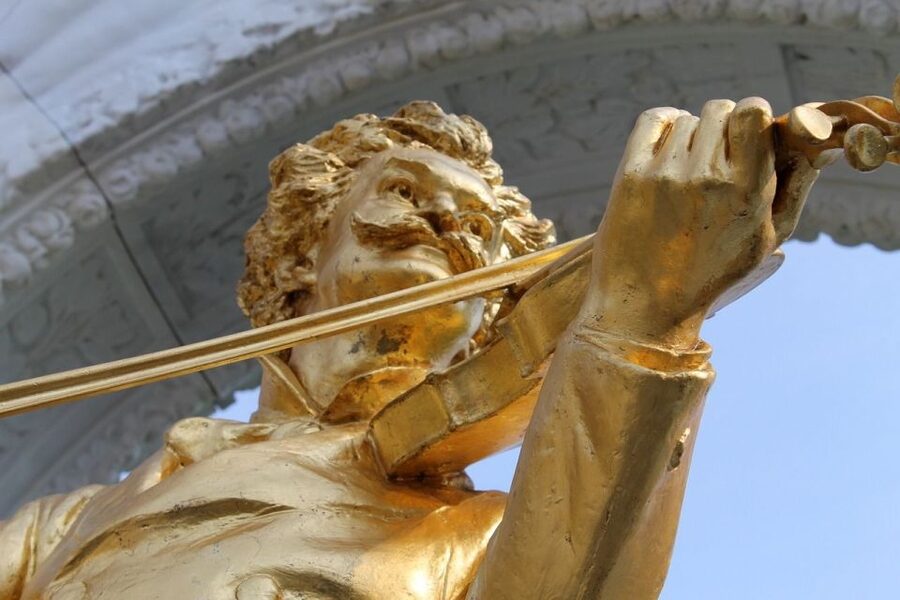
One of the more satisfying parts of this route is how it uses specific stops to explain daily imperial life. After the Hofburg area, you pass the Michaelertor gate and get a look at the Church of St. Michael, also known as Michaelerkirche.
This church is described as the official church of the emperors for years, and that detail matters. It signals that religion was not only faith, it was protocol, authority, and identity, all wrapped into the same building culture.
You also get a pause for the Roman and medieval layers that sit just under the surface of the city center. The tour points out ancient Roman ruins in the square and old medieval walls, along with remnants of the old Burg Theatre. That is a neat reminder that Vienna kept rebuilding over itself, rather than freezing in one era.
Roman Vindobona Roots to the Graben, Vienna’s Street-Level Timeline
Vienna can feel intimidating at first, because it is all there, everywhere. This is where the tour helps you. It takes key street spaces and treats them like historical documents.
You will visit the Graben Street, known as Der Graben. This is tied to Vienna’s older story, with a mention that Richard Lionheart used this route to enter the city. That single detail is a quick way to stop thinking about medieval Vienna as distant myth and start seeing how movement shaped the city.
From there, you move onward through more core church stops, including Peterskirche, or St. Peter’s Church. The tour notes it has been there since the 4th century, which is the kind of fact that makes the whole walk feel more grounded. You are not just seeing pretty buildings. You are seeing continuity.
If you like learning by location, you will appreciate that each stop adds one missing puzzle piece. Roman foundations. Imperial institutions. Medieval walls. Then the church and cathedral axis that ties it all together.
Stephansplatz and Stephansdom, The Big Finish at the Heart of Vienna
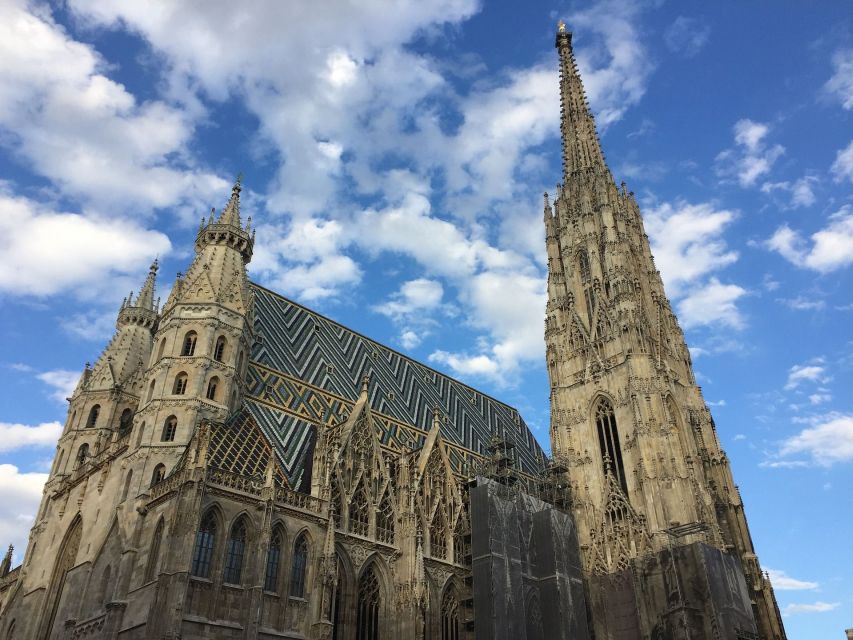
Every good Vienna walk should end with the skyline moment. Here, that moment is Stephansplatz and the Stephansdom, Vienna’s cathedral.
The tour frames Stephansdom as a majestic Roman-Gothic masterpiece and highlights its height, noting it as one of the tallest churches in the world. Even if you only see it from the square, the scale hits fast, and the guide’s historical context helps you see it as a statement, not just architecture.
This ending also makes route logic click. You start near Stephansplatz, move out toward the opera and imperial core, then return to the cathedral heart. You finish with the city center still working like a map in your head.
For me, the best value of an ending like this is that it gives you a clean reference point for the rest of your trip. After the tour, Stephansplatz stops feeling like a random landmark and starts feeling like where Vienna’s eras all meet.
World Wars and the Second Republic, Why This Tour Talks About More Than Crowns
A lot of Vienna tours focus on art and palace faces. This one also covers the less cheerful parts of the story: World Wars and the birth of the Second Republic.
That matters because it changes how you read the city. Vienna is not only a museum of imperial glamour. It is also a city that had to reinvent itself politically and socially after catastrophe. When your guide explains this shift alongside the imperial sites, you understand why certain institutions and public identities changed.
You might not want heavy topics while you are on vacation. If that is you, tell the guide what level of focus you want. A good guide will adjust tone while still keeping the story accurate and respectful.
Price and Value for a Private Group Up to 15
The price is $323 per group for up to 15 people, with a 3-hour duration. That is a big deal for value if you are traveling with more than two or three people.
Here is the simple math:
- For 2 people, it is about $161.50 per person
- For 4 people, about $80.75 each
- For 8 people, about $40.38 each
- If you get a full group of 15, about $21.53 each
So the best value happens when you can actually fill the group size. That said, even with a small group, the private format can still feel worth it if you care about getting your questions answered and keeping the pace comfortable.
Also keep in mind: entrance fees are not included. If the opera access or any interior spaces require separate tickets, you will need to budget for that. To avoid surprises, ask what is included in your exact State Opera visit, especially whether it is a lobby viewing or a deeper interior tour.
Who Should Book This Tour, and Who Might Want Something Else
I would book this if you want a high-meaning walk that connects big themes: Habsburg power, opera culture, and the city’s Roman and medieval roots. It is also great if you are a first-timer who needs structure, because the route moves you through the key zones efficiently.
You might want a different option if your top priority is a guaranteed, fully guided, inside-the-opera-house experience at a specific time. Since opera access can be variable, it is smart to confirm what you will see beyond the public areas.
And if you are traveling with someone who has limited mobility, this is not the best fit, since the tour is not suitable for mobility impairments.
Should You Book This Private Vienna Walk?
Book it if you want a focused 3-hour route with real context, not just snapshots. The State Opera stop is a strong anchor, and the way the tour links the Habsburg era to music and major landmarks helps you understand Vienna faster.
Skip or switch if you are strict about opera interior access. In that case, do your homework on what the State Opera portion includes, because the visit can be limited, and entrance fees are not included.
If you do book, plan for shoes on your feet and a lot of story time in between landmarks. This is the kind of tour where you leave with a clearer map of Vienna in your head, plus a stronger sense of why the city’s music and power history belong to the same conversation.
FAQ
How long is the Vienna Private Walking Tour including State Opera?
The tour lasts 3 hours.
Where do we meet for the tour?
The meeting point is Stephansplatz 8A, 1010 Wien, Austria.
Is this a private tour?
Yes, it is a private group tour.
What language is the live guide available in?
The live tour guide is available in English and German.
What is included, and what is not?
Included are a local professional guide and a visit to the State Opera. Entrance fees are not included.
Is the tour accessible for people with mobility impairments?
No, the tour is not suitable for people with mobility impairments. Comfortable shoes are recommended.
Fresh on the site in Vienna
- World War II History Vienna Old Town Private Walking Tour★ 4.8 · 9 reviews
- Vienna/Bratislava: Traunkirchen, Hallstatt & Salzburg Tour★ 4.8 · 53 reviews
- Vienna: Winery and Wine Tasting Tour with a Wine Expert★ 5.0 · 5 reviews
- Vienna/Bratislava: Day Trip to Hallstatt & Salzburg★ 4.8 · 21 reviews
- Vienna: Wine Tasting Tour★ 4.8 · 61 reviews
- Vienna: Wiener Schnitzel and Strudel Cooking Class★ 4.9 · 126 reviews
- Vienna: Waltz into the Ball Season★ 4.7 · 3 reviews
- Vienna: Wine Tasting E-Bike Tour★ 4.9 · 46 reviews
Mozart & Classical Concerts, compared.
Vivaldi’s Four Seasons Concert in Karlskirche
Read our review →
Classical Concert in the World-Famous Musikverein
Read our review →
Mozart Concert at the Musikverein – Golden Hall
Read our review →
Classical Concert in St. Anne’s Church (Annakirche)
Read our review →
Vienna Classical Concert at St. Peter’s Church
Read our review →Browse the lists this tour appears in