
REVIEW · CITY TOURS
Panoramic Vienna City Tour Passing by the Most Famous Landmarks
Ring Road views, served in one hour.
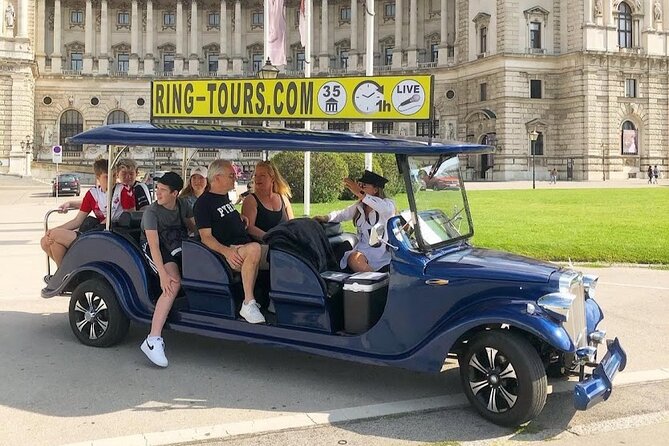
This panoramic Vienna tour strings together Habsburg sights, grand museums, parliament, opera, and baroque churches, with a private group and an English mobile ticket.
I love how quickly it gets you oriented, so Vienna stops feeling like a blur of streets. I also like the guide-driven details, and the reviews specifically highlight guides such as Constanze (warm, story-focused) and Hannah (fun, great with questions and recommendations).
One possible drawback: with about 1 hour and a lot of stops, you mostly pass by sights rather than having long, slow time inside.
In This Review
- Key highlights you will feel fast
- Where this 1-hour panoramic Vienna loop fits
- Starting point at Führichgasse, and how the tour actually moves
- Hofburg: the Habsburg headquarters vibe in the city center
- Maria-Theresien-Platz and Empress Maria Theresa’s monument
- The museum zone: why Kunsthistorisches and Naturhistorisches feel like a pair
- Austrian Parliament and Burgtheater: politics and performance
- Vienna City Hall: Gothic Revival and the Ringstraße big-budget look
- University of Vienna: old campus, big influence
- Café stop for intellectual Vienna, plus Tarock play
- Spanish Riding School: classical dressage meets Lipizzaner legend
- Austrian National Library: the Neue Burg Wing connection
- Albertina: prints that work for art lovers and sketch nerds
- Vienna State Opera and Wiener Musikverein: the music address
- Karlskirche: baroque Saint Charles Borromeo at Karlsplatz
- Guides, pace, and what you should expect from your group
- Price and value for a group of up to 7
- Should you book this panoramic Vienna city tour?
- FAQ
- How long is the panoramic Vienna city tour?
- What does the tour cost?
- Is this a private tour?
- What language is the tour offered in?
- Do I receive a mobile ticket?
- Where do we meet for the tour?
- Is free cancellation available, and are service animals allowed?
Key highlights you will feel fast
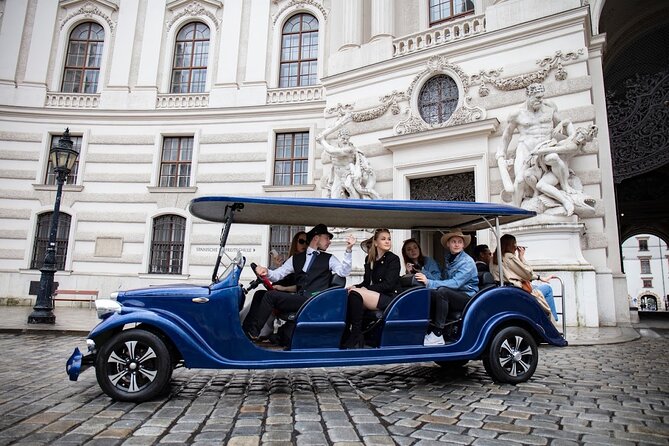
- Private group pace for up to 7 people, so questions do not get lost in the shuffle
- Ring Road and Inner City hits in one loop, including Hofburg, parliament, city hall, opera, and concert venues
- Maria Theresa centered focus, with a stop at the monument in Maria-Theresien-Platz
- Museum-zone context, including the Natural History Museum and the mirror-like museum setting nearby
- Café culture stop tied to 19th-century intellectual life and classic Tarock card play
- Lipizzaner-facing stop, plus a walk-by sense of why the Spanish Riding School matters
Where this 1-hour panoramic Vienna loop fits
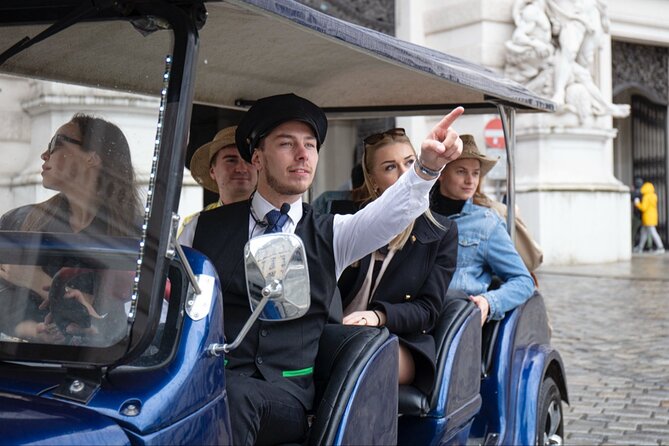
If you are trying to make sense of Vienna quickly, this tour is built for that job. In a single hour, you get the big visual map: imperial power at Hofburg, the grand civic buildings along the Ringstraße, and the culture wall of famous names around the city center.
The value here is not that you will spend the entire day sightseeing. It is that you will leave with clear landmarks in your head, and that makes your remaining time far more efficient. The best part is how the guide can help you decide what is worth a second visit, whether that is a museum interior or a performance evening.
This works especially well early in your trip. You can take the route first, then come back with a plan.
More City Tours in Vienna
- Vienna: Guided Walking Tour of City Center Highlights
★ 4.7 · 4,989 reviews - Vienna: City Cruise with Optional Lunch
★ 3.4 · 3,982 reviews - Vienna: City Cruise
★ 3.3 · 2,978 reviews
Starting point at Führichgasse, and how the tour actually moves
You meet at Führichgasse 8, 1010 Wien, and the activity ends back at the meeting point. That matters because it keeps the day simple. You are not scrambling across town to catch a bus, and you do not have to guess how to get back.
You also use a mobile ticket, which is the modern, low-friction way to enter a guided experience. Service animals are allowed, and the meeting area is described as near public transportation, which is helpful if you are pairing this with other plans.
From reviews, there is at least some walking included, and the pace is praised as well managed. Expect short, purposeful stops where you can get your bearings, photos, and a quick explanation, not a long “stand and read” museum lecture.
Hofburg: the Habsburg headquarters vibe in the city center
The first major anchor is the Hofburg, the former principal imperial palace of the Habsburg dynasty. It started in the 13th century under Ottokar II of Bohemia, and then kept getting expanded for centuries. That layered timeline is what you feel here: Vienna did not just build one palace and stop. It kept growing its power center.
A key detail that helps you understand Hofburg’s role: it served as the imperial winter residence, while Schönbrunn Palace was the summer home. Once you know that, the whole city starts to make more sense. Vienna is not one single “palace place.” It is a seasonal system of power.
The practical upside of including Hofburg in a short panoramic tour is that it gives you a home base for context. If you later visit other sites, Hofburg becomes your reference point for dates, dynasties, and political geography.
Maria-Theresien-Platz and Empress Maria Theresa’s monument
Next you get the monument honoring Empress Maria Theresa. She inherited the Habsburg lands in a difficult position and turned them into something more successful. Franz Joseph unveiled the monument in 1888, which places it in a period when Vienna was building like crazy.
Why that construction burst matters: the Ringstraße era took shape after fortifications were removed, and the city used the freed space to create major new civic and museum zones. So this stop is not only about one ruler. It is about how Vienna turned from walled city to grand capital.
The monument also connects you to the museum face-off nearby, because this whole area is one of the focal points for development. Even if you only get a glance on the move, the layout is the lesson.
Still the same country, a very different afternoon:
- Vienna: Vivaldi’s Four Seasons Concert in Karlskirche
★ 4.7 · 14,951 reviews - Vienna: Spanish Riding School Training
★ 3.9 · 9,281 reviews - Vienna: Skip-the-cashier-desk-line Giant Ferris Wheel Ride
★ 4.5 · 7,859 reviews - Vienna: Schönbrunn Palace & Gardens Skip-the-Line Tour
★ 4.7 · 7,739 reviews
The museum zone: why Kunsthistorisches and Naturhistorisches feel like a pair
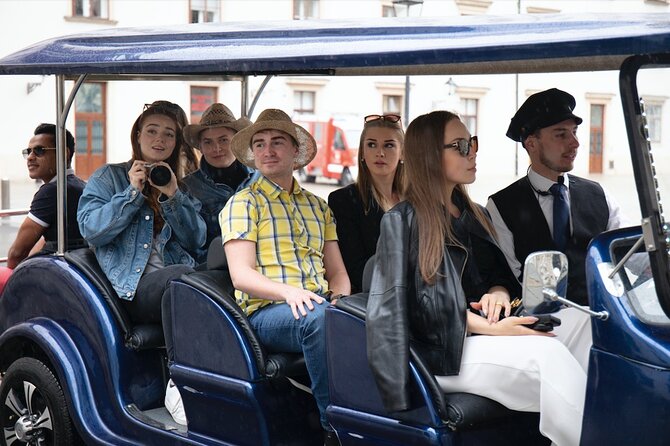
You will pass by the area where the Kunsthistorisches Museum and the Naturhistorisches Museum face each other across Maria-Theresien-Platz. That “two buildings, facing each other” design is a big clue about how Vienna planned this district: culture and science were treated as part of the same civic statement.
The tour then spotlights Naturhistorisches Museum Vienna specifically. It is described as one of the largest museums and non-university research institutions in Austria, and an important center for natural sciences. That is useful context if you like to know why a building matters, not just what it looks like.
Practical tip: if your interests lean scientific, you now have a strong reason to return. If you prefer art and architecture, the paired museum setup is a good sign that the district will reward you either way.
Austrian Parliament and Burgtheater: politics and performance
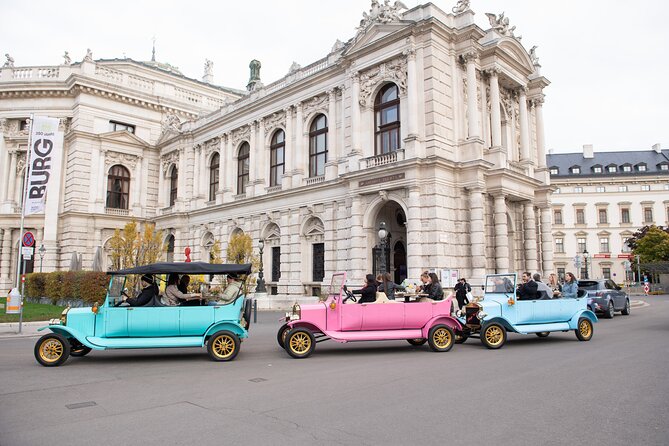
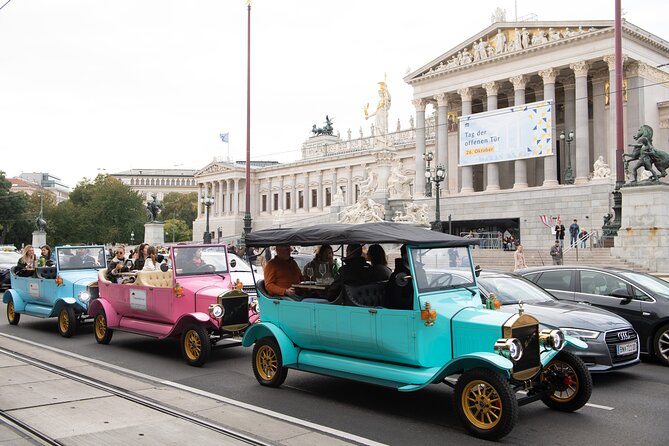
Along the Ringstraße route, you reach the Austrian Parliament Building, the meeting place of the two houses of the Austrian Parliament. It sits near Hofburg Palace and the Palace of Justice, which places it in the same power corridor as the imperial world.
That positioning is exactly why this tour design works. You see that Vienna’s center does not split neatly into categories. Government, courts, and culture are close enough that you can walk between them if you want to follow a theme later.
After that, you stop by the Burgtheater, described as Austria’s national theater and the most important German-language theater. The building has had names over time, including K.K. Hofburgtheater until 1918. That timeline detail reminds you the theater has been part of Vienna’s identity through huge historical shifts, not just as an entertainment venue.
If you are the type who loves architecture and how a city declares its priorities, parliament and theater together help you see Vienna as a place that values both rules and stagecraft.
Vienna City Hall: Gothic Revival and the Ringstraße big-budget look
Next comes Vienna City Hall at Rathausplatz. This is the Gothic Revival building designed by Friedrich von Schmidt and constructed between 1872 and 1883. Even on a short panoramic pass, Gothic Revival reads clearly: it signals ambition, civic pride, and an era that wanted the city to look like a major European capital.
Why it belongs on this route: City Hall sits in the Inner City, just off the Ringstraße, and it is another piece of the grand-building puzzle that began when Vienna expanded beyond its older fortifications.
If you later wonder why the Ringstraße looks like a parade of iconic facades, stops like this are the answer. Vienna invested in the look of governance and community as much as in the function.
University of Vienna: old campus, big influence
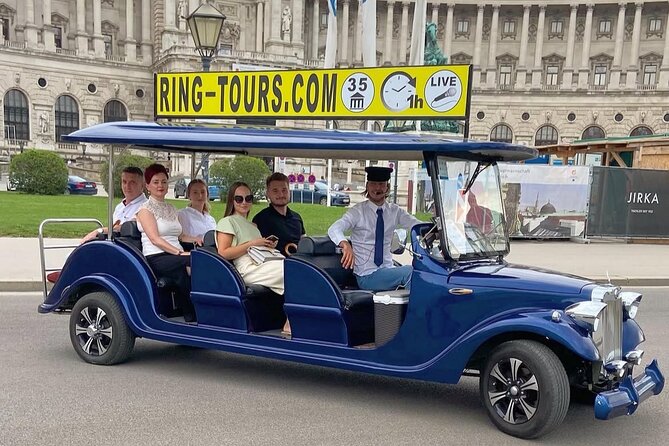
You also pass the University of Vienna. It was founded by Duke Rudolph IV in 1365 and is described as the oldest university in the German-speaking world, and among the largest institutions of higher learning in Europe.
This is another good “stop for meaning” moment. In a short tour, you may not go inside. But you will understand that Vienna is not only about imperial courts and elegant museums. It is also a long-running center of education and research, which feeds the city’s cultural life.
If you are traveling solo, that helps you connect the dots. You are not just visiting monuments. You are visiting a place built by institutions.
Café stop for intellectual Vienna, plus Tarock play
Then you get something different from the usual palace-and-church sequence: a café opened in 1876 that became a key meeting place for the Viennese intellectual scene. The list of regulars is the kind of roll call that makes this stop feel almost unreal, because it includes thinkers like Peter Altenberg, Theodor Herzl, Alfred Adler, and Egon Friedell, plus writers such as Hugo von Hofmannsthal, Anton Kuh, Robert Musil, and Stefan Zweig.
The story gets even more striking with patrons named in January 1913, including Josip Broz Tito, Sigmund Freud, and Stalin. Tarock games of the Tarock family are also described as played regularly, with Tapp Tarock especially popular between the wars.
Even if you do not order anything, this stop is valuable because it gives you Vienna’s “ideas engine.” This is the part of the city that shaped art, politics, psychology, and writing, long before any souvenir shops.
If you enjoy history through people, not just buildings, this café moment is likely to be one of your favorite segments.
Spanish Riding School: classical dressage meets Lipizzaner legend
You also pass by the Spanish Riding School, an Austrian institution dedicated to preserving classical dressage and training Lipizzaner horses. Performances in the Hofburg are mentioned as a tourist attraction, and the leading horses and riders also periodically tour and perform worldwide.
Here is what I think you should take from this stop: Vienna’s cultural identity includes not only music halls and museums, but also disciplined traditions you can watch, learn about, and even follow across continents.
If you love animals and pageantry, this stop is a nice contrast to the more formal power buildings earlier in the route. It also gives you a clear lead-in for planning a performance night, if that is your style.
Austrian National Library: the Neue Burg Wing connection
Next you reach the Austrian National Library, described as Austria’s largest library with more than 12 million items across its collections. It is located in the Neue Burg Wing of the Hofburg.
Since 2005, some collections have been relocated within the Baroque structure of the Palais Mollard-Clary. That detail matters because it frames the library as a living institution, not a static landmark.
This stop is a great reminder that Vienna’s “palaces and culture” are not only for display. They are also where knowledge is stored, curated, and moved to meet modern needs.
Albertina: prints that work for art lovers and sketch nerds
You will also pass by Albertina, a museum that houses one of the largest and most important print rooms in the world. It includes approximately 65,000 drawings and around 1 million old master prints, plus modern graphic works, photographs, and architectural drawings.
Why this matters in a short tour: prints are easier to appreciate quickly than you might think. If you like art, design, or the craft behind images, Albertina is a strong candidate for a later, longer visit.
If you are more performance-focused, this stop still has value because it shows you Vienna did not stop at grand stages. It also built institutions for visual scholarship and collecting.
Vienna State Opera and Wiener Musikverein: the music address
Two of the biggest “Vienna label makers” show up back to back.
First is the Vienna State Opera, a historic opera house and opera company. The building is Renaissance Revival, with a 1,709-seat venue, and it is described as the first major building on the Vienna Ring Road. That “first major building” detail tells you how important the opera was to Vienna’s identity as a modern capital.
Then you reach the Wiener Musikverein (Musikverein), opened in 1870, home of the Vienna Philharmonic orchestra. This is the kind of venue people plan around, because the hall itself is part of the experience.
What you can do with this information: even if you do not have opera tickets yet, you can now decide what you want to prioritize. One night at the opera or a concert at Musikverein can become the “anchor event” that turns Vienna from sightseeing into a memory.
Karlskirche: baroque Saint Charles Borromeo at Karlsplatz
The tour ends with Karlskirche, a baroque church dedicated to Saint Charles Borromeo. It sits in the Karlsplatz area on the border of Wieden and the Innere Stadt.
This stop helps close the loop because it adds a strong visual finale. You get power (Hofburg and parliament), civic pride (city hall), scholarship (university and library), art and music (opera and concert hall), and finally a church that makes the whole city feel dramatic.
If you have been mostly looking at straight lines and grand facades, Karlskirche gives you curves, ornament, and atmosphere in one go.
Guides, pace, and what you should expect from your group
The reviews you provided put the spotlight on guide quality. Constanze is described as amazing, warm, and detailed, with a pace that felt right. Hannah is praised for being fun and for having a wealth of knowledge, plus patience and good answers.
There is also an emphasis on being on time and following through on what was promised. One review specifically calls out the walk portion, so do not assume it is purely a drive-by. If you enjoy short stops where you can ask questions and get quick orientation, this format is designed for that.
For value, think about your own travel style. If you like to move steadily but still want context, you will enjoy this. If you want to spend two hours inside one museum, you will probably feel that this tour is not meant for that.
Price and value for a group of up to 7
The price is $212.93 per group, for up to 7 people, with a duration of about 1 hour. That is where the math becomes your friend.
- For 7 people, it works out to about $30.42 per person.
- For 4 people, it is about $53.23 per person.
- For 2 people, it is about $106.47 per person.
So this is best value when you can fill the group, like two or three couples, a small family, or friends traveling together. Even if you are not filling all seats, the real value is time saved. Getting a guided route this focused can prevent the classic first-day problem in Vienna: wandering without a plan.
Should you book this panoramic Vienna city tour?
Book it if: you want a fast, guided way to connect Vienna’s biggest landmarks, especially along the Ringstraße and around the Hofburg area. It is a smart way to choose what to revisit after you learn what you actually care about.
Skip it, or pair it differently, if: you want deep museum time or long indoor visits during your first hour. This tour is built for orientation and stories while passing major stops, not for full ticketed entry experiences.
My take: if you are aiming to understand Vienna’s structure in one short session, this is a solid choice. And if you book early in your trip, it will help you spend the rest of your days with far better instincts.
FAQ
How long is the panoramic Vienna city tour?
It lasts about 1 hour.
What does the tour cost?
It costs $212.93 per group, up to 7 people.
Is this a private tour?
Yes. It is a private tour/activity, and only your group participates.
What language is the tour offered in?
It is offered in English.
Do I receive a mobile ticket?
Yes, it is listed as a mobile ticket.
Where do we meet for the tour?
The meeting point is Führichgasse 8, 1010 Wien, Austria, and the tour ends back at the meeting point.
Is free cancellation available, and are service animals allowed?
Free cancellation is available, and service animals are allowed.
Fresh on the site in Vienna
- World War II History Vienna Old Town Private Walking Tour★ 4.8 · 9 reviews
- Vienna/Bratislava: Traunkirchen, Hallstatt & Salzburg Tour★ 4.8 · 53 reviews
- Vienna: Winery and Wine Tasting Tour with a Wine Expert★ 5.0 · 5 reviews
- Vienna/Bratislava: Day Trip to Hallstatt & Salzburg★ 4.8 · 21 reviews
- Vienna: Wine Tasting Tour★ 4.8 · 61 reviews
- Vienna: Wiener Schnitzel and Strudel Cooking Class★ 4.9 · 126 reviews
- Vienna: Waltz into the Ball Season★ 4.7 · 3 reviews
- Vienna: Wine Tasting E-Bike Tour★ 4.9 · 46 reviews
City Tours, compared.
Guided Walking Tour of City Center Highlights
Read our review →
Guided Walking Tour of City Highlights & Hidden Gems
Read our review →
City Sightseeing Tour in an Electro Vintage Car
Read our review →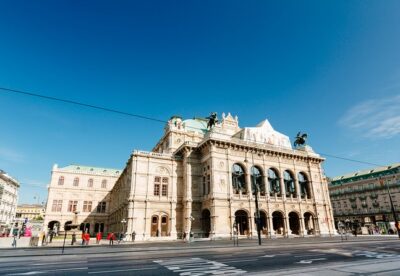
Skip-the-Line Schonbrunn Palace Guided Tour and Vienna Historical City Tour
Read our review →
Vienna City Card: Public Transport incl. 200+ discounts
Read our review →Browse the lists this tour appears in