

REVIEW · WALKING TOURS
Salzburg Introduction Walking Tour
This walk turns Salzburg into a timeline. I love the historian-led storytelling that links medieval commerce and culture to the city’s later musical legends. I also like how it weaves Mozart landmarks and the The Sound of Music Trapp family story into the streets you’ll actually walk.
The only real catch is time. At about 2.5 to 3 hours on foot, it’s a packed route, so if you want tons of big-picture context nonstop, you may need to ask your guide for quick added framing early on.
If you want a friendly first look at old-town Salzburg that helps the rest of your trip click, this format makes a lot of sense. It’s designed for small groups, with departures in the morning or afternoon, and you start right in the historic center.
In This Review
- Key highlights to notice before you go
- Salzburg on foot with a historian: what you are really buying
- Meeting in the center, then walking the city’s “two Salzburgs”
- Getreidegasse and baroque squares: how the route teaches you to read Salzburg
- Mozart’s Birthplace and Festival Halls: the music stops that actually help
- St. Peter’s Abbey (St. Peter’s monastery) and the medieval salt story
- The Trapp story: why the WWII context is the real point
- Michael Haydn and local musical culture: not just a Mozart tour
- Comfort, pace, and what to expect on the ground
- Price and value: is $180.21 worth it?
- Who should book this Salzburg introduction walk?
- Should you book it?
- FAQ
- How long is the Salzburg Introduction Walking Tour?
- Where do I meet, and what time does it start?
- Is the tour offered in English?
- How many people are in the group?
- What is included, and do I need to pay for Mozart Residence admission?
- Can I cancel for a full refund?
Key highlights to notice before you go
- Historian-level guides (professors, doctoral students, historians, journalists, art critics, or published authors) who connect places to ideas.
- Getreidegasse street level plus baroque squares, so you see Salzburg at two very different scales.
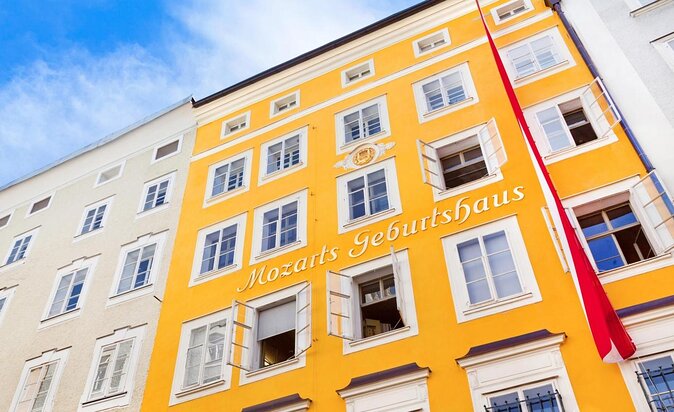
- Mozart stops including Mozart’s Birthplace and the Festival Halls, tied to childhood stories of Wolfgang and Nannerl.
- St. Peter’s Abbey (St. Peter’s monastery), dating to 696 AD, with context beyond postcards.
- Sound of Music context that points to the Trapp family’s real-world WWII story, not just movie scenes.
- Small-group pacing with options such as moving into shade when needed, as some guides are known for smart comfort choices.
Salzburg on foot with a historian: what you are really buying
You are not paying for a loop around famous buildings. You are paying for interpretation. This is a Salzburg introduction walking tour where the guide’s job is to help you understand why this city looks the way it does, and why its music stories stuck so hard in the world’s imagination.
At $180.21 per person for roughly 2.5 hours, the price feels steep on paper until you see what is included: a professional scholarly guide and a focused walk through the historical center. For me, the value is in the pairing. You get both the physical route (you’ll walk the old lanes and squares) and the narrative glue (how medieval trade and politics lead into Salzburg as a musical powerhouse).
Also, the guide lineup matters. The tour lists guides who are not just hobbyists. You may encounter someone working as a professor or doctoral student, a historian, a journalist, an art critic, or a published author. In past groups, people have been guided by names like Peter, Natalie, Liza, Claudia, and Lisa. That tells me the expectation is academic storytelling, delivered in a way that still works on a street corner.
More Walking Tours in Salzburg
- Salzburg 2.5-Hour Walking Tour: Mozart, Old Town & More
★ 4.2 · 987 reviews - Salzburg: Old Town, Mozart, & Mirabell Gardens Walking Tour
★ 4.8 · 461 reviews - Salzburg Oldtown: Sightseeing Walking Tour with Licensed Local Guide
★ 5.0 · 392 reviews
Meeting in the center, then walking the city’s “two Salzburgs”
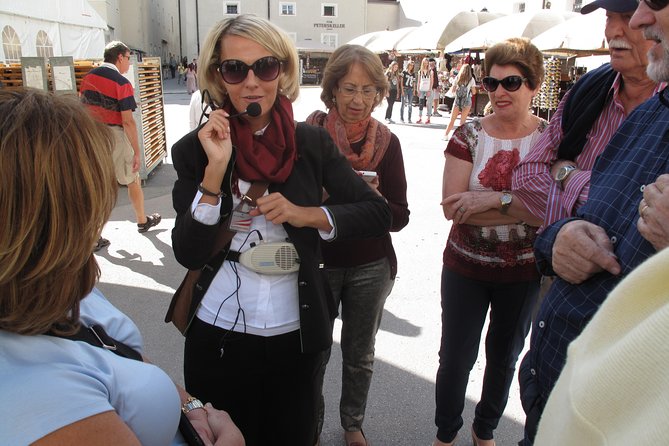
The tour meets at Linzer G. 39, 5020 Salzburg and starts at 9:30 am (there is also an afternoon option on other departures). This location choice is practical. You are already positioned near transit and near the historic core, so you do not spend your time commuting.
Then you get the first big payoff: a shift between street-scale old town and palace-scale Salzburg.
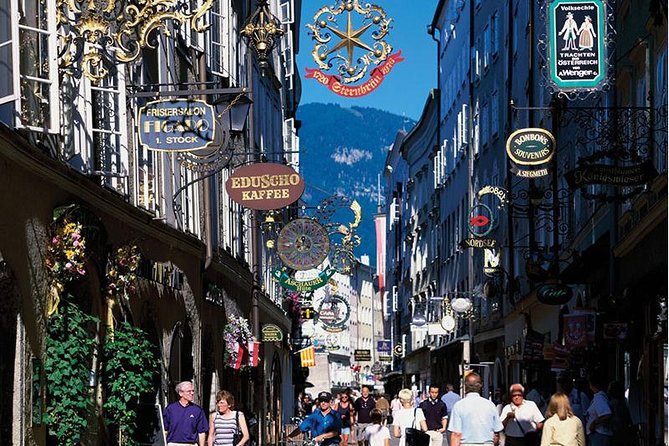
You begin in the Burgher Town, where the streets are narrow and crooked, and the commercial passage ways of the Getreidegasse area still preserve medieval atmosphere. If you have only seen Salzburg from viewpoints, this part makes the city feel real and human, like you could have bumped into an apothecary or merchant centuries ago.
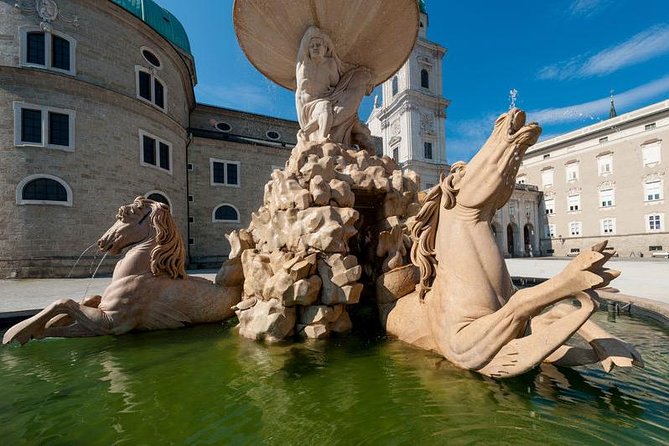
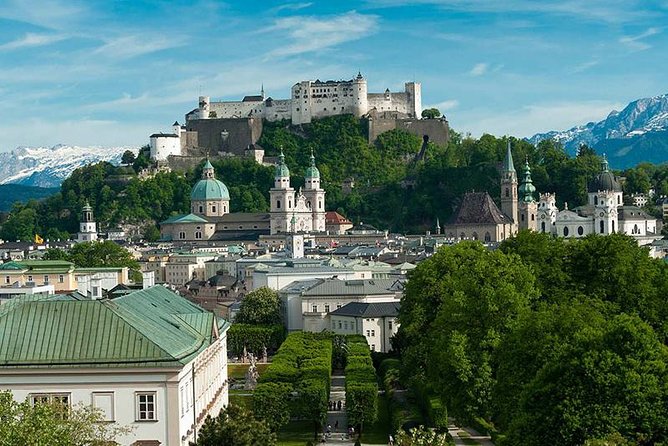
After that, the walk opens up into the baroque squares of the district where the archbishops presided, tied to the power center around their residence. It is a clever contrast. Tiny medieval lanes, then broad baroque spaces where authority is literally built into the architecture. That is the kind of visual lesson you can’t easily replicate on your own without a lot of map work.
One practical consideration: this is an active walk. It is not listed as a bus tour, and you’ll be on your feet for most of the 2.5 to 3 hours. Some groups have clocked big step counts, around 10,000 steps. Wear comfortable shoes and plan for stone and cobblestones.
Getreidegasse and baroque squares: how the route teaches you to read Salzburg
The Getreidegasse portion matters because it is not just a pretty street. It’s a key to understanding how Salzburg worked.
You’ll explore the commercial core that stayed intact with medieval charm, including those tight passage ways that feel slightly secret and very different from modern shopping streets. For first-time visitors, this is where you start learning how the city’s layout shapes movement and views. You’ll also get a sense of why merchants and everyday life mattered alongside big political power.
Then you transition into the baroque squares. This is where your guide’s stories do important work. The tour connects what you see to who ruled, and why it shows up in the architecture. The archbishops were not background figures. They were the power source, and their presence is reflected in the scale and design of the spaces around them.
If you are traveling with family or friends and want everyone to feel like they are getting something, this is a strong section. Younger travelers tend to enjoy the street feel and the quick reveals, while history-minded folks get satisfied by how the guide ties the streets to institutions.
Mozart’s Birthplace and Festival Halls: the music stops that actually help
Mozart in Salzburg can go two ways. You either see a museum-like site list, or you get a story that makes the city feel like a living stage.
This tour goes for the second option. You pass Mozart’s Birthplace and the Festival Halls, then connect the dots to childhood stories of both Wolfgang and Nannerl Mozart. That matters, because it shifts Mozart from a name you know to a person in a specific place at a specific time.
The guide also looks beyond Mozart as an isolated genius. You hear about Michael Haydn, described in the tour as the city’s second major musical son. That line is important. It nudges you to listen for Salzburg’s wider musical ecosystem, not just the one famous poster child.
Here’s the practical reason this helps your trip: once you understand the city’s musical network, your later sightseeing feels less random. Instead of, I saw a building, you can think, I know how this fit into the culture and institutions.
Still the same country, a very different afternoon:
- The Original Sound of Music Tour in Salzburg
★ 4.5 · 6,129 reviews - Salzburg: Original Sound of Music Tour
★ 4.8 · 5,059 reviews - From Salzburg: Half-Day Tour to Hallstatt
★ 4.6 · 3,596 reviews - Salzburg: Mozart Concert at Mirabell Palace
★ 4.8 · 3,498 reviews
St. Peter’s Abbey (St. Peter’s monastery) and the medieval salt story
This is one of the most compelling parts of the route, because it adds depth beyond Mozart and movie scenes.
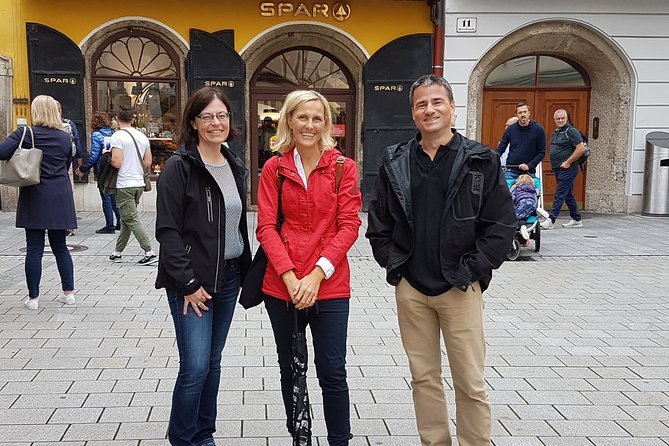
You reach St. Peter’s, a Benedictine monastery dating back to 696 AD. That number alone signals you’re walking in a place where continuity matters. Then the guide ties the location to Salzburg’s deeper forces: medieval salt commerce and even medical innovations connected to the city’s practical needs.
Why should you care about salt and medicine on a walking tour? Because it explains something visitors often miss. Salzburg was not famous because it had good weather and great violins. It had systems that created wealth and shaped knowledge. Salt was a driver of prosperity, and prosperity built institutions. Those institutions then supported music, education, and cultural output.
In one example of how guides use their access and storytelling, a group was taken into the chapel of Nonnenberg Abbey, where they were able to hear a choir rehearsal. That is exactly the sort of “wait, this is happening right now” moment that can make a historic walk feel immediate.
Even if your day does not include anything like that, St. Peter’s is still the stop where the tour slows down your brain. It turns your attention to scale, age, and the way one location can anchor multiple eras.
The Trapp story: why the WWII context is the real point
Salzburg and The Sound of Music are tied together so tightly that it’s easy to reduce everything to filming locations. This tour tries to keep you honest.
Toward the end, you learn the true story of the Trapp family as part of a refugee tale linked to World War II. The tour description explicitly frames it that way, and guides also tend to approach it with perspective instead of just pointing to landmarks.
I like this approach because it makes the tour more than nostalgia. You still get the movie cultural connection, but you also get context for why those stories travelled, and what real people risked and lost.
And there is another subtle benefit. When you understand the WWII context, your later Salzburg experiences make more sense. Even if you visit sites tied to the film, you can keep the emotional weight grounded in reality.
Michael Haydn and local musical culture: not just a Mozart tour
If you already know Mozart well, you might wonder what’s left. This tour answers that with a shift in focus.
You follow Mozart’s early life and also hear about Michael Haydn, plus you get the broader point that Salzburg’s musical reputation came from more than one household or one composer. That makes the city feel less like a single spotlight and more like a network of teachers, performers, and institutions.
This is also where a great guide changes everything. In past groups, guides such as Claudia, Liza, and Lisa were described as tailoring explanations to the group and using a clear structure rather than dumping facts at random. One guide, Natalie, was noted for tailoring the route to the group’s interests. That matters because it can help you avoid the classic mismatch problem: you chose a Mozart walk, but your group wants architecture, or vice versa.
Comfort, pace, and what to expect on the ground
Even the best storytelling can fall flat if the pace is wrong. This tour’s small-group size is meant to keep things manageable.
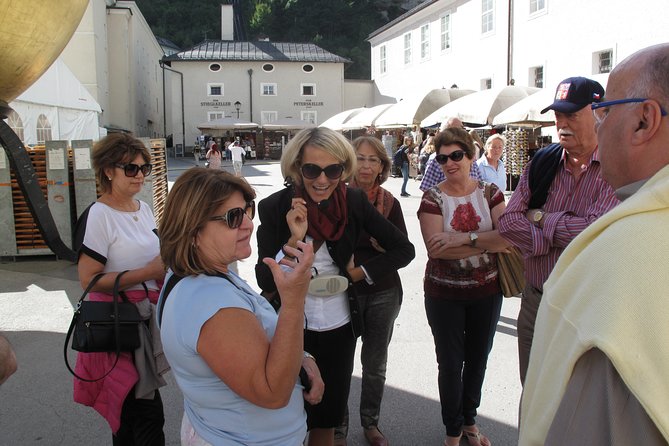
The listing includes a small-group format with a maximum of 8 travelers, and the features section also states a limit of six people. Either way, the practical takeaway is that you are not swallowed by a giant crowd. You can hear your guide, and you can ask a question without feeling like you are interrupting a parade.
You should still expect steady walking. Some guide behaviors reported in past groups include moving people into shade during hot conditions and making comfort choices while staying on schedule. That’s smart. Salzburg weather can shift, and old-town stone can make heat linger.
Plan for:
- comfortable walking shoes
- water if it’s warm
- a bit of focus, because the route covers a lot of ground in a short time
One more thing I appreciate: guides are described as being good at handling small disruptions, like train delays, while keeping the tour value intact. That’s not something you control as a traveler, but it’s reassuring to know the human side of touring is taken seriously.
Price and value: is $180.21 worth it?
For $180.21, you are clearly paying for more than a stroll. You are paying for a professional scholarly guide and a curated route through the historical center designed around major themes: power, daily life, music, and WWII context.
Is it “cheap”? No. But it can be good value if you fit the target audience:
- You want context, not just photos.
- You plan to revisit parts of the old town later and want the memories to connect.
- You care about understanding Mozart and also the bigger Salzburg story.
If you are the type who loves self-guided sightseeing with an audio app and a book, you might not use the guide enough. In that case, you could build a route yourself around Getreidegasse, Mozart’s Birthplace, St. Peter’s, and the big squares.
But if you prefer to have someone point, explain, and connect the dots as you walk, the guide component is the reason this price starts to make sense. Salzburg can be a very “look but don’t know why” destination if you go solo. This tour aims to prevent that.
Who should book this Salzburg introduction walk?
I think this tour is a strong match for:
- first-timers who want old town order fast
- history buffs who like a guide who ties places to institutions and events
- music fans who know Mozart, but want the wider local musical story too
- fans of The Sound of Music who want the film connection, plus the real-world Trapp context
It is also a good choice if you travel with mixed interests. The route naturally includes medieval street texture, baroque power spaces, major Mozart landmarks, monastic history, and a WWII refugee story. That gives people different ways to feel satisfied.
If you already know Salzburg extremely well, you may still enjoy it, but you’ll want to check whether the themes match what you need next. This is not marketed as a deep specialty tour. It is an introduction that gives you firm footing.
Should you book it?
Book this Salzburg Introduction Walking Tour if you want a small-group, guide-led first look that connects Getreidegasse, baroque squares, St. Peter’s Abbey, Mozart sites, and the Trapp story into one readable walk.
Skip it or consider self-guided options if:
- you prefer silent sightseeing
- you want a slower pace with long stops at fewer places
- you already have your own detailed historical and musical framework and just need logistics
My honest take: for most visitors, this is one of the best ways to get oriented in old-town Salzburg without spending hours trying to connect everything on your own.
FAQ
How long is the Salzburg Introduction Walking Tour?
It lasts about 2 hours 30 minutes (around 2.5 hours), and it is described as a 3-hour walk through the historical center.
Where do I meet, and what time does it start?
The meeting point is Linzer G. 39, 5020 Salzburg, Austria. The start time listed is 9:30 am, and there are morning or afternoon departures available.
Is the tour offered in English?
Yes, it is offered in English.
How many people are in the group?
The tour is a small-group experience, with a maximum of 8 travelers listed, and it is also described as limited to a maximum of six people.
What is included, and do I need to pay for Mozart Residence admission?
Included is a professional scholarly guide and a walk through the historical center. Mozart Residence admission is not included.
Can I cancel for a full refund?
Yes. You can cancel for a full refund if you cancel up to 24 hours before the experience’s start time.
Fresh on the site in Salzburg
- Wachau, Melk Abbey & Salzburg (Sound of Music & UNESCO)★ 5.0 · 23 reviews
- Private Werfen Ice Cave and Golling Waterfall from Salzburg★ 5.0 · 15 reviews
- Viator Exclusive: ‘The Sound of Music’ Private Tour★ 5.0 · 28 reviews
- Werfen World’s Largest Ice Caves and Golling Waterfalls Tour★ 4.5 · 7 reviews
- Private transfer from Salzburg to Vienna, 2 hours for sightseeing★ 4.5 · 7 reviews
- Private Transfer from Salzburg to Munich with 2 hours for sightseeing★ 5.0 · 8 reviews
- Private Austrian Food Tasting Tour in Salzburg’s Old Town★ 4.5 · 3 reviews
- Salzburg Marionette Theater: The Magic Flute SHORT version (1 hour)★ 5.0 · 11 reviews
Walking Tours, compared.
Guided Walking Tour of City Center Highlights
Read our review →
Guided Walking Tour of City Highlights & Hidden Gems
Read our review →
Vienna Historic Center Small Group Walking Tour
Read our review →
Browse the lists this tour appears in