
REVIEW · HISTORICAL TOURS
Vienna: World War II Historical Walking Tour
Vienna’s streets tell a brutal story. I like that this tour connects Hitler’s early Vienna to the wider political and social climate, and it gives you a visit to the synagogue that survived Nazi rule plus a stop at a Holocaust memorial that you cannot breeze past. For $31, the pace is solid for a 150 minute walk, and the live storytelling keeps the facts tied to what you can see on the street.
The subject matter is heavy, and you will be standing and walking in public spaces for most of the 2.5 hours. If you are sensitive to Holocaust history, go in with a little extra time afterward to decompress, and wear weather-ready layers, because Vienna weather does what it wants.
In This Review
- Key things I’d circle before you go
- Meeting at the Albertina, then walking into WWII Vienna
- Hitler’s early years in Vienna, told through the city’s pressures
- The city after the bombs, and how destruction changes what you notice
- Jewish Vienna and the synagogue that survived Nazi rule
- The Holocaust memorial stop that makes you slow down
- Postwar Vienna, the division you can still sense in the streets
- Guides, hearing it clearly, and how pacing actually works
- Price and value: getting more than a quick lecture for $31
- Should you book this Vienna WWII Historical Walking Tour?
- FAQ
- Where does the tour start?
- How long is the Vienna WWII historical walking tour?
- How much does it cost?
- What language is the tour offered in?
- What are the main stops on the tour?
- Is a live guide included?
- Are entrance fees included?
- Is transport included in the tour?
- Can I cancel and get a full refund?
- Is reserve now, pay later available?
Key things I’d circle before you go
- Start right by the Albertina Museum and the Opera House so you get oriented fast in central Vienna.
- A rare surviving synagogue stop that anchors the story in real, physical history.
- A dedicated Holocaust memorial visit that shifts the focus from ideology to consequences.
- Bomb damage and postwar scars you can read in the city instead of only hearing about them.
- Live guides who tell the story with context and follow-ups, with many guests praising the clarity of the delivery.
- Audio support (ear pieces/headsets for larger groups), so you are not forced to crowd the guide to hear.
Meeting at the Albertina, then walking into WWII Vienna
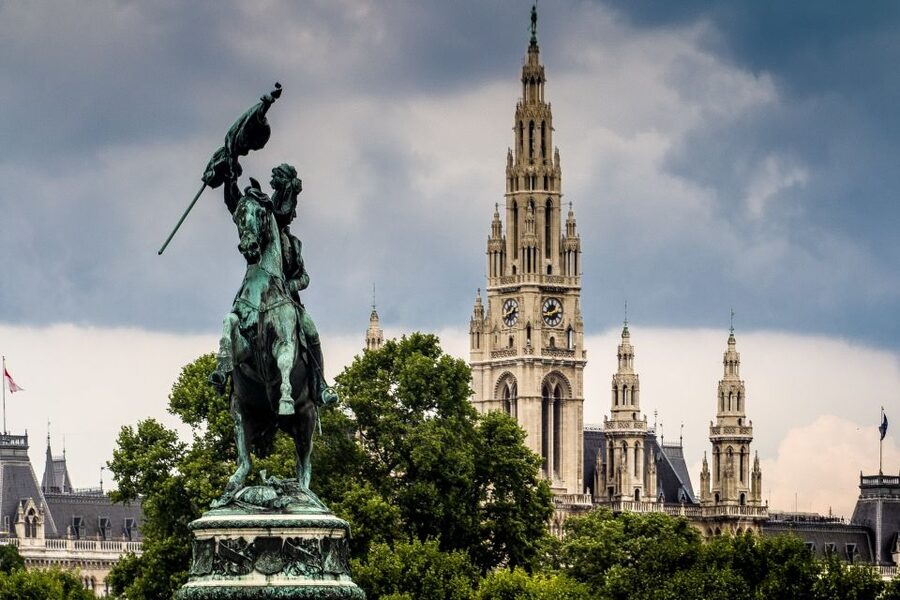
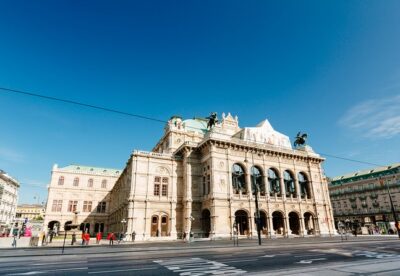
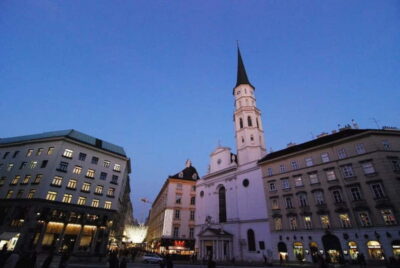
The tour kicks off in a great spot for first-time orientation: in front of the Albertina Museum, next to Vienna’s Opera House. Your best bet for finding the group is to look for the green umbrella at Albrechtsbrunnen, the fountain downstairs at the Albertina. If you are using the subway, Karlsplatz/Oper is the nearby stop.
This is the kind of start that helps you immediately. Instead of beginning in a history museum, you start in the part of Vienna people actually move through. That matters because the tour is about cause and effect, not just dates.
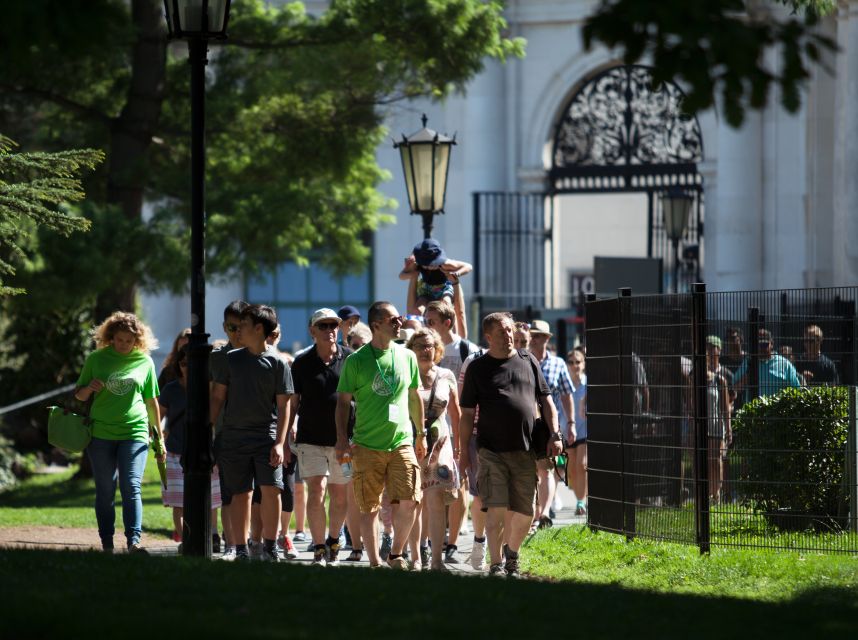
You’ll get a live English guide and likely audio assistance such as ear pieces or headsets, especially for bigger groups. That shows up again and again in the reviews, and it is a practical win: you can keep your eyes on the street while still hearing every detail.
More Walking Tours in Vienna
- Vienna: Guided Walking Tour of City Center Highlights
★ 4.7 · 4,989 reviews - Vienna: Vienna Central Cemetery Guided Walking Tour
★ 4.8 · 3,307 reviews - Vienna: Guided Walking Tour of City Highlights & Hidden Gems
★ 4.9 · 2,180 reviews
Hitler’s early years in Vienna, told through the city’s pressures
The heart of the tour is the story of how Vienna shaped a young Adolf Hitler’s thinking and how his ideology took hold. You begin with the social and political climate of the city and then connect it to his early life, including his time as an art student and how an artist’s ambitions can turn, in the wrong conditions, into political obsession.
What I like about this approach is that it keeps you grounded. You are not just learning why history happened in general. You are learning what in Vienna made extreme ideas feel plausible to some people, and how fear plus ethnic rivalry can become a political fuel.
A good guide makes the difference here, and this tour has a track record of strong, story-forward narration. Names you may hear from the guide roster include Dieter, Stefan, Michael, Wolfgang, Florian, and Siggi, and the common theme is clear explanations paired with real context and room for questions. If you like asking why something happened, you will probably get that moment to pause and make the story click.
One practical note: because the tour spends time on difficult topics, your guide is usually careful about pacing and sensitivity. Still, go in mentally ready for grim material. This is history that explains harm, not a feel-good walk.
The city after the bombs, and how destruction changes what you notice
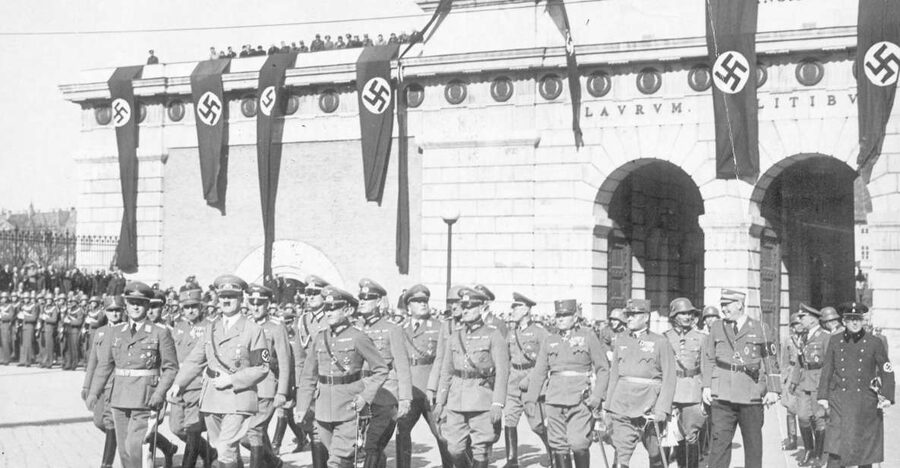
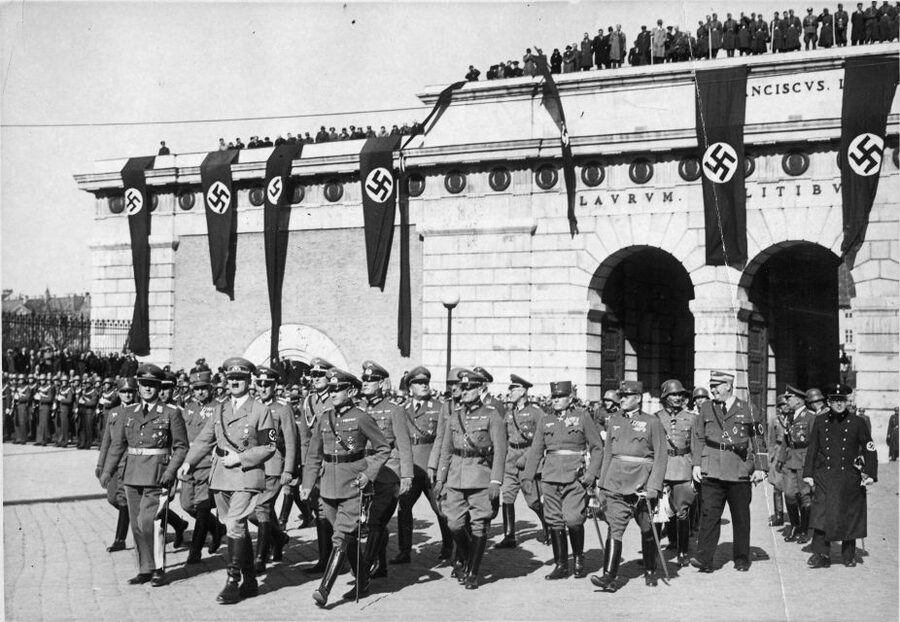
Vienna did not escape WWII. Over the course of the tour, you hear about the impact of more than 100,000 bombs and what those attacks did to daily life and the urban fabric.
The tour connects bombing to what you see as you walk: scars on streets and the lingering traces of wartime disruption. Even if the buildings around you look calm now, the guide’s job is to help you read what changed and why. That is where a guided walk beats a self-guided stroll. You start noticing the city as a layered document.
This is also where the tour’s pacing matters. You will still be moving, but you will not be rushed through everything. Several guests mention the guide building in pauses for weather and breathing space. If you need small moments to sit, this is the kind of tour that tends to offer them.
Jewish Vienna and the synagogue that survived Nazi rule
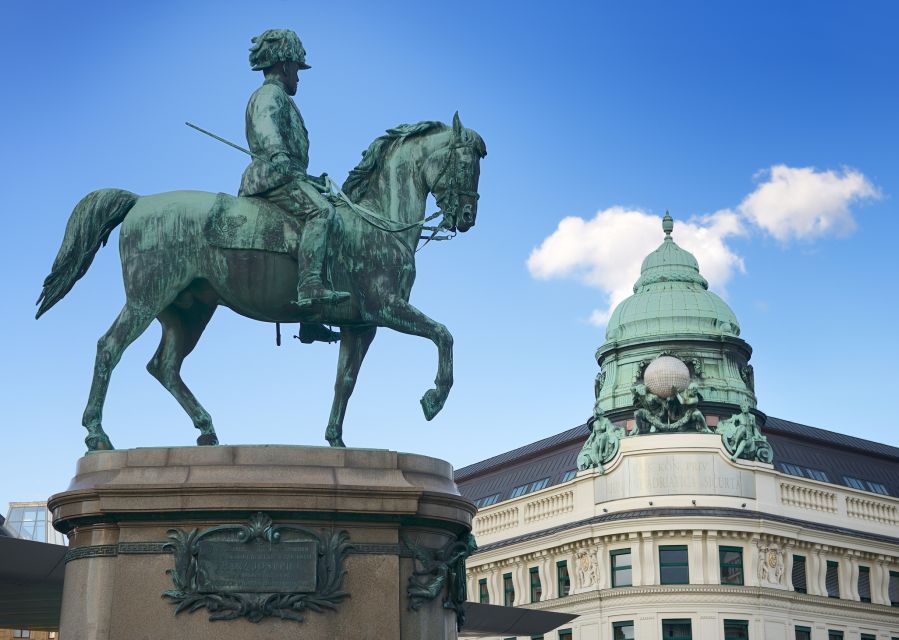
One of the most memorable stops is the only synagogue that survived the Nazi regime. This is the kind of detail that instantly raises the stakes. You are not just hearing that persecution happened. You are standing at a rare physical survival that forces you to confront what was targeted and what was nearly erased.
The tour also explains what happened to Vienna’s large Jewish community when ethnic rivalry and fear seized the city. That connection is important because it keeps the synagogue stop from feeling like a standalone sight. It becomes a marker of resilience in a story filled with exclusion, threat, and violence.
A practical tip for this part: treat it like a living historical site. Keep your tone respectful, and if your guide shares context about why this building is significant, lean into it. The point is not to collect a quick photo and move on. The point is to understand what the survival represents.
If you are traveling with teens or friends who know WWII mainly from headlines, this is the stop that often turns vague facts into something concrete.
More history tours in Vienna:
- Vienna: Time Travel and Magic Vienna History Tour
★ 4.6 · 3,879 reviews - Vienna Historic Center Small Group Walking Tour
★ 5.0 · 1,746 reviews - Time Travel-Magic Vienna History Tour Ticket
★ 4.5 · 1,099 reviews - Skip-the-Line Schonbrunn Palace Guided Tour and Vienna Historical City Tour
★ 3.5 · 940 reviews
The Holocaust memorial stop that makes you slow down
After the synagogue, you visit Vienna’s somber Holocaust memorial. This is where the tour shifts into a slower, more reflective mode. The guide frames the memorial in a way that connects ideology to human loss, and that is usually the moment people feel the most affected.
I appreciate that this part is guided, not just listed. A memorial can turn into background scenery if you walk too fast. With a guide, you tend to get the meaning behind the design and the message, plus a sense of why Vienna still carries this weight in public space.
Based on guests’ feedback, many guides on this tour handle the topic with care and even incorporate thoughtful prompts for the group. That can help you process without feeling like you are being lectured.
As with all history tours focused on genocide, you should plan your day accordingly. If you’re stacking museums and concerts afterward, consider giving yourself a little quiet time. Let the message land before you switch gears.
Postwar Vienna, the division you can still sense in the streets
World War II ended, but Vienna did not immediately return to normal. The tour explains how the city was divided after the war and why that division lasted.
One of the most striking facts in the tour is that Vienna was the only city in the world where the Allied powers managed a zone together. The tour uses that point to explain how political control and competing interests shaped neighborhoods and daily life.
You also see the remains of the divided city and the wider scars from WWII. Even without specific floor plans or museum-style graphics, you can start to understand that city boundaries are never purely cartographic. They affect movement, identity, and what institutions look like when you’re living inside them.
This is the section where I think the walking style really shines. You are learning history through geography, not just through speeches.
Guides, hearing it clearly, and how pacing actually works
The tour runs about 150 minutes. Several guests call out that the distance is doable, with one person estimating around 4 kilometers over the course of the walk. That is long enough to feel like a real tour, but short enough to avoid total fatigue, especially if your guide includes sit-down breaks.
A big recurring praise point is delivery quality. Guests mention guides like Dieter, Stefan, Michael, Wolfgang, Florian, and Charles using strong storytelling, explaining complex links, and building in time for questions. Some guides are also said to use printed photos or visual examples, which is a smart move for this kind of history because it helps you picture what you cannot literally see anymore.
Weather management comes up too. Guides are described as finding warm spots, pausing when conditions get rough, and sometimes getting indoor shelter. Vienna in winter can be sharp, so that kind of flexibility makes the experience feel cared for, not stiff.
Finally, the audio setup is not a small detail. If your group gets ear pieces or headsets, you can hear the guide without constantly stepping aside, craning your neck, or losing the story every time someone walks in front of you.
Price and value: getting more than a quick lecture for $31
At $31 per person for 150 minutes, this tour sits in the budget-friendly zone for a specialist walking experience. You are paying for a live guide, not just a route map, and the subject is complex. Hitler’s early Vienna, the city under bombing, the persecution of the Jewish community, and postwar division do not add up to a simple set of talking points.
What you get for the money is the way the guide stitches those threads together while you are physically moving through central Vienna. That is hard to replicate on your own without missing the connective tissue.
Two practical value notes:
- Entrances to attractions are not included, so do not assume you will walk into every stop.
- The tour is a walking tour, so you are responsible for getting to and from the start area.
Also, the tour likely ends near transit so you can keep moving through the city afterward. One guest specifically mentioned it does not return to the starting point. If your plan depends on being back exactly where you started, factor that in.
Should you book this Vienna WWII Historical Walking Tour?
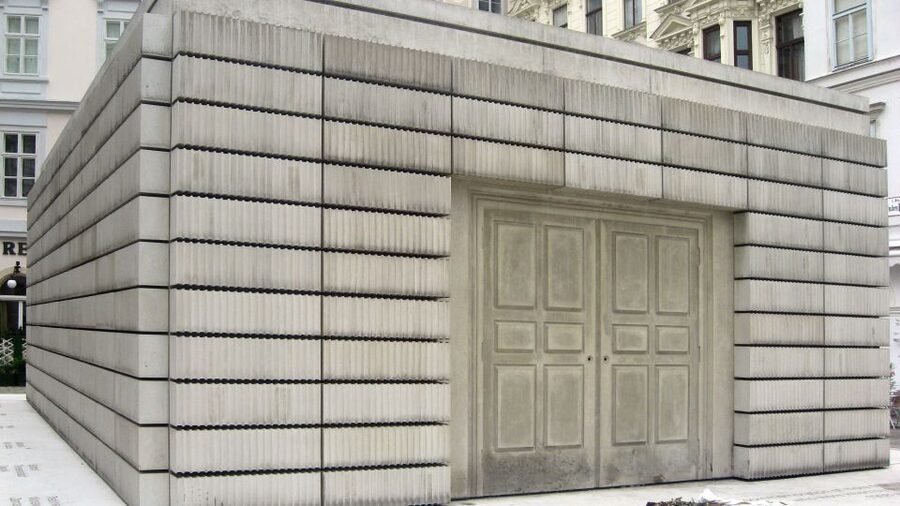
Book it if you want your Vienna history to feel grounded in real places, not just in a lecture hall. The combination of the surviving synagogue, the Holocaust memorial, and the street-level story of bombing and postwar division makes it a strong way to understand why WWII still echoes in Vienna’s public spaces.
Skip it or think twice if you are looking for a light, casual sightseeing walk. This one asks you to pay attention to hatred, persecution, and destruction. Also, if you hate walking in cold or wet weather, you should plan for layers and expect most of the time to be outdoors.
If your goal is to get a clear, human-scale understanding of how Vienna contributed to and then suffered from WWII, this is a worthwhile choice. For $31, you get a guided narrative that helps you read the city with your eyes open, and that is exactly what a good walking tour should do.
FAQ
Where does the tour start?
It starts in front of the Albertina Museum, next to the Opera House. The meeting point is the green umbrella in front of Albrechtsbrunnen, the fountain downstairs at the Albertina Museum (Subway stop: Karlsplatz/Oper).
How long is the Vienna WWII historical walking tour?
The tour lasts 150 minutes, which is about 2.5 hours.
How much does it cost?
The price is $31 per person.
What language is the tour offered in?
The live tour guide speaks English.
What are the main stops on the tour?
You will visit key WWII and Holocaust-related sites, including the only synagogue that survived the Nazi regime and Vienna’s Holocaust memorial, plus areas connected to WWII scars and the postwar division of the city.
Is a live guide included?
Yes. The tour includes a live guide and is a walking tour.
Are entrance fees included?
No. Entrances to attractions are not included.
Is transport included in the tour?
No. This is a walking tour, and transport is not listed as included.
Can I cancel and get a full refund?
Yes. You can cancel up to 24 hours in advance for a full refund.
Is reserve now, pay later available?
Yes. You can reserve your spot and pay later, keeping your travel plans flexible.
Fresh on the site in Vienna
- World War II History Vienna Old Town Private Walking Tour★ 4.8 · 9 reviews
- Vienna/Bratislava: Traunkirchen, Hallstatt & Salzburg Tour★ 4.8 · 53 reviews
- Vienna: Winery and Wine Tasting Tour with a Wine Expert★ 5.0 · 5 reviews
- Vienna: Wine Tasting Tour★ 4.8 · 61 reviews
- Vienna/Bratislava: Day Trip to Hallstatt & Salzburg★ 4.8 · 21 reviews
- Vienna: Wiener Schnitzel and Strudel Cooking Class★ 4.9 · 126 reviews
- Vienna: Waltz into the Ball Season★ 4.7 · 3 reviews
- Vienna: Wine Tasting E-Bike Tour★ 4.9 · 46 reviews
Historical Tours, compared.
Vienna Historic Center Small Group Walking Tour
Read our review →
Skip-the-Line Schonbrunn Palace Guided Tour and Vienna Historical City Tour
Read our review →
Vienna Mozart Concert in Historical Costumes at the Musikverein
Read our review →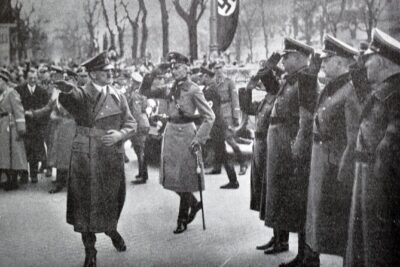
Browse the lists this tour appears in