

REVIEW · WALKING TOURS
Salzburg Introduction Walking Tour
Salzburg makes history walkable, not overwhelming. This 150-minute introduction threads major themes through the UNESCO-listed old town, with a guide who explains why Mozart, salt trade, and the city’s architecture all belong in the same story.
What I like most is the mix of musical heritage and big visual payoffs like Gothic and Baroque architecture. The route also includes classic squares and churches, so you get context where it matters, not just a checklist of stops. One possible drawback is price, since a reviewer felt the cost was high if the guide did not match the level they expected.
In This Review
- Key things that make this tour worth your time
- Why Salzburg’s UNESCO old town makes a guided primer smart
- Meeting on Linzergasse 39 and getting your bearings fast
- Mirabellgarten, where stories start with the setting
- Mozart Geburtshaus: music, context, and the one thing not included
- Alter Markt to Residenzplatz: squares that explain how power worked
- Domplatz: reading Gothic and Baroque layers in the open air
- St Peter’s Abbey: the calmer pause that rounds out the story
- The guides behind the scenes, and why it affects your real value
- Price and what $176 for 2.5 hours really buys you
- Who this Salzburg introduction walking tour suits best
- Should you book this Salzburg Introduction Walking Tour?
- FAQ
- How long is the Salzburg Introduction Walking Tour?
- What does the tour cost?
- Where do I meet the guide?
- Is the tour guided in English?
- Which stops are included during the walk?
- Is admission to Mozart’s residence included?
- Is this tour private or small group?
- What is the cancellation policy?
Key things that make this tour worth your time
- Historian-led explanations that turn squares and churches into understandable chapters
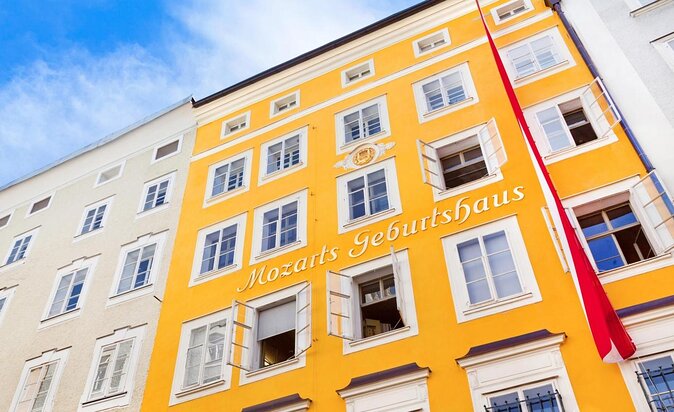
- Mozart Geburtshaus focus on meaning, with no Mozart residence ticket included
- Gothic and Baroque architecture in one walking loop, not a scattered plan
- Mirabellgarten as a story-setting, tying music, culture, and Salzburg atmosphere together
- Guides with serious credentials, and real skill answering group questions
- 150 minutes that work as a first Salzburg orientation, so you can plan the rest of your visit
Why Salzburg’s UNESCO old town makes a guided primer smart
Salzburg’s city center has been on the UNESCO World Heritage List since 1997, and that matters here because the guide helps you read what you see. You are not just passing buildings. You are learning how the city’s identity formed across centuries, from medieval salt commerce to medical innovations, to the music Salzburg became famous for.
And yes, Mozart is part of the story, but this tour frames his birthplace as one chapter in a bigger cultural machine. You also get the film connection to The Sound of Music as part of the way modern visitors experience the city, not as a side note.
The timing is right for an introduction. A 150-minute walk gives you enough coverage to feel oriented, without chewing up an entire day before you even know where to return for longer stops on your own.
More Walking Tours in Salzburg
- Salzburg 2.5-Hour Walking Tour: Mozart, Old Town & More
★ 4.2 · 987 reviews - Salzburg: Old Town, Mozart, & Mirabell Gardens Walking Tour
★ 4.8 · 461 reviews - Salzburg Oldtown: Sightseeing Walking Tour with Licensed Local Guide
★ 5.0 · 392 reviews
Meeting on Linzergasse 39 and getting your bearings fast
You meet outside Coffeehouse Salzburg on Linzergasse 39 (Linzer G. 39). That is helpful because it places you at the start of the old town flow, where you can begin mapping Salzburg in your head right away.
The tour stays focused and walkable, with scheduled stops rather than open-ended wandering. That matters when you are trying to get value quickly, especially if you only have one morning or one afternoon in town.
Wear comfortable shoes. You are walking through a historic center where the ground can feel uneven in places, and the route is meant for steady progress with stops for explanation. If you show up ready to look up at façades and pay attention to what the guide points out, the whole experience becomes easier to remember.
Mirabellgarten, where stories start with the setting
Mirabellgarten is your first guided stop, and it is a strong choice because gardens give you a reset from streets and buildings. This is where the tour’s “Salzburg as a lived-in stage” approach makes sense. You are not only seeing an attraction. You are getting a sense of why Salzburg’s visual style fits music, ceremony, and the film image people carry with them.
From here, the guide can connect the look and feel of Salzburg across time. That connection is the whole point of an introduction tour. You learn what to notice so later, when you walk past the same kind of details on your own, you already know what they mean.
If you are someone who usually rushes photo spots, this stop is useful because it slows you down in a good way. You learn to look at layout and atmosphere, not just snap pictures and move on.
One small consideration: gardens can feel subject to weather and lighting. If you want the most comfortable experience, bring layers and check conditions before you go.
Mozart Geburtshaus: music, context, and the one thing not included
Mozart Geburtshaus is next, and it is where the tour makes its musical promises concrete. The guide’s job here is to help you understand how a birthplace becomes a symbol, and why Salzburg treats Mozart as more than a famous name on a postcard.
You get a guided look tied to Salzburg’s musical heritage. That matters because Mozart is often presented as isolated genius. Here, you are taught to see him inside a city with institutions, patrons, and a long tradition of performance.
Important detail for your planning: Mozart residence admission tickets are not included. So when you arrive, keep expectations realistic. You can still get the context and significance from the guided stop, but if you want to go inside specific rooms, you would need to arrange tickets separately.
If you are traveling with a strong Mozart fan, you should decide early whether you want to add the interior visit to your day. Otherwise, you might spend time expecting something that is not part of the guided portion.
Still the same country, a very different afternoon:
- The Original Sound of Music Tour in Salzburg
★ 4.5 · 6,129 reviews - Salzburg: Original Sound of Music Tour
★ 4.8 · 5,059 reviews - From Salzburg: Half-Day Tour to Hallstatt
★ 4.6 · 3,596 reviews - Salzburg: Mozart Concert at Mirabell Palace
★ 4.8 · 3,498 reviews
Alter Markt to Residenzplatz: squares that explain how power worked
The tour then moves into major squares, starting with Alter Markt. Market spaces like this are ideal for history talk because they capture everyday life and economic momentum. In Salzburg, that connects well to the tour’s themes of medieval salt commerce and how wealth shaped the city.
From there, you head to Residenzplatz, another anchor point in the old town. Residenzplatz is one of those places where architecture and layout make the social hierarchy feel real. The guide’s explanations help you see why the city looks the way it does, and why the public spaces were designed as much for display and authority as they were for movement.
This is also where the tour’s “listen and look” style really pays off. The guide pauses you at points where the buildings and details stop being background and start being evidence. If you like learning by observation, this part will feel efficient and satisfying.
A practical note: squares can get busy, especially in peak seasons. The guide’s pacing and timing help, but you may still want to be patient with foot traffic while you focus on the explanation.
Domplatz: reading Gothic and Baroque layers in the open air
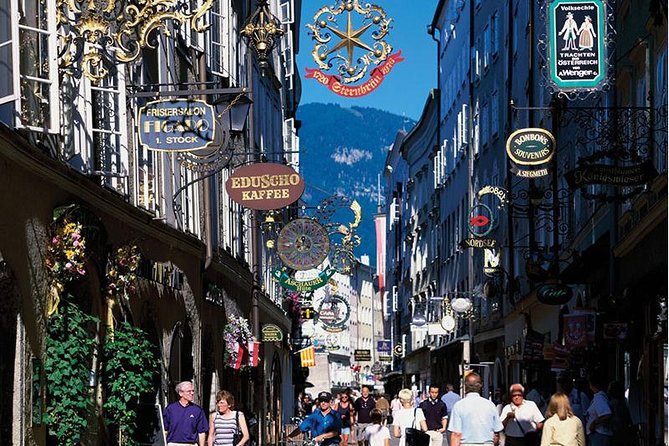
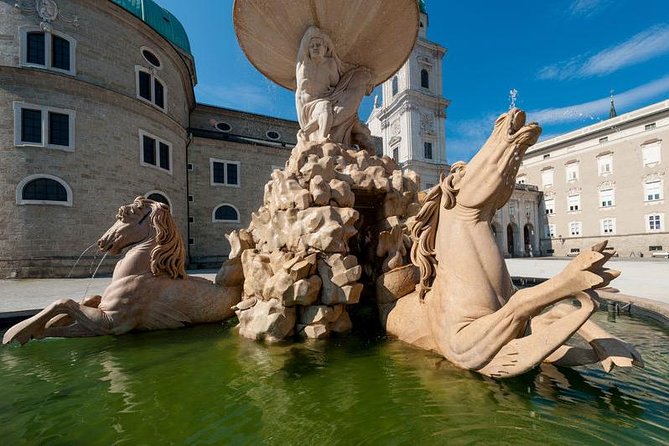
Domplatz brings you into the heart of Salzburg’s architectural identity. This stop is a key part of the tour’s focus on Gothic and Baroque architecture, because it is the kind of place where stylistic layers become obvious once someone points them out.
Gothic and Baroque might sound like art history terms, but the guide helps you translate them into something you can see quickly. You start noticing proportions, ornament, and how light plays on stone. Even if you are not an architecture expert, you will come away with an eye for differences instead of just one big “old building” impression.
This is also a strong moment for questions. The guide is set up for discussion, and if your group asks about music, religion, politics, or why Salzburg looks ceremonial, Domplatz is where the explanation tends to click.
If you prefer a quieter pace, Domplatz is the place to take a breath. It is an open area, but it can feel like a hub. Bring your attention back to the details the guide highlights, and it will feel purposeful instead of crowded.
St Peter’s Abbey: the calmer pause that rounds out the story
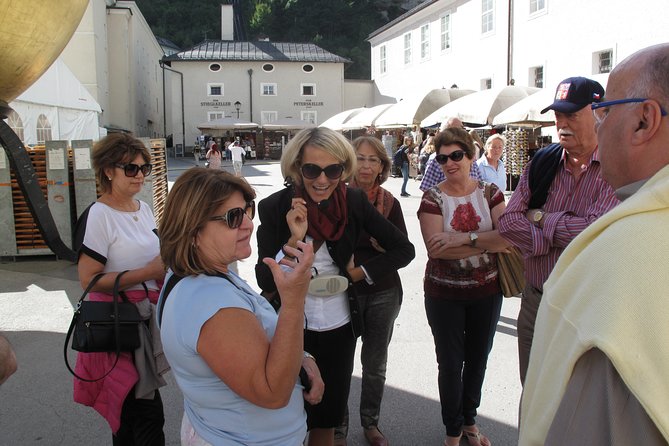
St Peter’s Abbey is your later guided stop, and it changes the mood of the walk in a good way. After squares and architecture-heavy areas, the abbey stop adds a different tone. It helps you understand Salzburg not only as a stage for music and commerce, but also as a place shaped by religious life and scholarship.
This is where the tour’s academic credentials become more than a marketing point. The guide can connect how institutions influenced art, education, and cultural life. That makes the earlier stops feel more coherent.
You might find yourself appreciating the city differently by this point. The tour has already taught you to look at buildings as symbols. St Peter’s Abbey helps you absorb that lesson in a slower, steadier way.
If you are taking photos, be mindful that abbeys and church areas often have rules and norms. Even when you are allowed to take pictures, it is best to keep your movements respectful and your attention on the guide’s explanation.
The guides behind the scenes, and why it affects your real value
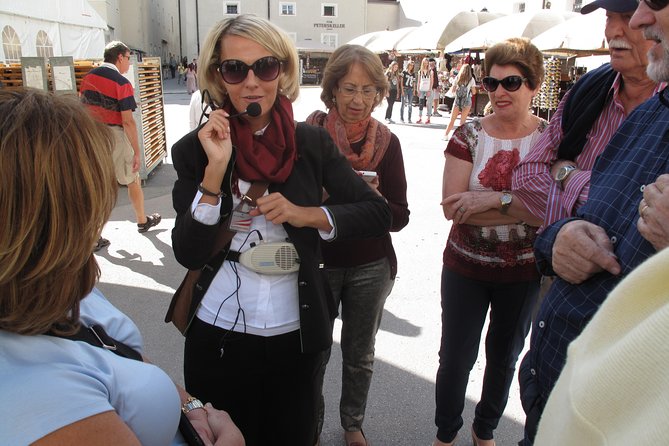
This tour stands or falls on the guide, and the provider emphasizes that the guides come with serious backgrounds, including professors, doctoral students, historians, journalists, art critics, and published authors. That credential mix matters because the tour is not only about what you see, it is about what you should notice.
One review specifically praised Liza by name, noting that she met the group exactly as promised and had a hometown feel for Salzburg. The same feedback highlighted how she stopped the group to explain histories behind squares, churches, shops, and buildings. That is the kind of teaching that turns a walk into an education you can reuse the next day.
Another review said the guide was punctual, friendly, and genuinely excited, and that the morning stroll through the historical old town felt both informative and fun. That kind of energy matters, because 150 minutes is long enough to get bored if the guide is only reciting facts.
Now, the balanced part: one review criticized the price as too high and felt the guide’s expertise did not match what they expected. You cannot control who you get when booking. My practical advice is to treat this tour as a premium introduction. If you want deep explanations and discussion, it is more likely to feel worth it. If you mostly want quick sight-seeing with minimal talking, you may feel the cost more strongly.
Price and what $176 for 2.5 hours really buys you

At $176 per person for a 150-minute walking tour, this is not a budget sightseeing option. The value depends on what you want from Salzburg.
What you are paying for is an expert historian guide leading a walk through the historical center, with guided stops at key sites. The tour is not only taking you to places. It is interpreting why those places matter, including Salzburg’s musical heritage, its architectural styles, and broader historic themes like salt commerce and medical innovations.
You should also factor in what is not included. Mozart residence admission tickets are not included. If you end up wanting that interior experience, plan for extra time and cost beyond the tour itself.
So when does it feel like a smart buy? If you are short on time and want to understand the city quickly, a guide can save you from wandering and guessing. If you love architecture and music, this kind of narrative walk tends to stick. If you are the type who prefers to roam with a self-guided audio app, the price may feel steep because you would be paying mainly for someone else’s explanations.
My rule of thumb: book it if you want your eyes guided, not just your feet moved.
Who this Salzburg introduction walking tour suits best
This tour fits best if you are:
- A first-time Salzburg visitor who wants an orientation without doing museum heavy lifting
- A music fan who wants Mozart placed in a wider cultural story
- An architecture watcher who likes Gothic and Baroque landmarks explained in plain terms
- A traveler who enjoys Q and A style learning while walking through real public spaces
- Someone traveling in private or small group settings where discussion feels natural
It may be less ideal if you want mostly quiet sightseeing and minimal interpretation. Also, because Mozart residence entry is not included, it is best to treat the birthplace stop as guided context unless you plan to add tickets separately.
Should you book this Salzburg Introduction Walking Tour?
I would book it if you want a guided, historian-led way to understand Salzburg’s center fast, especially if you care about how the city connects Mozart, architecture, and the culture around him. The stop choices, from Mirabellgarten to Domplatz and St Peter’s Abbey, are strong for seeing Salzburg as a whole, not as disconnected attractions.
Skip it or reconsider if you are mainly after low-cost photo stops, or if you are happy to research on your own. At this price point, you are paying for expertise and discussion, so you should make sure you want that kind of experience.
If you do book, go in with curiosity. Bring a couple of questions about how Salzburg became a musical and cultural hotspot, and ask the guide to point out what to look for when you return later on your own. That is how you turn a 150-minute walk into a visit that lasts longer than the tour itself.
FAQ
How long is the Salzburg Introduction Walking Tour?
The tour lasts 150 minutes, about 2.5 hours.
What does the tour cost?
The price is $176 per person.
Where do I meet the guide?
Meet outside Coffeehouse Salzburg at Linzergasse 39.
Is the tour guided in English?
Yes, the tour guide provides the experience in English.
Which stops are included during the walk?
The guided stops include Mirabellgarten, Mozart Geburtshaus, Alter Markt, Residenzplatz, Domplatz, and St Peter’s Abbey, plus the walking tour around Salzburg’s historical center.
Is admission to Mozart’s residence included?
No. Mozart residence admission tickets are not included.
Is this tour private or small group?
Yes. Private or small groups are available.
What is the cancellation policy?
Free cancellation is available up to 24 hours in advance for a full refund.
Fresh on the site in Salzburg
- Wachau, Melk Abbey & Salzburg (Sound of Music & UNESCO)★ 5.0 · 23 reviews
- Private Werfen Ice Cave and Golling Waterfall from Salzburg★ 5.0 · 15 reviews
- Viator Exclusive: ‘The Sound of Music’ Private Tour★ 5.0 · 28 reviews
- Werfen World’s Largest Ice Caves and Golling Waterfalls Tour★ 4.5 · 7 reviews
- Private transfer from Salzburg to Vienna, 2 hours for sightseeing★ 4.5 · 7 reviews
- Private Transfer from Salzburg to Munich with 2 hours for sightseeing★ 5.0 · 8 reviews
- Private Austrian Food Tasting Tour in Salzburg’s Old Town★ 4.5 · 3 reviews
- Salzburg Marionette Theater: The Magic Flute SHORT version (1 hour)★ 5.0 · 11 reviews
Walking Tours, compared.
Guided Walking Tour of City Center Highlights
Read our review →
Guided Walking Tour of City Highlights & Hidden Gems
Read our review →
Vienna Historic Center Small Group Walking Tour
Read our review →
Browse the lists this tour appears in