
REVIEW · CITY TOURS
Terrible crimes in Vienna, hidden secrets of the inner city
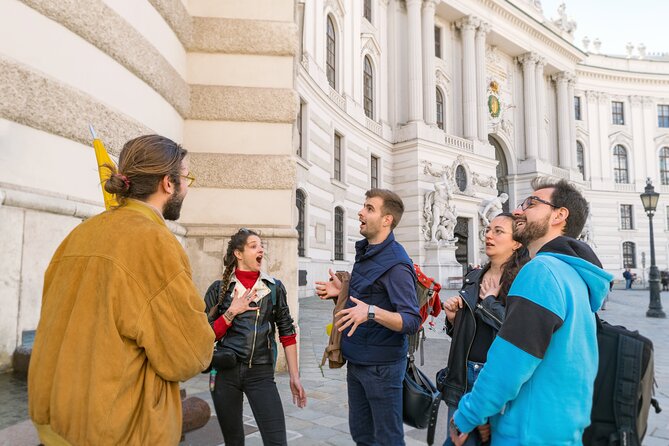
Vienna’s fancy face has a dark side. This 2-hour walk turns ordinary inner-city corners into crime scenes, tying lesser-known murders and punishments to real buildings you can actually see.
I love the way the stories are packaged in short stops, so the walk stays lively instead of turning into a lecture. I also like that you get a complimentary smartphone audio guide, which helps you keep the details straight as the route moves on.
One thing to consider: the subject matter is heavy. Several cases involve torture and gruesome deaths, so decide in advance if true crime is your comfort zone, not just your curiosity.
In This Review
- Key highlights you will feel on the walk
- Why Vienna’s crimes make the city feel real
- Price and logistics, and why it feels like good value
- How the route works from Albertinaplatz to Rauhensteingasse
- Stop-by-stop: Capuchin dungeons, spy intrigue, and punishments you can still picture
- Stop 1: Tegetthoffstraße 2 and the Capuchin monastery dungeon
- Stop 2: Trattnerhof and the Jaroszynski murder case
- Stop 3: Augustinerstraße 12 and Palais Bathory, the blood countess story
- Stop 4: Graben and Kohlmarkt, Demel area and the Lucona affair
- Stop 5: Herrengasse at Palais Ferstel, Zu den Fünf Morden
- Stop 6: Herrengasse and the Hotel Klomser, Colonel Redl
- Stop 7: Molker Bastei and the Anna Gaugisch murder
- Stop 8: Am Hof and the 1848 war minister lynching
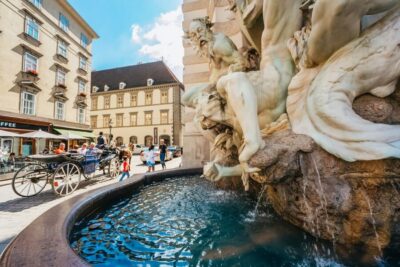
- Stop 9: Hannaken-Brunnen and the Hannakenkönig surgeon scheme
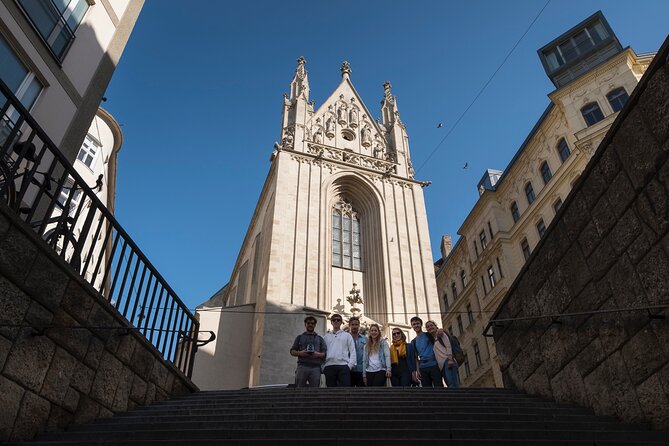
- Stop 10: Maria Am Gestade and the Zahlheim case on the city wall
- Stop 11: Hoher Markt and Thekla Riener’s torture
- Stop 12: St. Stephen’s Cathedral area and the bakers’ punishment legend
- Stop 13: Steffl and the executioner’s dungeon, plus the Plainacher witch case
- Stop 14: Himmelpfortgasse and the nun allegedly walled in
- What makes this tour special, beyond the crime theme
- Who should book, and who should skip
- Should you book this Vienna inner-city crime walk?
- FAQ
- How long is the tour?
- What is the tour price per person?
- What language is the tour offered in?
- Do I need a physical ticket?
- Is there an audio guide included?
- How big is the group?
- Are the stops admission ticket free?
- Where does the tour start and end?
- What if the weather is bad?
- What is the cancellation deadline?
Key highlights you will feel on the walk
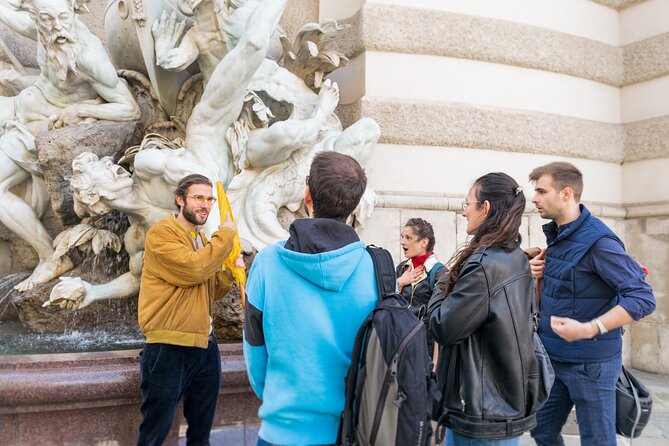
- A true-crime tour in central Vienna that uses landmark streets as your map of the city’s darker moments
- Complimentary smartphone audio guide for extra context while you walk
- Quick, efficient pacing with stops that are often around 5 to 15 minutes
- English-language storytelling with a small group size, capped at 20
- A route that reaches places many visitors skip, including the edge of the city wall area
Why Vienna’s crimes make the city feel real
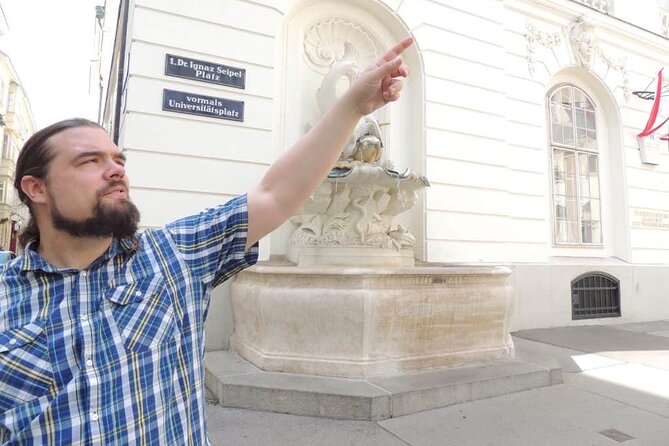
This is the kind of tour that makes you look at familiar streets like they are new. One minute you’re beside a refined façade, the next you’re hearing why people were locked up, executed, punished, or hunted, all in the same tight inner-city grid.
What I like most is the time-spanning way the stories connect. You move from medieval punishment and monastery imprisonment to 1800s crimes and even 1900s espionage. The city doesn’t feel like a museum. It feels like a place where human behavior, greed, jealousy, and power really mattered.
The tone is adult and straightforward. Some scenes are unpleasant, but the goal is understanding, not shock for shock’s sake.
More City Tours in Vienna
- Vienna: Guided Walking Tour of City Center Highlights
★ 4.7 · 4,989 reviews - Vienna: City Cruise with Optional Lunch
★ 3.4 · 3,982 reviews - Vienna: City Cruise
★ 3.3 · 2,978 reviews
Price and logistics, and why it feels like good value
At about $46.13 per person for roughly 2 hours, you are paying for a guided narrative route plus a take-along smartphone audio guide. That combo is what makes this worth it versus reading about crimes later on your own.
You also get a mobile ticket, and the tour runs in English. A small group, up to 20 people, matters here because the stops are short and you want the guide to actually land the story at each location.
One more value point: the stops listed are marked as admission ticket free, which keeps the tour from turning into a paywall crawl. You still do the “walk and look” work, but you are not layering extra entry fees on top.
How the route works from Albertinaplatz to Rauhensteingasse
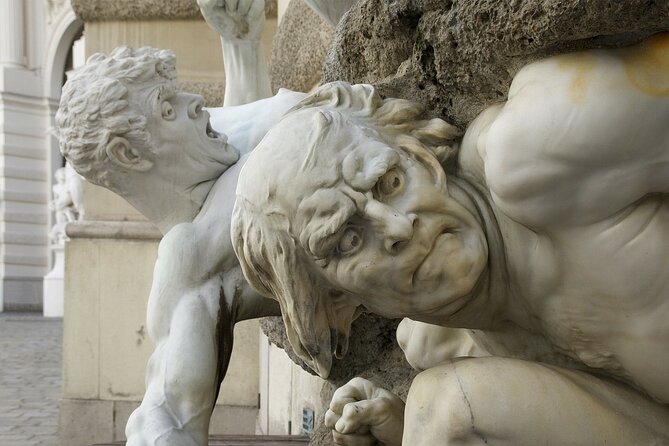
You start around Helmut-Zilk-Platz / Albertinaplatz 2 to 3 (1010 Wien), and you finish near Rauhensteingasse (1010 Wien). It’s a compact central loop, built for an easy, steady walking pace rather than long detours.
Each stop is a focused hit: you spend about 5 to 15 minutes at key points, then move on. That timing is smart for a theme like this, because the stories stay memorable instead of blending together.
The tour also runs with the practical assumption of good weather. Since it’s outdoors in the center, dress for street walking and plan for some standing in place at stops.
Stop-by-stop: Capuchin dungeons, spy intrigue, and punishments you can still picture
Below is what you can expect at each location, and what makes it meaningful. Think of these as story anchors. You’re not just passing through streets, you’re placing each crime inside a real address and a real setting.
Still the same country, a very different afternoon:
- Vienna: Vivaldi’s Four Seasons Concert in Karlskirche
★ 4.7 · 14,951 reviews - Vienna: Spanish Riding School Training
★ 3.9 · 9,281 reviews - Vienna: Skip-the-cashier-desk-line Giant Ferris Wheel Ride
★ 4.5 · 7,859 reviews - Vienna: Schönbrunn Palace & Gardens Skip-the-Line Tour
★ 4.7 · 7,739 reviews
Stop 1: Tegetthoffstraße 2 and the Capuchin monastery dungeon
This is where the tour leans into imprisonment as control. The guide explains the Capuchin monastery dungeon tied to Father Innocentius, with monks reportedly locked up for extremely long stretches, sometimes for reasons the story frames as absurd, like unauthorized afternoon walks or monastery-related misconduct.
You also hear how Emperor Joseph II reportedly closed the dungeon and transferred Father Innocentius to Lviv, and how he later became Protestant, Freemason, and an advisor connected to the tsar. It’s a reminder that power structures rarely stay tidy.
Stop 2: Trattnerhof and the Jaroszynski murder case
Here the tour shifts toward the messier side of crime and reputation. The story focuses on the Jaroszynski case, especially how the actress Therese Krones got pulled into a murder scandal and suffered career fallout.
You also get a key nuance: rumors blame extravagant desires, but the tour’s version points to debt and gambling addiction as the real driver. That contrast is useful, because it shows how myths grow around public cases.
Stop 3: Augustinerstraße 12 and Palais Bathory, the blood countess story
Next comes the most famous name on the route: Elisabeth Bathory, known as the blood countess. The tour presents her as either a genuinely dangerous serial killer or a target in an alleged violent intrigue.
You hear the legend about victims and blood used for beauty and youth, including the striking claim of 600-plus alleged murders. Even if you approach it with skepticism, the framing teaches you how stories spread and harden around fear and rumor.
Stop 4: Graben and Kohlmarkt, Demel area and the Lucona affair
This section moves into 1970s-era crime and insurance fraud. The guide places the Lucona affair planning around the Demel area, involving Udo Proksch, an overinsured freighter set up for Asia, and an explosive charge.
The tour connects it to mass murder and long investigation time, including the idea that Proksch’s many relationships made the case harder to untangle. It’s crime as bureaucracy and money as motive.
Stop 5: Herrengasse at Palais Ferstel, Zu den Fünf Morden
Now you’re back in medieval Vienna, right next to Palais Ferstel, but the site is tied to a darker former address: Zu den Fünf Morden. The story describes an infamous mass murder, followed by an execution that the tour says involved impalement.
It’s particularly grim because the deed includes the killing of a seven-year-old, and the guide explains that the executioner was not experienced for that specific method, making it take extremely long. This stop hits the theme of punishment-as-performance.
Stop 6: Herrengasse and the Hotel Klomser, Colonel Redl
Opposite Palais Ferstel, the tour turns from public punishment to secret service failure. You hear about the former Hotel Klomser and the place where Colonel Redl’s suicide ended a major spy affair tied to the monarchy.
The guide also connects the affair to wider historical consequences, including claims that it could have been a factor in the build-up to World War I, and that it exposed weaknesses in an underfunded secret service system called Evidenzbureau.
Stop 7: Molker Bastei and the Anna Gaugisch murder
Molker Bastei brings the narrative closer to the river. The tour covers the 1861 case of Anna Gaugisch, allegedly dismembered by her boyfriend Raimund Lewisch, with some remains reportedly found in the Danube and others linked to this area.
The story explains the motive as removing an inconvenient partner who was pregnant, and it also ties in local labor figures from the blacksmith world. It’s a grim example of how everyday workplaces can intersect with violence.
Stop 8: Am Hof and the 1848 war minister lynching
At Am Hof, the tour moves into political violence during revolution. You hear about the lynching of war minister Theodor Baillet de Latour in 1848, described as one of the rare cases of political killing in Vienna.
The guide frames it as linked to the beginning of the Wiener October Revolution, and mentions looting connected to a civil arsenal in the same area. This stop helps you see crime and politics as intertwined, not separate categories.
Stop 9: Hannaken-Brunnen and the Hannakenkönig surgeon scheme
This one is almost unsettlingly practical. The tour introduces the Hannakenkönig, a surgeon who is said to have created injuries, like broken bones, to improve business by setting trip hazards that led to patients needing treatment.
The fountain is also explained as a visual story of two men carrying an injured comrade to the surgeon. The Hannaken are described as a minority group from Moravia often seeking work in Vienna, adding a social layer to the scam.
Stop 10: Maria Am Gestade and the Zahlheim case on the city wall
Here the theme becomes punishment with physical cruelty baked in. The guide points to part of the city wall connected with the Zahlheim case and describes the last wheeling in Vienna.
You hear that the method was extremely cruel and later became less common in many countries, and that the case happened during Joseph II, who usually rejected the death penalty but reportedly made an exception based on the facts.
Stop 11: Hoher Markt and Thekla Riener’s torture
At Hoher Markt, the tour centers on Thekla Riener, played by her husband Anton Grünborn, described as using instruments associated with the courthouse. The story says she was expected to betray a lover, but that lover did not exist.
The guide connects the climax of the case to jealousy and imaginary relationships, and it also includes the devastating aftermath, with Thekla’s parents allegedly losing their minds. This stop is about obsession turning into irreversible harm.
Stop 12: St. Stephen’s Cathedral area and the bakers’ punishment legend
The tour uses St. Stephen’s Cathedral area to talk about medieval quality control as brutality. It mentions the legend of the city’s standard bread loaf used to police baking, framing it as a symbol of harsh standards.
The tour’s “true” version includes a punishment called the baptism of bakers, with bad bakers put in a cage and dipped into the Danube. You also get a comparison idea to similar punishments described in English-speaking countries.
Stop 13: Steffl and the executioner’s dungeon, plus the Plainacher witch case
Next is the executioner connection at Steffl, tied to the Malefizspitzbubenhaus, described as the executioner’s apartment and dungeon. The tour claims this was the only witch burned in Vienna, involving a woman named Plainacher.
You hear about torture tied to accusations involving an epileptic granddaughter and demons, plus the claim that witch persecution was not common in Vienna, so the city judge had to avoid public pressure. It’s a lesson in how fear and authority can clash with public opinion.
Stop 14: Himmelpfortgasse and the nun allegedly walled in
The final stop is at Himmelpfortgasse, tied to a monastery where a nun was reportedly walled in during 1319. The story says she refused to give up a lover her father hated, turning the case into a Vienna version of a Romeo and Juliet-style conflict.
The tour wraps by describing the mayor and his archenemy as families on opposing sides, and the decision that condemns her to a life as a nun. It closes the loop on romance, punishment, and family power.
What makes this tour special, beyond the crime theme
The strongest part is how the guide stitches crimes to place. You finish with a mental map of Vienna that is more than streets and domes, it’s human choices and consequences in specific settings.
It’s also well paced for people who get restless. The route is tight, the stops are short, and the story momentum keeps you moving through the center. In the feedback I’m reflecting on, the transitions between hotspots land in a way that makes you curious about the next location instead of dreading the next long explanation.
Finally, the audio guide helps you keep up. Even if you miss a detail in the first pass, you can revisit it through your phone while the location is still fresh.
Who should book, and who should skip
This tour suits you if you like history that has teeth. If you enjoy true crime as a lens for understanding power, punishment, rumor, and motive, you will probably find the connections satisfying.
It might not be for you if you want light entertainment, or if graphic stories stress you out. The material includes torture, executions, and murders, so it’s best approached with awareness, not wishful thinking.
If you enjoy walking in the center but want something different from standard sightseeing, this delivers. It goes beneath the gilding and focuses on the darker side of a city that can look polite at first glance.
Should you book this Vienna inner-city crime walk?
I’d book it if you want a compact, English guided experience that uses real addresses as anchors for true-crime storytelling. The combination of a 2-hour walking route, small group size, and a complimentary smartphone audio guide gives solid value, especially with stops that are marked admission ticket free.
I’d skip it if the subject matter feels like too much. Also skip it if you prefer purely architectural history with no murder and punishment focus.
If you are the kind of person who loves a city that surprises you, this one is built for that.
FAQ
How long is the tour?
It lasts about 2 hours.
What is the tour price per person?
The price is $46.13 per person.
What language is the tour offered in?
The tour is offered in English.
Do I need a physical ticket?
No. It’s a mobile ticket.
Is there an audio guide included?
Yes. You get a complimentary smartphone audio guide.
How big is the group?
The tour has a maximum of 20 travelers.
Are the stops admission ticket free?
The listed stops are marked as admission ticket free.
Where does the tour start and end?
It starts at Helmut-Zilk-Platz, Albertinaplatz 2 to 3, 1010 Wien, and ends at Rauhensteingasse, 1010 Wien.
What if the weather is bad?
The tour requires good weather. If it’s canceled due to poor weather, you are offered a different date or a full refund.
What is the cancellation deadline?
Free cancellation is available if you cancel up to 24 hours in advance for a full refund.
Fresh on the site in Vienna
- World War II History Vienna Old Town Private Walking Tour★ 4.8 · 9 reviews
- Vienna/Bratislava: Traunkirchen, Hallstatt & Salzburg Tour★ 4.8 · 53 reviews
- Vienna: Winery and Wine Tasting Tour with a Wine Expert★ 5.0 · 5 reviews
- Vienna/Bratislava: Day Trip to Hallstatt & Salzburg★ 4.8 · 21 reviews
- Vienna: Wine Tasting Tour★ 4.8 · 61 reviews
- Vienna: Wiener Schnitzel and Strudel Cooking Class★ 4.9 · 126 reviews
- Vienna: Waltz into the Ball Season★ 4.7 · 3 reviews
- Vienna: Wine Tasting E-Bike Tour★ 4.9 · 46 reviews
City Tours, compared.
Guided Walking Tour of City Center Highlights
Read our review →

Guided Walking Tour of City Highlights & Hidden Gems
Read our review →
City Sightseeing Tour in an Electro Vintage Car
Read our review →
Skip-the-Line Schonbrunn Palace Guided Tour and Vienna Historical City Tour
Read our review →

Vienna City Card: Public Transport incl. 200+ discounts
Read our review →Browse the lists this tour appears in