
REVIEW · CITY TOURS
Vienna Guided City Tour in English
Vienna clicks into place fast on this walk. I love the small group size and how the route strings major sights into one easy flow. I also like the clear storytelling that connects places like Mozarthaus, Stephansdom, and the Hofburg without making you work for it. One watch-out: it is a short, street-level tour, so you get quick looks, not deep museum time.
I like that the guide, Nicoleta, keeps the group feeling together, with solid volume so you do not miss the key points. You also get a mobile ticket, plus a printed Vienna Information Package and a city map to help you plan what to do next. If you want lots of inside-the-buildings time, you may need to pair this tour with separate tickets later.
In This Review
- Key highlights you should care about
- Why $46.96 for a 2-hour orientation can be a smart buy
- Mozarthaus Vienna, and why the Mozart start matters
- Stephansdom and the Pestsaule Plague Column, two Vienna lessons in one walk
- Peterskirche plus Julius Meinl Am Graben: Vienna’s baroque look and coffeehouse soul
- Palais Ferstel and Café Central vibes, then a Scottish twist in Freyung
- Votivkirche, Beethoven Museum, and Universitat Wien: genius and storytelling in three quick beats
- Burgtheater, Rathaus, and the Parliament: the Ring Street power corridor
- Volksgarten roses and the Hofburg finish in Heroes Square
- Who should book this Vienna guided city tour, and who might skip it
- FAQ
- Is the Vienna Guided City Tour in English?
- How long is the guided tour?
- How many people are in the group?
- Where does the tour start and where does it end?
- Are entrance fees included?
- Can I cancel and get a full refund?
Key highlights you should care about
- Mozarthaus Vienna start, at Mozart’s Figaro House area: a strong first anchor for the whole walk
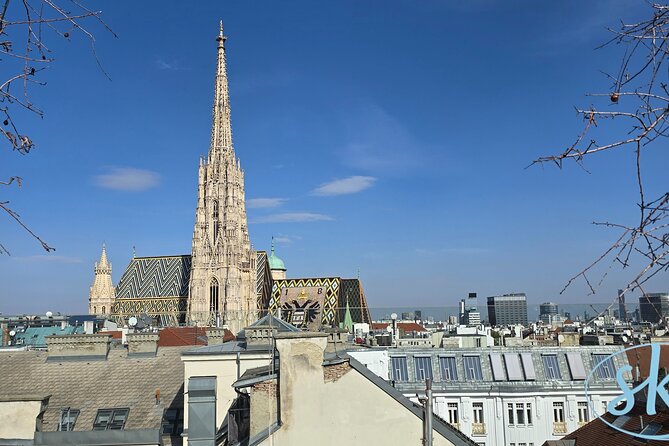
- Stephansdom in a tight window: you get the why behind the gothic cathedral look
- Pestsaule Plague Column in the Graben: Baroque style explained where it actually sits
- Coffee-house culture stops, not coffee-shop marketing: Julius Meinl Am Graben and tips for where to go next
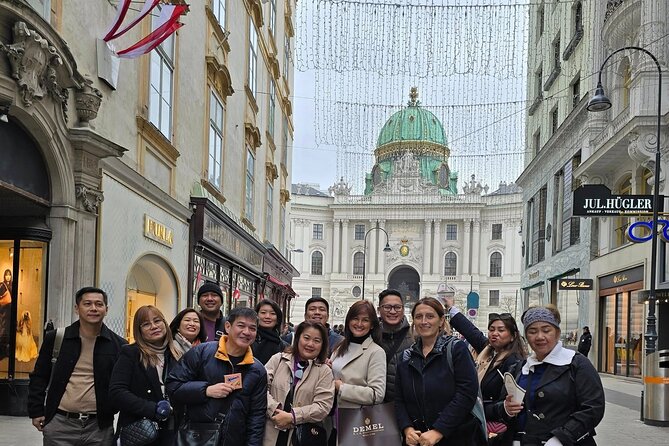
- Finish at the Hofburg and Heroes Square: a logical end point for continuing your day
Why $46.96 for a 2-hour orientation can be a smart buy
At $46.96 per person, this is not the cheapest thing in Vienna. But you are paying for an organized route, an English-speaking guide, and a plan that takes you through central landmarks in about 2 hours. For a first trip, that is often better value than wandering for hours and only later realizing what you missed.
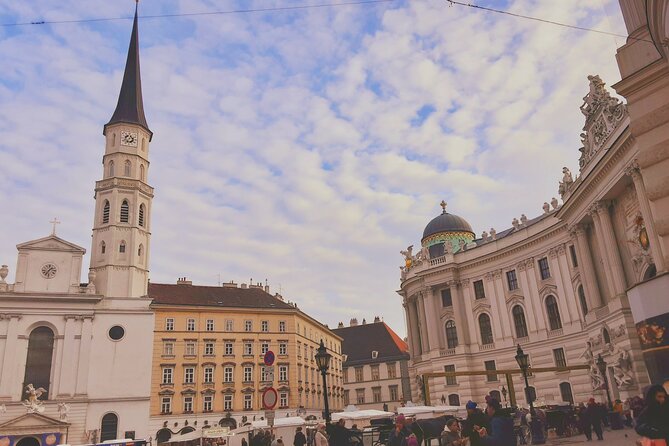
The group stays small, up to 15, which matters in Vienna where many sights are crowded and loud. With a small group, questions feel easier and you are more likely to hear the key facts. Booking timing also tells you something. This tour is often reserved about a month ahead, so I suggest planning earlier if your dates are busy.
What you really get is a mix of big-name stops and story-building details. You learn what to look for, then you can explore on your own after the tour with more confidence. That is the best kind of guided tour, short and useful, not long and exhausting.
More City Tours in Vienna
- Vienna: Guided Walking Tour of City Center Highlights
★ 4.7 · 4,989 reviews - Vienna: City Cruise with Optional Lunch
★ 3.4 · 3,982 reviews - Vienna: City Cruise
★ 3.3 · 2,978 reviews
Mozarthaus Vienna, and why the Mozart start matters
The tour begins at Mozarthaus Vienna, Domgasse 5. This is where you start with Mozart’s world instead of starting with a random landmark. The stop highlights the Mozart house and Museum in Vienna, where Mozart spent about two years, including the so-called Figaro House.
In a practical sense, this opening works because it sets context. When the tour later mentions courts, theaters, churches, and state buildings, you already understand Vienna as a place powered by culture and patronage, not just postcard beauty.
The time here is brief, about five minutes. That is a good thing if you hate rushing but love structure. It is a consideration if you want a slow read of museum exhibits. Think of it as a spark, not a full visit.
Stephansdom and the Pestsaule Plague Column, two Vienna lessons in one walk
Next up is Stephansdom, the iconic gothic cathedral tied to the city’s medieval core. Expect a quick but focused orientation, around ten minutes, on what makes this church feel uniquely Vienna. If you are the type who normally just takes photos, this is where you start seeing shapes and styles that you would otherwise miss.
Right after, you move toward the Colonna Della Peste (Pestsaule) in the Graben area. This stop is about the impressive Plague or Holy Trinity Column, a Baroque monument from the 17th century. It is not just decoration. It is a visual history marker, the kind of thing that shows how people in Vienna dealt with crisis and faith.
The trade-off with both stops is the same. You get the story in the open air, not the slow, inside-the-detail experience. Still, if your goal is to understand Vienna fast, this pairing is smart. You see the medieval skyline icon and then jump to a later era of belief and art.
Peterskirche plus Julius Meinl Am Graben: Vienna’s baroque look and coffeehouse soul
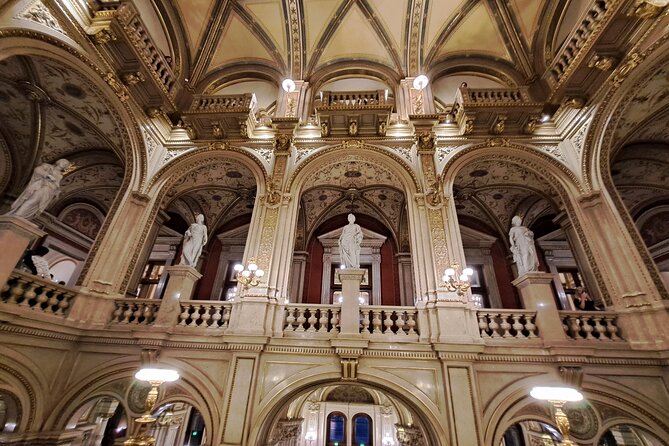
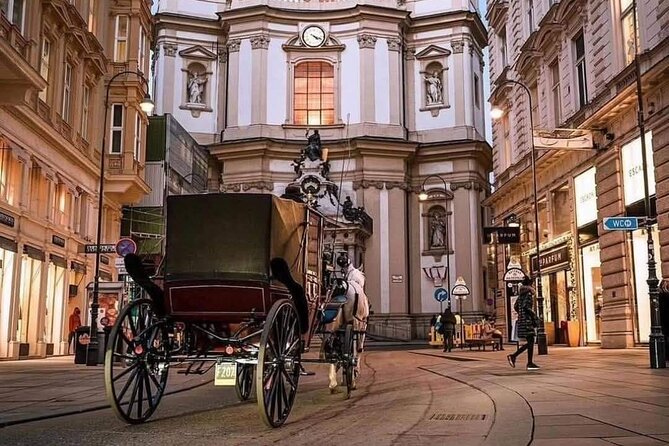
Peterskirche is one of the stops that leans into pure atmosphere. This stop calls it the most beautiful baroque church of Vienna, with only about five minutes set aside. Even in a short visit, you can still tell why people remember it. Baroque churches have a particular sense of drama, and this is the kind of place where details catch your eye even if you arrive with no plan.
Then comes the shift that I really like: the tour turns toward daily life with Julius Meinl Am Graben. Here, you learn the story about the first coffee houses in Vienna and how the city built an important coffeehouse culture around them. The guide also shares suggestions for coffee houses to visit during the tour.
This is valuable because it changes how you travel after the tour. Instead of only seeing what Vienna built, you start noticing what Vienna actually did, met, talked, argued, and drank. Coffeehouses in Vienna are not just venues. They are part of the social engine.
One consideration: if you already know Vienna’s coffeehouse story, this might feel like a “taste.” But even then, the concrete recommendations can save you time once you are hungry and deciding where to go.
Still the same country, a very different afternoon:
- Vienna: Vivaldi’s Four Seasons Concert in Karlskirche
★ 4.7 · 14,951 reviews - Vienna: Spanish Riding School Training
★ 3.9 · 9,281 reviews - Vienna: Skip-the-cashier-desk-line Giant Ferris Wheel Ride
★ 4.5 · 7,859 reviews - Vienna: Schönbrunn Palace & Gardens Skip-the-Line Tour
★ 4.7 · 7,739 reviews
Palais Ferstel and Café Central vibes, then a Scottish twist in Freyung
At Palais Ferstel, the tour points you toward historical Café Central and includes a walk through its beautiful passage. Even if you do not go in for a full meal, the idea is to show how Vienna mixes elegance with everyday public life. Palais Ferstel is a strong reminder that the city’s style is not only in churches and palaces, it also lives in how people move through buildings.
From there, the walk includes Schottenkirche and the reason Vienna has a Scottish church and monastery at Freyung. It is about identity and migration, and how older parts of the city kept evolving. Freyung itself is mentioned as one of Vienna’s oldest areas, and the tour notes that seasonal markets draw lots of visitors throughout the year.
For you, this section is the payoff if you like variety. You go from coffeehouse elegance to an odd but true local story about Scots in Vienna, then end with the sense that this district is alive even when you are not aiming for a museum.
A practical note: these are short stops, around five to ten minutes each. If you want to read every plaque or linger for photos, you may feel rushed. If you prefer a guided route that sets your direction, this pace is exactly the point.
Votivkirche, Beethoven Museum, and Universitat Wien: genius and storytelling in three quick beats
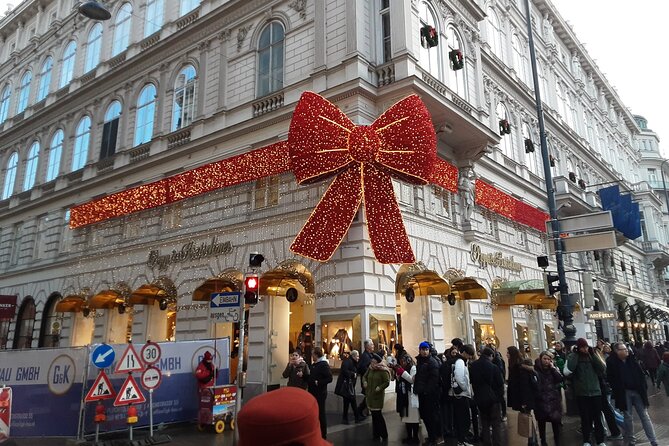
The tour continues with Votivkirche, a beautiful modern gothic church from the 19th century. This is another five-minute stop, but the value is in what it teaches you to notice. Vienna loves the contrast between old and newer styles, and this gives you a “then and now” perspective without slowing the whole day.
Then you get Beethoven Museum, the apartment and museum of Beethoven in Vienna. It is brief, about five minutes, which means you are not getting a full museum experience. You are getting orientation, the place name that matters, and a reason to return later if you want the deeper story.
Right after, the tour turns to the University of Vienna. You hear who started it, why it began, and the scandal behind him. The specifics are part of the guide’s storytelling, and even without long details, it gives you a sense of how education and politics tangled in Vienna’s past.
The drawback with stops like this is simple. You will not leave with every date memorized. But you will leave with enough context to make independent exploring feel easier. This kind of “story first” tour is great for travelers who hate reading big wall panels later, and prefer to know what the place is about before they start walking.
Burgtheater, Rathaus, and the Parliament: the Ring Street power corridor
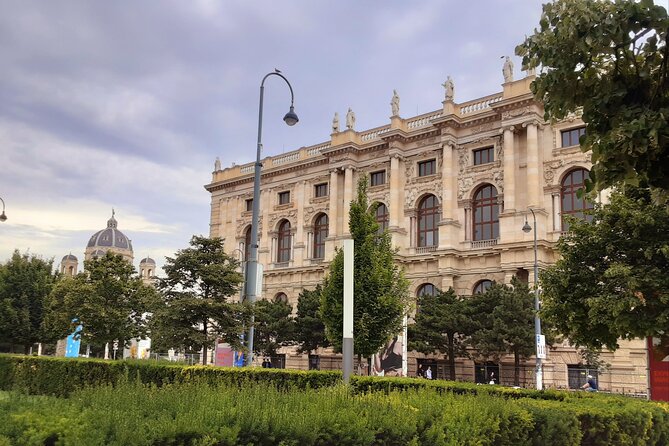
One of the most impressive parts of Vienna is how it concentrates major institutions in a walkable arc. This tour leans into that. You visit Burgtheater, the oldest theater of Vienna, which used to be part of the Hofburg palace and was transferred to its magnificent building in the 19th century.
Then you move to Rathaus, Vienna’s Gothic city hall on the historical Ring Street. It is a five-minute stop, but it helps you frame the Ring as more than a scenic drive. It is where Vienna put its official face.
After Rathaus, the tour includes the Austrian Parliament, noted for its breathtaking Greek style architecture. This is where Vienna’s architecture stops being just “pretty” and becomes a political statement you can recognize in minutes.
If you care about design and symbolism, this section will feel satisfying. The only downside is time. You get the highlights, not the long look at carvings, interiors, and details. If you want to spend extra time on any one of these buildings, take notes during the tour, then go back later on your own.
Volksgarten roses and the Hofburg finish in Heroes Square
The tour ends with a green and a palace, and I like that balance. First comes Volksgarten, a garden with thousands of colorful roses from April to November. The tour makes a clear point: do not miss it. If you travel outside rose season, you might still enjoy the layout and the idea of it, but you will not get the same flower payoff.
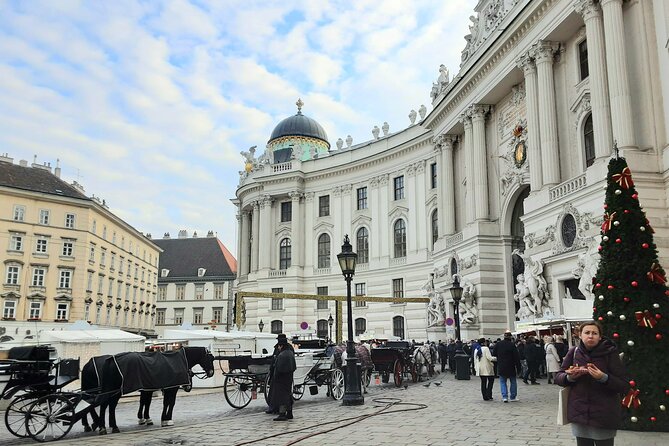
Finally, you finish at the Hofburg, the Winter Palace of the Habsburgs. The tour describes it as a complex of several buildings built in different centuries and styles. That is exactly what you should expect when you stand near it. It is not one building. It is a whole institution.
This end point is useful because it ties into more exploring. Finishing at the Hofburg at Heroes Square gives you multiple directions to go next, whether you want more architecture, more walking, or to settle into your evening plans.
Who should book this Vienna guided city tour, and who might skip it
Book this if you want a fast, organized introduction to central Vienna in English. It is ideal for first-timers who want the names, the basic stories, and practical guidance to plan the rest of their trip. It also fits travelers who value a small group and a guide who keeps everyone able to hear, especially if you struggle with chaotic groups at busy landmarks.
Skip it if you are hoping for a museum-heavy day. The stops are short, and even with the note that many stops are admission ticket free during the guided visit, the tour is not designed for long indoor time. If you like slow wandering with no structure, you might feel constrained by the set route and timing.
If you are on the fence, think of it like this. This tour helps you get your bearings fast. Then you choose what to go deeper on with your own tickets and your own pace.
FAQ
Is the Vienna Guided City Tour in English?
Yes. The experience is offered in English.
How long is the guided tour?
The duration is about 2 hours.
How many people are in the group?
The tour has a maximum of 15 travelers.
Where does the tour start and where does it end?
It starts at Wien Museum Mozart apartment (Mozarthaus, Domgasse 5, 1010 Wien, Austria) and ends at the Hofburg at Heroes Square (the finish is in front of the Hofburg Palace).
Are entrance fees included?
The stops are listed as admission ticket free during the guided visit, but entrance fees to museums are not included.
Can I cancel and get a full refund?
Yes, you can cancel for free up to 24 hours in advance for a full refund. The tour also requires good weather, and if it is canceled due to poor weather you will be offered a different date or a full refund.
Fresh on the site in Vienna
- World War II History Vienna Old Town Private Walking Tour★ 4.8 · 9 reviews
- Vienna/Bratislava: Traunkirchen, Hallstatt & Salzburg Tour★ 4.8 · 53 reviews
- Vienna: Winery and Wine Tasting Tour with a Wine Expert★ 5.0 · 5 reviews
- Vienna: Wine Tasting Tour★ 4.8 · 61 reviews
- Vienna/Bratislava: Day Trip to Hallstatt & Salzburg★ 4.8 · 21 reviews
- Vienna: Wiener Schnitzel and Strudel Cooking Class★ 4.9 · 126 reviews
- Vienna: Waltz into the Ball Season★ 4.7 · 3 reviews
- Vienna: Wine Tasting E-Bike Tour★ 4.9 · 46 reviews
City Tours, compared.
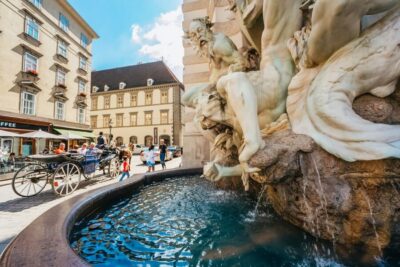
Guided Walking Tour of City Center Highlights
Read our review →
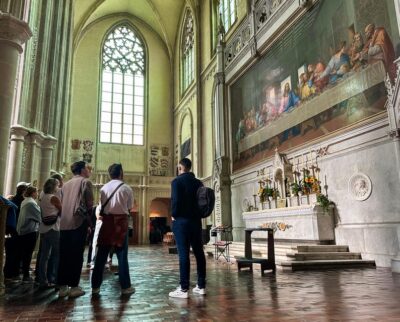
Guided Walking Tour of City Highlights & Hidden Gems
Read our review →
City Sightseeing Tour in an Electro Vintage Car
Read our review →
Skip-the-Line Schonbrunn Palace Guided Tour and Vienna Historical City Tour
Read our review →
Vienna City Card: Public Transport incl. 200+ discounts
Read our review →Browse the lists this tour appears in