
REVIEW · CONCERTS IN VIENNA
Vienna: Romantic Classics Piano, Violin, and Cello Concert
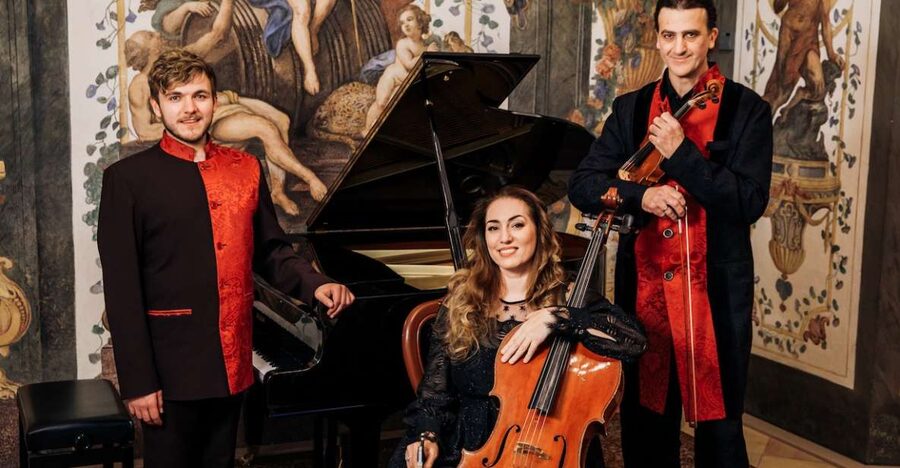
Vienna in 90 minutes sounds impossible, until the music starts. This Romantic Classics concert at the Mozarthaus brings together piano, violin, and cello in a small, historical room, with famous works from Beethoven, Chopin, Mozart, Liszt, Schubert, and Brahms. I especially like the way the program mixes huge emotional hits, like Beethoven Moonlight Sonata and Chopin’s Nocturne, with lighter, sparkling pieces that keep things moving.
Two other reasons I’d pick this: you get Sala Terrena frescoes as part of the atmosphere, and the playing is close enough to feel expressive, not distant. One possible drawback to think about is seat choice, since the room is small and the difference between student tickets, back row tickets, and seats closer to the performers can affect how intimate the viewing feels.
In This Review
- Key Things to Know Before You Go
- Finding the Mozarthaus Near St. Stephen’s Cathedral
- The Sala Terrena Room: Why the Setting Matters
- Meet the Performers You’ll Hear Live
- The 90-Minute Flow: How the Concert Keeps Its Momentum
- What You’ll Hear: From Moonlight to The Swan
- Picking Your Seat: Student, Back Row, and Closer Options
- What’s Included, and How to Plan Your Evening Comfort
- Price and Value: Is $69 Worth It?
- Should You Book This Romantic Classics Concert?
- FAQ
- How long is the Vienna Romantic Classics concert?
- What is the price per person?
- Where is the meeting point?
- How early should I arrive?
- What languages are available for the host or greeter?
- Is the venue wheelchair accessible?
- Is a cloakroom included?
- Are there different ticket types or seating options?
- Which composers and works are included in the program?
- Is free cancellation available, and is pay later offered?
Key Things to Know Before You Go
- Intimate performance space where the musicians are visually close, not staged far away
- Sala Terrena frescoes add a special, old-world look while you listen
- Romantic Classics program covers Beethoven, Chopin, Mozart, Liszt, Schubert, and Brahms
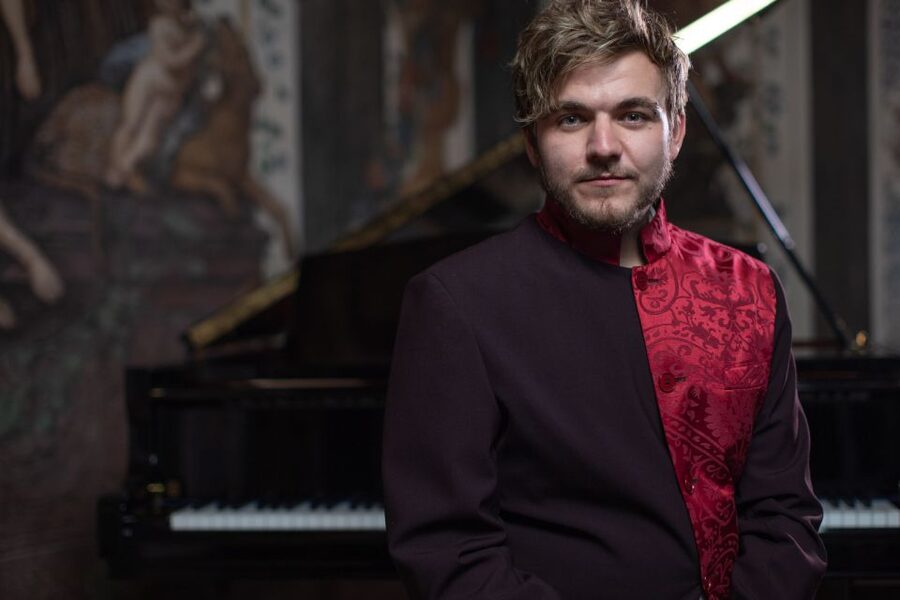
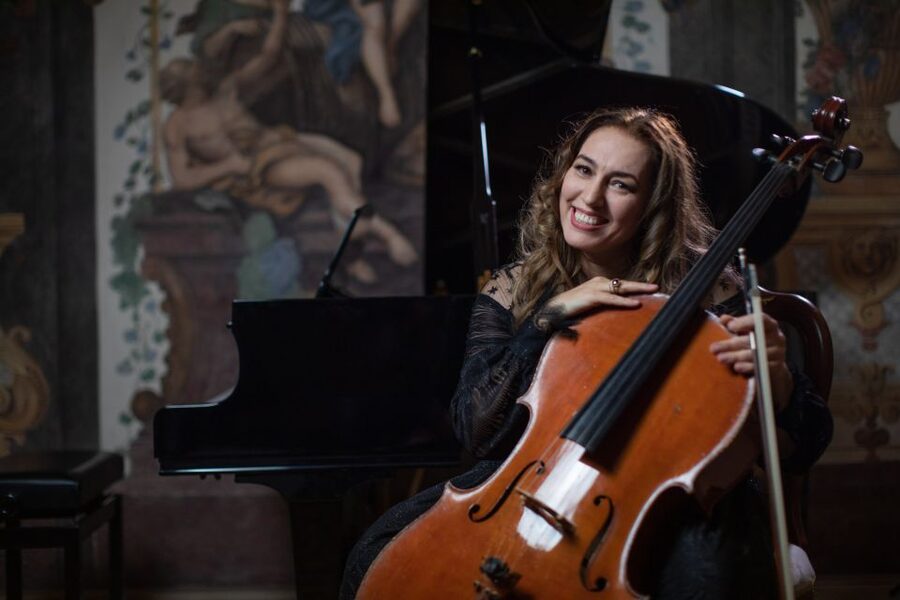
- Featured performers include violinist Claudio Bentes, pianist Dushan Sretovic, and soloist Teodora Miteva
- Easy central location about 150 meters from St. Stephen’s Cathedral, near the Deutschordenskirche gate
Finding the Mozarthaus Near St. Stephen’s Cathedral
You’ll want to arrive early, about 15 minutes before the concert start. The venue is very close to the tourist center, roughly 150 meters from St. Stephen’s Cathedral, so it’s a walk you can do even after a busy day.
Your best move is to enter through the gate at Deutschordenskirche. There’s a poster stand for concerts at Mozarthaus there, which saves you time when you’re scanning streets and people. If you’re traveling with a little stress in your day plan, this location is one of the reasons the experience works well, because you can get there, settle in, and focus on the sound instead of navigating.
If you’re thinking about accessibility, this concert is wheelchair accessible, so you should be able to attend without turning it into a logistics puzzle.
More Concerts in Vienna
- Vienna: Vivaldi’s Four Seasons Concert in Karlskirche
★ 4.7 · 14,951 reviews - Vienna: Classical Concert in the World-Famous Musikverein
★ 4.6 · 6,673 reviews - Vienna: Mozart Concert at the Musikverein – Golden Hall
★ 4.6 · 5,194 reviews
The Sala Terrena Room: Why the Setting Matters
This isn’t a giant hall. You’ll be in a space where the frescoes of the Sala Terrena are part of the visual experience, and the closeness makes the music feel more immediate.
Acoustics are the quiet hero here. In a small room like this, every phrase lands with clarity, which is especially helpful for composers where the details matter, like Chopin’s delicate touch and Beethoven’s transitions. The room design means you’re not fighting echo, so the performance stays readable note by note.
There’s also a practical side to an intimate venue: you notice how musicians communicate with each other. When violin, piano, and cello are synchronized, you feel it, because you can see entrances, pacing, and reactions. That adds something to the classics that you simply don’t get when the performers are far away.
One small consideration: as charming as older buildings are, signage for breaks and restrooms might not be perfect. It can feel like you need to look around a bit to find facilities quickly during intermission.
Meet the Performers You’ll Hear Live
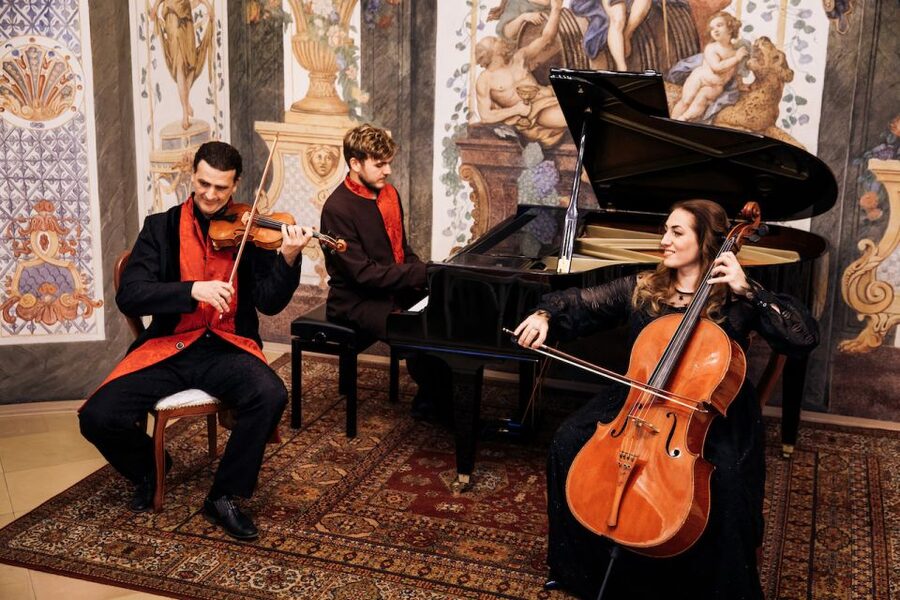
The program is built around standout musicians, and the casting shows. You’re not just listening to famous composers, you’re hearing artists who clearly know how to shape mood.
You’ll hear violinist Claudio Bentes, who anchors much of the romantic tone and lyrical phrasing. The way violin can sing in slow movements is exactly why pieces like Beethoven Moonlight Sonata and lyric interludes from the program feel so natural in this format.
On piano, Dushan Sretovic is a major draw. He’s presented here with a special focus on Chopin interpretations. If you love the kind of piano playing where you can hear both tenderness and sharp control, this is the part of the evening most likely to make you sit up and listen harder.
You’ll also hear soloist Teodora Miteva, described as an outstanding soloist with numerous international competition wins. That kind of training usually translates into clean technique and confident musical choices, which matters because this is a mixed program with both virtuosic showpieces and quieter moments.
And it’s not only piano and violin. Cello also takes center stage, including a Bach Cello Suite that shifts the emotional temperature in a very satisfying way.
The 90-Minute Flow: How the Concert Keeps Its Momentum
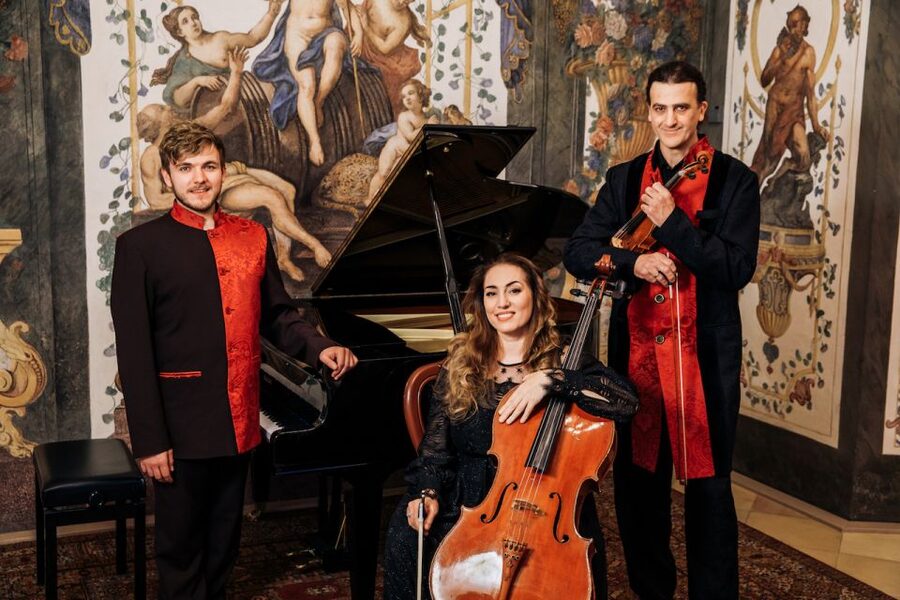
This concert runs about 90 minutes, so it’s long enough for a complete arc, but short enough to stay crisp. That matters, because romantic classics can sometimes sprawl if the pacing is off. Here, the program is constructed like a conversation: introspective moments are followed by technical sparks, then the mood returns again.
You can think of the evening as moving through three kinds of listening:
- lyrical and reflective (where you focus on phrasing and dynamics)
- romantic intensity (where rhythm and drama matter)
- virtuosity and color (where speed and tone become the point)
Even if you only know one or two pieces by name, the mix is designed so you still get the emotional “payoff” repeatedly. That’s why the concert is engaging from start to finish, not just a set of standalone classics.
If you’re sitting in back, it can still work. The room is small enough that sound carries well, but if you want maximum closeness, choose seats nearer the performers when possible.
Still the same country, a very different afternoon:
- Vienna: Spanish Riding School Training
★ 3.9 · 9,281 reviews - Vienna: Skip-the-cashier-desk-line Giant Ferris Wheel Ride
★ 4.5 · 7,859 reviews - Vienna: Schönbrunn Palace & Gardens Skip-the-Line Tour
★ 4.7 · 7,739 reviews - Vienna: Light of Creation Votive Church Immersive Light Show
★ 4.8 · 6,779 reviews
What You’ll Hear: From Moonlight to The Swan
The music list reads like a best-of romantic canon, but what makes it valuable is how the pieces talk to each other.
Here are some highlights, in the order they appear in the program:
Joseph Haydn, Trio all’ungarese (Trio in Hungary), Hob XV:25
You start with movements that balance charm with structure. This sets the musical “language” for the night, with clear phrasing before the heavier romantic emotions take over.
Ludwig van Beethoven, Moonlight Sonata (Adagio)
This is the emotional cornerstone. The slow movement doesn’t just sound beautiful, it invites you to hear how tension can exist without rushing. In a small room, you catch the nuance in sustain and the delicate shifts that make Moonlight feel like a living thing instead of a recording.
Wolfgang Amadeus Mozart, La tartine de beurre / The Butterbrot
It’s a playful break in the best sense. Mozart can feel light without losing musical intelligence, and this choice keeps the program from becoming too heavy. If you like variety, you’ll appreciate this kind of tonal reset.
Beethoven, Sonate op. 2 (Allegro con brio)
Then comes energy. This movement brings punch, and it’s a smart placement because it prepares your ears for Chopin’s rhythmic personality and the program’s technical flourishes later.
Franz Liszt, Un sospiro
Liszt here is about color and breath. You’ll likely feel the romantic obsession with atmosphere, where one phrase can sound like a whole story.
Franz Chopin, Nocturne in C minor, op. 48 No. 1
This is Chopin at full emotional reach. In performance, the magic is in the balance between soft singing and the undertow of tension. If you’ve ever loved hearing how a pianist shapes tempo without making it sound mechanical, this is the moment.
Chopin, Étude op. 10 No. 1 in C major
You get a bright technical contrast. Études can be intimidating on paper, but in a live concert they show what technique is for, which is musical expression, not only speed.
Johann Sebastian Bach, Cello Suite in G major, BWV 1007 (Allegro)
A Bach suite movement is a palate cleanser and also a spotlight. Cello brings a different kind of warmth, and the shape of the line feels tactile. If you’re a fan of Baroque clarity, this is one of the smarter programming choices.
Niccolò Paganini, Caprice 13
This adds showpiece energy. Paganini’s caprices are built to impress, but a good performance also sounds effortless. This is where the hall benefits from being intimate, because you can hear detail rather than just the spectacle.
Camille Saint-Saëns, The Swan
A graceful, recognizable classic. You’ll likely find yourself relaxing here, because the melody is all about elegance and control, not volume.
Jules Massenet, Thais, Meditation
This has a dreamy, romantic feel and fits perfectly after The Swan. The pairing makes the evening feel coherent, like one long story with chapters.
Franz Schubert, Trio in E-flat major, op. 100 (Andante con moto)
Schubert is the final emotional signature. In a live setting, you can hear why this movement is beloved: it flows with feeling and momentum without becoming frantic. It’s a strong closer because it leaves the night lingering in your mind.
Picking Your Seat: Student, Back Row, and Closer Options
You get ticket choices that matter in a small venue. There are options for student tickets, back row tickets, and seats closer to the performers. In most big halls, back row is a compromise. Here, it’s still a compromise, but the acoustics do most of the heavy lifting.
If you’re the type who likes to watch hands and bow movement, pick seats closer to the performers. That visual layer makes it easier to follow the interplay between piano, violin, and cello, especially during fast transitions.
If you’re on a budget and just want the best sound you can, back row can still work because the hall is set up for clarity. The goal is to enjoy the experience without turning it into a stress test.
Also, since the concert is 90 minutes, seat choice is less about comfort over time and more about how you want to experience the relationship between sound and performer.
What’s Included, and How to Plan Your Evening Comfort
What’s included is straightforward: you get a cloakroom and the concert. That cloakroom matters in Vienna, where you can easily arrive with a jacket, scarf, or umbrella depending on the weather.
For timing, treat this like a show. Arrive early enough to find your way in and settle. The venue is walkable from St. Stephen’s, but the gate entry and indoor setup can take a few minutes when you’re aiming to not feel rushed.
During the break, you may find facilities and refreshments available, but the practical details can be a bit uneven. One useful note to keep in mind: restroom signage might not be obvious, and refreshments can mean cash-only purchases outside the break, with at least one drink included for some ticket types. Plan for that by bringing some cash if you like options during the intermission.
Price and Value: Is $69 Worth It?
At $69 per person for about 90 minutes, this sits in the “classic evening” range. Whether it feels like a good deal depends on what you’re comparing it to.
If you’re comparing it to a standard tourist show with generic programming, the value is strong because the lineup is serious: Beethoven, Chopin, Mozart, Liszt, Schubert, and Brahms. You’re not waiting for one highlight. You’re getting repeated emotional hits plus virtuosic moments spread across the full program.
If you’re comparing it to a big concert hall, this may feel like a better buy because of the intimate space, the clear acoustics, and the sense that you are closer to the performance. That changes how you experience technique and nuance, especially with piano and string playing.
I also like the fact that you can choose seating level and not have to guess blindly. Student tickets exist, and there are options for closer seats, which helps if you care about seeing the performers.
With a 4.7 rating from 60 reviews, the overall demand is clearly consistent. That’s usually a good sign for a concert, where you want both performance quality and audience satisfaction.
Should You Book This Romantic Classics Concert?
Book it if you want a Vienna night that feels classic but not stiff. This works best when you like hearing well-known composers performed with focus on detail, not just name recognition. The combination of fresco-filled Sala Terrena atmosphere and clear, close-up sound makes it a high-quality choice for couples, solo travelers, and anyone doing a first-time Vienna taste of serious music.
Skip it or rethink it if you hate seated listening for an entire 90 minutes. This isn’t built around participation or sightseeing stops. It’s a concert night, so you should be ready to sit back and listen.
If you want a straightforward, romantic, high-value evening near the center of Vienna, I’d say yes, this is worth adding to your plan. Choose closer seats if you care about intimacy, or go back row if you want to save money while still enjoying strong acoustics.
FAQ
How long is the Vienna Romantic Classics concert?
The concert lasts about 90 minutes.
What is the price per person?
The price is listed as $69 per person.
Where is the meeting point?
You should enter the gate at Deutschordenskirche. The venue is about 150 meters away from St. Stephen’s Cathedral, and there is a poster stand of concerts at Mozarthaus.
How early should I arrive?
Please arrive about 15 minutes before the concert starts.
What languages are available for the host or greeter?
English and German are available.
Is the venue wheelchair accessible?
Yes, it is wheelchair accessible.
Is a cloakroom included?
Yes, a cloakroom is included.
Are there different ticket types or seating options?
Yes. You can choose from student tickets, back row tickets, and tickets closer to the performers.
Which composers and works are included in the program?
The program includes works by Haydn, Beethoven, Mozart, Liszt, Chopin, Bach, Paganini, Saint-Saëns, Massenet, and Schubert, including Beethoven Moonlight Sonata and Chopin Nocturne in C minor, among others.
Is free cancellation available, and is pay later offered?
Free cancellation is available up to 24 hours in advance for a full refund. There is also a reserve now & pay later option.
Fresh on the site in Vienna
- World War II History Vienna Old Town Private Walking Tour★ 4.8 · 9 reviews
- Vienna/Bratislava: Traunkirchen, Hallstatt & Salzburg Tour★ 4.8 · 53 reviews
- Vienna: Winery and Wine Tasting Tour with a Wine Expert★ 5.0 · 5 reviews
- Vienna: Wine Tasting Tour★ 4.8 · 61 reviews
- Vienna/Bratislava: Day Trip to Hallstatt & Salzburg★ 4.8 · 21 reviews
- Vienna: Wiener Schnitzel and Strudel Cooking Class★ 4.9 · 126 reviews
- Vienna: Waltz into the Ball Season★ 4.7 · 3 reviews
- Vienna: Wine Tasting E-Bike Tour★ 4.9 · 46 reviews
Concerts in Vienna, compared.

Vivaldi’s Four Seasons Concert in Karlskirche
Read our review →
Classical Concert in the World-Famous Musikverein
Read our review →
Mozart Concert at the Musikverein – Golden Hall
Read our review →
Classical Concert in St. Anne’s Church (Annakirche)
Read our review →
Vienna Classical Concert at St. Peter’s Church
Read our review →Classical Concert in St. Anne’s Church (Annakirche)
Read our review →Browse the lists this tour appears in