REVIEW · GUIDED
Vienna Spanish Riding School Guided Tour
The Spanish Riding School is one of those places where the past still works today. In 55 minutes you’ll walk between the Winter and Summer riding schools, ending in the Stallburg, Vienna’s famous Renaissance stable complex. This is a guided, behind-the-scenes look at the Lipizzaner world, not a quick photo stop.
I especially like how focused it is. You get the architectural highlights, then you get real explanations about classical equitation and how these horses are handled. My other favorite part is the access to places you usually only see from outside, including the historic stables and tack-related areas.
One thing to consider: you cannot take photos or video, and you also cannot touch the horses. If you want a hands-on visit, this tour is about watching and learning, not interacting.
In This Review
- Key highlights I’d plan around
- Entering Michaelerplatz: a short tour with big focus
- Winter Riding School: Baroque rooms built for discipline
- Summer Riding School and the oval horse walker
- Stallburg: Vienna’s Renaissance stable heart
- Stallions, stables, and the tack-room details you’ll want to remember
- How the guide experience shapes what you get
- Price and value: why $28 can feel like more than you paid for
- Who should book this Spanish Riding School tour
- Simple planning tips for a smooth one-hour visit
- Should you book the Vienna Spanish Riding School guided tour?
Key highlights I’d plan around
- Winter Riding School and Summer Riding School in one visit so you see how the school functions across seasons
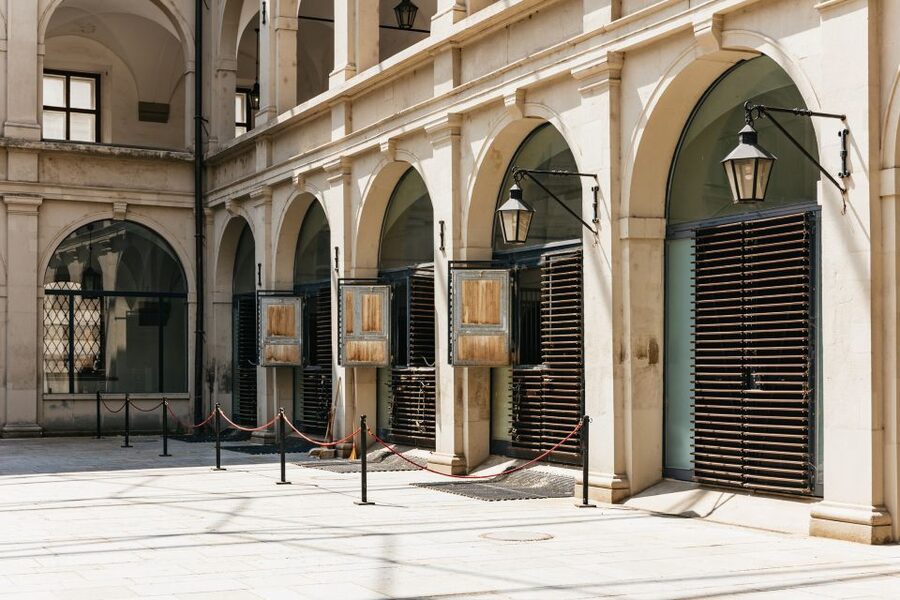
- Stallburg’s Renaissance setting with its arcade courtyard and Lipizzaner historical stables
- A behind-the-scenes guide with room for questions in English or German
- Up-close viewing with strict rules (no cameras, no touching, no video recording)
- A strong history-and-training focus on the 450+ year tradition of classical equitation
Entering Michaelerplatz: a short tour with big focus
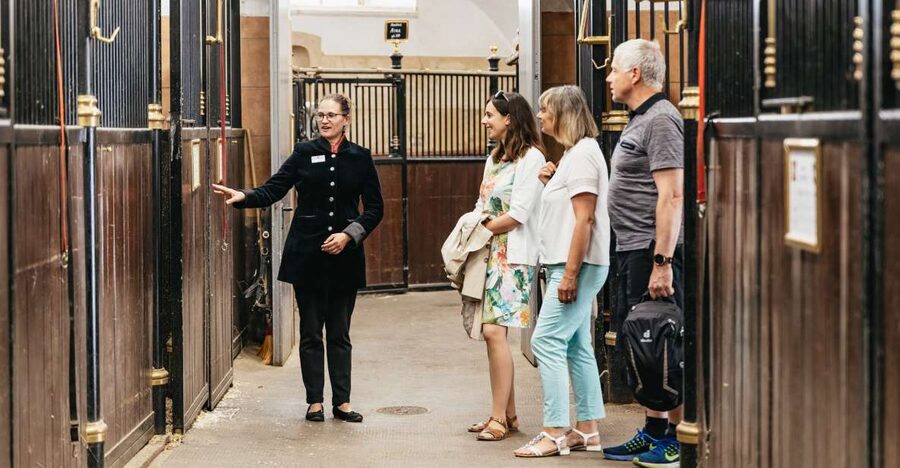
The tour starts at Michaelerplatz 1, at the main entrance of the Spanish Riding School. Plan to show your voucher at the ticket counter, because you’ll need to exchange your mobile voucher for an actual ticket at the cashier’s desk.
This is a 55-minute guided tour. That time matters, because it pushes the experience to be efficient: you’re not drifting around an enormous complex, you’re moving through the school’s most meaningful spaces.
Also note the rules up front. No pets. No cameras. No video recording. And the tours are not wheelchair accessible, so don’t plan on this as your mobility-friendly option.
A few more Vienna options worth a side-by-side
- Vienna: Vivaldi’s Four Seasons Concert in Karlskirche
★ 4.7 · 14,951 reviews - Vienna: Spanish Riding School Training
★ 3.9 · 9,281 reviews - Vienna: Skip-the-cashier-desk-line Giant Ferris Wheel Ride
★ 4.5 · 7,859 reviews
Winter Riding School: Baroque rooms built for discipline
Your first major stop is the Winter Riding School. This is the space the school uses for training in colder months, and you’ll notice the building’s Baroque architecture right away.
What I like about starting here is the context. You’re not just seeing impressive interiors, you’re learning how the school’s classical approach fits a real daily schedule. The guides tie the architecture to the purpose, so the room feels like part of the training system rather than a museum set.
Because photos are not permitted, you’ll have to use your eyes and your ears. If you care about details, sit where you can hear the guide clearly, especially if the group is a bit large.
Summer Riding School and the oval horse walker
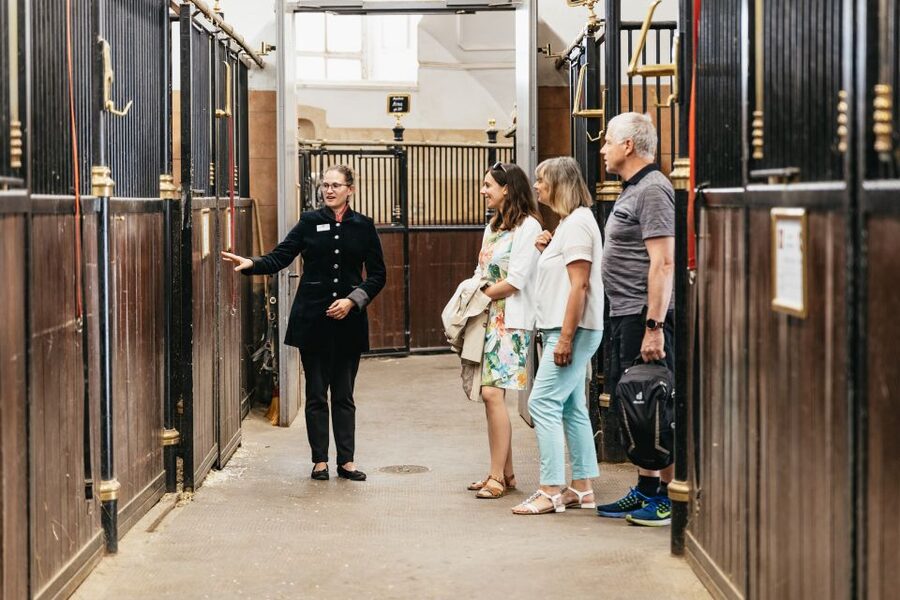
Next comes the Summer Riding School, a major contrast from the Winter space. According to the tour description, it houses the world’s largest oval horse walker, which is one of those quietly important pieces of how trained horses stay healthy and managed.
In plain terms, this is where you connect the dots between “beautiful riding” and “serious care.” A horse walker is not glamorous. It is practical. It helps with routine exercise when horses cannot train the same way every day.
If you’re a horse person, this part usually feels especially satisfying. Even if you don’t know the technical terms, you can see how the school thinks in systems: training, recovery, and movement are built into the architecture.
Stallburg: Vienna’s Renaissance stable heart
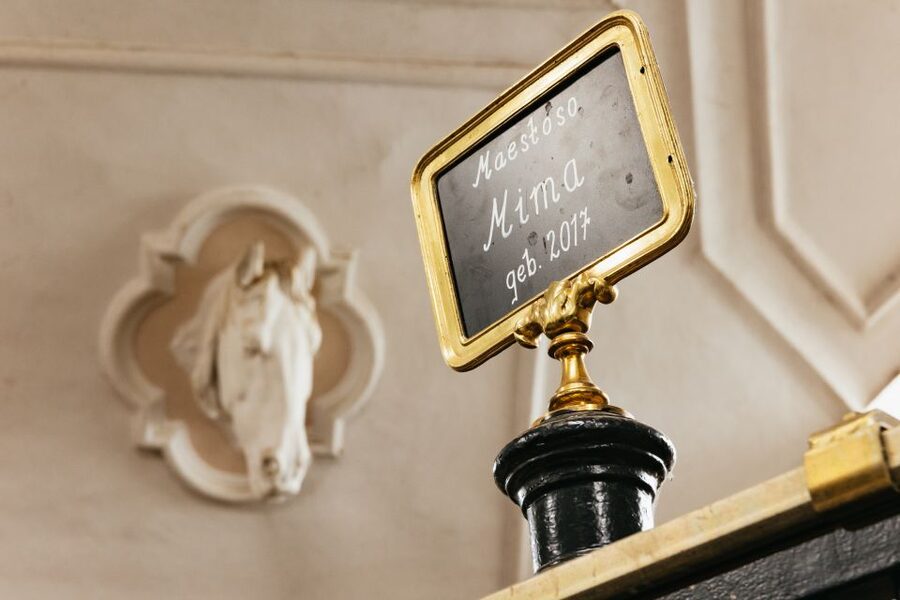
The tour then moves into the Stallburg, which is described as Vienna’s most significant Renaissance building. It’s not just a backdrop, it’s the historic core where the Lipizzaner stables are located.
Expect to see the arcade courtyard and the historical stables of the Lipizzaner stallions. This is one of the moments where the scale clicks. You’re looking at a place meant to function over centuries, not just a room for occasional visits.
Why this stop is valuable is simple. The school has been operating continuously for more than 450 years, and the tour ties that longevity to the Lipizzaner and the classical equitation tradition of the Haute Ecole. You see a physical environment that has supported long-term training practices.
Still the same country, a very different afternoon:
- Vienna: Schönbrunn Palace & Gardens Skip-the-Line Tour
★ 4.7 · 7,739 reviews - Vienna: Light of Creation Votive Church Immersive Light Show
★ 4.8 · 6,779 reviews - Vienna: Classical Concert in the World-Famous Musikverein
★ 4.6 · 6,673 reviews - Vienna: Hallstatt Day Trip with Boat Ride Option
★ 4.7 · 6,311 reviews
Stallions, stables, and the tack-room details you’ll want to remember
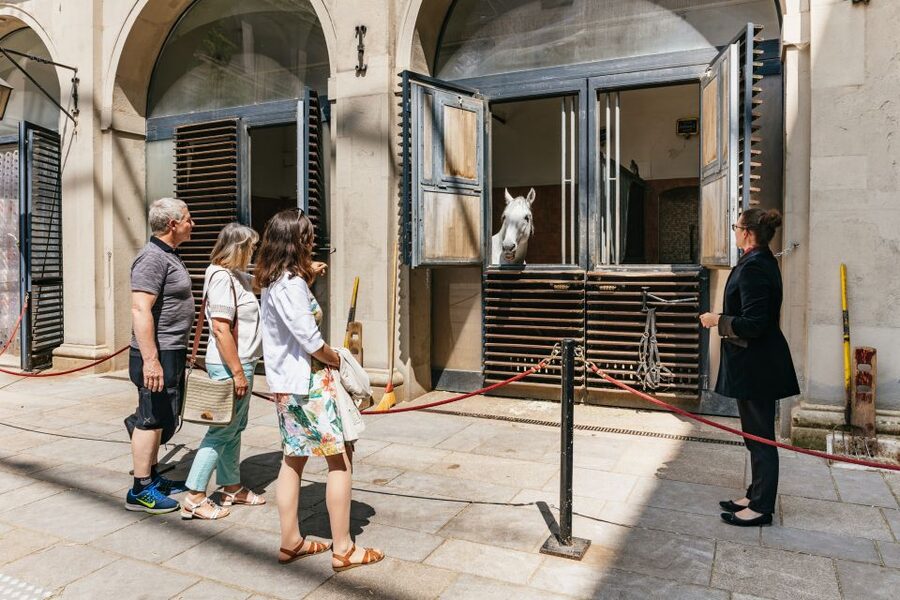
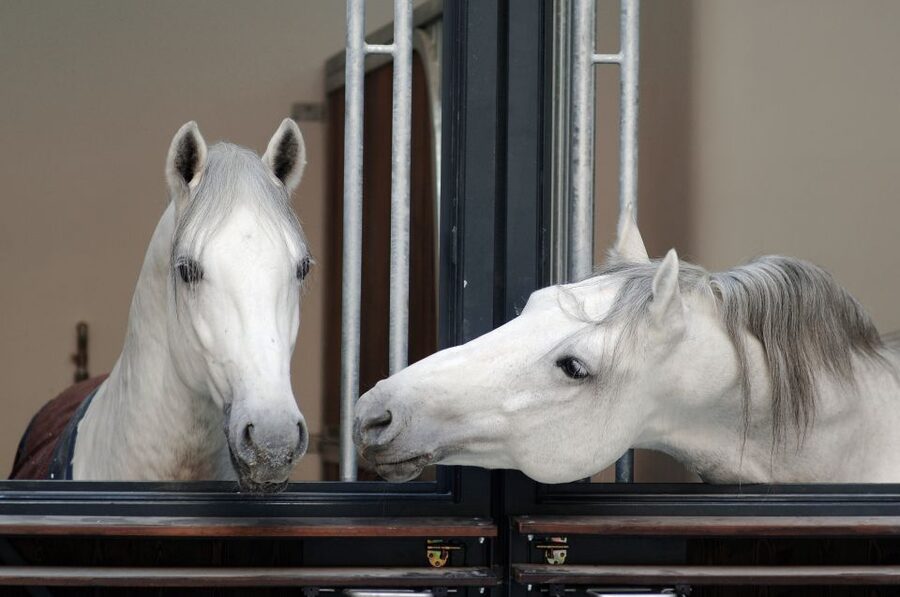
The Lipizzaner horses are the stars throughout the tour. You’ll learn about their role in the establishment, and you’ll be guided through areas where you can observe them close by (within the rules).
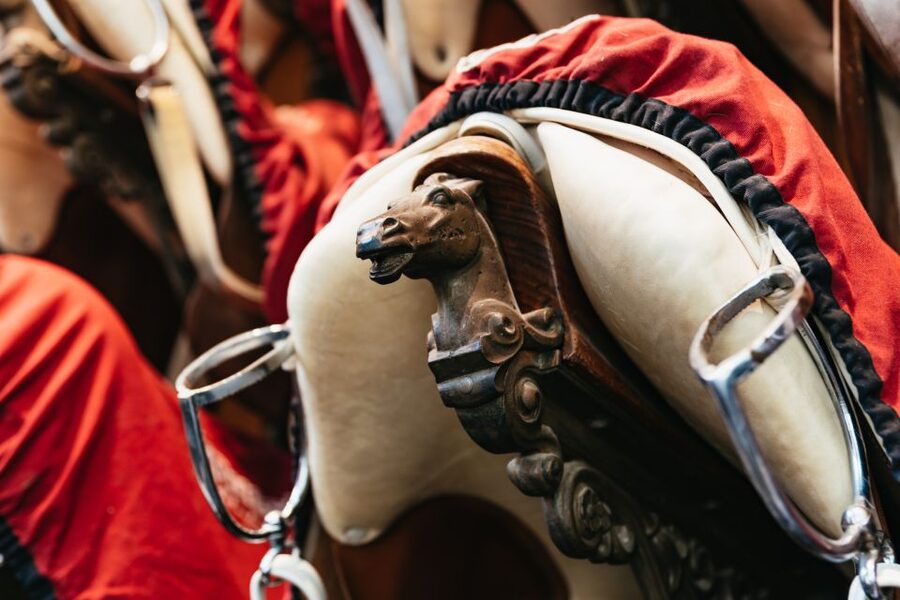
A few reviews highlight moments that stick, and they’re the kind of things you can use to set expectations. People have pointed out the tack-related areas and training equipment as a highlight, and one person specifically mentioned seeing an exceptional bay horse that never turns white. That fits the tour’s overall theme: these horses are not generic “pretty animals,” they’re tied to a carefully managed tradition.
There are also two very clear limitations you should respect. You can’t stroke the horses, and you can’t record video or photos. The upside is that it forces you to look properly, not through a screen.
One extra detail worth knowing: you may notice the working “mouser” cats mentioned in reviews, and they’re described as unbothered by the crowd. That doesn’t change the tour content, but it’s a fun real-life touch that makes the stables feel like a working place, not a staged exhibit.
How the guide experience shapes what you get
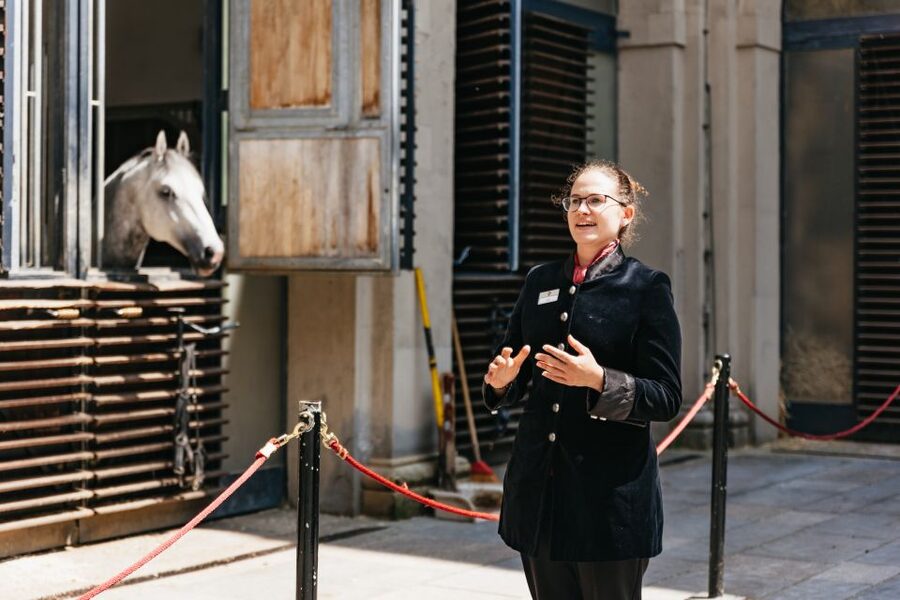
This tour is led by a live guide in English or German. The difference between a good tour and a great one is usually how well the guide answers questions and keeps the pace moving.
In the feedback you provided, the most praised guides share a similar style: they explain training and operations with lots of day-to-day context, and they make space for questions. Names that show up in the comments include Natasha, Sisi, Lorelai, Inga, Isabelle, Pieta, and a guide described as Guy from Kazahstan. You might not get the exact same person each time, but the pattern is consistent: strong storytelling, clear explanations, and calm rule-following.
One practical downside shows up too. When the group is bigger, it can be harder to hear. Your best move is to position yourself near the guide when you can, and don’t pick a spot behind taller people unless you have to.
Price and value: why $28 can feel like more than you paid for
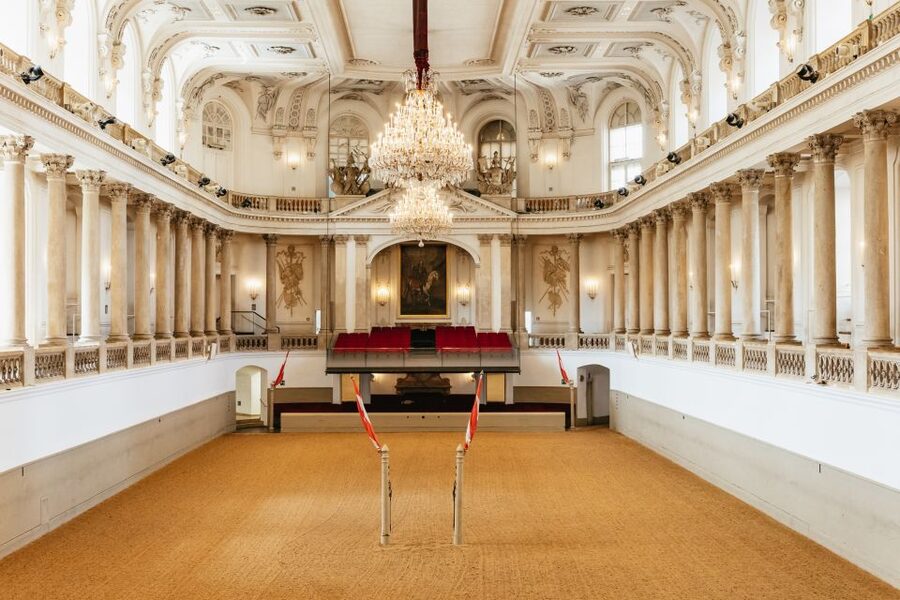
The price is listed at $28 per person, and it’s for a 55-minute guided behind-the-scenes tour. To judge value, I focus on what you actually see.
You’re not just viewing one interior room. You’re getting two riding schools (Winter and Summer) plus Stallburg, including the arcade courtyard and the historical stables. Add in the Lipizzaner focus and the guide’s explanations of the equestrian tradition, and you end up with a compact overview of how the Spanish Riding School operates.
Also, this is a good choice when your schedule does not match the morning exercise tickets. Those are specifically listed as not included, so the tour is a way to experience core areas and context even if you cannot attend the exercise routine.
If you want a performance, that is a separate decision. This tour is built to teach you what you’re looking at, whether or not you later add a show.
Who should book this Spanish Riding School tour
This tour makes the most sense if you fall into one of these groups:
- Horse lovers who want stables access and training context without committing to a longer visit
- History and architecture fans who enjoy Renaissance and Baroque spaces connected to real use
- People with limited time in Vienna who still want something authentic and very “Vienna”
It’s also ideal if you don’t already know classical equitation. Several comments mention that even people who bought it as a whim ended up caring deeply once they learned the day-to-day structure of training and care.
If you need hands-on interaction, this will not satisfy that craving. No touching. No photo-taking. You’ll be close, but you’ll be an observer.
And if you rely on a wheelchair, this one is not suitable. The tour notes it is not accessible by wheelchair.
Simple planning tips for a smooth one-hour visit
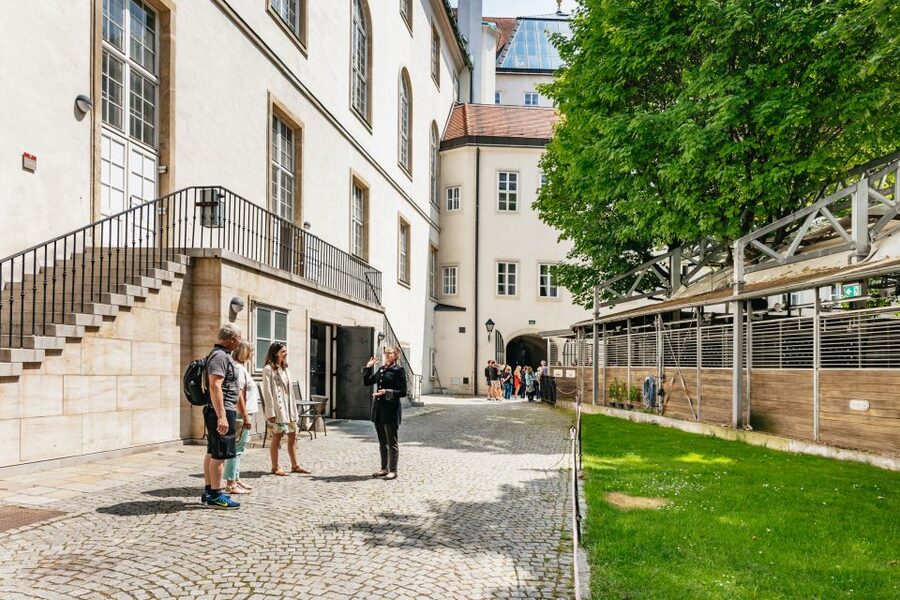
Here’s how I’d set yourself up for success.
- Arrive early enough to avoid stress. Ticket pickup can be done earliest 1 hour before the activity, and you’ll exchange your voucher at the cashier desk.
- Wear comfortable shoes. You’ll be moving between multiple parts of the school.
- Expect a no-camera rule. If you love collecting proof, plan to rely on memory and notes instead.
- Choose your spot for better audio. If the group feels large, hearing matters more than standing near a wall.
- Ask questions. The tour format is built for explanation, and many comments mention the guide making time for questions.
One more honest note: the tour can include time when horses are not in a specific training state you might expect. The experience is still centered on the stallions and the school’s methods, but you should treat it as learning and viewing, not as a guaranteed action show.
Should you book the Vienna Spanish Riding School guided tour?
I think you should book it if you want a focused, high-quality introduction to the Lipizzaner and classical equitation tradition, and you have room for a strict rules-based visit. The value is strong for the money because you see multiple major spaces in one tight 55-minute window, including the Stallburg and the arc of Winter and Summer operations.
Skip it if you really want photos and video, or if you need wheelchair accessibility. Also skip it if you only care about the riding action itself. This tour’s power is education and access, not performance ticket inclusion.
If your goal is to understand why this institution has survived more than 450 years and why people still travel to see it, this guided tour is a very practical first step.
Fresh on the site in Vienna
- World War II History Vienna Old Town Private Walking Tour★ 4.8 · 9 reviews
- Vienna/Bratislava: Traunkirchen, Hallstatt & Salzburg Tour★ 4.8 · 53 reviews
- Vienna: Winery and Wine Tasting Tour with a Wine Expert★ 5.0 · 5 reviews
- Vienna: Wine Tasting Tour★ 4.8 · 61 reviews
- Vienna/Bratislava: Day Trip to Hallstatt & Salzburg★ 4.8 · 21 reviews
- Vienna: Waltz into the Ball Season★ 4.7 · 3 reviews
- Vienna: Wine Tasting E-Bike Tour★ 4.9 · 46 reviews
- Vienna: Wiener Schnitzel and Strudel Cooking Class★ 4.9 · 126 reviews
Guided, compared.
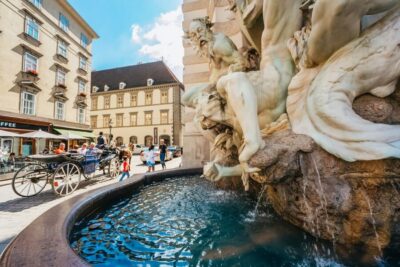
Guided Walking Tour of City Center Highlights
Read our review →
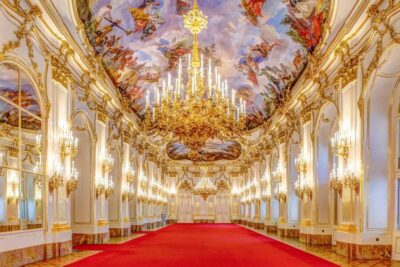
Bus & Schönbrunn Palace Skip-the-Line Guided Tour
Read our review →
Tickets for Mozarthaus Vienna with Audio Guide
Read our review →
Day trips from Vienna: Hallstatt & Salzburg Guided Tour
Read our review →
Guided Walking Tour of City Highlights & Hidden Gems
Read our review →