REVIEW · TOURS
Fall in Love with Vienna in 4h: Hidden Gems- Group Tour
Fast Vienna, without feeling rushed. In about 4 hours, you get a guided walk that stitches together Mozart landmarks, medieval lanes, and Vienna’s biggest icons, plus a mid-tour coffee stop that actually matters.
I especially like the 30-minute coffeehouse break for coffee and apple strudel, because it breaks up the walking and gives you a real taste of the city. I also like that this is a small-group experience, where the guide can keep the pace friendly and the conversation going, with stories that people remember, like the approach one guide named Nicoleta used to make each corner make sense.
One thing to consider: the route is packed with lots of short stops, so this is not a sit-and-stroll tour. It works best if you have moderate physical fitness and you do not mind moving between sights fairly often.
In This Review
- Key things to know before you go
- 4 hours in Vienna: what the schedule feels like
- Stop 1-8: Mozart, passages, and the medieval lanes you would miss
- Stop 9-14: oldest churches, the Ankeruhr clock, and Vienna shaped by the 20th century
- Stop 15-18: a Last Supper copy, rose gardens, and MuseumsQuartier’s museum-courtyard vibe
- Stop 19-21: the Habsburg power axis, Mozart statue moments, and the opera finale
- What you get included, and why it matters for value
- Who this tour suits best
- Should you book this 4-hour Vienna walk?
- FAQ
- How long is the Fall in Love with Vienna in 4h tour?
- Where does the tour start and where does it end?
- What language is the tour offered in?
- Is a mobile ticket used?
- What is included in the price?
- Are entrance fees included?
- What kind of physical fitness do I need?
- Is tipping required?
Key things to know before you go
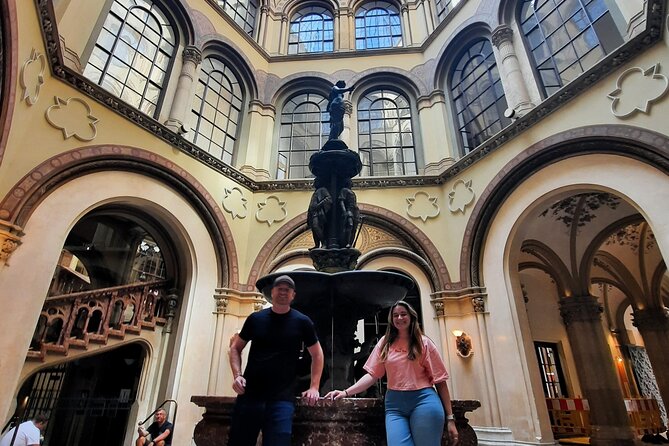
- A start-to-finish orientation in one afternoon: You begin at Mozarthaus Vienna and end at the Vienna State Opera, so you get a clear line through the center.
- Most stops are free to access: The listed sights do not require you to budget for museum tickets during the walk.
- Coffee and apple strudel break is built in: Plan on using it for both fuel and a short reset.
- A route heavy on passages and side streets: You see spots you would miss on a basic big-sights only plan.
- Small group feel: You can actually ask questions and stay engaged, even with a mixed crowd.
- English guide, mobile ticket: You get an easy-to-use ticket and a guide who explains the why, not just the what.
4 hours in Vienna: what the schedule feels like
This tour is designed like a fast but friendly sampler of central Vienna. The walk runs about 4 hours, starting at 1:00 pm at Mozarthaus (Mozarthaus, Domgasse 5, 1010 Wien). You finish at the Vienna State Opera (Opernring 2, 1010 Wien), so you end at a spot that is easy to keep exploring after the tour.
You will be with a guide for the full time, and the group size is kept small enough for real interaction. That matters because a packed route only works if the guide can keep things clear and moving. The tour is offered in English, and you use a mobile ticket, which makes arrival simpler when you are bouncing between streets.
The biggest practical point is the rhythm. Many stops are only 5 to 10 minutes, which means you should treat each stop like a photo and context moment, not a long museum session. If you like to linger, you’ll still get value, but you may want to pick a couple of places you care about most and plan an extra visit after.
Also keep in mind that the experience is listed as weather dependent. Walking tours in Vienna can be excellent in cool months, but if it is harsh weather, you may need to accept changes or cancellations.
A few more Vienna options worth a side-by-side
- Vienna: Vivaldi’s Four Seasons Concert in Karlskirche
★ 4.7 · 14,951 reviews - Vienna: Spanish Riding School Training
★ 3.9 · 9,281 reviews - Vienna: Skip-the-cashier-desk-line Giant Ferris Wheel Ride
★ 4.5 · 7,859 reviews
Stop 1-8: Mozart, passages, and the medieval lanes you would miss
The tour kicks off with Mozart, which is a smart move. You start at Mozarthaus Vienna, described as Mozart’s house and apartment in Vienna, also called the Figaro house. This sets a theme early and helps you understand the city through its famous music connections, before you even reach the big-name landmarks.
Next, you head to Blutgassenviertel, also called the Blood Alley Quarter. The tour description focuses on old traditional Czech-style houses. I like this kind of stop because it is not about one famous building, it is about the feel of a place, the way streets and house styles create a lived-in neighborhood atmosphere.
Then it is off to Sala Terrena im Deutschordenshaus, where the tour notes it as one of the first concert houses in Vienna and that Mozart performed there. Even if you are not a deep classical music expert, this kind of point helps you connect names like Mozart to actual rooms and settings, not just museum facts.
After those Mozart-related stops, the route hits Stephansdom, the landmark cathedral of Saint Stevens. This is where the tour gives you the “I am really in Vienna” moment. You get a longer stop here, about 10 minutes, so you can take in the scale and make sense of where you are in the center.
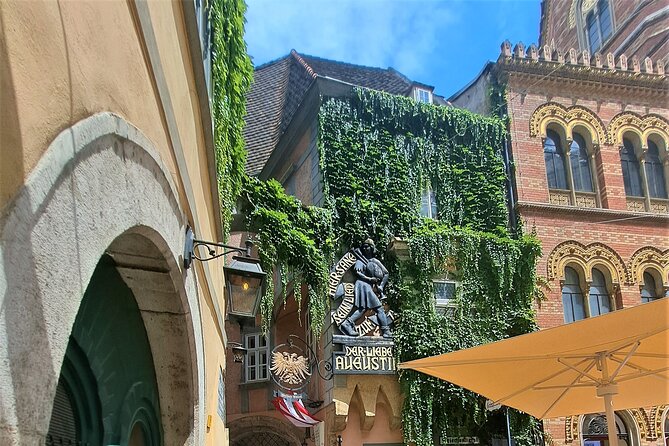
From there, the walk turns toward food and street charm with Figlmüller at Wollzeile, described as the most historical schnitzel restaurant in Vienna in a wonderful passage. I like pairing a food stop with a passage stop because it shows you Vienna’s everyday life, not just its monuments. Even if you do not eat right then, you leave knowing exactly where that kind of Viennese meal culture lives.
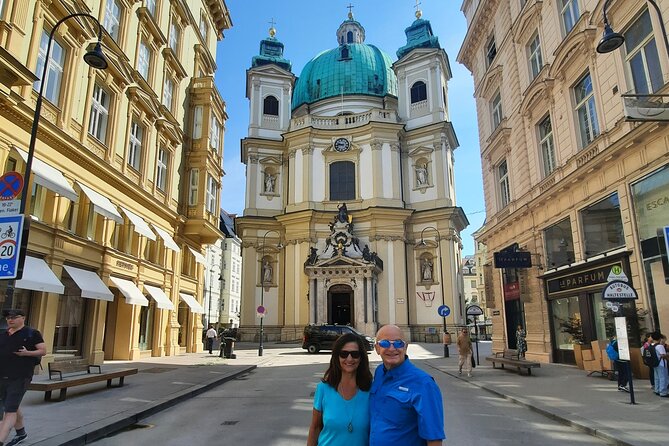
You continue to the Church of the Jesuits, described as one of Vienna’s most impressive baroque churches. This is one of those stops where the architecture does a lot of talking. With a short time window, your best approach is to pick one or two details you want to notice, like the overall style versus any single decoration.
The tour then moves to Heiligenkreuzerhof Market. Here the description includes a dramatic historical story connected to the suicide of the son of the last emperor, and how that relates to the abbey of the Holy Cross. I find these narrative stops useful because they give you a reason to look closer than you would on a plain sightseeing walk.
Finally for this section, you reach Griechenkirche zur heiligen Dreifaltigkeit, and the focus shifts to the medieval part of the city. The tour highlights old pedestrian streets and passages, plus lots of tales. This is where you start feeling like Vienna is not only a sequence of monuments, it is a web of small routes and stories.
Stop 9-14: oldest churches, the Ankeruhr clock, and Vienna shaped by the 20th century
Stop 9 is St. Rupert’s Church (Ruprechtskirche), described as the oldest church of Vienna. If you like history that stretches long past postcards, this is a strong mid-tour anchor. Even with a shorter visit, an oldest-in-the-city stop gives your walking route weight.
Then you go to the Ankeruhr Clock, described as one of the city’s most beautiful clocks. Clocks can be easy to miss when you walk fast, so I recommend using your time here for a quick look from different angles. A guide-led pause is helpful because you notice features you would otherwise glide past.
Next comes Hoher Markt, where the tour points you to a Roman museum and a chance to see Roman and Vienna history in the area. This is another stop that helps you think of Vienna as layered, not one single era.
Then the route turns to Judenplatz Holocaust Memorial. The tour notes it as Jewish square and focuses on the impact of World War II on the Jewish community of Vienna. This is not a casual stop. Even in a short window, it’s one of the places where being respectful and taking a moment to read or absorb what is there matters. The guide’s context is what turns the location into something more meaningful.
After that you reach Am Hof, described as one of the oldest parts of the city. I like this because it is a reminder that some of the “big” feeling in Vienna comes from the overall older street fabric, not only from landmark buildings.
The next stop is Freyung Passage, described as a wonderful passage of Freyung, with nearby buildings that enhance the experience. Passages in Vienna are a big deal, and this is exactly the kind of detail that makes the tour feel more like exploring than just ticking off names.
Stop 15-18: a Last Supper copy, rose gardens, and MuseumsQuartier’s museum-courtyard vibe
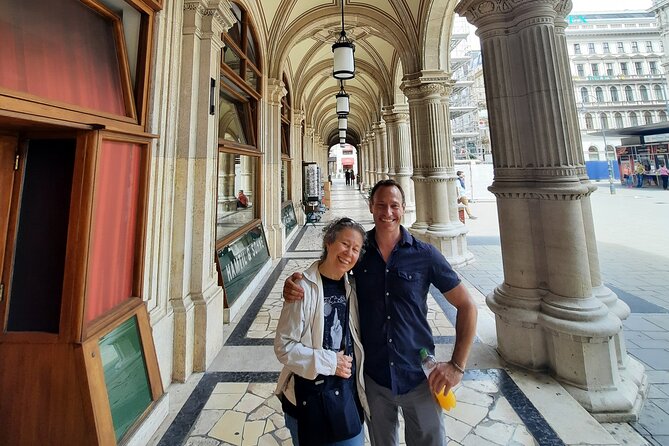
Minoritenkirche is stop 15, and the tour highlights a copy of Leonardo Da Vinci’s Last Supper. This is a clever stop for a short tour because it combines a recognizable artwork with a specific Viennese setting. If you are a fan of art history, you can also use this as a prompt for follow-up visits later.
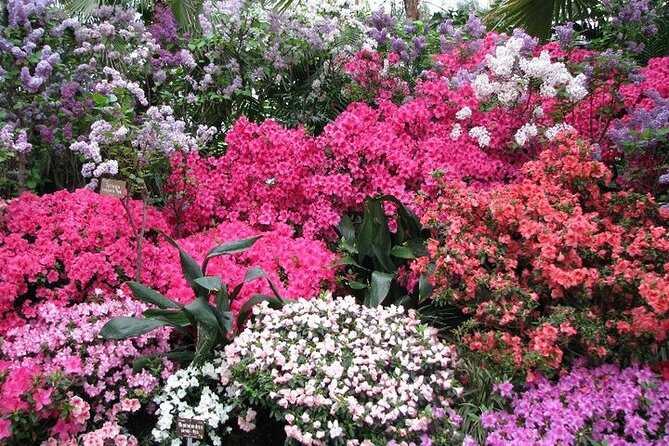
Stop 16 is Volksgarten, described as the garden of thousands of roses. Even if you only get a brief look, rose gardens can change your mood in a way buildings cannot. It is a nice reset between denser historical areas and the larger institutional parts of the walk.
Then you visit Justizpalast, described as one of Vienna’s most impressive buildings. The tour’s short timing here means you should focus on overall impression. Big civic architecture can feel intimidating, but that is also why a guide-led stop works: you can understand why it looks the way it does without needing to become an expert on the spot.
Stop 18 is MuseumsQuartier Wien, described as an inner yard with several interesting museums. Instead of a deep museum visit, this is an atmosphere stop. Think of it as a chance to notice the modern cultural campus feel inside the city center, and maybe choose a museum to add later if you want to spend more time.
You also get practical value from this segment. MuseumsQuartier is a good place to adjust your plan, because it naturally leads into deciding what you want to do after the tour ends.
Still the same country, a very different afternoon:
- Vienna: Schönbrunn Palace & Gardens Skip-the-Line Tour
★ 4.7 · 7,739 reviews - Vienna: Light of Creation Votive Church Immersive Light Show
★ 4.8 · 6,779 reviews - Vienna Spanish Riding School Guided Tour
★ 4.7 · 6,765 reviews - Vienna: Classical Concert in the World-Famous Musikverein
★ 4.6 · 6,673 reviews
Stop 19-21: the Habsburg power axis, Mozart statue moments, and the opera finale
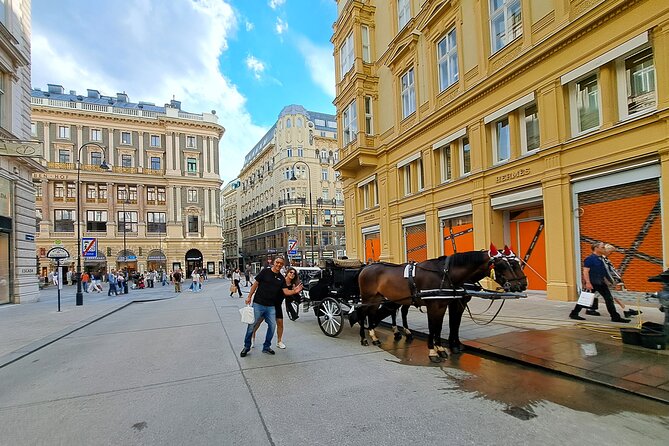
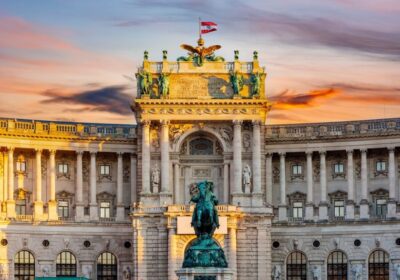
Stop 19 is the Hofburg, described as the Habsburgs palace. This is where the route shifts back into power-and-history territory. Even in a brief stop, the Hofburg works as an “okay, now I understand the center” marker, because it is so central to the story of Vienna.
Stop 20 is Burggarten. The tour calls out the most photographed statue of Mozart in Vienna and also mentions the Butterfly Museum. This is another stop that mixes famous Vienna imagery with a more curious side attraction. If you want souvenir photos, this is likely where you’ll want them. If you want something lighter or more unusual, the Butterfly Museum mention is a useful clue for optional exploring.
Finally, stop 21 is Wiener Staatsoper, the Vienna State Opera, where the tour finishes. Ending here is smart. The opera building is iconic, and the area is easy to continue from, whether you want dinner nearby or just want another loop through the surrounding streets.
This ending also helps you in planning terms. After a walk like this, you often need a visual goal. Finishing at the opera gives you that and helps you navigate the rest of your afternoon or evening.
What you get included, and why it matters for value
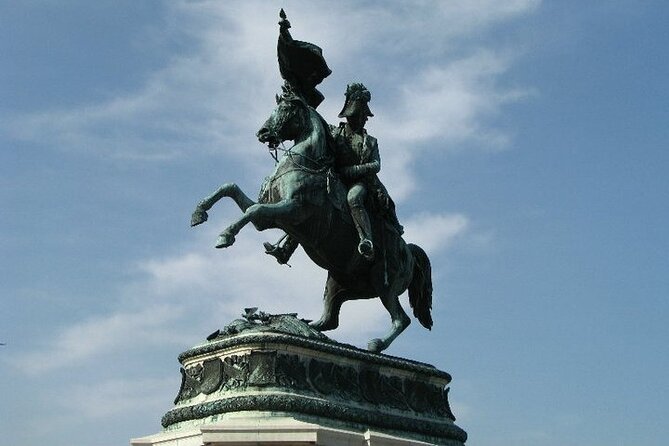
The price for this tour is $84.29 per person, and the value is less about museum entry fees and more about the guided structure. Entrance fees are not listed as included, but the tour’s stop descriptions indicate free access for the sights on your route. That means you are paying mainly for the guide, the group pacing, and the organized route.
You also get a 30-minute break in a traditional Viennese coffee house, described as for coffee and apple strudel. This is not just a nice-to-have. It is a practical part of the tour design, and it is exactly the kind of pause that keeps a packed walking schedule enjoyable.
Other inclusions that help you travel lighter: a printed Vienna information package, suggestions for places outside the city center and for restaurants and coffee shops, and a Vienna city map. I like this mix because it helps you keep going after the tour ends, instead of leaving with only memories.
And you have a mobile ticket, with the guide and tour designed to be easy to find near public transportation.
Who this tour suits best
This is a great fit if you are:
- In Vienna for a short time and want a fast, guided way to see a lot of variety
- Interested in Mozart-related stops but also want churches, passages, and city squares
- The kind of traveler who likes to ask questions and get context instead of doing everything solo
- Traveling with kids or mixed ages, since multiple guides in the tour’s feedback have been described as handling family groups well, with clear, friendly explanations and breaks
It may be less ideal if you:
- Want a slow pace with long museum time at each stop
- Dislike weather-dependent walking
- Hate photo-only moments and prefer fewer stops with deeper stays
Should you book this 4-hour Vienna walk?
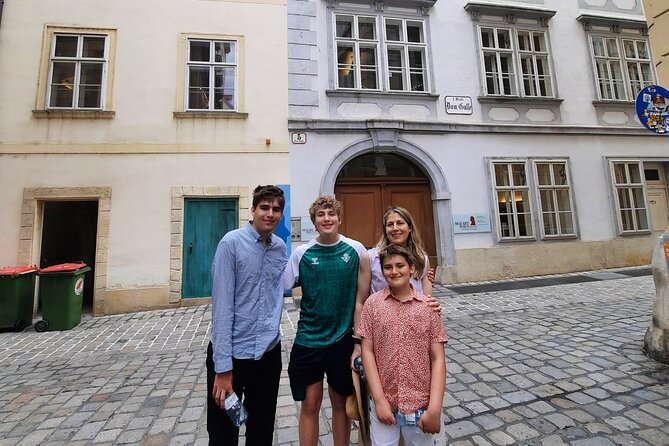
Yes, if your goal is to get your bearings fast and still come away with stories and contrast. This tour’s strength is how it combines Mozart settings, older street texture, and major landmarks into one coherent afternoon, with a built-in coffee break that makes the schedule feel humane.
Book it if you like guided orientation and you want a smart starting point for planning the rest of your trip. I would also book it if you value a small-group feel, because that is what keeps the route from becoming a stiff checklist.
Skip it only if you know you want long time in churches or museums right now. You can still use this as your Vienna starter, but you will likely need a second visit later to fully enjoy the places you personally care about most.
FAQ
How long is the Fall in Love with Vienna in 4h tour?
It is about 4 hours.
Where does the tour start and where does it end?
It starts at Mozarthaus (Mozarthaus, Domgasse 5, 1010 Wien, Austria) and ends at the Vienna State Opera (Opernring 2, 1010 Wien, Austria).
What language is the tour offered in?
The tour is offered in English.
Is a mobile ticket used?
Yes, the tour uses a mobile ticket.
What is included in the price?
A knowledgeable tour guide, a small group experience, a 30-minute break in a traditional Viennese coffee house with coffee and apple strudel, a printed information package, suggestions for more places to visit, and a Vienna city map.
Are entrance fees included?
Entrance fees to museums are not included, though the listed stops on the route show admission ticket free.
What kind of physical fitness do I need?
Travelers should have a moderate physical fitness level, since it is a walking tour with many short stops.
Is tipping required?
Tips are not included.
Fresh on the site in Vienna
- World War II History Vienna Old Town Private Walking Tour★ 4.8 · 9 reviews
- Vienna/Bratislava: Traunkirchen, Hallstatt & Salzburg Tour★ 4.8 · 53 reviews
- Vienna: Winery and Wine Tasting Tour with a Wine Expert★ 5.0 · 5 reviews
- Vienna: Wine Tasting Tour★ 4.8 · 61 reviews
- Vienna/Bratislava: Day Trip to Hallstatt & Salzburg★ 4.8 · 21 reviews
- Vienna: Wiener Schnitzel and Strudel Cooking Class★ 4.9 · 126 reviews
- Vienna: Waltz into the Ball Season★ 4.7 · 3 reviews
- Vienna: Wine Tasting E-Bike Tour★ 4.9 · 46 reviews
Tours, compared.
Schönbrunn Palace & Gardens Skip-the-Line Tour
Read our review →
Skip-the-Line Sisi Museum, Hofburg and Gardens Tour
Read our review →
Skip-the-Line Schönbrunn Palace & Gardens Tour
Read our review →
Guided Walking Tour of City Center Highlights
Read our review →