
REVIEW · WALKING TOURS
Graz Private Walking Tour
Graz feels different with a good walking guide. This private route in Styria connects the Habsburg story of Graz with standout architecture, and it moves you from the medieval heights of Schlossberg down into the UNESCO old town. I love the way the walk blends imperial-era buildings with the city’s modern edge, and I also like that your guide can respond to what you want to know, like when Leo’s storytelling helped people shape the rest of their day. The main drawback is simple: it is still a 90-minute walk, so you need comfortable shoes and a willingness to keep a steady pace.
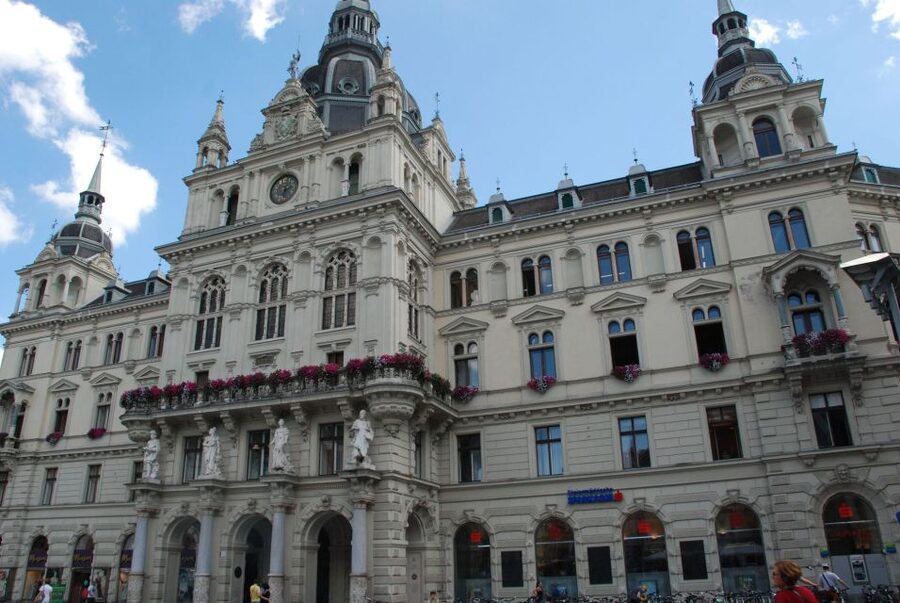
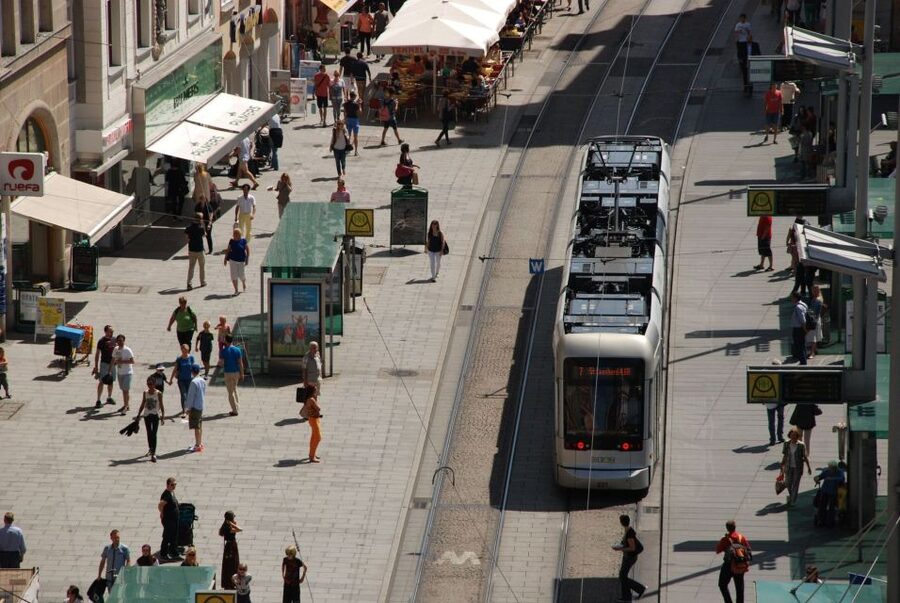
You’ll start at Hauptpl. 1 in the market square, next to the fountain, with the Town Hall drawing your eyes right away. From there, the tour’s rhythm is practical, you get orientation first, then you zoom in on details, stucco, reliefs, and names that tie back to how Graz was governed and lived. Graz also earns its nicknames as a City of Design and a Culinary Capital, and you’ll see why in the mix of careful historic facades and contemporary art.
Price-wise, $289 is for your group up to 15, not per person, so it can be a good deal if you’re traveling with family, friends, or a small circle. It also runs with a live guide in English or German, but one consideration is that entrance fees are not included, so some places may be seen from the outside unless you choose to pay separately.
In This Review
- Key highlights you will actually notice
- Graz, Habsburg residence, and why a short walk works
- Starting at Hauptpl. 1 and getting your bearings fast
- Schlossberg hill: medieval views and the early Slavic merchant link
- Luegg House and the face of the 17th century
- The White House relief and the Eagle Pharmacy
- Palais Sturgkh, Archduke Johann, and the city’s political thread
- Landhaushof and its Renaissance courtyard you will want to see twice
- Kunsthaus Graz: modern art architecture after UNESCO lanes
- How private guiding changes what you get from Graz
- Value: $289 for your group up to 15, in 90 minutes
- Who should book this Graz Private Walking Tour
- Should you book it
- FAQ
- How long is the Graz Private Walking Tour?
- Where is the meeting point for the tour?
- How much does the tour cost?
- Is this a private tour?
- What languages are available for the guide?
- Are entrance fees included?
- What should I bring?
- What is the cancellation policy?
Key highlights you will actually notice
- Schlossberg orientation from above: start with the medieval view and the early Slavic merchant story tied to the hill.
- Town Hall and market-square framing: quick way to understand how civic power shaped the city.
- Imperial facade stops you can point at later: Luegg House stucco, the White House Virgin Mary relief, and the Eagle Pharmacy.
- Renaissance Landhaushof courtyard: a standout political and architectural reference point with the first Renaissance courtyard in the city.
- Kunsthaus Graz after the medieval lanes: ultramodern blob-like architecture that feels like a different Graz.
- Guiding that adapts to your wishes: Leo is specifically praised for clear, interesting stories and practical suggestions.
Graz, Habsburg residence, and why a short walk works
Graz is the kind of city that rewards being shown, not just being looked at. In a compact 90 minutes, you can link the city’s role as an imperial residence of the Habsburg dynasty to the buildings you see today, and you can also connect the dots between older governance and newer cultural identity. That is the hidden value here: the walk is short enough to stay energetic, but structured enough to feel like a guided storyline.
You also get a sense of Styria beyond postcards. Graz’s old-town district is a UNESCO World Heritage site, and it is described as one of the best-preserved areas in central Europe. Walking it with context matters because the city is not only pretty, it is also political, religious, and designed to impress, even in small details like a relief over a doorway.
More Walking Tours in Graz:
- Graz: Old Town Highlights Private Walking Tour
★ 4.6 · 16 reviews - Graz Private Walking Tour With A Professional Guide
★ 5.0 · 5 reviews - Graz Old Town Highlights Private Walking Tour
★ 5.0 · 4 reviews
Starting at Hauptpl. 1 and getting your bearings fast
Your meeting point is straightforward: next to the fountain in the middle of the main square, Hauptpl. 1, 8010 Graz. This matters more than you might think. Being placed in the core market area helps you understand distances and align what you see next with where you started.
From the start, the Town Hall dominates the square. Your guide uses that as a reference point to explain Graz’s significance, and how the city’s civic life and imperial connections overlapped. If you like history but not the tedious kind, this is a good match because the tour uses the city as the textbook, with buildings as your cues.
You will also hear the city’s nicknames, including UNESCO City of Design, City of Human Rights, and Culinary Capital City of Austria. You do not have to agree with every modern label to appreciate the point. It is how Graz balances tradition with identity today, and the guide will steer you toward what that looks like in real streets.
Schlossberg hill: medieval views and the early Slavic merchant link
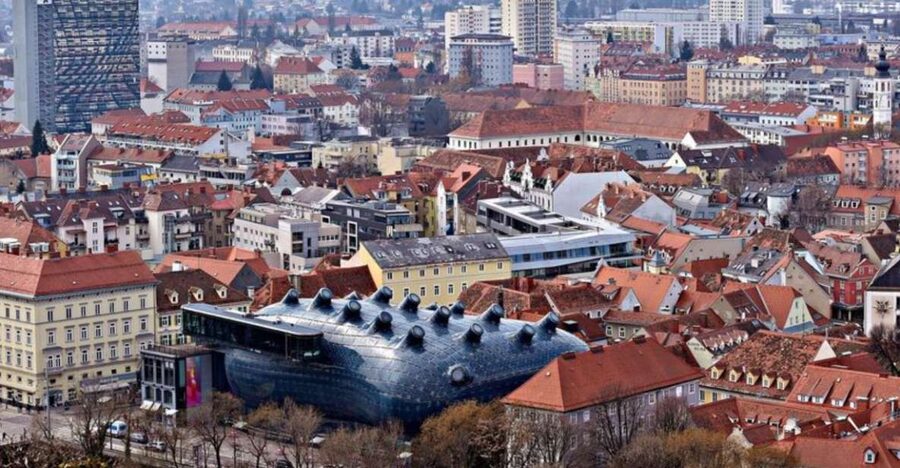
One of the tour’s best pacing choices is that it starts with altitude and perspective. You begin with views from Schlossberg, the hill above Graz, a medieval landmark that helps you read the city like a map. Even if you are not visiting any viewpoints with tickets, the explanation alone can make the streets below feel less random.
This is also where the tour brings in the Slavic angle, pointing to the period when Graz was home to Slavic merchants and traders. That detail gives the city a deeper origin than a pure Habsburg-only storyline. It is an easy shift in your understanding of Graz, from a place you walk through to a place that formed through movement and trade.
Practical tip: if it is hot or windy, take a moment at the top to slow down and look. You are training your eyes for the rest of the walk. Once you can picture the city from up there, the architectural details down below feel more intentional.
Luegg House and the face of the 17th century
After the overview, the tour moves into close-up architecture. A highlight stop is the Luegg House, a 17th-century building known for its impressive stucco façade. Stucco can be easy to overlook if you are rushing, but in a guided walk you learn what to look for and why it mattered.
What you love about this kind of stop is not just the beauty. You start seeing the city as a place where style was a message. Facades like this communicate status, wealth, and taste, and they also show how long people invested in the look of the streets.
If you are an architecture person, you will enjoy how quickly the guide helps you connect details to the era. If you are not, you will still walk away knowing what makes the façade special, and that makes your photos better too.
A few more Graz options worth a side-by-side
- Kunsthaus Graz Museum Entrance Ticket
★ 3.5 · 19 reviews - Lipizzaner Stud Piber: Guided Tour
★ 4.6 · 18 reviews - Universalmuseum Joanneum Pass in Graz
★ 4.0 · 14 reviews - Fun & mobile scavenger hunt through Graz
★ 4.5 · 12 reviews
The White House relief and the Eagle Pharmacy
Two next door details can become your mental anchors for Graz. The five-story White House is known for a sandstone relief of the Virgin Mary. Again, you are not just seeing decoration. You are seeing how religious identity and public-facing architecture overlapped in everyday city life.
Then comes the Eagle Pharmacy, a 16th-century address that adds a totally different texture to the walk. Pharmacies sound ordinary until you remember that medicines, trade, and civic life were linked. A named building like this tells you the city’s historic economy had its own landmarks, not only palaces and churches.
These are great stops because they are specific. When you can point to a relief or a labeled house, Graz sticks in your memory for real, not as vague old streets.
Palais Sturgkh, Archduke Johann, and the city’s political thread
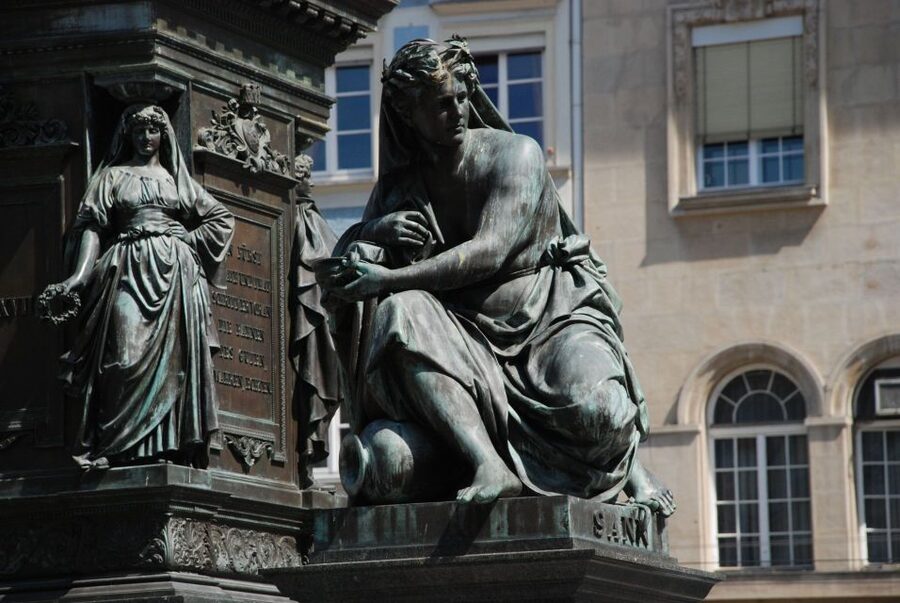
The tour keeps returning to power and governance through buildings and monuments. Palais Sturgkh is a 14th-century palace stop, a chance to see how aristocratic presence shaped the city’s layout and streetscape. Even without going inside, the exterior read gives you a sense of what kind of neighborhood this was, and why certain buildings were built to last.
Then you have the fountain and statue of Archduke Johann dating from 1878. This is a turning point from medieval and early modern architecture into later layers of Graz’s story. When you connect this statue to earlier imperial significance, you start understanding how Graz kept redefining who it was, even as centuries changed.
This part of the walk also ties into the tour’s theme of religious and political background, plus the influence of the historic Styrian Diet. You will come away with a sense that Graz’s identity was shaped by institutions, and those institutions left traces you can still recognize.
Landhaushof and its Renaissance courtyard you will want to see twice
If you like architecture that rewards patience, the Landhaushof stop is a big reason to do this tour. The Landhaushof has a remarkable Renaissance courtyard, described as the first Renaissance courtyard in the city. That phrase matters because it signals change, when Graz was adopting new architectural ideas and expressing that shift through design.
A courtyard is also a smart walking-tour choice. It gives you a breather without losing the thread of the story. You can look at proportions, materials, and the way the courtyard frames space, then you understand the political context even better. Courtyards like this were not accidental, they shaped how people met, moved, and performed civic life.
This is also where the connection to the historic Styrian Diet feels more concrete. The tour’s theme is not just Habsburg culture in general. It links that power to how regional governance worked, and how those choices ended up in architectural form.
Kunsthaus Graz: modern art architecture after UNESCO lanes
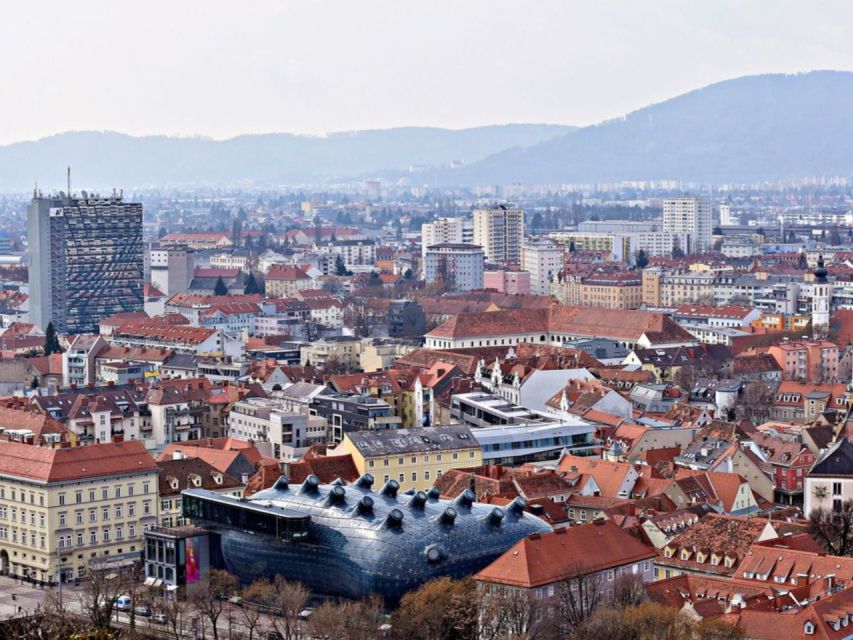
Just when you think you have the old city totally figured out, the tour brings you to the Kunsthaus. This is Graz’s newer exhibition place, and its architecture is described as blob-like and ultramodern. That is not just a style description, it changes your emotional tempo. The walk starts grounded in medieval and imperial cues, then it flips you into contemporary art space.
What makes this stop valuable is contrast. After UNESCO World Heritage streets from medieval times, a futuristic-looking building feels like the city announcing it is not frozen in history. You can also see how Graz is building a cultural identity that sits comfortably next to older stonework and planned imperial streets.
Tip for the Kunsthaus moment: take a step back before you take close photos. The architecture reads differently at distance, and your guide will likely point out how the building’s shape relates to modern design values.
How private guiding changes what you get from Graz
This is a private group tour where the local guide stays with your group only. That changes the experience in small but meaningful ways.
First, you can ask questions without feeling rushed. If you care more about architecture, you can steer the guide toward the stucco, reliefs, and the Renaissance courtyard. If you prefer politics and religion, you can ask how the city’s background shows up in the institutions, buildings, and monuments you pass.
Second, a private format gives the guide freedom to respond to your wishes. One of the standouts from comments about this tour is that the guide adjusts to what the group wants, and can add insider knowledge that makes the walk feel personal. Leo, specifically, is praised for making the exploration memorable through interesting stories, and for sharing suggestions that help you continue later in the day.
Language is also practical. You can get the tour in English or German, and that matters because history and architectural details land better when you understand every nuance.
Value: $289 for your group up to 15, in 90 minutes
Let’s look at the pricing in a way that helps you decide. $289 per group up to 15 for 90 minutes is not designed for solo travelers looking for a cheap overview. It is designed for small groups that want more control, more interaction, and a tighter storyline than a large group tour usually offers.
If you are traveling with, say, 4 to 8 people, this can be very good value compared to paying for multiple individual guide services. Even if you do not split the cost evenly, the big win is quality of attention. A private guide is better at matching the pace to your group, and that can be the difference between a walk that feels like school and one that feels like a conversation with the city.
Two value caveats to keep in mind:
- Entrance fees are not included, so if any of the stops require tickets for interior access, you will pay separately.
- In 90 minutes, you will see highlights, not everything. If you want museums or long interior stays, you may need extra time or another plan.
Who should book this Graz Private Walking Tour
Book it if you want a story-driven walk that connects Graz’s Habsburg role, Styria’s institutional influence, and the mix of architectural eras. It is especially a good fit if:
- You like architecture but want context so it makes sense.
- You enjoy history that links to real places, not just names.
- You are traveling in a group where a shared private experience feels easier than coordinating separate outings.
- You want to finish the day with a better sense of where to go next, since the guide is known for offering practical suggestions.
It may not be the best fit if you dislike walking, or if you need guaranteed time inside multiple sites. This tour is built around guided exterior and orientation experiences, and entrance fees are not part of the deal.
Should you book it
I think you should book this Graz private walking tour if your goal is to understand the city fast, and if you want the highlights explained clearly by a guide who stays with your group the whole time. The combination of Schlossberg orientation, UNESCO old-town streets, and a modern Kunsthaus finale is a smart way to cover both Graz’s historic identity and its present-day cultural voice.
Skip it only if you want a long museum-heavy itinerary or you dislike walking for 90 minutes. Otherwise, this is a solid, cost-effective choice for groups that want real guidance, not just a list of sights.
FAQ
How long is the Graz Private Walking Tour?
The tour lasts 90 minutes.
Where is the meeting point for the tour?
You meet next to the fountain in the middle of the square, Hauptpl. 1, 8010 Graz, Austria.
How much does the tour cost?
The price is $289 per group, for groups up to 15 people.
Is this a private tour?
Yes, it is a private group tour, with a local guide who stays with your group only.
What languages are available for the guide?
The live guide is available in German and English.
Are entrance fees included?
No. Entrance fees are not included in the price.
What should I bring?
Wear comfortable shoes.
What is the cancellation policy?
You can cancel up to 24 hours in advance for a full refund.
Fresh on the site in Graz
- Graz city tours★ 3.5 · 9 reviews
- Graz Private Walking Tour With A Professional Guide★ 5.0 · 5 reviews
- Fun & mobile scavenger hunt through Graz★ 4.5 · 12 reviews
- Graz Scavenger Hunt and Sights Self Guided Tour★ 4.0 · 9 reviews
- Explore Graz in 60 minutes with a Local★ 5.0 · 7 reviews
- Graz Old Town Highlights Private Walking Tour★ 5.0 · 4 reviews
- Graz Funicular Ride and Schlossberg Picnic Experience★ 5.0 · 5 reviews
- Private Photoshoot Walk Old Town of Graz★ 3.0 · 3 reviews
Walking Tours, compared.
Guided Walking Tour of City Center Highlights
Read our review →
Guided Walking Tour of City Highlights & Hidden Gems
Read our review →
Vienna Historic Center Small Group Walking Tour
Read our review →
Browse the lists this tour appears in