
REVIEW · WALKING TOURS
Private Vienna Art Nouveau Walking Tour
Jugendstil hides in plain sight. This private walk ties together Vienna’s Art Nouveau architecture and the city’s metro world, from the Secession Building to Otto Wagner design landmarks. I love how the guide turns facades into stories, and I love that the tour is flexible enough to follow your questions without feeling like a stamp-collection route.
One thing to plan for: several key stops involve separate entrance fees (especially the Secession Building for the Klimt Beethoven Frieze and the Otto Wagner Pavilion depending on opening dates). Also, it’s a walking tour, so you will want good shoes and a little patience for weather and station crowds.
In This Review
- Key highlights to look for
- Why this Art Nouveau route works so well in Vienna
- Operngasse meeting point and the warm-up at the Secession Building
- Stadtpark gives your eyes a breather before the Jugendstil focus returns
- Karlsplatz Stadtbahn station: where transit architecture becomes a design statement
- Otto Wagner Pavillon on Karlsplatz: a practical stop for understanding the architect
- Postsparkasse: Otto Wagner Secession work you can actually spot and photograph
- Naschmarkt: the food market break that still fits an Art Nouveau tour
- The finish at metro stations, including the tiny Emperor-era stop
- Price and value: $490 per group, and what it means per person
- Entrance fees you should budget for up front
- What the private guide format gives you (and what it does not)
- Getting ready: shoes, timing, and how to make the most of 3 hours
- Who should book this Art Nouveau walk
- Should you book this tour?
- FAQ
- How long is the Private Vienna Art Nouveau Walking Tour?
- What is the price and group size for this tour?
- Is this tour private?
- What is included in the tour price?
- Are there any entrance fees?
- Does the tour include pickup?
- Where does the tour start?
- Does the tour use a mobile ticket?
Key highlights to look for
- Secession Building first, so the Beethoven Frieze theme lands early, not at the end of your walk.
- Otto Wagner’s station buildings, where transit architecture becomes art you can actually study up close.
- Metro stop details, including a tiny finish stop linked to an Emperor.
- Easy pacing with meaningful breaks, like Stadtpark, Postsparkasse, and the Naschmarkt area.
- Private guide Q&A, with guides like Barbara, Wolfgang, and Annelie known for answering history and art questions clearly.
Why this Art Nouveau route works so well in Vienna
Vienna’s Art Nouveau, often called Jugendstil, can feel like decoration from a distance. Up close, it is political, artistic, and very specific to a time when Vienna wanted to reinvent itself.
This tour does that job fast. You start where the Vienna Secession declared it was done with the old art rules, then you move through Otto Wagner’s design thinking, and you end at metro stations that show how the new style spread into daily life. You are not just looking at pretty buildings, you are learning why people built them that way.
I also like the private format. With a group capped at up to 10, you should be able to get direct answers, slower explanations, and practical pacing. It is the kind of tour where you can say, I care more about the architecture than the art, or the other way around, and your guide can steer the conversation.
More Walking Tours in Vienna
- Vienna: Guided Walking Tour of City Center Highlights
★ 4.7 · 4,989 reviews - Vienna: Vienna Central Cemetery Guided Walking Tour
★ 4.8 · 3,307 reviews - Vienna: Guided Walking Tour of City Highlights & Hidden Gems
★ 4.9 · 2,180 reviews
Operngasse meeting point and the warm-up at the Secession Building
Your tour starts at Operngasse 7 (near public transportation). From there, the first stop sets the tone: the Secession Building, finished in 1898 by Joseph Maria Olbrich.
This is not a random museum stop. It was designed as an architectural manifesto for the Vienna Secession, a group of rebel artists who broke away from an established, long-running fine arts institution. That context matters because Jugendstil is not just style. It is a statement about who gets to decide what art is.
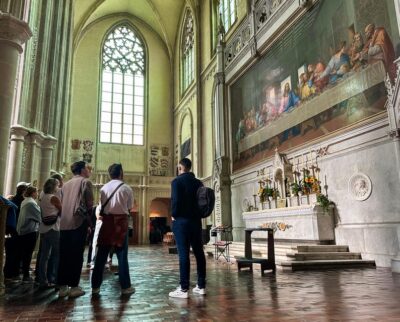
Inside, you focus on the famous Beethoven Frieze by Gustav Klimt. The frieze was painted for one of the original exhibitions, so you are seeing the kind of work the Secession wanted to promote and protect.
Timing note: this stop is about 30 minutes. Also plan for entry costs here. The tour notes that if you tour Tuesday to Sunday, there is an admission fee for the Secession House to see the Beethoven Frieze. Your guide will help you pay, so you are not left wrestling with ticket machines mid-walk.
Stadtpark gives your eyes a breather before the Jugendstil focus returns
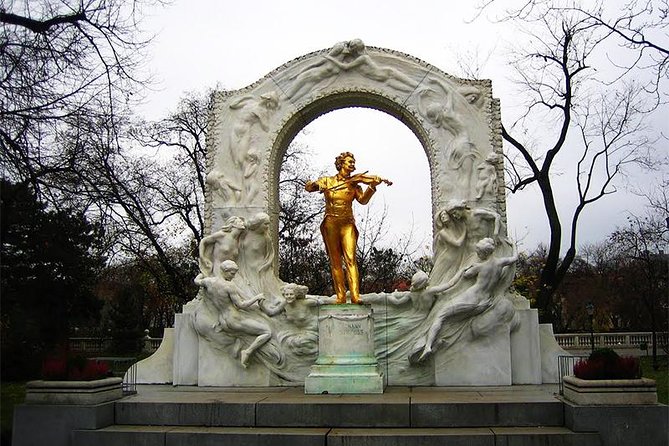
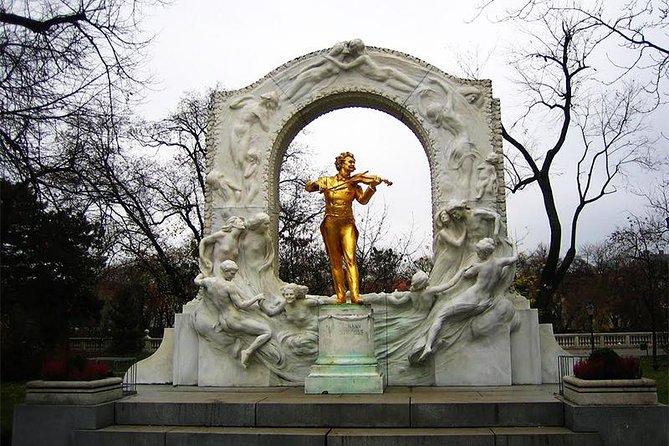
After the Secession moment, you get a breather with Stadtpark. It is a municipal park that runs from the Ringstraße area in the First District up to Heumarkt.
This park stop is about 15 minutes and is free. It gives you something important: a pause between big architecture moments. When you are moving from exhibition hall ideas to street-level building design, your brain needs a reset. Stadtpark helps with that.
It also changes your pace. In a lot of Vienna tours, every stop is either a church or a palace. Here you get a green, city-centered gap, and it helps you notice how the surrounding streets and buildings frame the style.
Karlsplatz Stadtbahn station: where transit architecture becomes a design statement
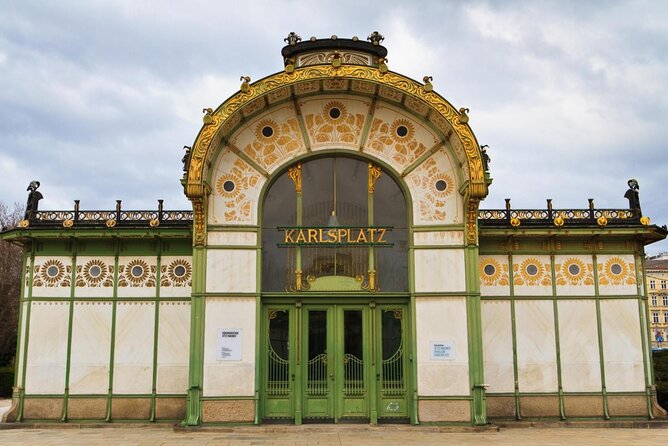
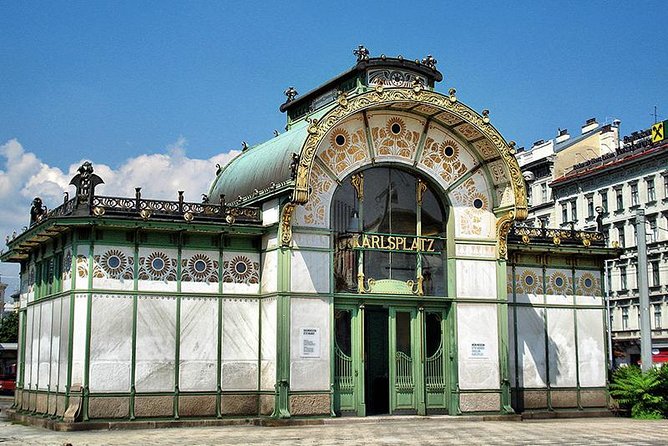
Next comes Karlsplatz, specifically the Karlsplatz Stadtbahn Station. The buildings above ground here are a well-known example of Jugendstil architecture designed by Otto Wagner, with Joseph Maria Olbrich also involved.
This is the part of the tour I think is most useful for understanding Vienna. Otto Wagner is often discussed in big, theoretical terms. But Karlsplatz shows you how his thinking played out in real public infrastructure, where ordinary people would encounter it daily.
The tour gives this stop around 20 minutes. If you like architecture, you will probably want to slow down. Jugendstil details are not always obvious at first glance, but they become clearer when you stand close and look like a designer.
Still the same country, a very different afternoon:
- Vienna: Vivaldi’s Four Seasons Concert in Karlskirche
★ 4.7 · 14,951 reviews - Vienna: Spanish Riding School Training
★ 3.9 · 9,281 reviews - Vienna: Skip-the-cashier-desk-line Giant Ferris Wheel Ride
★ 4.5 · 7,859 reviews - Vienna: Schönbrunn Palace & Gardens Skip-the-Line Tour
★ 4.7 · 7,739 reviews
Otto Wagner Pavillon on Karlsplatz: a practical stop for understanding the architect
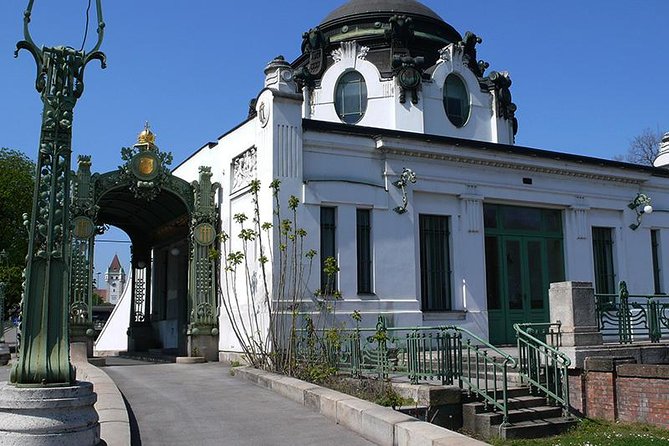
You then move to the Otto Wagner Pavillon Karlsplatz, a station building from 1898 designed by Otto Wagner. This stop is essentially an exhibit on his life and work in that very Art Nouveau setting.
Time-wise, you get about 15 minutes. Entrance is not included. The tour notes that visiting this pavilion depends on opening dates, with the museum open from April to October.
Admission is listed as €5 for general admission and €4 for senior citizens, students, Vienna Card holders, and persons with disabilities. If you are traveling in the colder months, you might not see this pavilion visit, but your guide will still keep the Otto Wagner thread going through the other sites.
If you care about why Art Nouveau shows up in transit at all, this is the stop that ties your observations together.
Postsparkasse: Otto Wagner Secession work you can actually spot and photograph
Postsparkasse is one of those buildings where the style feels obvious once someone points it out. The Austrian Postal Savings Bank building was designed and built by Otto Wagner, and it is regarded as an important work in the Vienna Secession branch of Art Nouveau.
This stop is about 25 minutes and free to visit. That free access matters. It means you can spend time studying without worrying about ticket timing or entrance lines.
Even if you are not a hardcore architecture fan, you can usually tell when a building is meant to be noticed. Postsparkasse looks like it has opinions. The details feel deliberate, and that aligns with what Otto Wagner was trying to do in the modernizing Vienna of his day.
Naschmarkt: the food market break that still fits an Art Nouveau tour
Naschmarkt is the classic Vienna market, with around 120 colorful market stands and lively restaurants. Here, the tour gives you about 10 minutes, and it is free.
This stop is short on purpose. The value is not buying souvenirs or doing a full meal crawl. The value is switching your eyes from architectural details to how modern life mixes with historic city planning.
If you want to add on your own time, this is a smart place to do it because the area has plenty of food options and you are near lots of walking routes. The tour does not promise a meal, so if you want lunch or a quick snack, plan to buy it yourself.
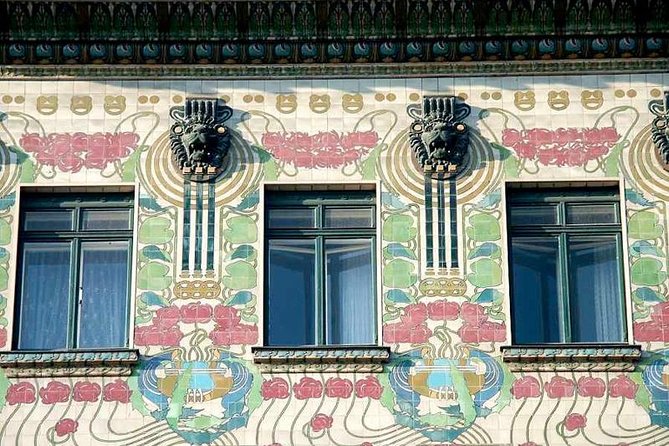
One more thing: Art Nouveau apartment houses often get discussed in this same neighborhood context. The tour’s broader design conversation can lead to nearby ornamented residential buildings, so keep your camera ready and your questions even readier.
The finish at metro stations, including the tiny Emperor-era stop
The tour ends at a pair of beautiful metro stations. The details here lean into something very Vienna, the idea that even transit gets treated like culture.
One of the final stops includes a tiny stop built just for the Emperor. The tour also frames the finishing stations as part of the wider Art Nouveau story, showing how the style shows up not only in exhibition halls and banks, but in the way the city moves people.
You will want to have a practical plan after the tour. Your guide ends you at the stations, so think about which line gets you back to your hotel or your next plan.
Price and value: $490 per group, and what it means per person
The tour costs $490 per group, up to 10 people, for about 3 hours. That means the value shifts a lot based on your group size.
- If you go as 2 people, you are effectively paying about $245 per person.
- If you go as 4, it drops to about $122.50 per person.
- If you fill closer to 8 or 10, it becomes a bargain compared with paying the same per-person rate for a larger group tour.
What makes this price make sense is the private format plus the focused theme. You are not just paying for walking. You are paying for a guide who can connect the Secession movement, Otto Wagner’s station design ideas, and how Klimt’s Beethoven Frieze fits into the broader Art Nouveau agenda.
Also note what is and is not included. The tour includes the guided experience with a professional guide. It offers pickup, and it uses a mobile ticket. But it does not include entrance fees, and it does not include meals or drinks unless specified. So your real cost depends on whether you hit the pavilion opening schedule and whether you tour on the days when the Secession House visit is set.
Entrance fees you should budget for up front
Plan for separate admissions at key moments.
- Secession House for the Beethoven Frieze: The tour lists admission fees if you tour Tuesday to Sunday, including €9.50 for adults and €6 for students and seniors.
- Otto Wagner Pavillon: This is tied to the museum opening season from April to October. Listed admission is €5 general and €4 for senior citizens, students, Vienna Card holders, and persons with disabilities.
The good news: your guide helps with paying. The not-so-fun part: it adds cost and it can affect how long you stand in a line if you arrive right around the same time other visitors do.
I recommend budgeting at least the Secession fee for the Klimt frieze unless you know your dates line up differently.
What the private guide format gives you (and what it does not)
This is a private tour, so it should feel calmer than a large-group march. It also means you can steer the emphasis.
From the way the guides are described by people who took the tour, the guide role is not only “show up and walk.” Guides like Barbara, Wolfgang, and Annelie are repeatedly described as strong at explaining Vienna Secessionism and answering questions about history, art, Vienna’s past and present, and how it all connects.
That is exactly what you want in a tour like this. Art Nouveau becomes much easier to understand when someone teaches you the logic behind the ornament, the symbolism, and the design choices.
What it does not do: it does not function as a full museum day. You get quick, focused time at each stop, around 10 to 30 minutes, so you are not going to see every room or every side exhibit. The trade-off is that you will see more of the city theme in less time.
Getting ready: shoes, timing, and how to make the most of 3 hours
You are on foot for about three hours, with several station-area locations. I’d come in with comfortable walking shoes and a light layer. Vienna weather can shift fast, even when the morning looks safe.
Bring a charged phone too, because the tour uses a mobile ticket. Even if you are not a phone person, you will appreciate not scrambling for paper.
Also, come ready with one or two questions. If you walk in asking nothing, you might still enjoy the architecture. But if you ask, What is Vienna Secession rebellion compared to other European movements? or, Why does Otto Wagner treat transit like art? your guide can aim the conversation where you care most.
A final practical note: most travelers can participate, which suggests the walking level is reasonable. Still, if you have mobility limits, ask before booking so the route fits your pace.
Who should book this Art Nouveau walk
This tour is a great fit if you like any of these:
- Architecture with a story, not just photos of buildings
- Art Nouveau/Jugendstil, especially the Vienna Secession angle
- A mix of museum-like moments and street-level design
- People who want a private experience without spending a whole day in a single building
It is less ideal if you want a long, deep museum visit, because time at each stop is limited. It is also less ideal if you hate paying separate entrance fees, because the Beethoven Frieze and Otto Wagner Pavilion visits can require them.
Should you book this tour?
Yes, if you want a tight, high-value way to understand Vienna’s Art Nouveau through the lens of Joseph Maria Olbrich, Otto Wagner, and Gustav Klimt. The private guide format is where this tour really earns its keep, because you get context fast and you can ask questions as you look.
Consider skipping or adjusting if:
- Your dates make the paid interior visits unlikely, and you mainly want museum time.
- You are traveling with a strict budget for entrance fees.
- You prefer an unstructured walk where you choose every stop yourself.
If you want a guided path that turns Vienna’s Jugendstil from pretty to meaningful, this one is an easy yes.
FAQ
How long is the Private Vienna Art Nouveau Walking Tour?
It runs for about 3 hours.
What is the price and group size for this tour?
The price is $490.00 per group, up to 10 people.
Is this tour private?
Yes, it is private. Only your group participates.
What is included in the tour price?
You get a 3-hour guided tour of Vienna Art Nouveau metro stations and iconic buildings, with a professional guide.
Are there any entrance fees?
Yes. Entrance fees are not included. The tour lists fees for the Secession House to see Klimt’s Beethoven Frieze, and also entrance for the Otto Wagner Pavillon when it is open. The guide helps you pay.
Does the tour include pickup?
Pickup is offered, but hotel pickup and drop-off are not included.
Where does the tour start?
The meeting point is Operngasse 7, 1010 Wien, Austria.
Does the tour use a mobile ticket?
Yes, the tour includes a mobile ticket.
Fresh on the site in Vienna
- World War II History Vienna Old Town Private Walking Tour★ 4.8 · 9 reviews
- Vienna/Bratislava: Traunkirchen, Hallstatt & Salzburg Tour★ 4.8 · 53 reviews
- Vienna: Winery and Wine Tasting Tour with a Wine Expert★ 5.0 · 5 reviews
- Vienna: Wine Tasting Tour★ 4.8 · 61 reviews
- Vienna/Bratislava: Day Trip to Hallstatt & Salzburg★ 4.8 · 21 reviews
- Vienna: Wiener Schnitzel and Strudel Cooking Class★ 4.9 · 126 reviews
- Vienna: Waltz into the Ball Season★ 4.7 · 3 reviews
- Vienna: Wine Tasting E-Bike Tour★ 4.9 · 46 reviews
Walking Tours, compared.
Guided Walking Tour of City Center Highlights
Read our review →
Guided Walking Tour of City Highlights & Hidden Gems
Read our review →
Vienna Historic Center Small Group Walking Tour
Read our review →
Browse the lists this tour appears in