REVIEW · TOURS
Taste and Tour Small Organic Wineries with a Winemaker
Vienna gets the headlines, but the real wine story is north. This private, winemaker-led tour takes you from Krems through small organic wineries guided by the Danube valley, with tastings that explain how vineyards, soil, and cellar choices shape every glass. I love the up-close scale of the stops, and I love that you meet people making the wine, not just people pouring it.
One consideration: it is a 3 hour outing with moderate walking, including a short vineyard stroll and stairs or cellar access you should be comfortable with, especially if you cannot walk down into a cellar.
In This Review
- Key highlights before you go
- Vienna’s wine day, but start in Krems
- What makes this tour feel like real winemaking
- The 3-hour flow: wine time beats checklist time
- Stop 1, Kapitel Zwei Wine: Kremsleithen and amphora aging
- Stop 2, Weingut Mantlerhof: a classic manor and organic Grüner
- Stop 3, Weingut Feldtheorie in Schoenberg am Kamp: science meets wine
- Stop 4, WeinSchach in Langenlois: biological Pet Nat and free unfolding
- Stop 5, Welterbesteig viewpoint: the 7 to 10 minute walk
- What you will likely taste, and how the tastings differ
- Price and value: why $114 can work better than a bigger tour
- Who this private winemaker tour is best for
- Smart tips so the day goes smoothly
- Should you book this winemaker-led organic wineries tour from Krems?
- FAQ
- How long is the tour?
- How much does it cost?
- Is the tour offered in English?
- Where does the tour start and end?
- Can I get picked up?
- How do I get to Krems from Vienna?
- Do the wineries charge extra entry fees?
- Is the tour difficult to walk?
- Is this a private tour?
- What is the cancellation timeframe?
Key highlights before you go
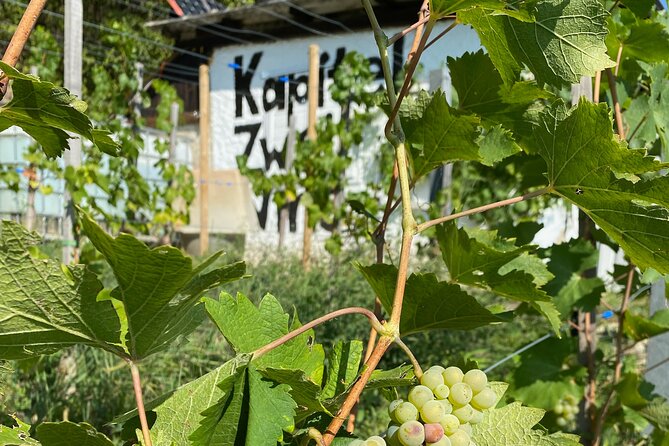
- Small organic wineries you can actually hear: you stay in real cellar rooms and vineyard lanes, where questions make sense.
- The Danube as your thread: the drive and viewpoints stay tied to the river valley all day.
- Hands-on wine logic: amphora and steel aging, biological sparkling methods, and single vineyard focus.
- Owners at the table: each stop is run by the people behind the wine, with explanations that stay grounded.
- Views without a long hike: a short 7 to 10 minute walk ends at a viewpoint over the region.
- Private group pace: only your group participates, so the timing feels unhurried.
Vienna’s wine day, but start in Krems
This is not a full-day bus tour that dumps you at a single tasting room and calls it a day. The day is built around Krems an der Donau as your base, with the route hugging the Danube area and nearby wine districts. Expect about 2.5 hours of tour time and around 30 minutes of driving between stops, so you spend more time with the wine than with the van.
The tour meets at Bahnhofpl. 2, 3500 Krems an der Donau, and it runs Monday through Saturday during set windows (12:00 PM to 7:00 PM in the stated date range). If you are staying in Vienna, you can take a direct train to Krems and meet at the station, which keeps your day simple. If you arrive by boat from Vienna, you can coordinate to meet at the boat station too.
For me, the value here is that Krems is a real gateway to the region, not a chore to reach. You get out of the city, but you do it in a way that still feels organized.
A few more Vienna options worth a side-by-side
- Vienna: Vivaldi’s Four Seasons Concert in Karlskirche
★ 4.7 · 14,951 reviews - Vienna: Spanish Riding School Training
★ 3.9 · 9,281 reviews - Vienna: Skip-the-cashier-desk-line Giant Ferris Wheel Ride
★ 4.5 · 7,859 reviews
What makes this tour feel like real winemaking
The biggest draw is that you are tasting at small producers who care about process. Instead of one big crowd setup, you move through micro and family wineries where the “why” behind the wine is part of the visit.
You will see a few distinct approaches:
- French varietals tested in Austria, aged in amphora and steel tanks
- Long-running family production focused on Grüner Veltliner and Roter Veltliner, with organic methods
- A natural sciences background driving a “Kamptal through our wines” idea at Feldtheorie
- Biological sparkling production aimed at making a Pet Nat with free expression
In the reviews, the consistent theme is that the host guides you through how the vineyard choices end up in the bottle. That is exactly what you want from a winemaker tour, because the tasting becomes more than a pleasant moment. It turns into a map you can reuse later when you buy bottles back home.
The 3-hour flow: wine time beats checklist time
The itinerary is tight and practical. You are visiting five stops, with short time blocks at each place and enough driving to link the points.
Here is what the timing feels like on the ground:
- Stop 1 is about 20 minutes at a micro-winery.
- Stop 2 gives you about 45 minutes at a longer established family site.
- Stop 3 is around 30 minutes.
- Stop 4 is about 40 minutes at a sparkling-focused operation.
- Stop 5 includes a short 7 to 10 minute vineyard walk, with time afterward for the viewpoint.
This pacing matters. In wine country, too many tastings back-to-back can blur together. Here, the breaks between stops let each place land, especially since the wineries are different enough in style that your brain can tell the story.
Also, admission is listed as free at each stop. That does not mean everything is “just included,” but it does suggest you are not paying extra entry fees layered on top of the tour price.
Stop 1, Kapitel Zwei Wine: Kremsleithen and amphora aging
Your day starts with Kapitel Zwei Wine in the Krems area, a micro-winery experiment that focuses on organically and sustainably growing French grape varietals. The lineup you can expect includes Chenin Blanc, Roussanne, and Sémillon, which is already a great sign if you like your Austrian wine with a twist.
The wine concept here is tied to both vineyard origin and cellar method:
- The grapes are handpicked from a single vineyard, called a ried, specifically Kremsleithen.
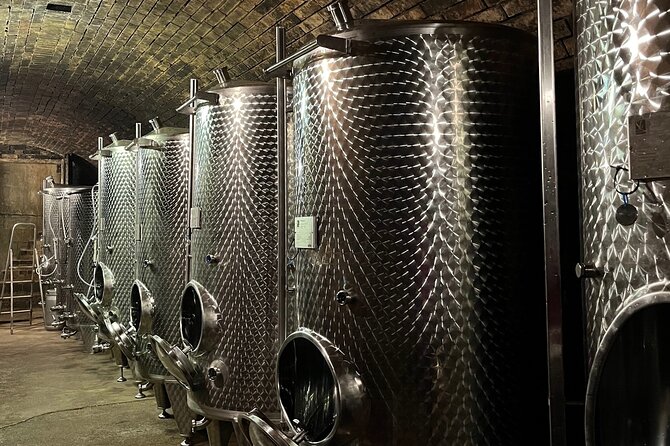
- The wine is aged in amphora and steel tanks.
Kremsleithen adds extra meaning. The vineyard sits on steep slopes down toward the river Krems, at around 300 meters above sea level, with loamy, sandy soil and clay. It was abandoned decades ago and replanted in May 2022, so the story is part of the character, not just marketing trivia. Even the name traces to the German word for slope, “Leiten,” which makes the place feel personal.
What I like about this stop is the learning style. A micro-winery visit is short by nature, so the host tends to focus on a few key choices: why these varietals, why this site, and why amphora plus steel. If you like your wine explanations crisp and grounded, this is a strong start.
Still the same country, a very different afternoon:
- Vienna: Schönbrunn Palace & Gardens Skip-the-Line Tour
★ 4.7 · 7,739 reviews - Vienna: Light of Creation Votive Church Immersive Light Show
★ 4.8 · 6,779 reviews - Vienna Spanish Riding School Guided Tour
★ 4.7 · 6,765 reviews - Vienna: Classical Concert in the World-Famous Musikverein
★ 4.6 · 6,673 reviews
Stop 2, Weingut Mantlerhof: a classic manor and organic Grüner
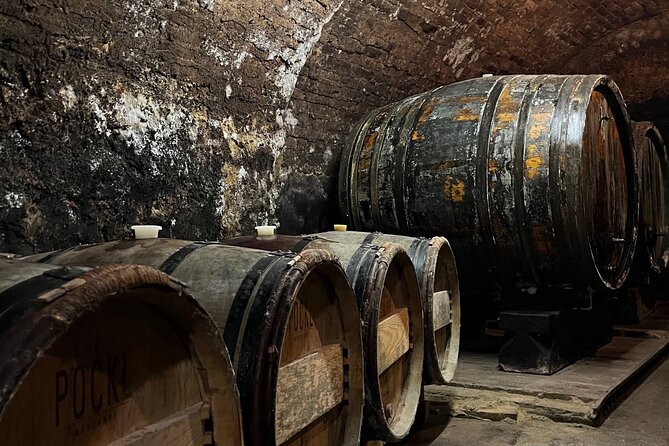
Next you head to Weingut Mantlerhof in the municipality of Gedersdorf, close to the river Kamp before it merges with the Danube. The setting helps you orient the region: you can see the lights of Krems to the west, and you can glimpse the towers of Grafenegg to the east.
The winery itself sits in the village center of Brunn im Felde, within an old manor with an early classicist facade. This is a family-owned winery with roots going back to 1365, and the Mantler family has worked it for over 200 years. That long timeline matters because it usually means continuity in local knowledge, even while the methods evolve.
Their approach is organic and vineyard focused. They work 15 hectares of vines and concentrate on long-lasting organic wines, with a focus on Grüner Veltliner and Roter Veltliner.
For you, this stop is where the region identity snaps into focus. If Kremsleithen was about an experiment with French grapes, Mantlerhof brings you back to Austria’s signature varieties and the logic behind them. Even if you do not know the jargon yet, you can taste the difference between a site-driven organic style and a more experimental one.
Stop 3, Weingut Feldtheorie in Schoenberg am Kamp: science meets wine
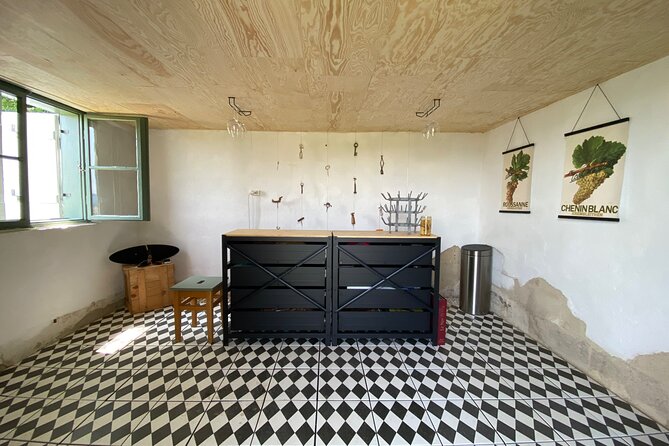
Schoenberg am Kamp is the kind of place where a winery feels like part of the landscape, not a destination staged for tourists. Here, the people behind Weingut Feldtheorie are Ulrike Filp and Robert Bormuth, along with friends and family.
Their origin story is unusually specific. During studies in natural sciences, they discovered a love for wine on a trip to New Zealand. After finishing school, they did internships in Germany, Australia, and Austria before settling in Wachau. When the chance came to buy their own parcels of vineyards in neighboring Kamptal, they moved forward rather than waiting for a bigger break.
The goal is simple to state and hard to do: pass the uniqueness of Kamptal through their wines to everyone. In a tasting, you will feel that intent in how they talk about vineyard parcels and how they connect cellar decisions to what the grapes express.
This stop is about mindset as much as it is about bottles. If you enjoy hearing how people think, not only what they taste, Feldtheorie is a good match.
Stop 4, WeinSchach in Langenlois: biological Pet Nat and free unfolding
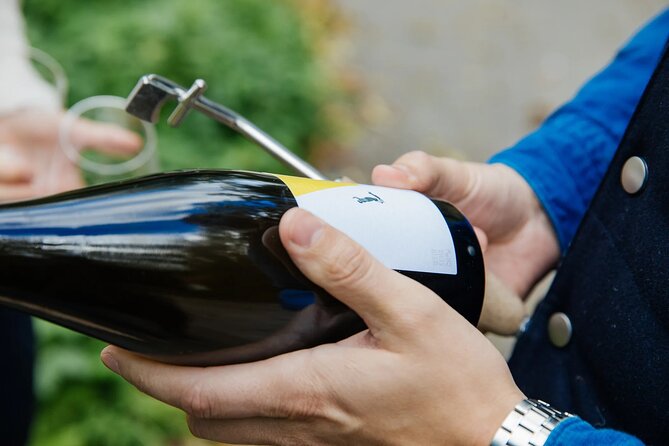
The last tasting stop is WeinSchach in Langenlois, focused on sparkling wine and, specifically, Pet Nat. The guiding belief is that nature has what it takes to make an extraordinary wine, and the winemaking job is to let the wine unfold in the bottle.
The winery frames Pet Nat as something they want on equal footing with the great sparkling wines. Their method includes experimentation, and they are open about the idea that sometimes you have to try again and go back to the start. That makes this place feel honest, not rigid.
Practically, you will hear about:
- Biological work in production
- Hand harvesting
- Handling through to the sparkling stage, including de gorging
If you usually think of sparkling wine as a “big brand” category, this stop is a great reality check. You get to compare the quiet work of vineyard biology with the excitement of bubbles. That contrast keeps your palate awake, too, since a Pet Nat style tends to feel different from still wines.
Stop 5, Welterbesteig viewpoint: the 7 to 10 minute walk
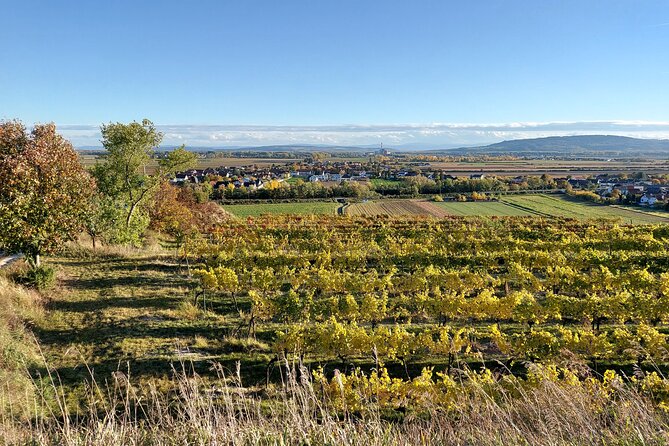
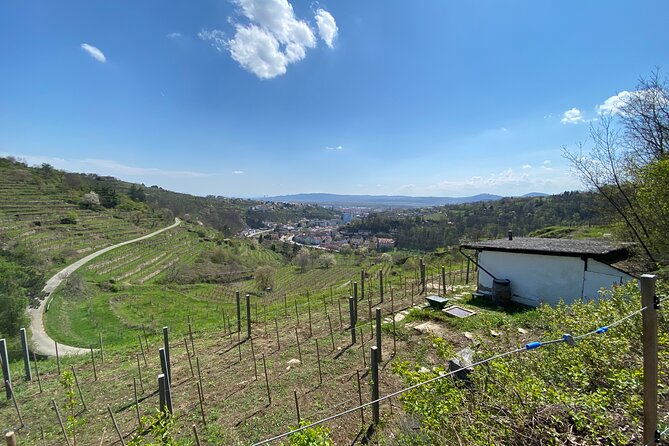
The tour ends at Ausblick am Welterbesteig, with a short 7 to 10 minute walk through vineyards to a viewpoint over the region. This is the part that makes the day feel like a connection, not a sequence of tastings.
The walk itself is short, but it still counts as hiking. Wear shoes you trust on uneven ground. If you have any doubts about going down into cellar spaces earlier in the day, this final viewpoint is the gentler finish that still lets you see what the wineries are describing.
This stop is also a good time to slow down. You are not rushing to get to another room. You can step back, take in the river valley feel, and remember what each wine was trying to say.
What you will likely taste, and how the tastings differ
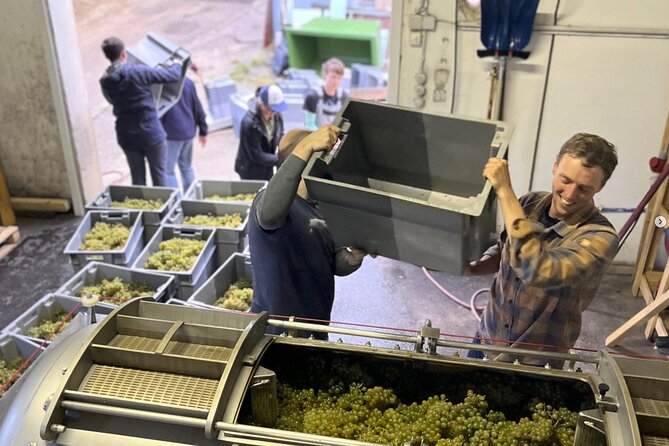
You should expect multiple tastings across the five stops, with hosts explaining how each wine is made and why. The reviews repeatedly point to lots of wine samples, plus hosts who answer questions without rushing you out the door.
The styles you are likely to encounter based on the winery focus:
- Whites from French varietals (Chenin Blanc, Roussanne, Sémillon) at Kapitel Zwei, with amphora and steel aging in the story.
- Grüner Veltliner and Roter Veltliner from organic vineyards at Mantlerhof, tied to long-running family production.
- A Kamptal expression from Feldtheorie that reflects the founders’ science background and parcel work.
- Biological sparkling wine and a push for Pet Nat style at WeinSchach.
One more detail worth noting from the way the hosts are described: the experience can be personal. Some groups highlight that questions shape what they taste, which makes the tasting feel less like a script and more like a conversation.
Price and value: why $114 can work better than a bigger tour
At $114.02 per person for about 3 hours, the price sits in the “serious tasting” zone. You are not paying for a huge marketing machine. You are paying for access, time, and the effort of several small winery owners hosting a private group.
Here is the value math that matters:
- You get five stops in a compact route, rather than one or two.
- Admission is listed as free at each stop, which suggests you are not double paying entry fees.
- You are tasting and learning across different styles, amphora whites to organic Grüner to Pet Nat.
Also, private tours often feel like better value than they sound. Instead of standing in a line of other groups, you can ask about fermentation choices, vineyard replanting, or why certain grapes were chosen for Austria’s climate. That type of interaction is what turns a tasting from pleasant to memorable.
Who this private winemaker tour is best for
This is a great fit if you:
- Love small producers and want to meet the people behind the bottles
- Prefer guided wine education over a drive-by photo stop
- Enjoy Austrian wine basics like Grüner Veltliner, plus the fun curveballs like French varietals and Pet Nat
- Like a countryside day with short walks and strong views
It is not the best choice if:
- You cannot walk down into a cellar, since some wineries involve cellar access
- You dislike small rooms, because the micro and family wineries tend to be intimate spaces
- You want a long, leisurely hike. The walking is manageable, but it is still real.
If you are traveling solo or as a small group, the private setup makes the whole day feel more tailored, which is exactly how these wineries can show their craft.
Smart tips so the day goes smoothly
A few practical things will make your experience smoother.
Wear real walking shoes. You will do a short vineyard walk at the end, and cellars can mean steps or uneven floors.
Bring a sense of curiosity, not a wine dictionary. The hosts are there to explain, and the best moments come when you ask simple questions like what changed in the vineyard, why they use amphora or steel, or how biology shapes the sparkling method.
Plan your Vienna exit. If you are using the train, get to Krems with enough buffer to meet at Bahnhofpl. 2. If you are arriving by boat, coordinate with the provider so you meet at the boat station.
And pace yourself on the tastings. Even if you love wine, you are driving between stops and walking at the end, so a steady rhythm helps you enjoy every sample.
Should you book this winemaker-led organic wineries tour from Krems?
Yes, book it if you want a high-touch, winemaker-led day that stays authentic and focused. The strongest reasons to choose this one are the small scale, the organic and sustainable emphasis, and the way each stop has a clear theme, amphora aging, organic Grüner, Kamptal identity, and Pet Nat experimentation.
If you have limited mobility, avoid it unless you are confident about cellar stairs and uneven ground. If you enjoy learning and you want wine education with real people behind it, this is an easy pick for a Vienna trip where you do not want to stay only in the city.
FAQ
How long is the tour?
The tour is about 3 hours.
How much does it cost?
The price is listed as $114.02 per person.
Is the tour offered in English?
Yes, it is offered in English.
Where does the tour start and end?
It starts at Bahnhofpl. 2, 3500 Krems an der Donau, Austria, and ends back at the same meeting point.
Can I get picked up?
Pickup is offered, and the meeting time and place can be flexible.
How do I get to Krems from Vienna?
You can take a direct train to Krems and meet at the train station, or you can arrive by boat from Vienna and meet at the boat station.
Do the wineries charge extra entry fees?
Admission ticket free is listed for each stop.
Is the tour difficult to walk?
It requires moderate physical fitness and includes some hiking. There is also a short 7 to 10 minute walk at the end, and it may involve walking down into cellar areas.
Is this a private tour?
Yes, it is a private tour, so only your group participates.
What is the cancellation timeframe?
Free cancellation is available. You can cancel up to 24 hours in advance for a full refund.
Fresh on the site in Vienna
- World War II History Vienna Old Town Private Walking Tour★ 4.8 · 9 reviews
- Vienna/Bratislava: Traunkirchen, Hallstatt & Salzburg Tour★ 4.8 · 53 reviews
- Vienna: Winery and Wine Tasting Tour with a Wine Expert★ 5.0 · 5 reviews
- Vienna: Wine Tasting Tour★ 4.8 · 61 reviews
- Vienna/Bratislava: Day Trip to Hallstatt & Salzburg★ 4.8 · 21 reviews
- Vienna: Wiener Schnitzel and Strudel Cooking Class★ 4.9 · 126 reviews
- Vienna: Waltz into the Ball Season★ 4.7 · 3 reviews
- Vienna: Wine Tasting E-Bike Tour★ 4.9 · 46 reviews
Tours, compared.
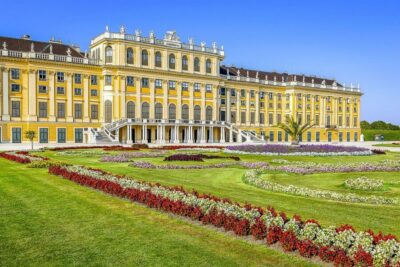
Schönbrunn Palace & Gardens Skip-the-Line Tour
Read our review →
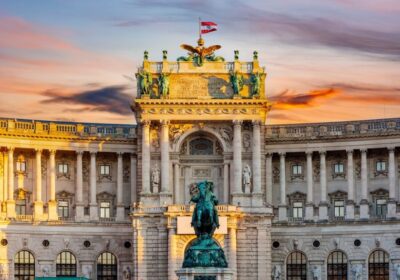
Skip-the-Line Sisi Museum, Hofburg and Gardens Tour
Read our review →
Skip-the-Line Schönbrunn Palace & Gardens Tour
Read our review →
Guided Walking Tour of City Center Highlights
Read our review →