REVIEW · TOURS
Vienna: ‘Armenia In The Heart Of Austria’ Tour
Armenian Vienna hides behind quiet monastery walls. This 2-hour Mekhitarist Monastery tour threads faith, art, and books into one easy walk through “Small Armenia” in the city.
I love the focus on specific works of art and why they matter, from altar paintings by Camillo Sitte to architecture credited to Theophil von Hansen. I also love the library payoff, including thousands of Armenian manuscripts and museum collections of coins, ceramics, carpets, and paintings like Aivazovsky.
One consideration: this visit is tightly timed, so you may feel a little rushed if you want long, silent time in the church spaces during a 2-hour small-group stop.
In This Review
- Key Highlights You’ll Care About
- Small Armenia in Vienna: Why This 2-Hour Tour Works
- What makes it especially “worth it” for your first Vienna visit
- Meeting in Front of the Mekhitarist Monastery: Timing and Group Feel
- How to decide if 2 hours is the right tempo
- Maria Schutz Church Interior: 1874 Art Tied to Armenian Protection
- Why the St Mary altar painting feels more meaningful than it sounds
- Theophil von Hansen and St Gregory the Illuminator Altarpiece
- What to look for as you stand there
- Loretto-Chapel: Mary with the Rose and the 1683 Siege
- The practical takeaway for you
- Refectory Painting: Schnorr von Carolsfeld’s Five Thousand
- How to get more out of this stop
- Mekhitharis Library and Museum: Armenian Manuscripts, Coins, Carpets, and Aivazovsky
- What you’ll also see beyond books
- How to handle the “where do I look first” problem
- The Liqueur Tasting Finish: Mechitharine in Taste, History, and Families
- Who will like this part most
- Value Check: Is $84 Worth It?
- Who Should Book This Tour (and Who Might Skip It)
- Should You Book “Armenia In The Heart Of Austria”?
- FAQ
- How long is the Vienna Armenia In The Heart Of Austria tour?
- How much does the tour cost?
- Where do we meet for the tour?
- What are the main highlights?
- Is there a live guide?
- What languages are offered?
- How big is the group?
- What is included in the price?
- Is liqueur tasting part of the tour?
- Can I cancel for a refund?
Key Highlights You’ll Care About
- Maria Schutz Church (1874), built to replace an older Cappuccine church, with major Armenian-protection artwork inside
- Loretto-Chapel and Mary with the Rose, a baroque picture tied to the 1683 siege of Vienna
- Refectory painting: The Feeding of the Five Thousand by Ludwig Ferdinand Schnorr von Carolsfeld
- Mekhitharis Library scale, including 2,800 Armenian manuscripts and a huge run of Armenian publications and newspapers
- Mechitharine liqueur tasting, finishing with a story about taste, families, and business
Small Armenia in Vienna: Why This 2-Hour Tour Works
There are cities where “culture” means museums on a checklist. Then there are places where the buildings feel like living chapters. This tour is the second kind. You start at the Mekhitarist Monastery and move through church, chapels, refectory, museum rooms, and finally the library, all with a guide who ties the art to Armenian history and the monastery’s role in Vienna.
The format helps. With a small group limited to 10 people, you’re not stuck listening from the back. The guide can also slow down when questions come up, and you’ll likely hear plenty of detail about what you’re looking at. Even better, the tour includes a liqueur tasting at the end, so you leave with more than images in your phone.
A few more Vienna options worth a side-by-side
- Vienna: Vivaldi’s Four Seasons Concert in Karlskirche
★ 4.7 · 14,951 reviews - Vienna: Spanish Riding School Training
★ 3.9 · 9,281 reviews - Vienna: Skip-the-cashier-desk-line Giant Ferris Wheel Ride
★ 4.5 · 7,859 reviews
What makes it especially “worth it” for your first Vienna visit
This is a clever way to see Vienna beyond palaces and grand boulevards. You get a focused look at how one community preserved language, books, and identity in a major European capital. If you love architecture, religious art, or book history, this will feel like a concentrated dose of the human side of culture, not just decoration.
Meeting in Front of the Mekhitarist Monastery: Timing and Group Feel
You’ll meet in front of the main entrance of the Mekhitarist Monastery. That’s convenient because it’s a clear landmark, and it keeps the start point simple.
The tour lasts 2 hours and runs with a live guide in Armenian, English, and German. If you’re traveling with mixed language comfort in your group, you’ll have options. The small-group size matters here because the tour moves through interiors. In tight spaces, a big crowd can turn a beautiful stop into a bottleneck. With up to 10 participants, you’ll spend less time waiting and more time looking closely.
How to decide if 2 hours is the right tempo
Two hours is perfect for a “special interest” stop that doesn’t eat your whole day. It’s also short enough that you can pair it with something else in Vienna the same afternoon or evening. If you prefer slow pacing, plan to come back on your own afterward if you want extra time inside any room.
Still the same country, a very different afternoon:
- Vienna: Schönbrunn Palace & Gardens Skip-the-Line Tour
★ 4.7 · 7,739 reviews - Vienna: Light of Creation Votive Church Immersive Light Show
★ 4.8 · 6,779 reviews - Vienna Spanish Riding School Guided Tour
★ 4.7 · 6,765 reviews - Vienna: Classical Concert in the World-Famous Musikverein
★ 4.6 · 6,673 reviews
Maria Schutz Church Interior: 1874 Art Tied to Armenian Protection

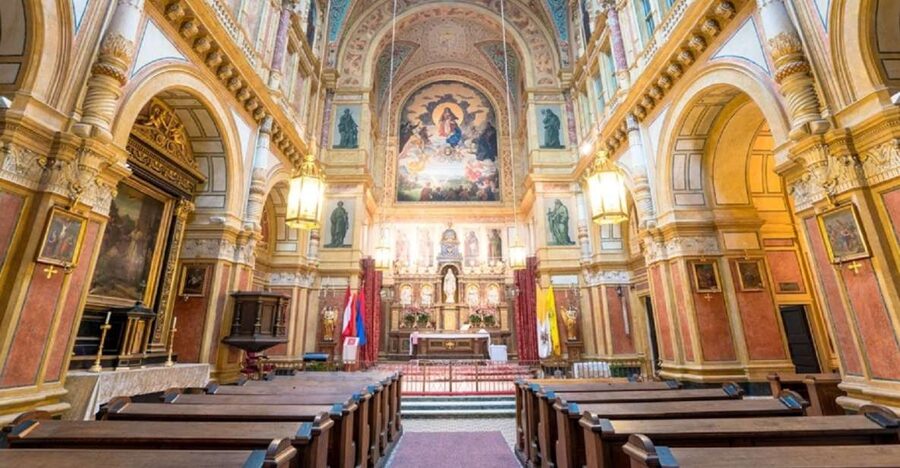
Your first major wow factor is Maria Schutz Church. The church you see today dates to 1874, built to replace an older Cappuccine church. That replacement detail matters, because it signals that this wasn’t a casual addition to Vienna. It was a deliberate project, and the monastery’s identity shows up in the way the church is decorated.
Inside, your guide points out key works, including the standout altar painting showing St Mary’s protection of Armenia, painted by Camillo Sitte. That’s not just “nice Christian art.” It’s Armenian-focused symbolism in a Viennese setting, a visual statement that bridges faith and national memory.
Why the St Mary altar painting feels more meaningful than it sounds
It’s easy to skim religious art as background. Here, the guide’s commentary makes it feel purposeful. You start to recognize how the monastery’s culture is embedded in the iconography, so you’re not only learning dates and names. You’re learning what people wanted to preserve and emphasize.
If you’re the kind of traveler who likes to understand what you’re seeing in practical terms, you’ll appreciate the way the tour connects the art to the monastery’s community mission.
Theophil von Hansen and St Gregory the Illuminator Altarpiece
After the St Mary protection theme, you’ll move to another altar area dedicated to St Gregory the Illuminator. This part of the church experience is a useful reminder that Armenia’s story can be told through multiple lenses at once: spiritual life, art, and the built environment.
Your guide attributes the altar work to Theophil von Hansen. He’s the architect associated with the Austrian Houses of Parliament in Vienna, so you’re standing in a place where Armenian devotion and prominent Viennese design talent overlap.
What to look for as you stand there
Don’t rush your gaze. Give yourself a minute to locate the altar focus and then let the guide’s explanation frame what you’re seeing. In tours like this, the difference between “I saw something” and “I understood it” is usually timing. You’ll get better results if you pause while the guide is still talking, instead of waiting until the end to look.
Loretto-Chapel: Mary with the Rose and the 1683 Siege
One of the most striking stories in the tour is the Loretto-Chapel and its baroque miraculous picture, Mary with the Rose. The key detail here is survival. This picture was rescued intact from the perils of the Turkish siege of Vienna in 1683.
That fact gives the chapel a different temperature. It’s not only devotional. It’s historical evidence of what people protected during crisis.
The practical takeaway for you
When a guide links an artwork to a specific moment like 1683, you’ll remember the details longer. Your brain holds onto a picture more easily when it has stakes. So if you like tours that help you retain what you learn, this chapel stop is one of the best moments to pay close attention.
Refectory Painting: Schnorr von Carolsfeld’s Five Thousand
Next comes the refectory, where your tour shifts from chapel intimacy to a larger, more public-looking visual statement. The centerpiece is a monumental painted scene by Ludwig Ferdinand Schnorr von Carolsfeld, The Feeding of the Five Thousand.
This is the kind of artwork that can feel overwhelming in real life. The scale matters, and the story behind it matters too. Your guide uses the refectory setting to reinforce how monasteries worked as communities, not just places of private prayer. It’s a reminder that faith was also daily routine, meals, and shared space.
How to get more out of this stop
Look for the human scale of the figures and then compare it to the refectory size. You’ll start to understand why a monastery would choose such a large painting for that room. It’s meant to be seen while people gather and eat. In other words, it turns a meal into a quiet act of reflection.
Mekhitharis Library and Museum: Armenian Manuscripts, Coins, Carpets, and Aivazovsky
Now comes the tour’s big intellectual payoff: the Mekhitharis Library and the monastery museum. This is the area where you stop thinking of the place as a church stop and start thinking of it as an Armenian cultural archive.
The library collection size is staggering by any standard you might use in a normal museum:
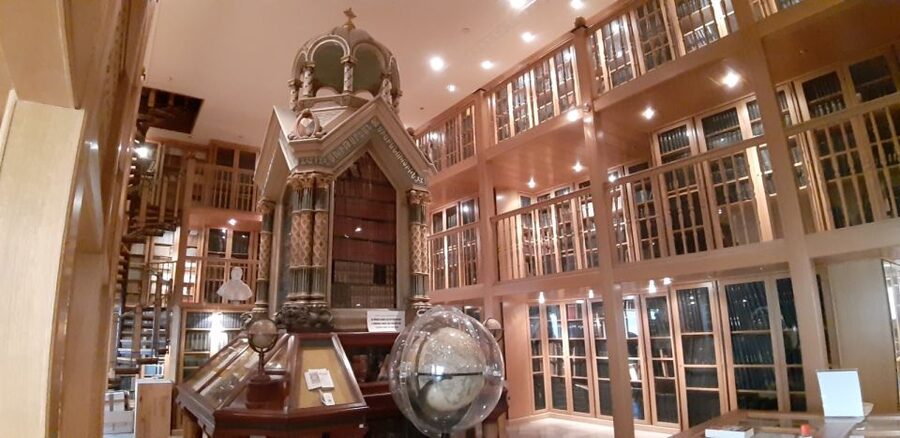
- more than 2,800 Armenian manuscripts
- more than 170,000 volumes of ancient and modern Armenian publications
- the largest collection of Armenian newspapers and magazines found in the Western world
That’s the kind of information that can turn into numbers only. The guide helps those numbers connect back to real questions, like why a diaspora community would build a collection like this, and how it would support learning across generations.
What you’ll also see beyond books
Your tour continues through exhibitions that highlight other parts of the monastery’s collection, including:
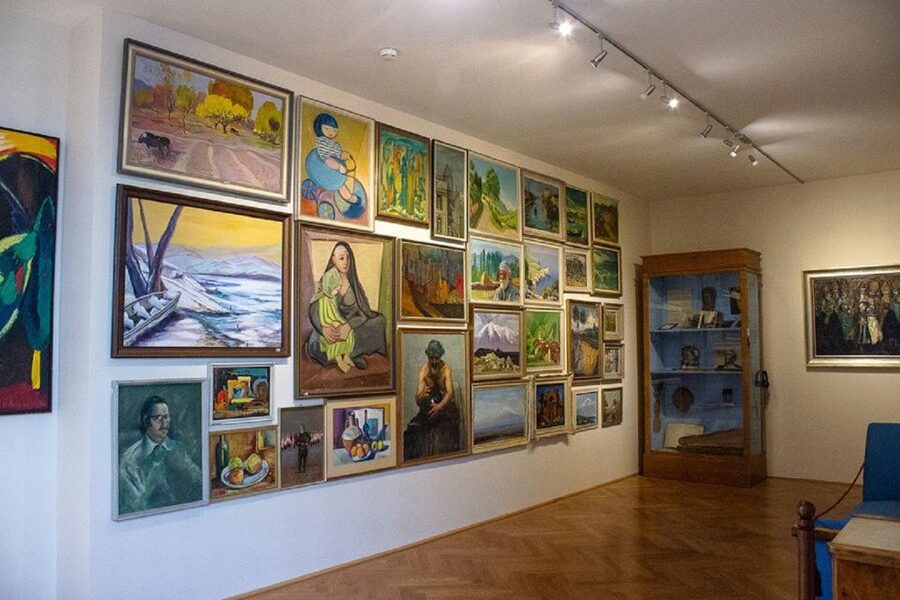
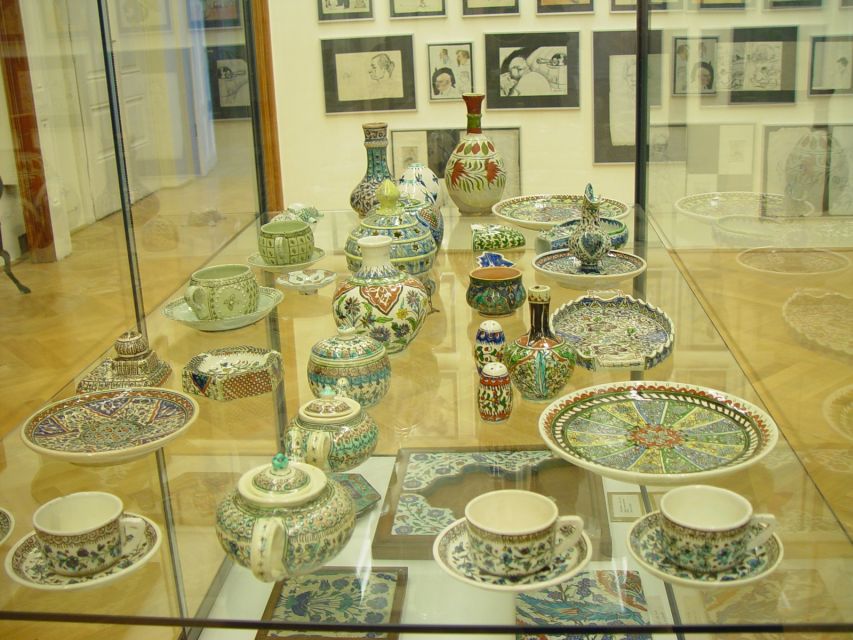
- the special features of the Mekhitharis numismatic collection, with about 10,000 Armenian coins and around 20,000 coins from other countries
- ceramics and carpets, mainly of Armenian production
- paintings by Armenian artists, including three paintings by Aivazovsky
This is one of the best parts for practical travelers. If you’re visiting Vienna and you’ve already hit big art museums, this gives you a different angle. You’re not seeing “general famous art.” You’re seeing a community collection, with objects that point back to Armenian craft traditions and Armenian visual culture.
How to handle the “where do I look first” problem
When you enter a room packed with displays, it’s easy to glaze over. Here’s a simple strategy: pick one category the guide talks about most, then let your eyes adjust for everything else. If the guide starts with manuscripts, focus on that. If coins come up next, look for any display of coin-related items while the guide explains the theme.
You’ll leave feeling like you learned a structure, not just facts.
The Liqueur Tasting Finish: Mechitharine in Taste, History, and Families
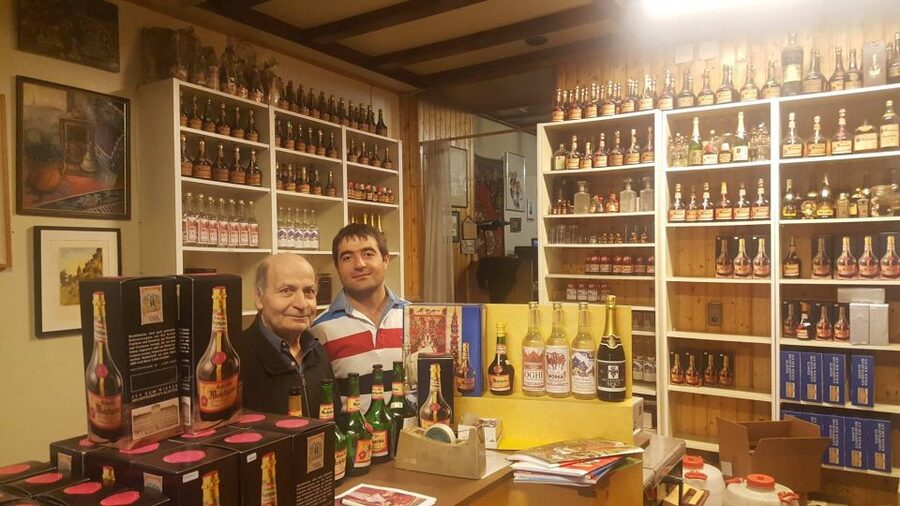
The tour ends with a high-quality Mechitharine liqueur tasting. This stop is more than a sweet capstone. The guide explains the secrets of the liqueur world: its unique taste, its history, its families, and the business behind it.
For many travelers, food and drink tastings can feel like an afterthought. Here, it works because the tour has already focused on preserving identity through books and art. A liqueur tradition fits that same theme. It’s a cultural product that you can literally taste.
Who will like this part most
If you enjoy learning how a tradition becomes a product, you’ll find this engaging. If you mainly want cultural sites, it’s still a nice practical bonus. And it’s a good way to end because the tasting breaks up the intensity of manuscript rooms with something immediate.
Value Check: Is $84 Worth It?
At $84 per person for a 2-hour, small-group tour, you’re paying for access, time, and interpretation. This isn’t a quick exterior stroll. You’re entering church interiors, chapels, a refectory, and special museum and library spaces, then receiving a guided explanation in multiple languages and ending with a liqueur tasting.
So where does the value come from?
- You get guided context for major artworks, like the Maria Schutz altar painting and the St Gregory the Illuminator altar work.
- You get access to a library and museum with Armenian collections that are hard to see in any casual way on your own.
- You get a cultural finish with Mechitharine liqueur tasting that ties the visit together.
If you’re someone who likes to see one meaningful side of Vienna deeply, not briefly, this price feels more like a fair entry ticket to something specific and rare.
Who Should Book This Tour (and Who Might Skip It)
I’d book this tour if you care about Armenian culture, religious art, architecture in Vienna, or book and manuscript history. It’s also a strong choice if you want a smaller-scale experience where the guide can actually answer questions and you can move at a comfortable pace.
You might consider skipping if you want only the biggest, most famous mass-market sights. This is not a “greatest hits” Vienna tour. It’s a focused, identity-driven stop, and that’s exactly why it works.
Should You Book “Armenia In The Heart Of Austria”?
Yes, you should book it if you want a memorable Vienna detour that feels human, specific, and well explained. The church interiors and altar art give you visual story points. The Loretto-Chapel adds a high-stakes historical layer with Mary with the Rose and the 1683 siege. Then the Mekhitharis Library and museum deliver the kind of collection scale that usually only shows up in major research institutions.
One more thing that makes this tour feel special: the guide’s tone. Notes from past visitors highlight a warm welcome, a homey atmosphere, and plenty of heartfelt commentary from Father Vahan. You’ll likely feel like you’re being hosted, not processed.
If that sounds like your kind of travel day, reserve your spot and come ready to look closely. This one rewards attention.
FAQ
How long is the Vienna Armenia In The Heart Of Austria tour?
It lasts 2 hours.
How much does the tour cost?
The price is $84 per person.
Where do we meet for the tour?
Meet in front of the main entrance of the Mekhitarist Monastery.
What are the main highlights?
You’ll see Maria Schutz Church, the Loretto-Chapel with the baroque picture Mary with the Rose, and the Mekhitharis Library and museum, with a final Mechitharine liqueur tasting.
Is there a live guide?
Yes, it includes a live tour guide.
What languages are offered?
The tour is available in Armenian, English, and German.
How big is the group?
It is limited to 10 participants.
What is included in the price?
Entrance fees, guide service, and a liqueur tasting are included.
Is liqueur tasting part of the tour?
Yes, the tour ends with a Mechitharine liqueur tasting.
Can I cancel for a refund?
Free cancellation is available up to 24 hours in advance for a full refund.
Fresh on the site in Vienna
- World War II History Vienna Old Town Private Walking Tour★ 4.8 · 9 reviews
- Vienna/Bratislava: Traunkirchen, Hallstatt & Salzburg Tour★ 4.8 · 53 reviews
- Vienna: Winery and Wine Tasting Tour with a Wine Expert★ 5.0 · 5 reviews
- Vienna: Wine Tasting Tour★ 4.8 · 61 reviews
- Vienna/Bratislava: Day Trip to Hallstatt & Salzburg★ 4.8 · 21 reviews
- Vienna: Wiener Schnitzel and Strudel Cooking Class★ 4.9 · 126 reviews
- Vienna: Waltz into the Ball Season★ 4.7 · 3 reviews
- Vienna: Wine Tasting E-Bike Tour★ 4.9 · 46 reviews
Tours, compared.
Schönbrunn Palace & Gardens Skip-the-Line Tour
Read our review →


Skip-the-Line Sisi Museum, Hofburg and Gardens Tour
Read our review →
Skip-the-Line Schönbrunn Palace & Gardens Tour
Read our review →
Guided Walking Tour of City Center Highlights
Read our review →