
REVIEW · WALKING TOURS
Vienna Art Nouveau Walking Tour
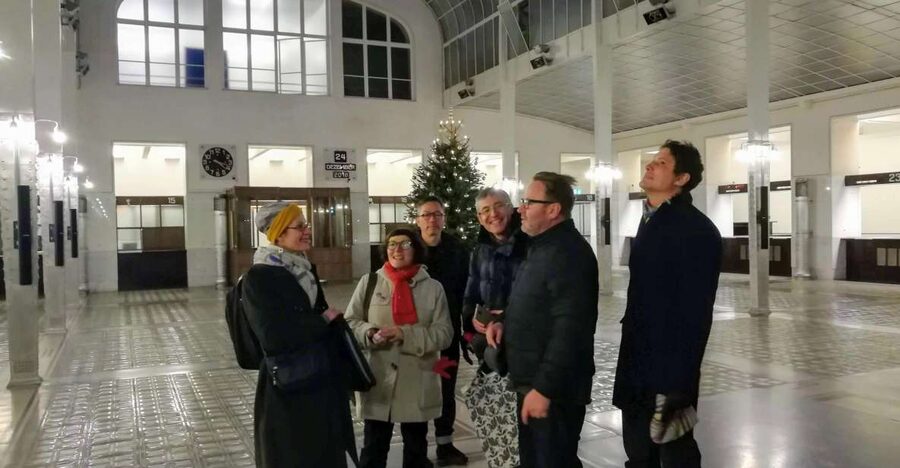
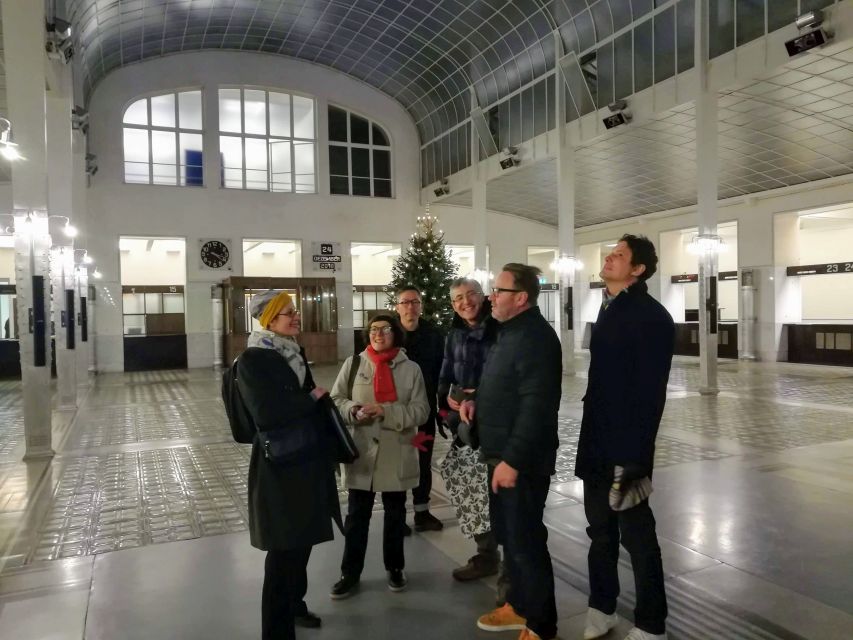
Vienna’s metro is art, not just transport. This 3-hour guided walk turns Otto Wagner’s late-1800s vision for the city into a real, street level experience, so you can see how Vienna’s Art Nouveau became part of everyday life. I love how the tour makes the metro stations feel meaningful, not random. You also get a strong feel for the mood and ideas behind Jugendstil, especially around the Secession House. One heads-up, you will likely pay extra for Secession House entry on many departures, since it is not included in the tour price.
What makes this work so well is the tone of the guide. People like Wolfgang and Peter (both noted for being enthusiastic and easy to ask questions with) help you slow down and spot details you would miss on your own. In small groups, the tour can flex a bit, which is ideal if you want more time looking closely at materials, symbols, and façade tricks.
In This Review
- Key things to look for on this Vienna Art Nouveau tour
- Otto Wagner’s metro: where design meets city change
- Starting at Café Museum, then walking with purpose
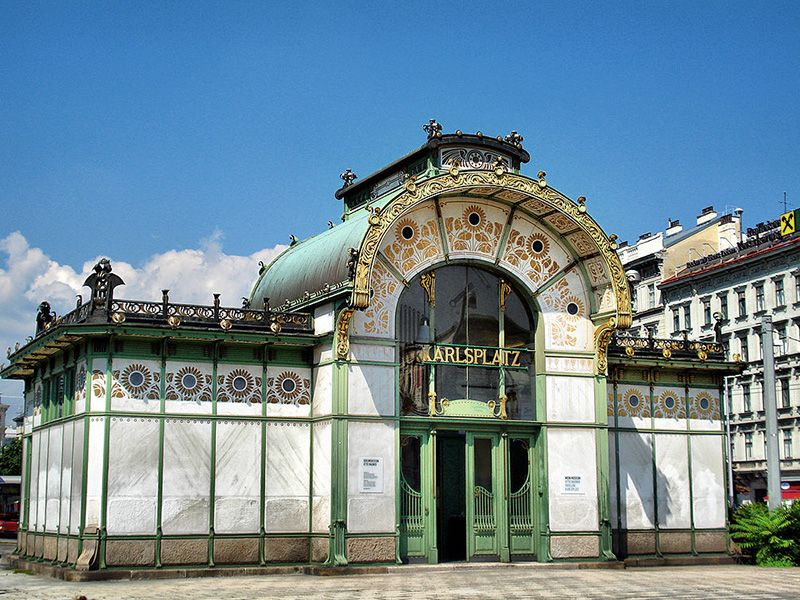
- Karlsplatz pavilion and the Wagner Museum stop that sets the tone
- Stadtpark station: the best-preserved clue to what once worked
- Secession House: Jugendstil’s icon, plus Klimt’s Beethoven Frieze
- Apartment houses and motifs: spotting Art Nouveau’s philosophy
- Österreichische Postsparkasse: a civic building lesson in style
- Kettenbrücke and the metro ride as part of the lesson
- The imperial station at Hietzing: architecture with a political job
- Price and value: is $176 worth it for 3 hours?
- Who this tour suits best
- Should you book? My take
- FAQ
- How long is the Vienna Art Nouveau Walking Tour?
- What is the meeting point for the tour?
- What does the tour price include?
- What is not included in the tour price?
- How much is Secession House admission if I need to pay extra?
- When can I see Klimt’s Beethoven Frieze during the tour?
- Is the tour guided in English?
- Is the tour private or small group?
- What is the cancellation and payment flexibility?
Key things to look for on this Vienna Art Nouveau tour
- Otto Wagner’s design logic: public transit built to be instantly recognizable and proudly Viennese
- Why some stations still matter today: preserved elements that show what worked
- Secession House as the emotional centerpiece: especially when the Beethoven Frieze is on view
- Art Nouveau in everyday buildings: apartment houses and other civic façades, not just one famous postcard
- Imperial symbolism at Hietzing: architecture used to send a political message about the metro line
Otto Wagner’s metro: where design meets city change
Late 19th-century Vienna grew fast, and the city needed a modern public transport system that could actually move people between suburbs and the center. The result was a metro plan tied to the big Ringstrasse idea, a grand city vision, not a small technical project.
Otto Wagner was the architect chosen for the job, and his goal was not just function. He aimed for an iconographic look, something easy to recognize, and something that reflected Vienna’s cosmopolitan identity. That is why you see Art Nouveau (Jugendstil) showing up in transit spaces, where you might expect plain utility instead.
On this tour, the point is to help you read what you are seeing. You learn to connect style to purpose. The decorations, the materials, the way forms are shaped, they all communicate something about modernity and about who Vienna wanted to be.
More Walking Tours in Vienna
- Vienna: Guided Walking Tour of City Center Highlights
★ 4.7 · 4,989 reviews - Vienna: Vienna Central Cemetery Guided Walking Tour
★ 4.8 · 3,307 reviews - Vienna: Guided Walking Tour of City Highlights & Hidden Gems
★ 4.9 · 2,180 reviews
Starting at Café Museum, then walking with purpose
Your tour begins near the center at Café Museum on Operngasse. Expect a short guided setup before you start moving, so your eyes know what to hunt for. This matters with Art Nouveau, because the differences can be subtle when you are rushing.
From the start, the guide’s job is to get you looking like a designer, not like a tourist. You’ll hear why certain motifs repeat, and how Wagner translated a style that could have felt bourgeois into something with more dignity and presence.
Also, plan for real walking. One group noted they walked miles, and that tracks with the route. Comfortable shoes are a must, even though the day is not physically extreme.
Karlsplatz pavilion and the Wagner Museum stop that sets the tone
One of the first big anchors is the Otto Wagner Pavillon at Karlsplatz. This is where you get context for what Wagner was trying to do with the metro system: make it a public statement, not a hidden service.
You get a guided look around the pavillon area and the small museum focus that helps you connect design choices to their historical moment. If you love architecture for its ideas as much as its looks, this stop will click. It sets the vocabulary you will keep using later, like how ornament, structure, and urban identity interact.
Important practical note, admission to the Otto Wagner Pavillon is not included. The guide can point you toward what to expect, but you should budget for that if you want to go inside during the visit window.
Stadtpark station: the best-preserved clue to what once worked
After Karlsplatz, you move toward Stadtpark station, described as the best-preserved of the original stations still in use. This is a big deal for anyone who cares about authenticity. When a place survives in near-original form, it becomes a reference point for what the designer intended.
Here, the experience shifts from background history to direct observation. You’ll get time to notice how the station reads as a single design object. Art Nouveau in stations is not just decoration slapped on top, it is part of the way the space feels and guides you.
The drawback is timing. If you get distracted by photos, you can lose the guide’s cues. I’d recommend holding off on your best shots until you understand what you are looking at, then photograph with intention.
Still the same country, a very different afternoon:
- Vienna: Vivaldi’s Four Seasons Concert in Karlskirche
★ 4.7 · 14,951 reviews - Vienna: Spanish Riding School Training
★ 3.9 · 9,281 reviews - Vienna: Skip-the-cashier-desk-line Giant Ferris Wheel Ride
★ 4.5 · 7,859 reviews - Vienna: Schönbrunn Palace & Gardens Skip-the-Line Tour
★ 4.7 · 7,739 reviews
Secession House: Jugendstil’s icon, plus Klimt’s Beethoven Frieze
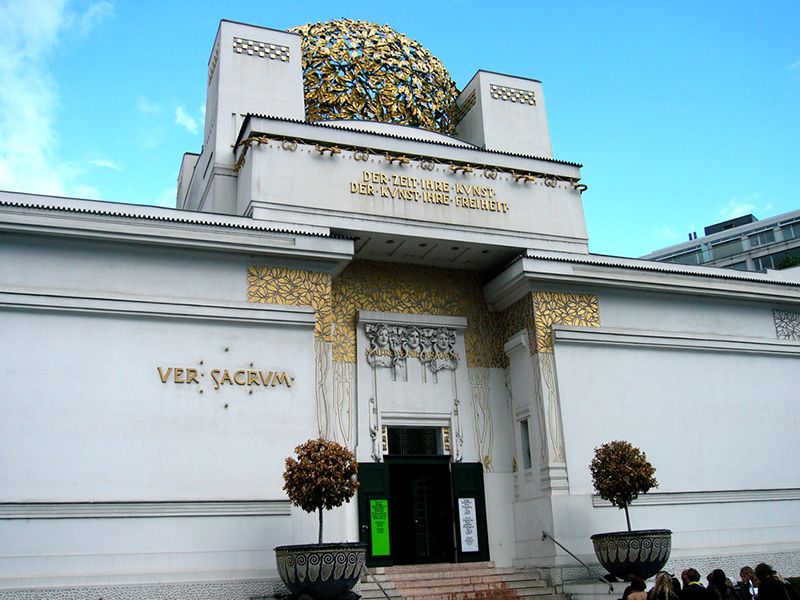
A major highlight comes when the route brings you to the Secession House, the icon of Viennese Jugendstil. This building is where the style feels most confident and most expressive, and it is a perfect counterpoint to the metro stations.
On Tuesday to Sunday departures, you will also see Gustave Klimt’s famous Beethoven Frieze. The key detail for budgeting: entry is not included in the tour price. The fee is listed as €9.50 for adults, and €6 for students and seniors, and your guide will help you handle the payment.
Even if you have seen Klimt images before, this is the moment where the artwork stops being a poster and becomes a place. The building setting changes your sense of scale and the way the frieze communicates through the space.
Apartment houses and motifs: spotting Art Nouveau’s philosophy
Between metro stops, the tour also includes views of other Otto Wagner works, including apartment houses designed by him. This is a smart move. It prevents the tour from becoming a one-style parade of famous landmarks.
Art Nouveau is built on a philosophy: use recognizable symbols, work with modern materials and forms, and create a visual language that feels modern but still rooted in Vienna. When you see how those ideas appear on residential façades, you understand the style as a broader cultural signal, not just one public building.
Here is what I would focus on if you are short on time later. Look at how lines move across surfaces, how the building frames windows and entrances, and how ornament interacts with structural shape. Those are the cues the guide will help you connect back to Jugendstil ideology.
Österreichische Postsparkasse: a civic building lesson in style
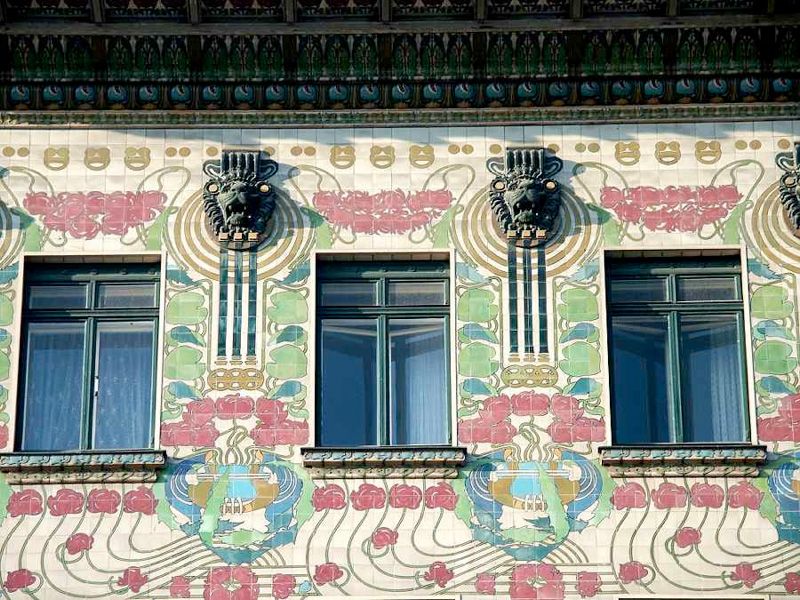
The route also includes a guided look at Österreichische Postsparkasse. This is another chance to see how Art Nouveau moved beyond galleries and into public life.
Civic architecture has a different job than an apartment façade or a museum. It has to feel trustworthy and official, while still being visually current. Wagner’s approach works because it gives you both, and the details make it feel intentional rather than decorative.
If you are the type who likes architecture but gets tired of long theory, this stop is a good balance. You can look, you can compare it to what you saw at Karlsplatz, and you can feel how the aesthetic changes depending on the building’s purpose.
Kettenbrücke and the metro ride as part of the lesson
From Kettenbrücke station, you step onto the metro for the last stop. This is not just a transfer, it is part of the design story. The whole point is to show that Wagner’s concept was meant for real movement, real crowds, real daily use.
Kettenbrücke is also a good place to reflect on the broader context you heard earlier. Vienna’s rapid growth demanded a system that felt connected to the city’s identity. Stations were part of that promise. When you ride and then look back at station architecture, you start seeing transit as a public stage.
One practical consideration: if you hate waiting or you get anxious in crowds, choose calm moments for photos. You can always return to the street after the ride, but the guide’s timing is built around reading the buildings and their symbolic role.
The imperial station at Hietzing: architecture with a political job
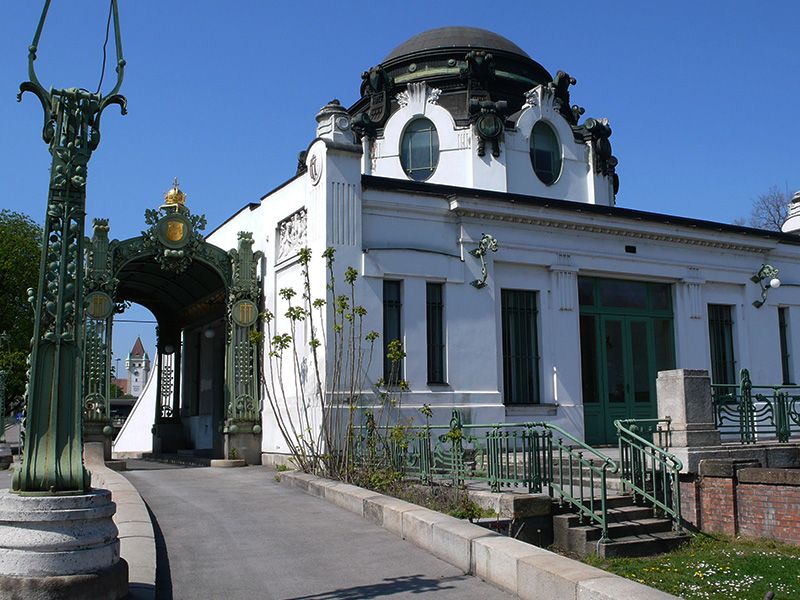
The final crown jewel is the imperial station visit, located at Hietzing and described as being erected outside Schönbrunn solely for the emperor’s use. That detail alone is enough to change how you look at the station. This was not for everyone, and the architecture carries that weight.
The tour frames the meaning: the station also sent a message to critics of Vienna’s metro that the emperor supported the line. In other words, architecture becomes propaganda, but the kind done through style, scale, and presence.
Wagner’s challenge here was how to translate a generally bourgeois Art Nouveau language into something with imperial grandiosity. You’ll be looking for how the design shifts from intimate ornament to stronger visual authority.
This is one of the stops where the guide’s explanations add the most value. Without that context, the building can look simply impressive. With it, you can read the station as a designed argument.
Price and value: is $176 worth it for 3 hours?
At $176 per person for about 3 hours, you are paying for three things: a historian guide, a route that connects multiple major Art Nouveau touchpoints, and time in the field to understand details.
Here is what you are getting that you cannot easily replicate alone. The tour connects Wagner’s metro design aims to the wider Art Nouveau mindset, and it helps you interpret what to look at at each stop. If you enjoy architecture with an explanatory layer, that is the core value.
Where you should plan your budget carefully is extras. Admission to the Otto Wagner Pavillon is not included, and Secession House admission is not included either. On days when the Beethoven Frieze is part of the visit, add the listed fees. That does not make the tour bad value, it just means you should treat the tour price as the guided experience and bring a bit extra for a couple of entry tickets.
Overall, if you are the kind of person who likes to understand what makes a building tick, the price feels fair. If you mainly want photos and quick stops, you might prefer a cheaper self-guided approach.
Who this tour suits best
This tour is a strong match if you want:
- Architecture that has a story, not just a façade checklist
- A focused route in a short time window, without feeling rushed
- An explanation of how metro design and civic identity connect
It is also a good choice for couples and small groups. One review highlighted that a small group of two let the guide tailor the route to what they wanted, and that flexibility is a real advantage with design tours, where interests can vary.
If you dislike walking and prefer to minimize time outdoors, consider the pace and plan for frequent pauses to look closely. The tour is not long, but it is active.
Should you book? My take
Book it if Vienna’s Art Nouveau is one of your priorities and you want to see how it changes across metro stations, public buildings, and imperial symbolism. I especially think it is worth it for the way the guide links style to purpose, from Wagner’s cosmopolitan vision to the political message built into the emperor’s station.
Skip it or wait for a different option if you want only quick photo moments, or if paying extra for Secession House and possible pavillon entry would feel like a dealbreaker. In most cases, though, the guided explanations and the variety of major stops make the experience feel focused, not scattered.
FAQ
How long is the Vienna Art Nouveau Walking Tour?
The tour lasts 3 hours.
What is the meeting point for the tour?
You meet at Café Museum, Operngasse 7, A-1010 Vienna.
What does the tour price include?
It includes a 3-hour Vienna Art Nouveau tour and a historian guide.
What is not included in the tour price?
Admission to the Otto Wagner Pavillon is not included, and Secession House admission is not included.
How much is Secession House admission if I need to pay extra?
The entrance fee is listed as €9.50 for adults and €6 for students and seniors.
When can I see Klimt’s Beethoven Frieze during the tour?
If the tour is Tuesday to Sunday, it includes a visit to see Gustave Klimt’s Beethoven Frieze at the Secession House.
Is the tour guided in English?
Yes, the live tour guide language is English.
Is the tour private or small group?
Private or small groups are available.
What is the cancellation and payment flexibility?
You can cancel up to 24 hours in advance for a full refund, and you can reserve now and pay later.
Fresh on the site in Vienna
- World War II History Vienna Old Town Private Walking Tour★ 4.8 · 9 reviews
- Vienna/Bratislava: Traunkirchen, Hallstatt & Salzburg Tour★ 4.8 · 53 reviews
- Vienna: Winery and Wine Tasting Tour with a Wine Expert★ 5.0 · 5 reviews
- Vienna: Wine Tasting Tour★ 4.8 · 61 reviews
- Vienna/Bratislava: Day Trip to Hallstatt & Salzburg★ 4.8 · 21 reviews
- Vienna: Wiener Schnitzel and Strudel Cooking Class★ 4.9 · 126 reviews
- Vienna: Waltz into the Ball Season★ 4.7 · 3 reviews
- Vienna: Wine Tasting E-Bike Tour★ 4.9 · 46 reviews
Walking Tours, compared.
Guided Walking Tour of City Center Highlights
Read our review →
Guided Walking Tour of City Highlights & Hidden Gems
Read our review →
Vienna Historic Center Small Group Walking Tour
Read our review →
Browse the lists this tour appears in