
REVIEW · WALKING TOURS
Vienna Art Nouveau Walking Tour
Vienna’s Art Nouveau reads like a coded message. This 2.5-hour walk links Otto Wagner’s world to the city’s metro stations, so you see Jugendstil as a design system, not a museum label. I like that the route gives you smart orientation fast, and you learn how and why the buildings were put together the way they are.
I especially like the focus on the key players and ideas, from Otto Wagner’s apartment houses to the Secession movement and its symbolism. If you’re chasing Klimt’s famous work, the tour also sets you up for optional time at Klimt’s Beethoven Frieze at the Secession House.
One thing to consider: you’ll do a lot of outdoor walking between stops, and some highlights come with extra entry fees depending on the day and museum opening months.
In This Review
- Key things that make this tour worth your time
- Vienna Art Nouveau makes more sense when you walk it
- Price, time, and what you really get for about $180
- Meeting at Operngasse 7, and how to plan your day
- Stop 1: Otto Wagner Pavillon Karlsplatz and the Wagner Museum
- Stop 2: Stadtpark station, and the little Vienna riverbed story
- Stop 3: Secession at Kettenbrücke, plus Wagner apartments
- Bonus planning: Klimt’s Beethoven Frieze at the Secession House (optional, but powerful)
- Imperial station, Schönbrunn’s shadow, and Wagner’s grand purpose
- What to look for on the walk so you get more than photos
- Group size, language, and why the guide matters
- Who should book this Vienna Art Nouveau walk?
- Should you book this tour? My take on value
- FAQ
- How long is the Vienna Art Nouveau Walking Tour?
- What is the tour price?
- What languages is the tour offered in?
- What is included in the tour price?
- Are any entrance fees included?
- What is the meeting point and group size?
Key things that make this tour worth your time
- Working metro stations as Art Nouveau classrooms: you learn in the places where Vienna still moves today
- Otto Wagner theme all the way through: pavillon, station design details, and Wagner apartment houses
- Secession and Jugendstil explained with symbols and materials: not just names, but how the style thinks
- Optional Klimt focus: you can plan the Beethoven Frieze visit with a clear ticket expectation
- Small group size up to 8: more chances to ask questions and stay on pace
Vienna Art Nouveau makes more sense when you walk it
Vienna’s Art Nouveau is often described as ornate, but on this tour you learn the quieter part: it is also functional, political, and engineered. The stops are chosen to show how design language traveled from artists’ studios into real public infrastructure, especially the metro world that helped modern Vienna grow.
This is also a good “first Vienna taste” for people who feel overwhelmed by the sheer number of sights. In a short stretch, you connect the dots between Jugendstil, Otto Wagner’s ambitions, and the mood of the city around 1900.
More Walking Tours in Vienna
- Vienna: Guided Walking Tour of City Center Highlights
★ 4.7 · 4,989 reviews - Vienna: Vienna Central Cemetery Guided Walking Tour
★ 4.8 · 3,307 reviews - Vienna: Guided Walking Tour of City Highlights & Hidden Gems
★ 4.9 · 2,180 reviews
Price, time, and what you really get for about $180
At about $180.04 per person for roughly 2 hours 30 minutes, you’re paying for an expert guide plus a route that ties multiple sites together into one story. The small group cap of 8 travelers matters here, because it tends to make the tour more conversational and less like a rush-job.
A big value point is that many stops are structured with free entry. You start at Otto Wagner’s Karlsplatz pavilion area with a small Wagner Museum visit listed as free, and the station stops you use for design learning are free as well. The experience still feels premium because the interpretation is the product, not just the photos.
The main cost “gotcha” is that the optional art museum part has separate admissions. If you go in April through October, you may see the Otto Wagner Pavilion with a fee, and if you want Klimt’s Beethoven Frieze at the Secession House, you should expect separate ticket pricing.
Meeting at Operngasse 7, and how to plan your day
You meet at Operngasse 7, 1010 Wien, which is a very practical spot for getting there by public transport. The tour also runs with a mobile ticket, which helps on the day when you are juggling tram lines, time, and weather.
With a small group, you should expect a steady walking pace plus short metro transitions. The itinerary is built around stations and buildings, so you will be outside for portions, then indoors for museum time if you choose the optional visit.
Bring something warm. The route is short, but Vienna damp cold can sneak in fast. If rain hits hard, the better part of this kind of tour is that the guide can often adapt to keep you comfortable, and at least one guide has offered an alternative to avoid getting soaked.
Stop 1: Otto Wagner Pavillon Karlsplatz and the Wagner Museum
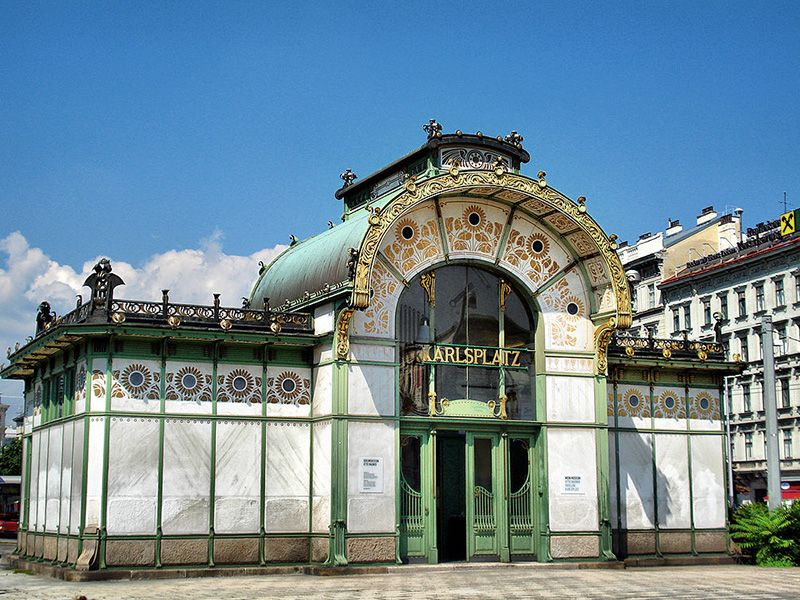
The walk begins at Otto Wagner Pavillon Karlsplatz, a fitting start because the whole tour is about Wagner’s Art Nouveau thinking. The pavilion gives you an immediate visual hit: you’re seeing how he treated architecture as a modern statement, not just decoration.
You then visit the small Wagner Museum listed as free admission. Even if you are not an architecture scholar, this is a smart move early on. It frames what you will keep seeing later: Wagner’s push toward modernity, his preference for certain materials and forms, and his interest in how design supports the way people use buildings.
If you like to understand the “why,” start here. If you only want pretty facades, it can still work, because Karlsplatz is already a lovely scene.
Still the same country, a very different afternoon:
- Vienna: Vivaldi’s Four Seasons Concert in Karlskirche
★ 4.7 · 14,951 reviews - Vienna: Spanish Riding School Training
★ 3.9 · 9,281 reviews - Vienna: Skip-the-cashier-desk-line Giant Ferris Wheel Ride
★ 4.5 · 7,859 reviews - Vienna: Schönbrunn Palace & Gardens Skip-the-Line Tour
★ 4.7 · 7,739 reviews
Stop 2: Stadtpark station, and the little Vienna riverbed story
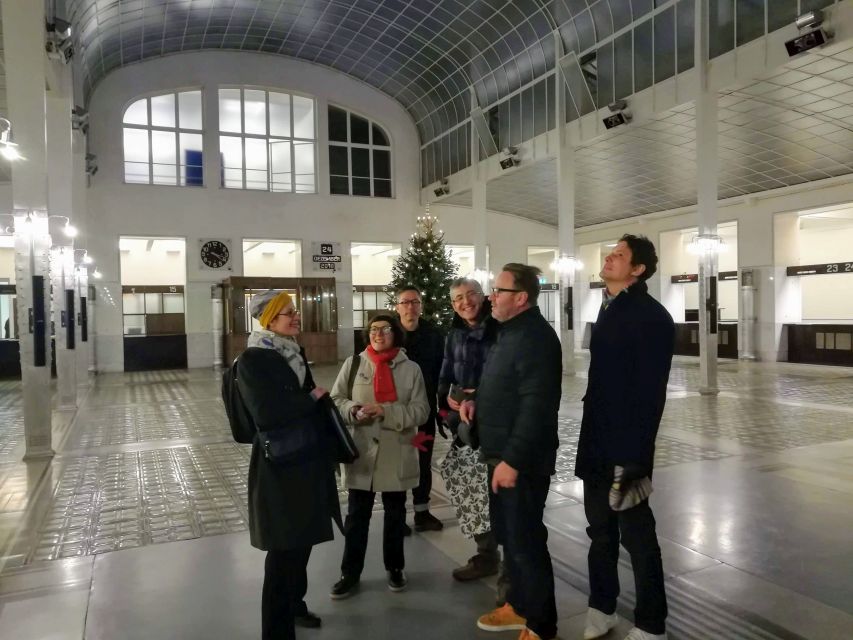
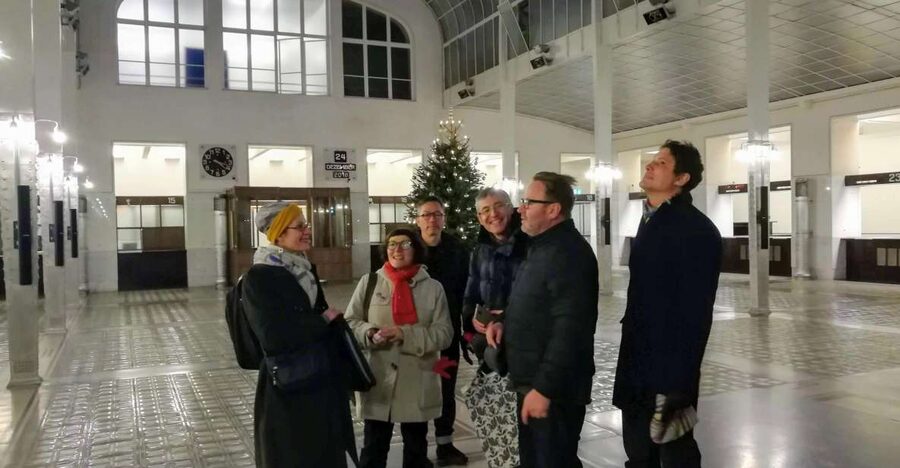
Next up is Stadtpark, where you stop at a metro station described as the best preserved of the original stations still in use. This is one of those details that makes the tour feel grounded. You are not just visiting a historic postcard, you’re studying how design lived on after the city updated its transit system.
The standout technical story here is the artificial riverbed built for the little Vienna river. When the city train was built, the waterway needed rechanneling, and the challenge was integrating the realigned river into the new urban landscape. That is the kind of behind-the-scenes problem that Art Nouveau architects loved to solve: form and function forced to cooperate.
This stop is also a quiet reminder that design is not only about what you see from street level. It is about what supports the city underneath.
Stop 3: Secession at Kettenbrücke, plus Wagner apartments
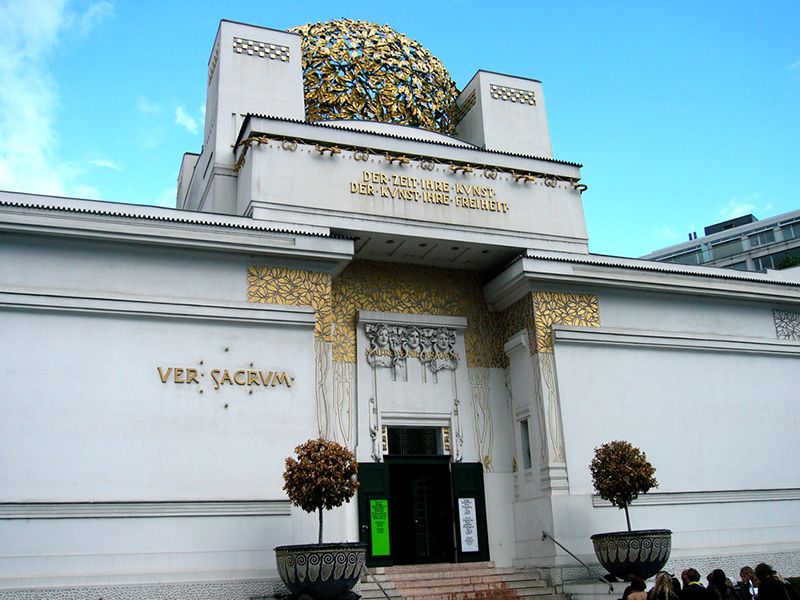
From the metro world, you shift toward the cultural engine of Jugendstil at the Secession building, described as the icon par excellence of Viennese Jugendstil. The guide uses this as a turning point: you are meant to connect the style’s philosophy to what you see in materials, symbols, and overall design choices.
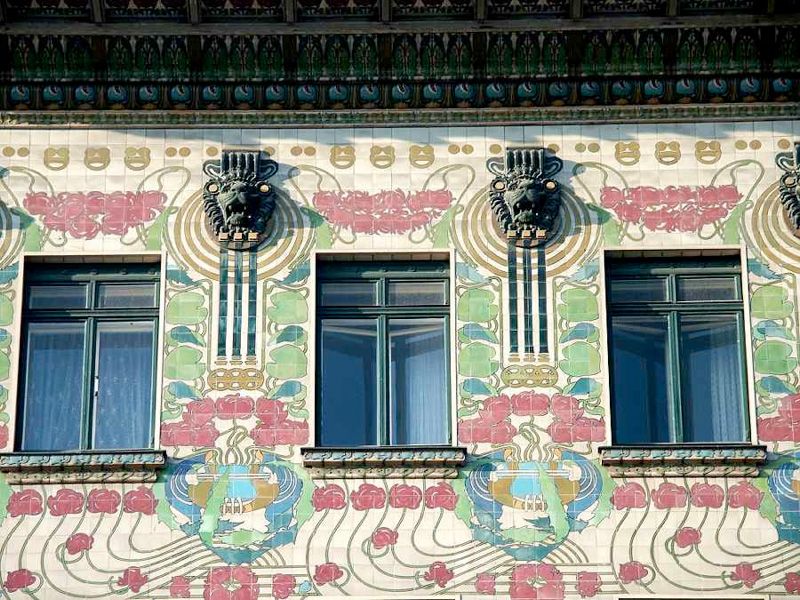
On the walk toward the Sezession building, you also explore two beautiful apartment houses by Otto Wagner. This is a useful reminder that Jugendstil was not limited to grand public monuments. It also showed up in homes, where modern design affected everyday life.
At Kettenbrücke station, you get the rhythm of the tour: brief transit transitions, then focused visual interpretation. If you like architecture but worry you will miss details because you are walking too fast, this format helps.
Bonus planning: Klimt’s Beethoven Frieze at the Secession House (optional, but powerful)
The tour includes time for the Secession area, with a strong path toward seeing Gustave Klimt’s Beethoven Frieze at the Secession House. This is not listed as included, so you need to plan the ticket.
The admission note is specific: if you tour Tuesday to Sunday, entry is €9.50 for adults and €6 for students and seniors. Your guide will help you pay, which is practical if you are juggling language and ticket rules on the spot.
Why does this matter for your value? Because it lets you shape the tour based on your interests. If Klimt is a must, you can add the time with confidence because you already know what the ticket situation looks like. If you are more into Wagner and the design mechanics, you can still enjoy the Secession building and the Jugendstil explanations without overcommitting your day.
Imperial station, Schönbrunn’s shadow, and Wagner’s grand purpose
The last stop is the imperial station, reached by stepping from Kettenbrücke onto the metro for the final segment. This station is described as having been erected outside Schönbrunn castle specifically for the Emperor to use.
What makes this stop fascinating is the stated symbolism: the station also functioned as a signal to critics of Vienna’s metro, showing the Emperor supported the line. That is a reminder that transit is never just transit in Vienna. It becomes a statement about who gets to modernize, and who gets to approve the plan.
In the small but dynamic space of the imperial station, you are meant to recognize the same design elements you encountered earlier in the walk. The guide also points out how Wagner translated a typically bourgeois Art Nouveau style into something with imperial grandiosity. If you’ve ever wondered why the same design language can feel humble in one context and ceremonial in another, this is where it clicks.
What to look for on the walk so you get more than photos
This tour works best when you treat it like a design scavenger hunt. You will move through stations and buildings that share themes, so your attention really matters.
Here are a few things to watch for as you go:
- Patterns and materials: the guide focuses on Jugendstil symbols and material choices, so keep an eye out for how texture and surface design carry meaning.
- How modern infrastructure is framed: the riverbed story at Stadtpark is a clue that engineering and aesthetics are linked here.
- Wagner’s mix of modern and ceremonial: the shift from everyday architecture to imperial scale is intentional, not random.
- Metro details that teach design: original station design is still visible, which makes this tour more than a lecture.
- The story logic: each stop is meant to set up the next, so listen for the way themes repeat in new contexts.
You do not have to be an architecture expert. If you can notice the differences between buildings and explain them in simple terms, you will get a lot out of it.
Group size, language, and why the guide matters
The max group size is 8 travelers, which is small enough to feel personal without becoming overly slow. That size also helps you ask a question when something catches your eye, especially if you notice a detail and want to understand what it’s doing.
The tour runs in English, and the guide is the reason the experience sticks. Several guides connected to this tour style are repeatedly praised for being passionate about Austrian architecture and history, and for staying flexible on the day.
One practical benefit that shows up in real life: because the guide understands the city, you can leave with clearer ideas for navigating Vienna on your own, including how to use public transportation more confidently.
Who should book this Vienna Art Nouveau walk?
This is a strong fit if you like art and architecture and want a city orientation that feels specific, not generic. It is also great if you already visited some big Vienna sights and want something that explains the city’s design brain around 1900.
You will likely enjoy it if you:
- want a guided route that links buildings to ideas
- enjoy seeing how art styles show up in real public spaces
- like learning with a clear sequence of stops, not a random wandering day
It may not be your best choice if you hate walking in bad weather or if you only want fully included, ticket-free museum time. The route is built around outdoor station-to-building segments, and at least some museum visits involve separate admissions.
Should you book this tour? My take on value
If you care about why Vienna’s Art Nouveau looks the way it does, this tour is worth the money. The $180 price feels justified by the structured route, the professional guide, and the fact that the story is built around historic metro stations and Wagner’s design influence.
The best part is that you get both big-picture context and tangible details you can recognize again later. You’re not just collecting sights, you’re learning a lens for the city.
I’d book it if you are staying in Vienna long enough to add one or two optional museum tickets, or if you just like the idea of a tight, expert-led walk through Jugendstil. If you are short on time and only want included museum entries with no extra planning, you might want to compare options first.
FAQ
How long is the Vienna Art Nouveau Walking Tour?
The tour is listed at about 2 hours 30 minutes.
What is the tour price?
The price is $180.04 per person.
What languages is the tour offered in?
The tour is offered in English.
What is included in the tour price?
It includes a 2.5-hour guided tour of Vienna Art Nouveau metro stations and iconic buildings, plus a professional guide.
Are any entrance fees included?
Many stops are listed as free, but some optional museum visits may have extra fees. The Otto Wagner Pavilion may require admission from April to October, and the Secession House visit for Klimt’s Beethoven Frieze has separate ticket pricing if you tour Tuesday to Sunday.
What is the meeting point and group size?
The meeting point is Operngasse 7, 1010 Wien, Austria, and the maximum group size is 8 travelers.
Fresh on the site in Vienna
- World War II History Vienna Old Town Private Walking Tour★ 4.8 · 9 reviews
- Vienna/Bratislava: Traunkirchen, Hallstatt & Salzburg Tour★ 4.8 · 53 reviews
- Vienna: Winery and Wine Tasting Tour with a Wine Expert★ 5.0 · 5 reviews
- Vienna: Wine Tasting Tour★ 4.8 · 61 reviews
- Vienna/Bratislava: Day Trip to Hallstatt & Salzburg★ 4.8 · 21 reviews
- Vienna: Wiener Schnitzel and Strudel Cooking Class★ 4.9 · 126 reviews
- Vienna: Waltz into the Ball Season★ 4.7 · 3 reviews
- Vienna: Wine Tasting E-Bike Tour★ 4.9 · 46 reviews
Walking Tours, compared.
Guided Walking Tour of City Center Highlights
Read our review →
Guided Walking Tour of City Highlights & Hidden Gems
Read our review →
Vienna Historic Center Small Group Walking Tour
Read our review →
Browse the lists this tour appears in