
REVIEW · WALKING TOURS
Vienna Highlight Tour – yue walk
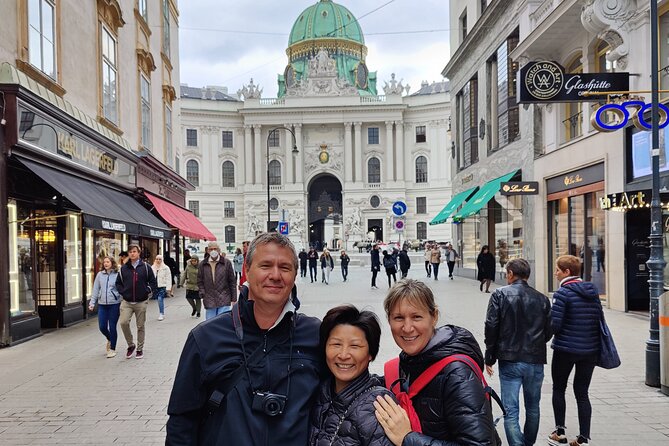
Vienna clicks into place on this walk. This 2-hour small-group walk, led by a licensed guide in English, maps Vienna’s historical center with a phone-friendly mobile ticket.
I especially like the way you get fast orientation around the main sights, from the Staatsoper area to St. Stephen’s. I also like the focus on how places connect, so you understand why one building matters to the next.
One thing to factor in: several stops have optional or ticketed entries, so your total “out of pocket” cost can rise if you want to go inside (like the Sisi Museum and some Hofburg-related interiors).
In This Review
- Key takeaways before you go
- Meeting at the Staatsoper, then getting your bearings fast
- Staatsoper to Sacher Hotel: where Vienna’s big names start talking
- The Memorial Against War and Fascism, not just another statue
- Albertina, Lobkowitzplatz, and church-tower viewpoints
- Stallburg Lipizzanners and the Hofmusikkapelle court-music world
- Hofburg inner courtyards and Heldenplatz: the Habsburg power map
- Maria Theresien Square and Sisi: why Vienna loves its icons
- Michaelerplatz, plague history, and finishing at St. Stephen’s Cathedral
- Price and value: what you get for $106.20 in about two hours
- Who should book this walk, and who might not
- Should you book Vienna Highlight Tour – yue walk?
- FAQ
- How long is the Vienna Highlight Tour?
- What is the tour price?
- Is the tour offered in English?
- How many people are in the group?
- Where do I start and where does it end?
- Do I need to buy admission tickets during the tour?
- Is a mobile ticket used?
- Is cancellation possible if the weather is bad?
Key takeaways before you go
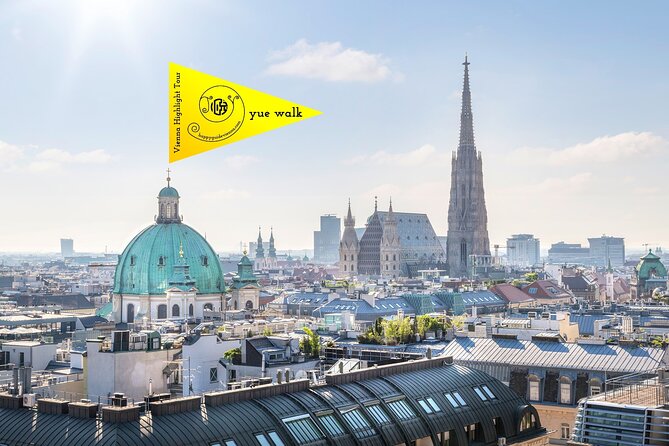
- Max 6 travelers means a calmer pace and more time for questions
- English guide plus mobile ticket keeps logistics simple
- Lots of free stops lets you see the big moments without paying at every corner
- Habsburg and Viennese culture in one loop gives you the cause and effect, not just photos
- Optional ticket sites let you choose how much you want to pay to enter
Meeting at the Staatsoper, then getting your bearings fast
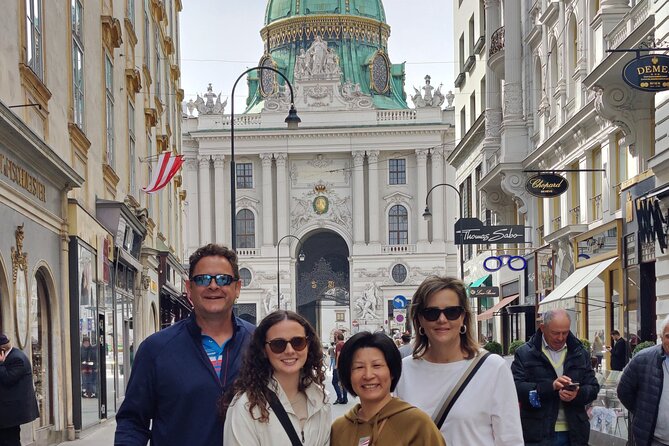
You start at Herbert-von-Karajan-Platz in front of the Vienna State Opera (Staatsoper). That location is perfect, because it puts you right in the middle of Vienna’s grand axis, where many of the city’s main stories begin. You’ll end near the Stephansplatz U-Bahn station, close to St. Stephen’s Cathedral, so the walk naturally carries you toward your “Vienna finale.”
This is built for real limited-time sightseeing. The tour runs about 2 hours, and it covers a lot of ground without feeling like you are sprinting through one landmark after another. With a group capped at 6 people, you tend to get more of the guide, less of the crowd.
In the best version of this tour, your guide is not just listing facts. Yue, for example, comes across as upbeat and funny, and she seems to enjoy answering questions as you go. A few guides like to speed past the awkward moments. Yue’s style feels more like, Okay, now you can actually see the city you came for.
More Walking Tours in Vienna
- Vienna: Guided Walking Tour of City Center Highlights
★ 4.7 · 4,989 reviews - Vienna: Vienna Central Cemetery Guided Walking Tour
★ 4.8 · 3,307 reviews - Vienna: Guided Walking Tour of City Highlights & Hidden Gems
★ 4.9 · 2,180 reviews
Staatsoper to Sacher Hotel: where Vienna’s big names start talking
The first stop is the Vienna State Opera, a neo-renaissance landmark dating to 1869. Even if you do not buy an inside ticket, the exterior alone gives you a sense of Vienna’s seriousness about music and performance. It’s a great first visual anchor for the rest of the day.
Right in this zone, the tour also threads in the kind of local stories Vienna is famous for. You’ll hear about Palais Toldesco and Johann Strauss, and you’ll get the idea behind the Sacher Hotel connection too, including the famous Sacher Torte. That mix, opera plus social history plus food culture, is a simple way to understand how Vienna’s elite life worked.
Small heads up: admission tickets are not included at the State Opera stop. So treat that as, you can enjoy the building as you walk by, and you can decide later if you want paid entry for more.
The Memorial Against War and Fascism, not just another statue
After the opera area’s glamour, the mood shifts with the Memorial Against War and Fascism. This stop hits harder than you might expect from a “highlights” walk, and that’s exactly why it works. The memorial includes a Jewish statue, the Gate of Hell, and the Independence Declaration Stone.
Why it matters: Vienna’s center is not only about palaces and emperors. It is also about the consequences of violence, hate, and political collapse. When you see these elements on the same day as the Hofburg power settings, you start to understand how history can change direction fast.
The good part is pacing. You’re not trapped in a long stop. You get enough time to look closely, then you move on with the story still in your head.
Albertina, Lobkowitzplatz, and church-tower viewpoints
Next you reach Lobkowitzplatz, where the architecture starts doing a lot of talking. You’ll be near the Albertina Palace and Museum area, and you’ll also spot the Augustina Church Tower. On top of that, the walk passes baroque Lobokowitz Palace and even an art deco-style building by Otto Wagner.
This is a smart stop for first-timers. Vienna often feels like one continuous “old city,” but it really isn’t. Here, you can see multiple eras next to each other, and the guide’s job is to help you notice what changed and why.
Then the tour moves toward Josefsplatz, where the walking continues to feel like a guided route through power, faith, and education. You can step inside the Augustina Church during this stop, which is a big plus if you like seeing interiors rather than only façades.
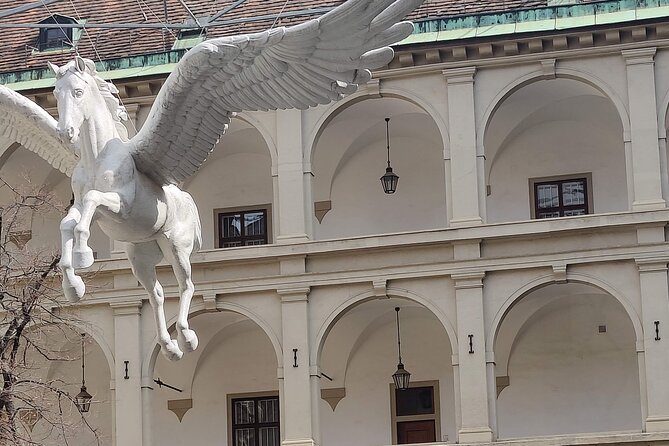
Josefsplatz also brings in the Josef Statue, the Court Library, Pallavicini Palace, and the Spanish Riding School. You likely view the Spanish Riding School from the outside, but it still gives you a sense of how deeply Vienna’s court culture ran, even when it changed hands across centuries. Most of the sites in this stretch are marked as admission free, so you can keep spending under control.
Still the same country, a very different afternoon:
- Vienna: Vivaldi’s Four Seasons Concert in Karlskirche
★ 4.7 · 14,951 reviews - Vienna: Spanish Riding School Training
★ 3.9 · 9,281 reviews - Vienna: Skip-the-cashier-desk-line Giant Ferris Wheel Ride
★ 4.5 · 7,859 reviews - Vienna: Schönbrunn Palace & Gardens Skip-the-Line Tour
★ 4.7 · 7,739 reviews
Stallburg Lipizzanners and the Hofmusikkapelle court-music world
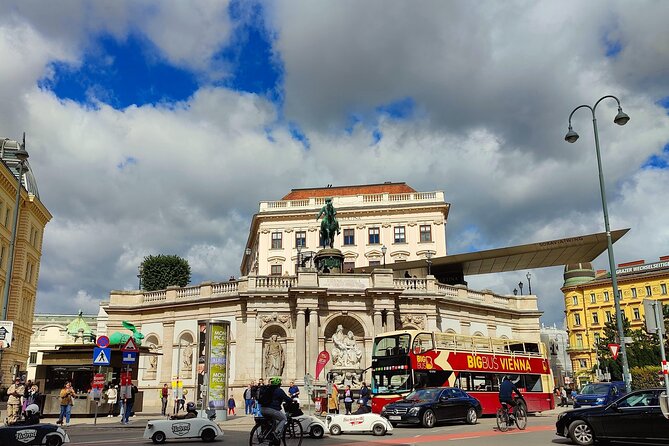
Stallburg is the next emotional beat, even if you just see the area rather than going deep inside. This stop centers on the Lipizzanner horses. The horses are part of Vienna’s identity, and even a short look from the right vantage point can make the city’s court traditions feel real.
At this stage, plan for optional paid entry. The State Opera stop and several Hofburg-adjacent areas list admission not included. That means you’re welcome to enjoy the setting and the guided context, but if you want the extra interior access, you’ll need to budget for it.
Then you move on to Wiener Hofmusikkapelle, where the tour spotlights the Imperial Treasury Museum and the Court Music Chapel, plus a Renaissance Gate. These are the kinds of locations where Vienna’s old-world obsession with ceremony makes sense. Music, ritual, and power were never separate in this city.
Again, admission is not included for this stop, so think of it as a guided “you are here in the court universe” moment. If you want to go further, you can.
Hofburg inner courtyards and Heldenplatz: the Habsburg power map
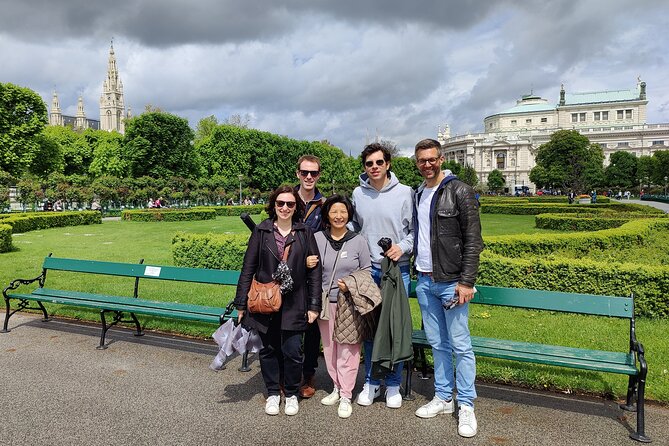
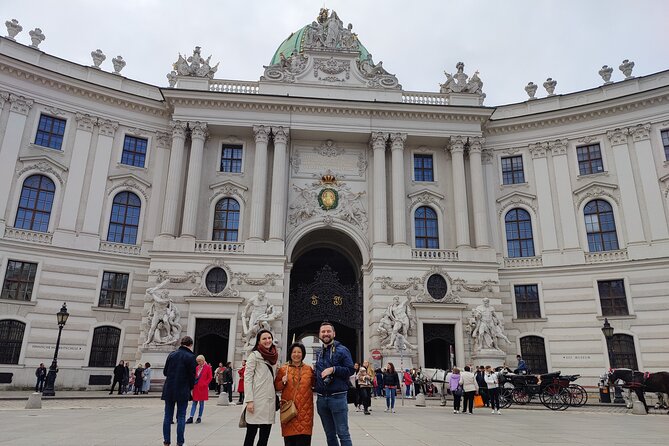
Now the tour leans fully into the Habsburg core. You enter the Hofburg area for the Inner Court, where you’ll see a statue of Franz II/I and then the wing names that help you orient the complex: Amalien Wing, Leopoldinischer Wing, and Reichskanzlei Wing.
This kind of naming can sound dry, but in Vienna it is useful. Once you learn which wing is which, the whole palace complex becomes easier to navigate on your own later. You stop seeing a blur of buildings and start seeing structure.
Heldenplatz is the next major open-space statement. You’ll see statues of Karl and Prince Eugen, and you’ll also pass key civic or institutional landmarks around the area, including the National Library, OSCE, Burgtor, City Hall, and the Parlament. Seeing these together is a helpful reminder that Vienna’s center is a mix of monarchy, modern government, and cultural institutions.
The guide’s big job here is connection. A good route through Hofburg and Heldenplatz helps you grasp how the city turned into a stage for political legitimacy, not just art and architecture.
Maria Theresien Square and Sisi: why Vienna loves its icons
Maria Theresien Square is your stop for Maria Theresa, with the tour framing her as one of the most powerful female rulers in the Habsburg era. You’ll also see the impressive statue of the empress surrounded by standout buildings that house major museums, including art and natural history.
This is where you start to see Vienna’s storytelling style. It is not only about kings. It is about figures whose personal myth becomes part of national identity. The guide’s framing helps you connect Maria Theresa’s political weight with the later “Sisi” fascination.
Next is the Sisi Museum area. Sisi is presented as one of the two most famous female figures in Habsburg, and the tour focuses on the stories that made her an Austria icon after her death. This stop lists admission not included, so treat it like an optional deeper layer if you want the museum experience.
Even if you skip paid entry, the surrounding context can still be valuable. You’ll walk away knowing why Sisi is not just a fashion memory, but a big part of how Vienna sells (and mourns) its imperial past.
Michaelerplatz, plague history, and finishing at St. Stephen’s Cathedral
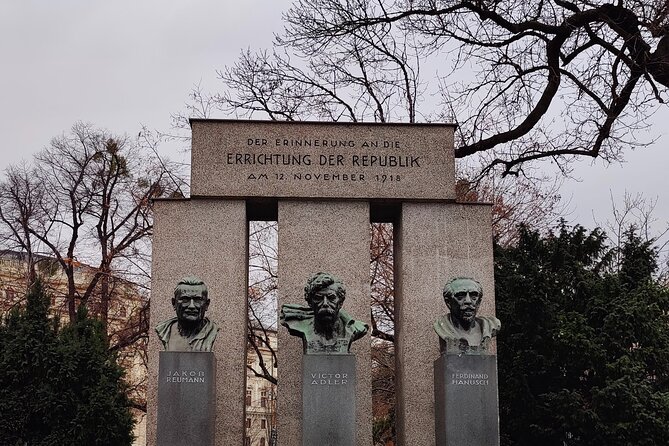
After the empress stops, the tour moves into the older fabric of the city. At Michaelerplatz, you’ll see Michaeler Church and Michaeler Gate, plus features like Loose House and excavations. This kind of stop is for people who like the “how did the city grow” feeling.
Then you reach Kohlmarkt, where the tour includes Cafe Demel. This is a quick taste of Vienna’s high-end food culture, and it’s a nice moment of contrast after the heavier history. Even if you do not stop for coffee, it gives you a practical target for later.
Colonna Della Peste, also known as the Pestsaule, is next. It’s the plague monument stop, along with Grabenhof and Ankerhaus nearby. You learn how Vienna remembers its darker chapters in stone, and that memory sits right inside the same streets where people later built shops and grand addresses.
Finally, you arrive at St. Stephen’s Cathedral. The tour frames it as a building that began in the 12th century and continued into the 16th, with the tallest tower in the city center. This is a strong finish because it naturally puts you within easy reach of more time in the cathedral area if you want it.
Most of these stops are listed as admission free, so your end phase is lighter on paid entries, which helps the last stretch feel easy.
Price and value: what you get for $106.20 in about two hours
At $106.20 per person for roughly 2 hours, you are paying mainly for two things: a licensed guide and time-saving storytelling. You are not paying for a stack of museum admissions. This tour mixes plenty of admission-free stops with a few areas where ticketed entry is optional.
So the value depends on your style. If you like seeing major sights and getting the “why” behind them, the guide pays off quickly. If you only want to take photos and you are already comfortable reading guide signage, you might feel the cost more.
Where this tour tends to score well is the pace and group size. A max of 6 travelers usually means the guide can slow down when you want details and can still keep the group moving. Many guides do the opposite, and you end up rushing your own attention.
Also, the tour’s structure helps you if it is your first day in Vienna. It starts at the Staatsoper, moves through the Hofburg and major squares, and ends near St. Stephen’s. That creates a mental map you can use for the rest of your trip, instead of wandering later with only memory and maybe a phone map.
Who should book this walk, and who might not
This is a great fit if you:
- want a first-pass orientation of Vienna’s historical center in a short window
- like Habsburg stories, court culture, and the city’s architectural shifts
- prefer a smaller group and a guide who will answer questions
It might not be ideal if you:
- plan to pay for multiple ticketed interiors during the walk and want that included
- need the tour in a language other than English (the tour is offered in English, and one mismatch can turn a tour into frustration)
- expect a fully museum-style experience, because several stops are exterior viewing or optional paid entries
One more practical note: the experience requires good weather. If Vienna gives you rain, you may need to reschedule or accept a different date.
Should you book Vienna Highlight Tour – yue walk?
If you are choosing one high-impact walk to get your bearings, I think this is a strong booking. The tour’s mix of big landmarks, admission-free stops, and court-and-history connections gives you real value fast. Add the small group size and the friendly, humorous guide energy reported with Yue, and it becomes the kind of tour that leaves you saying, I finally understand what I am looking at.
Book it especially if you want to return later on your own with a better sense of direction. You will know where to go next, and you will know which places are worth your money for inside access.
FAQ
How long is the Vienna Highlight Tour?
It runs for about 2 hours.
What is the tour price?
The price is $106.20 per person.
Is the tour offered in English?
Yes, the tour is offered in English.
How many people are in the group?
The tour has a maximum of 6 travelers.
Where do I start and where does it end?
You start at Herbert-von-Karajan-Platz, Staatsoper, 1010 Wien, Austria. You end near Wien Museum Virgilkapelle Stephansplatz U-Bahn-Station, 1010 Wien, Austria.
Do I need to buy admission tickets during the tour?
Some stops say admission tickets are not included, including areas at the Vienna State Opera, Stallburg, Wiener Hofmusikkapelle, and the Sisi Museum. Many other stops are listed as admission free.
Is a mobile ticket used?
Yes, it includes a mobile ticket.
Is cancellation possible if the weather is bad?
Yes. The experience requires good weather, and if it is canceled due to poor weather, you will be offered a different date or a full refund. You can also cancel up to 24 hours in advance for a full refund. Service animals are allowed, and the tour is near public transportation.
Fresh on the site in Vienna
- World War II History Vienna Old Town Private Walking Tour★ 4.8 · 9 reviews
- Vienna/Bratislava: Traunkirchen, Hallstatt & Salzburg Tour★ 4.8 · 53 reviews
- Vienna: Winery and Wine Tasting Tour with a Wine Expert★ 5.0 · 5 reviews
- Vienna: Wine Tasting Tour★ 4.8 · 61 reviews
- Vienna/Bratislava: Day Trip to Hallstatt & Salzburg★ 4.8 · 21 reviews
- Vienna: Waltz into the Ball Season★ 4.7 · 3 reviews
- Vienna: Wine Tasting E-Bike Tour★ 4.9 · 46 reviews
- Vienna: Wiener Schnitzel and Strudel Cooking Class★ 4.9 · 126 reviews
Walking Tours, compared.
Guided Walking Tour of City Center Highlights
Read our review →
Guided Walking Tour of City Highlights & Hidden Gems
Read our review →
Vienna Historic Center Small Group Walking Tour
Read our review →
Browse the lists this tour appears in