REVIEW · TOURS
Vienna Oldtown Tour
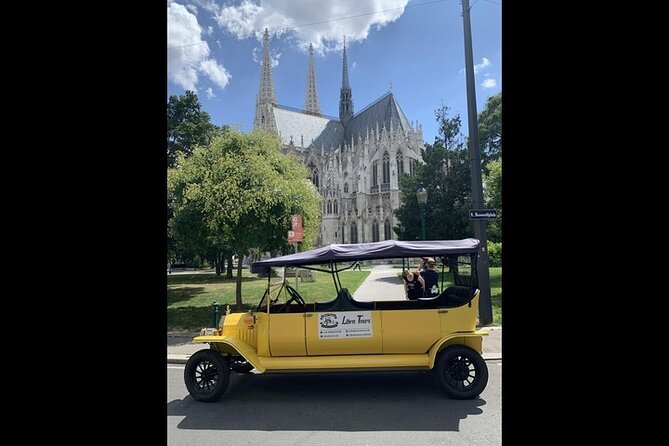
Vienna in 45 minutes, with big-picture context. This Vienna Old Town tour is a fast sweep through the places that shaped modern Austria, from imperial palaces to major museums and key political buildings. I love the way the route strings together Hofburg and the Ringstraße highlights so you get your bearings quickly.
I also like that it is offered in English and runs as a private experience for just your group. In real-world terms, that means you can ask questions and steer the focus toward what you care about, instead of being stuck with a rigid group script.
One thing to consider: the timing is short, and some details depend on your guide and conditions. The ride is built for quick photo stops, and a few reviews mention English can vary, meeting-point directions can be vague, and roof positions for photos may depend on the day.
In This Review
- Key things to know before you go
- The 45-minute loop that gives you your Vienna “map”
- Hofburg to Heldenplatz: where the Habsburg story turns into statues and stone
- Ringstraße monuments, theatres, and the university axis
- Parliament, libraries, and OSCE: Vienna’s “serious business” buildings
- Museums for art, natural science, and world cultures
- Albertina and modern art stops: prints, drawings, and the Secession vibe
- Churches and squares where Vienna feels old even during a quick stop
- Freud Museum and the Vienna Fire Service Museum
- Volksgarten rose garden: the short free break you will actually enjoy
- Practical photo and comfort tips based on what tends to happen
- Price and value: what $42.17 buys you in 45 minutes
- Who should book this Vienna Old Town tour, and who should choose something else
- Should you book the Vienna Old Town Tour?
- FAQ
- How long is the Vienna Oldtown Tour?
- What language is the tour offered in?
- Is this tour private?
- Do I get a mobile ticket?
- Does it start and end at the same place?
- What are the opening hours?
- Is good weather required?
- Can I cancel for a full refund?
Key things to know before you go
- A 45-minute overview route that covers big landmarks fast, ideal for a first day in Vienna
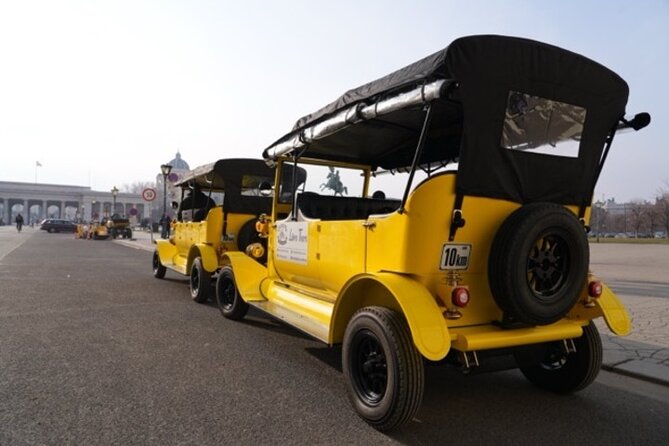
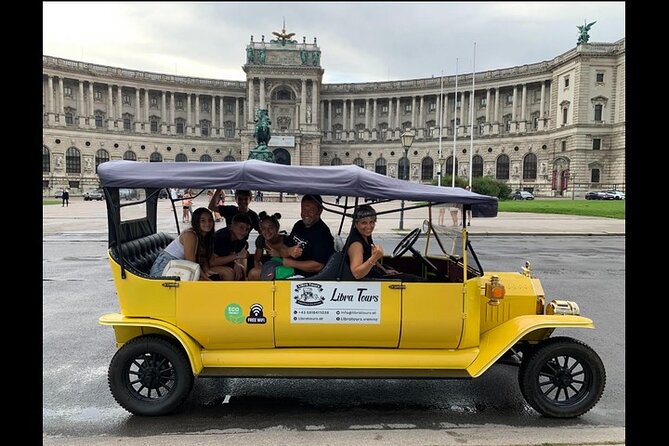
- Classic car style stops with photo moments at major squares and churches
- Hofburg area hits including the Swiss Gate, Heldenplatz monuments, and the palace complex
- Culture meets politics with stops near the Austrian Parliament, library, and major institutions
- Volksgarten rose garden gets a short, free, scenic break for photos
- Guides like Jerry, Jeremiah, and Alexander get praised for energy, friendliness, and adapting to older guests
The 45-minute loop that gives you your Vienna “map”
This is the kind of tour that helps you stop feeling lost. In under an hour, you get the visual connections between neighborhoods that otherwise look unrelated on a Vienna map, like how the palace world (Hofburg) connects to the grand civic buildings along Ringstraße and then down toward the older church squares.
The payoff is practical. When you return later for a museum ticket or a longer walk, you already know which direction you are facing and which street names matter. It is also a solid option if you have limited time, jet lag, or just want a quick “greatest hits” pass.
A few more Vienna options worth a side-by-side
- Vienna: Vivaldi’s Four Seasons Concert in Karlskirche
★ 4.7 · 14,951 reviews - Vienna: Spanish Riding School Training
★ 3.9 · 9,281 reviews - Vienna: Skip-the-cashier-desk-line Giant Ferris Wheel Ride
★ 4.5 · 7,859 reviews
Hofburg to Heldenplatz: where the Habsburg story turns into statues and stone
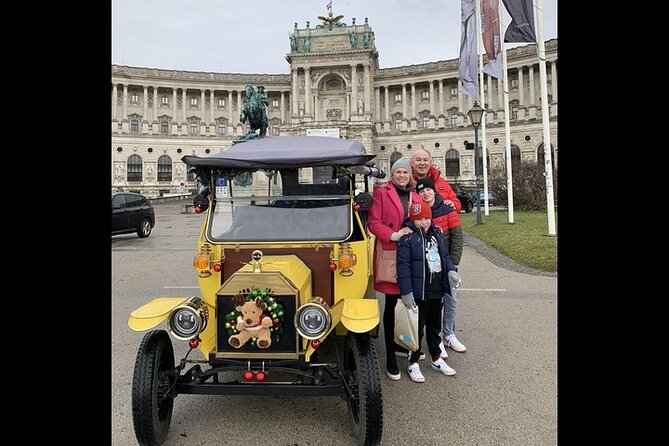
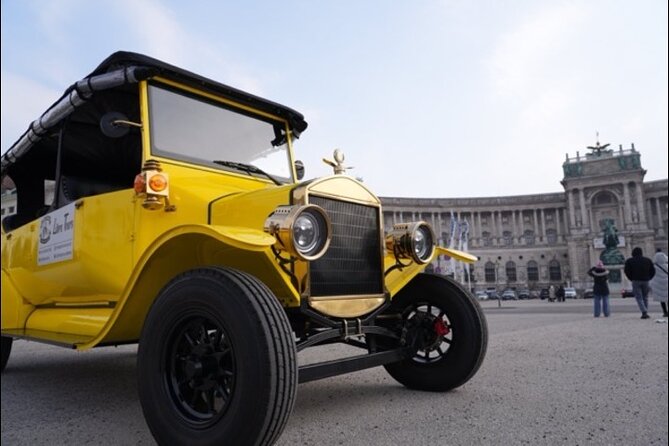
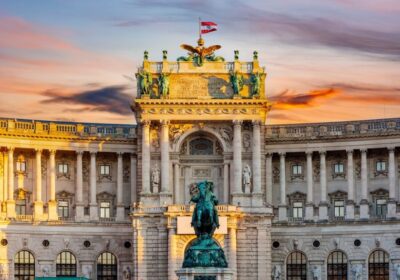
Your route is built around Vienna’s imperial core. The Hofburg Palace is the big anchor, a complex that has served as the winter residence of the Habsburg dynasty and now functions as the official residence and workplace of Austria’s president. Even if you are not going inside during this short ride, the palace complex explains why Vienna looks the way it does: multiple wings, multiple eras, all tied to one ruling family’s long timeline.
From there, you are set up for Heldenplatz and its monuments. You will learn about Prince Eugene of Savoy, a celebrated Austrian general and statesman known for victories against the Ottoman Empire and France. You also see the Archduke Karl equestrian statue in Heldenplatz, a popular photo landmark.
If you like small “context clues,” this part delivers. The names are not just decoration. They are the short version of why Vienna became a center of power for centuries.
Ringstraße monuments, theatres, and the university axis
After Hofburg, the tour keeps pulling you toward the Ringstraße corridor, where Vienna puts its best face on government, culture, and education.
You pass major cultural landmarks such as the Burgtheater, Austria’s national theatre. It began in 1741 and moved to its current Ringstraße location in 1888, so it is both old-school and built for grand city-scale audiences.
You also see the Vienna City Hall, Rathaus, a neo-Gothic building constructed from 1872 to 1883. It is huge for a reason. Vienna wanted civic pride to feel visible and permanent.
University of Vienna is another key stop. Founded in 1365, it is one of Europe’s oldest universities. In a short tour, you do not need a full campus visit to understand the message: Vienna has always mixed art, power, and scholarship in the same streets.
Parliament, libraries, and OSCE: Vienna’s “serious business” buildings
One of the more interesting parts of this tour is the shift from statues and theatres to institutions tied to ideas and governance.
You get a look at the National Library in Vienna, described as one of the oldest and largest libraries in the world, with over 11 million books and manuscripts. The library is also tied to special collections such as the Papyrus Museum and the Globe Museum. In a 45-minute format, you will mainly get orientation, but that orientation matters, because it tells you which building is worth a longer visit later.
You also stop near the Organization for Security and Co-operation in Europe, OSCE. It is described as the world’s largest regional security organization, with 57 participating states, working to prevent conflict and support human rights, democracy, and rule of law. The important practical takeaway for you is this: Vienna is not only palaces and concerts. It also hosts international diplomacy and policy discussions.
Then there is the Austrian Parliament Building, completed in 1883, designed in a Greek Revival style. You learn about its two chambers, the National Council and the Federal Council. If you care about architecture, this is a strong contrast against the ornate imperial buildings earlier.
Still the same country, a very different afternoon:
- Vienna: Schönbrunn Palace & Gardens Skip-the-Line Tour
★ 4.7 · 7,739 reviews - Vienna: Light of Creation Votive Church Immersive Light Show
★ 4.8 · 6,779 reviews - Vienna Spanish Riding School Guided Tour
★ 4.7 · 6,765 reviews - Vienna: Classical Concert in the World-Famous Musikverein
★ 4.6 · 6,673 reviews
Museums for art, natural science, and world cultures
Vienna is one of Europe’s museum capitals, and this tour helps you sort the main players quickly.
You will pass by Kunsthistorisches Museum, opened in 1891, which houses the Habsburgs’ imperial art collection. The description covers European art from antiquity to the late 18th century. Even without time inside here, the name tells you the theme: this is where imperial collecting shaped what you see in Vienna’s major art world.
You also get the natural-science counterpoint with the Natural History Museum Vienna. Founded in 1807 and opened in its current building in 1889, it is known for dinosaur skeletons, minerals, and animal exhibits. If you are traveling with kids, or you want variety beyond paintings, this stop is a helpful reminder that Vienna’s museum strength is not only cultural, it is scientific too.
For global culture and ethnography, the Weltmuseum Wien is on your route. It houses artifacts from around the world and connects art, history, and ethnography into one place. Again, this tour is not trying to replace tickets. It is trying to point you toward the right ticket later.
You also encounter MuseumQuartier Wien, a restored mix of historic and modern buildings opened to the public in 2001. Think of it as a “museum cluster,” not one museum. If you want to plan a longer day, this is a useful mental marker.
Albertina and modern art stops: prints, drawings, and the Secession vibe
If you care about paper and design, Albertina is one of Vienna’s standout names. The tour route includes it, highlighting one detail that helps you decide if it is worth your time later: Albertina is home to one of the world’s largest print rooms, with drawings, prints, photographs, and architectural works.
The Vienna Secession stop is also worth noting. The Secession movement broke away from traditional art styles, and its building, completed in 1898, became a visual symbol of that change. If you have only seen Vienna through Baroque churches and imperial palaces, the Secession area is a quick reminder that Vienna also modernized its taste.
Kunstforum Wien appears on the route as well, a modern and contemporary art museum known for temporary exhibitions and a central location. It is a good label to remember when you want something current instead of classic.
Churches and squares where Vienna feels old even during a quick stop
Vienna’s old core is made for short pauses, and the tour takes advantage of that. You pass through key squares and churches that help you understand how the city layers its eras.
Am Hof is one of the square highlights. It dates back to the Roman era and connects to the Babenbergs’ residence. Today, you see the Kirche am Hof and the Mariensäule, plus shops and restaurants around the square. Even if you do not step far off the route, this is the kind of place that makes Vienna feel lived-in, not only staged for tourists.
The Scots Church, Schottenkirche, founded in the 12th century by Irish monks, is another older anchor. The baroque facade came later, but it still helps you understand that the city’s religious buildings often combine time periods the way Vienna combines art movements.
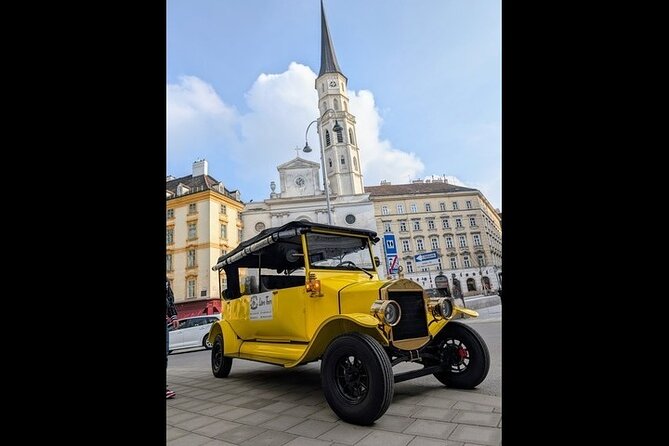
Church Am Hof and the Wiener Minoritenkirche give you more church variety. The Wiener Minoritenkirche is known for the mosaic of Leonardo da Vinci’s Last Supper, which is the sort of detail that turns a quick exterior stop into a “wait, I need to remember that” moment.
Freud Museum and the Vienna Fire Service Museum
Two stops that feel different from the palace-and-opera pattern are the Freud Museum and the Fire Service Museum.
The Sigmund Freud Museum sits in his former residence and focuses on his personal belongings, original furniture, and the development of psychoanalysis. If your interests lean toward ideas and personal stories, this is a nice switch.
The Vienna Fire Service Museum, established in 1901 in the historic Central Fire Station, shows the evolution of firefighting through historical equipment, uniforms, and documents. It is the kind of museum you might skip on a first pass, but once you have the name, you can decide later if you want something practical and hands-on rather than purely aesthetic.
Volksgarten rose garden: the short free break you will actually enjoy
This is the one stop with a clear time note and a clear perk: Volksgarten rose garden. You get about 5 minutes here, and admission is listed as free.
The garden is described as having over 300 rose varieties, and other notes in the same material point to over 400 varieties. The important part for you is the experience type: it is a perfume-and-color pause right in the center of the city, created in 1903 and popular with both tourists and locals.
It is also a smart moment for photos and breathing. The rest of the tour is fast movement through landmarks. This is the one tiny pocket where you can slow down.
Practical photo and comfort tips based on what tends to happen
This tour is designed for quick stops and brief looks, so you should plan for photography through quick angles.
A few reviews mention classic car roof behavior on sunny days, where the roof might not be rolled back, making photos tougher. My advice: when you meet your guide, ask what the roof plan is for your day and where you will stop for the best angles.
Meeting point clarity also matters. One review noted that the directions felt vague, mentioning the area near the Burgtheater and the front of the rose garden. So do yourself a favor: confirm the exact pickup point the day before, and take a screenshot of the meeting location on your phone.
Finally, comfort counts. The tour notes mention an extra stool for handicaps and elderly participants. That is a good sign if you need help sitting during the ride or if your mobility is limited.
Price and value: what $42.17 buys you in 45 minutes
At $42.17 per person for roughly 45 minutes, you are paying for a guided orientation plus a vehicle ride that lets you see far more in less walking time. This is not a “one attraction deeply” price. It is a “hit the big landmarks and learn the naming system” price.
That is why it can be good value if:
- you are on your first day and want a foundation for later self-guided exploring
- you want to reduce transit friction between sites
- you prefer quick context over museum ticket time
It is not the best value if you expect a full museum experience or long indoor time at each stop. The format is built to keep the pace moving. You will leave with a list of places you want to return to, not finished with everything.
Who should book this Vienna Old Town tour, and who should choose something else
This tour is a strong fit for couples, families, and anyone who wants a first-day orientation without committing to a full day of walking. Reviews also highlight that some guides, like Jerry and Jeremiah, helped older guests with pickup and scheduling flexibility, and guides like Alexander were described as helpful and friendly.
If your priorities are deep museum time, long cathedral interior visits, or guided entry into every major stop, you might do better with longer museum-focused tours. This one gives you the big-picture route, then points you to what to tackle next.
If you are very sensitive to language clarity, message the provider ahead and ask for your preferred English level, since one review noted difficulty when a guide’s English was not strong enough to explain details clearly.
Should you book the Vienna Old Town Tour?
Yes, if you want a quick, private introduction to Vienna’s top landmarks with a guide who can tie the places together. I think it is especially worth booking early in your trip so you can plan your next days with confidence.
Skip it or pair it with longer follow-ups if you want lots of indoor time at museums and churches, or if your main goal is to study one site in depth. For many people, the sweet spot is simple: use this tour to learn Vienna’s layout fast, then come back later for the stops that earned your attention.
FAQ
How long is the Vienna Oldtown Tour?
It lasts about 45 minutes.
What language is the tour offered in?
The tour is offered in English.
Is this tour private?
Yes. It is a private tour, so only your group participates.
Do I get a mobile ticket?
Yes. The tour uses a mobile ticket.
Does it start and end at the same place?
The activity ends back at the meeting point.
What are the opening hours?
The listed opening hours are Monday through Sunday from 9:00 AM to 6:00 PM.
Is good weather required?
Yes. If it is canceled due to poor weather, you will be offered a different date or a full refund.
Can I cancel for a full refund?
You can cancel up to 24 hours in advance for a full refund. If you cancel less than 24 hours before the start time, the amount paid is not refunded.
Fresh on the site in Vienna
- World War II History Vienna Old Town Private Walking Tour★ 4.8 · 9 reviews
- Vienna/Bratislava: Traunkirchen, Hallstatt & Salzburg Tour★ 4.8 · 53 reviews
- Vienna: Winery and Wine Tasting Tour with a Wine Expert★ 5.0 · 5 reviews
- Vienna: Wine Tasting Tour★ 4.8 · 61 reviews
- Vienna/Bratislava: Day Trip to Hallstatt & Salzburg★ 4.8 · 21 reviews
- Vienna: Wiener Schnitzel and Strudel Cooking Class★ 4.9 · 126 reviews
- Vienna: Waltz into the Ball Season★ 4.7 · 3 reviews
- Vienna: Wine Tasting E-Bike Tour★ 4.9 · 46 reviews
Tours, compared.
Schönbrunn Palace & Gardens Skip-the-Line Tour
Read our review →
Skip-the-Line Sisi Museum, Hofburg and Gardens Tour
Read our review →
Skip-the-Line Schönbrunn Palace & Gardens Tour
Read our review →
Guided Walking Tour of City Center Highlights
Read our review →