REVIEW · TOURS
Vienna: Sightseeing Tour in a Classic Style Car
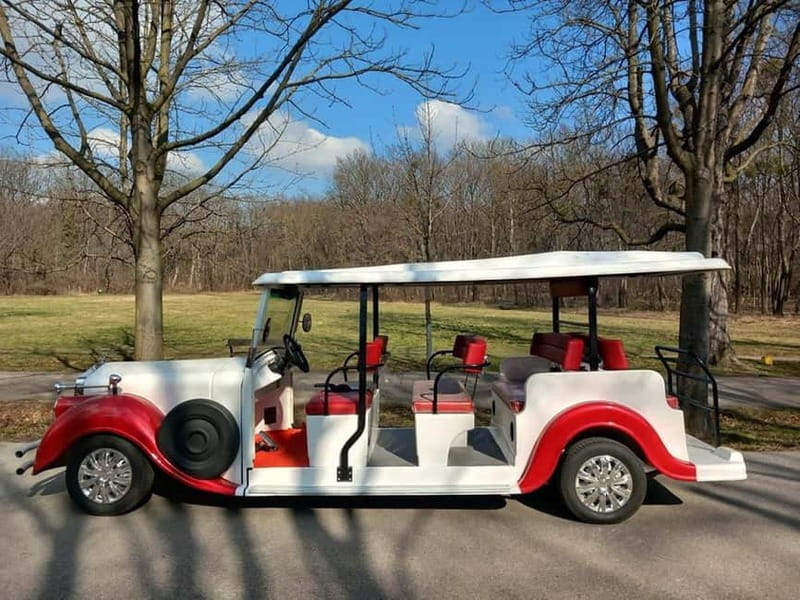
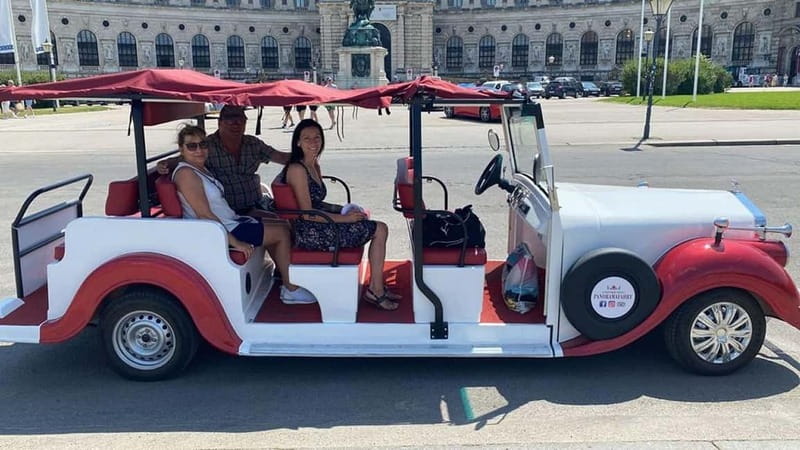
A classic car ride is a clever way to see Vienna. This electric old-timer tour lets you glide past the city’s biggest sights with emission-free comfort, while your live driver turns landmarks into stories. I love the small group feel and the way you get a ton of recognizable architecture in 90 minutes, even in chill weather. One drawback to plan for, the route is packed, so most stops are quick look moments rather than long walks.
You start and end at Herrengasse 12 (1010 Vienna), right in front of the Radisson Blu. Guides like Karl and Angelo are known for being friendly, funny, and good at answering questions as you roll through the old center and the grand imperial ring.
In This Review
- Key things that make this Vienna electric car tour worth your time
- Why a classic electric car works so well in Vienna
- Where the tour starts, and how to make the first minutes easy
- The 90 minute route: from Herrengasse to the imperial core
- Albertina and the old city wall zone
- Ringstrasse direction: State Opera and the grand boulevard feel
- Ringstrasse classics: Opera, monuments, and the grand parade feeling
- Burggarten and the Palm House moment
- Hofburg area: empires, statues, and museum-scale architecture
- The museum and monument sweep: what you should watch for
- Cultural Vienna in motion: Parliament, Burgtheater, City Hall, and the university vibe
- Back toward the inner center: old streets, St. Stephen’s, and Vienna at street level
- Why the quick passing works here
- Vienna’s music and hotel glamour loop: Strauss, Kursalon, and classic grand hotels
- Comfort, group size, and the guide factor that really changes the experience
- Price and value: is $40 a smart first stop in Vienna?
- Who this Vienna electric old-timer tour is best for
- Practical tips so you enjoy every minute
- Should you book this tour?
- FAQ
- How long is the Vienna sightseeing tour in a classic style car?
- What does the tour cost?
- Where does the tour start and end?
- Where exactly is the meeting point?
- What type of vehicle is used?
- How many people are in a group?
- What languages are available?
- Do you get live guidance or just audio?
- What will you see during the 90 minute tour?
- Can I cancel, and is pay later available?
Key things that make this Vienna electric car tour worth your time
- Electric old-timer, no emissions, so the ride feels clean and relaxed
- Live driver commentary in English or German, plus audio through the tour
- 90 minutes of major sights, from the State Opera to St. Stephen’s Cathedral area
- Up to 10 people total, so it stays personal and family-friendly
- You can ask for extra viewing time, if you want a closer look at a spot
Why a classic electric car works so well in Vienna
Vienna rewards slow looking, but your time in the city usually is not slow. This is the sweet spot: you get the comfort of a car, but you still move through the places that make Vienna feel like Vienna.
The vehicle matters. An electric old-timer means you are not sitting in fumes, and the ride stays comfortable for chilly or drizzly days. You can keep your attention on the buildings instead of the logistics of streets, parking, and crossing at busy intersections.
I also like that the “guide” is not just an announcer. The driver provides tour and audio commentary as you travel, and the best part is the way landmarks connect into a story you can actually remember later when you go back on foot.
A few more Vienna options worth a side-by-side
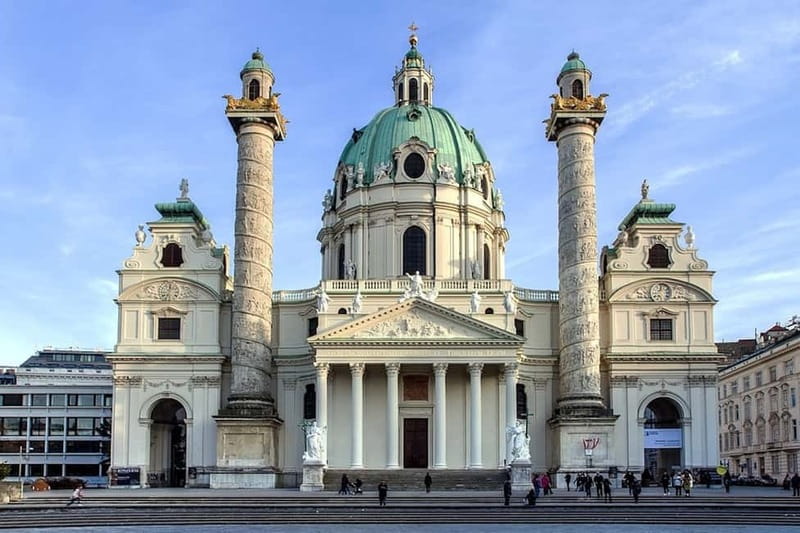
- Vienna: Vivaldi’s Four Seasons Concert in Karlskirche
★ 4.7 · 14,951 reviews - Vienna: Spanish Riding School Training
★ 3.9 · 9,281 reviews - Vienna: Skip-the-cashier-desk-line Giant Ferris Wheel Ride
★ 4.5 · 7,859 reviews
Where the tour starts, and how to make the first minutes easy
The tour meets at 1010 Wien, Herrengasse 12, in front of the Radisson Blu. That matters because you are starting in the central zone, right where Vienna’s main sightseeing spine begins to make sense.
When you arrive, take a minute to get your bearings before you board. The car is small and designed for sightseeing, so you will want a spot with a clear view of the street side where you can see façades and monuments as you pass.
If you are visiting with kids, this is a nice format. The group is limited to up to 10 participants, so it is easier to keep everyone together than on bigger bus tours.
The 90 minute route: from Herrengasse to the imperial core
This is a “see a lot, without sprinting” kind of tour. In 90 minutes, you travel through the old city and into the grand ring of imperial-era highlights, then you loop back toward the center near Herrengasse 12.
You start by rolling past major cultural and historic layers. Expect quick views of the old city wall area and the inner streets where the city feels medieval and ornate at the same time.
Then you move into the bigger, more ceremonial parts of Vienna. That shift is part of the fun. The city doesn’t just look impressive, it changes mood from street scale to boulevard scale as you go.
Albertina and the old city wall zone
You will pass the Albertina area first, a good early “Vienna art museum energy” moment. Right after that, the route connects to the old city wall idea, reminding you that today’s elegant streets were once defensive lines.
Even if you do not plan to go inside museums, these exterior moments help you understand where the cultural buildings sit in relation to older fortifications.
Still the same country, a very different afternoon:
- Vienna: Schönbrunn Palace & Gardens Skip-the-Line Tour
★ 4.7 · 7,739 reviews - Vienna: Light of Creation Votive Church Immersive Light Show
★ 4.8 · 6,779 reviews - Vienna Spanish Riding School Guided Tour
★ 4.7 · 6,765 reviews - Vienna: Classical Concert in the World-Famous Musikverein
★ 4.6 · 6,673 reviews
Ringstrasse direction: State Opera and the grand boulevard feel
As you head toward the State Opera and Ringstrasse, the city opens up. Ringstrasse is the long boulevard in world-class “big city theater” mode, and seeing it from a slow-moving car helps you catch the symmetry and the repeating architectural styles.
This is where Vienna’s love of scale shows. You can look up and take in the façades without constantly checking traffic or finding parking.
Ringstrasse classics: Opera, monuments, and the grand parade feeling
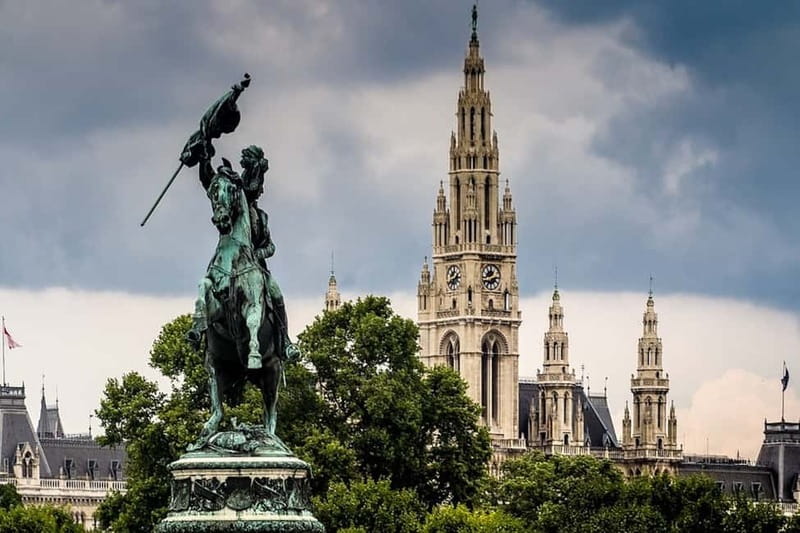
The tour gives you several bites of the Ringstrasse story rather than one long stop. That is useful if you want first-time orientation, especially if you plan to come back later for specific museums or churches.
You pass major institutions and statues that reflect Vienna’s mix of culture, politics, and big public spaces:
- Palais Schy
- Goethe Monument and Schiller Monument
- Academy of Fine Arts
- Burggarten
- Palm House and Butterfly House
- Mozart Monument
- New Burgtor
- Heldenplatz
What makes this section work is the pacing. Instead of forcing you to walk a long distance, the car lets you “scan” the skyline as you learn what each place is. You can also ask questions if something catches your eye.
Burggarten and the Palm House moment
One of the pleasant surprises on this route is how you get a direct view of Burggarten and then the greenhouse feel near the Palm House and Butterfly House. If you like botanical interiors, this is a good way to spot where you might want to return for a separate visit.
You are not spending an hour inside, but you are getting that key visual reference point that makes later visits feel more connected.
Hofburg area: empires, statues, and museum-scale architecture
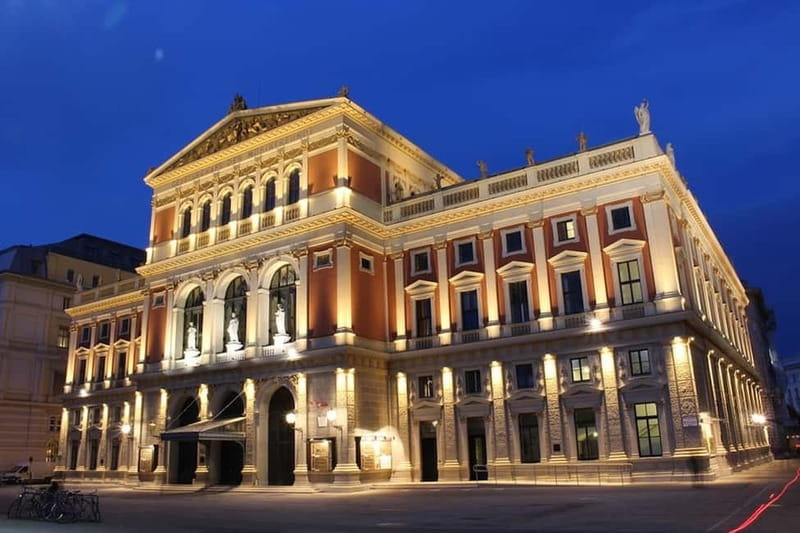
Once you reach the Heldenplatz and Hofburg zone, you are in the heart of the imperial story. This part of the tour is built around how power and culture were displayed in physical form.
Along the way, you pass:
- Hofburg
- National Library
- Welt Museum
- Presidential Palace
- Prince Eugene Statue
- Archduke Karl Statue
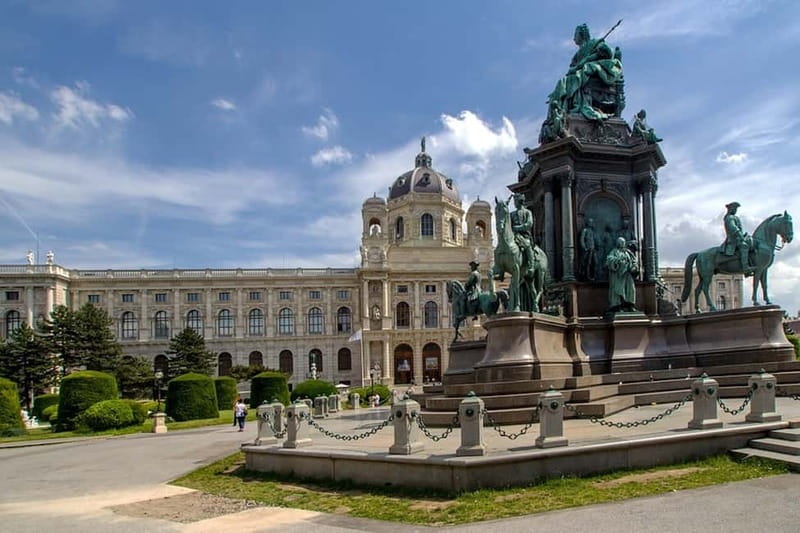
- Maria Theresa Statue
- Museum of Nature and Art History
- Epostein Palace
- and then onward toward Parliament and cultural buildings
If Vienna sometimes feels like it has too many palaces and too many grand buildings, this route helps you organize it. You start to notice patterns: where statues cluster, where the grand museum buildings sit, and how the city’s “official” face connects to its everyday streets.
The museum and monument sweep: what you should watch for
When you are moving, focus on shapes and placement, not every detail. Look for how the monument axes line up with big building fronts, and notice how the city uses open space to frame important figures.
If you are a photo person, aim for the street-facing moments rather than trying to get perfect shots of everything. With a loop like this, the best strategy is to capture a few “anchors,” then let the rest be memories you reconstruct later.
Cultural Vienna in motion: Parliament, Burgtheater, City Hall, and the university vibe
The tour keeps feeding you iconic culture signals. You pass Parliament, Burgtheater, City Hall, and University buildings in this stretch, and the grouping makes sense because Vienna’s civic and cultural identities were designed to sit close together.
This is also where the guide’s storytelling really helps. A building becomes more than a façade when you hear how it fits into Vienna’s public life.
You also pass:
- Liebenberg Monument
- and you start getting back toward the inner city energy
Even if you do not catch every fact, you will remember the “why this area feels official.” That is the value of seeing it in one continuous ride.
Back toward the inner center: old streets, St. Stephen’s, and Vienna at street level
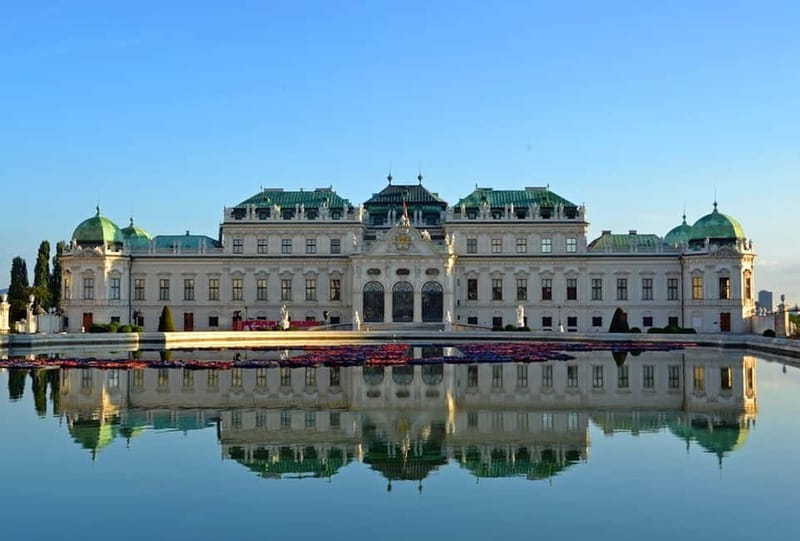
This section is where Vienna turns from ceremonial to human-scale. You move past sights that feel closer to everyday life, places you might later recognize when you wander.
You will pass (among others) the following landmarks and street-name moments:
- Old City Wall again, as the route ties back into the historic core
- Drei Mädel House
- Beethoven House area (one of the Beethoven houses)
- Palais Daum Kinski
- Palais Harrach
- Palais Ferstl with Café Central
- Am Hof
- Hohe Brücke
- Salz Gries
- Marc Aurel Straße
- Hoher Markt
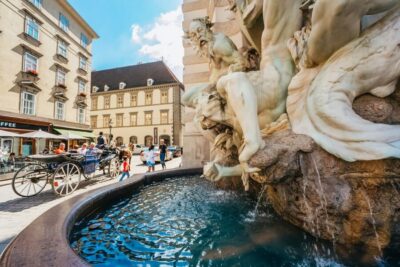
- Wedding Fountain
- Anchor Clock
- St. Stephen’s Cathedral
- Wollzeile
- City Park
This is a strong stretch for first-timers because it hits multiple “Vienna you can point to” markers. St. Stephen’s Cathedral is an obvious highlight, but the quieter hits like the Anchor Clock and Wedding Fountain help you learn the city’s rhythm.
Why the quick passing works here
On a car tour, you rarely get long stops in the inner streets. The payoff is that you get a coherent map in your head. Later, when you do walking, you will know which streets lead you where.
If you want longer looks, you can ask the guide for extra viewing time. You may find the driver can pause for a short window, typically a few minutes, so you can step out briefly and frame a shot or read a bit.
Vienna’s music and hotel glamour loop: Strauss, Kursalon, and classic grand hotels
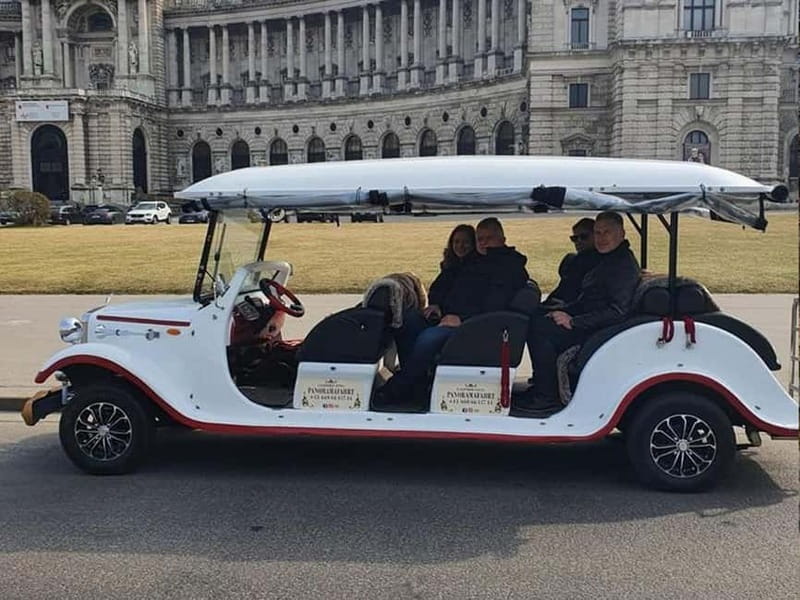
The final arc of the tour brings you past music-world Vienna and some of the famous hotel names. You travel through areas near:
- Johann Strauss Monument
- Kursalon Hübner
- Schwarzenberg Platz
- Café Schwarzenberg
- Musikverein
- Hotel Imperial
- Grand Hotel
- Hotel Bristol
- State Opera
- Hotel Sacher
then back toward Herrengasse 12
This section matters because it gives you a sense of Vienna’s cultural branding. You see where the music venues sit, and you spot the landmark hotels that show up in literature, old travel stories, and film.
Even if you do not plan to stay at any of these hotels, seeing them from the street gives you a feel for how the city treats elegance as public life, not just private luxury.
Comfort, group size, and the guide factor that really changes the experience
Two things drive the enjoyment here: comfort and personality.
The car is designed for sightseeing and keeps you sheltered enough for imperfect weather, which makes the tour feel doable in seasons like winter. The group stays limited to 10 participants, which helps the experience stay relaxed.
Then there is the guide. Names you might hear include Karl and Angelo, and both are known for mixing useful explanations with humor and question-friendly conversation. On this kind of route, that matters because you are seeing a lot quickly. A guide who can point out what you should notice can turn “passing views” into something you actually learn.
Also, the tour operates in English and German, and you will hear live commentary. If you happen to be in a mixed language group, having a guide who handles both can keep everyone connected.
Price and value: is $40 a smart first stop in Vienna?
At $40 per person for 90 minutes, this tour lands in the category of “pay for time saved and direction gained.” It is not the cheapest way to see Vienna, but it is also not trying to replace walking tours or museum tickets.
Here is why I think the value works:
- You get major sights across multiple zones in one go, which reduces decision fatigue.
- You ride in an electric classic car, so the experience feels different from a standard bus pass.
- The guide provides live tour and audio commentary, which helps you understand what you are seeing rather than just ticking boxes.
- The group stays small, so you are not swallowed by the crowd noise.
If your goal is to get oriented fast, I call this a good “first-day” purchase. If your goal is deep, slow exploration, you will still want to walk the city afterwards. This tour gives you the big picture, then you do the detail work.
Who this Vienna electric old-timer tour is best for
This works especially well for:
- Families who want one simple outing that stays together
- First-time visitors who need an overview of Ringstrasse, the Hofburg area, and the city center
- People who prefer comfort and shorter walking segments
- Anyone who wants a guided route with live explanations, not just audio-only sightseeing
It may not be your best choice if you want lots of time stepping inside buildings or doing long photo walks. This tour is built around viewing from the car and getting quick, well-framed looks at many places.
Practical tips so you enjoy every minute
Here are a few ways to get more out of the ride:
- Bring your camera, but aim for “anchor shots” at the big landmarks, not perfect shots of everything.
- If you see a building you love, ask your guide for a bit more viewing time. A short pause can make the difference between seeing it and truly appreciating it.
- Pay attention to the order of the route. When you later walk Vienna, you will recognize how the areas connect.
- If you are visiting in cold weather, dress for being outside briefly. Even with the car, you may want to step out for a short look when the guide can pause.
Should you book this tour?
If it is your first time in Vienna, and you want an easy way to see major sights without exhausting walking, this is a strong pick. The electric classic car, the live driver commentary, and the 90-minute overview help you build a mental map quickly, then you can plan the rest of your trip with confidence.
Book it if you like guided storytelling and “organized sightseeing.” Skip it if your ideal day in Vienna is all about long museum sessions and slow neighborhood drifting. In most cases, though, this tour makes your Vienna time feel smarter from the start.
FAQ
How long is the Vienna sightseeing tour in a classic style car?
The tour duration is 90 minutes.
What does the tour cost?
The price is $40 per person.
Where does the tour start and end?
It starts and ends at Herrengasse 12, 1010 Vienna.
Where exactly is the meeting point?
The meeting point is 1010 Wien, Herrengasse 12, in front of the Hotel Radisson Blu.
What type of vehicle is used?
You ride in an electric old-timer classic style car.
How many people are in a group?
The tour is a small group limited to 10 participants.
What languages are available?
The live tour guide and commentary are available in English and German.
Do you get live guidance or just audio?
You get a live tour guide, and there is tour and audio commentary by the driver.
What will you see during the 90 minute tour?
You will pass major Vienna sights such as the State Opera, Ringstrasse, Hofburg, the National Library area, Parliament, St. Stephen’s Cathedral, and more, before returning to Herrengasse 12.
Can I cancel, and is pay later available?
Yes. Free cancellation is available up to 24 hours in advance for a full refund, and you can reserve now and pay later.
Fresh on the site in Vienna
- World War II History Vienna Old Town Private Walking Tour★ 4.8 · 9 reviews
- Vienna/Bratislava: Traunkirchen, Hallstatt & Salzburg Tour★ 4.8 · 53 reviews
- Vienna: Winery and Wine Tasting Tour with a Wine Expert★ 5.0 · 5 reviews
- Vienna: Wine Tasting Tour★ 4.8 · 61 reviews
- Vienna/Bratislava: Day Trip to Hallstatt & Salzburg★ 4.8 · 21 reviews
- Vienna: Wiener Schnitzel and Strudel Cooking Class★ 4.9 · 126 reviews
- Vienna: Waltz into the Ball Season★ 4.7 · 3 reviews
- Vienna: Wine Tasting E-Bike Tour★ 4.9 · 46 reviews
Tours, compared.
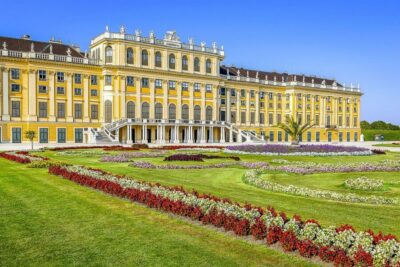
Schönbrunn Palace & Gardens Skip-the-Line Tour
Read our review →
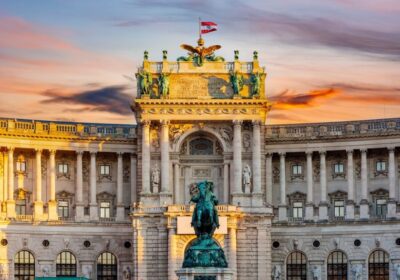
Skip-the-Line Sisi Museum, Hofburg and Gardens Tour
Read our review →
Skip-the-Line Schönbrunn Palace & Gardens Tour
Read our review →
Guided Walking Tour of City Center Highlights
Read our review →