
REVIEW · SELF-GUIDED TOURS
Vienna: The Great Plague Exploration Game
A plague story hunt, minus the tour guide. This Vienna smartphone quest turns famous sights into puzzle stops, so you move at your pace and learn while you look around. I like the private format for just your group, and I love that it keeps you off standard sightseeing rails. One drawback to plan for: the app setup can be a little tricky, and if you were expecting a chatty guide with lots of extra facts, you may want more.
You get a simple structure with a beginning at Ruprechtskirche and an ending at the Hofburg, plus audio stories to keep the plot moving. It’s also built to work for families, especially when kids get distracted easily, because the game gives them something to do. The route is compact enough to feel like an afternoon outing, but still stretches across multiple neighborhoods.
At $7.23 per person for about 1 hour 30 minutes, it’s excellent value if you like self-guided exploring. You can play it any time after booking, and you can take breaks for coffee without ruining a rigid schedule. Just remember some venues along the way have admission that isn’t included.
In This Review
- Key highlights worth your time
- A smartphone quest through Vienna’s back streets
- Starting at Ruprechtskirche and hunting the first clue
- Griechenbeisl: Mozart and friends, served with a puzzle
- Bäckerstrasse’s Hare House mural and Vienna’s odd humor
- Stephansplatz: clue solving at the city’s center
- Stock im Eisen: the nails that started a superstition
- St. Stephen’s Cathedral plus Frauenhuber coffee: sights and a reset
- Albertina in the Hofburg area: art after the walking game
- Hofburg power walk: where the game ends
- Price and timing that actually fit real travel days
- Who should book, and who might not love it
- Should you book this Vienna Great Plague Exploration Game?
- FAQ
- How long does the Vienna plague exploration game take?
- Is this experience private?
- Do I need a physical guide?
- What language is it offered in?
- Are admission tickets included?
- Is it family-friendly?
- Can I play it at any time after booking?
- What is the cancellation policy?
Key highlights worth your time
- Private for your party so you are not squeezed into someone else’s group pace
- No physical guide means you rely on the phone, plus audio stories for context
- Puzzle checkpoints at major landmarks like Stephansplatz and Stock im Eisen
- Family-friendly by design, with a structure that helps keep attention on track
- Free entry at several stops, with a few major attractions where admission is not included
- Play anytime after booking so you can fit it into your day, not the other way around
A smartphone quest through Vienna’s back streets
This is one of those ideas that makes perfect sense in Vienna: instead of following a guide’s script, you follow clues. Your phone becomes the “guide,” complete with audio stories, and the city becomes the game board. You will be walking between well-known icons and quieter lanes that most people only notice when they get lost.
The best part is how the game forces your attention. Instead of scanning facades for general beauty, you look for details, symbols, and text hidden in plain sight. That is how the city starts to feel personal, even when you are passing big-name places.
And yes, the “plague” theme gives you a storyline thread, but the experience stays grounded in actual locations. You are not just collecting trivia, you are noticing why each spot matters.
A few more Vienna options worth a side-by-side
- Vienna: Vivaldi’s Four Seasons Concert in Karlskirche
★ 4.7 · 14,951 reviews - Vienna: Spanish Riding School Training
★ 3.9 · 9,281 reviews - Vienna: Skip-the-cashier-desk-line Giant Ferris Wheel Ride
★ 4.5 · 7,859 reviews
Starting at Ruprechtskirche and hunting the first clue
You begin at Ruprechtskirche on Ruprechtsplatz, a church tied to Vienna’s very old layers. It is described as 13 centuries old, built from stone taken from an ancient Roman settlement. That one fact alone gives you a helpful frame for what you will see next: Vienna is not one era, it is layers stacked on top of each other.
Inside, you are pointed toward specific details connected to St. Rupert of Salzburg. The church is dedicated to St. Rupert, patron saint of the Danube’s salt merchants, which connects this area to trade and everyday life, not just royal prestige. You also learn that it houses the oldest stained-glass window and the oldest bells in Vienna, with one stained-glass window in the vaulted apse that has been standing since the 13th century.
The gameplay moment here is simple: you look around to find the answer to a question, and that moves you forward to learn the story of a nearby cafe. There is no pressure to rush. Plan to slow down a bit, because the point is to notice what the clue is asking you to notice.
Griechenbeisl: Mozart and friends, served with a puzzle
Next comes Griechenbeisl, one of Vienna’s legendary taverns. It has a star-studded reputation, with references to Mozart, Beethoven, and Schubert dining there. You will also see the Mark Twain room and framed signatures, including Luciano Pavarotti and Johnny Cash.
What I like about this stop is that it treats restaurant history like living history. You are not just admiring a building. You are standing in a place tied to famous cultural figures, and the puzzle structure nudges you to connect the name Griechenbeisl to its origins.
The clue-based mission here has you hunt for an answer as well, so you end up reading the room rather than just passing by. The tavern’s name, Greek Inn, comes from Greek tradesmen and Levant travelers who settled in that area. When you know that, the restaurant feels less like a postcard and more like a neighborhood story.
Bäckerstrasse’s Hare House mural and Vienna’s odd humor
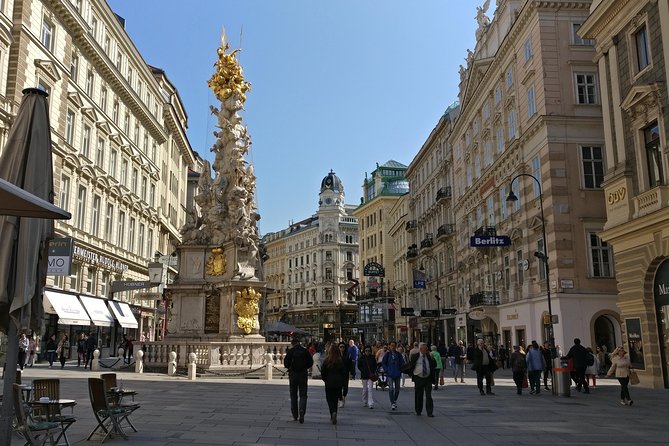
Bäckerstrasse is where the city shifts from “big monuments” to “small, story-rich streets.” You are sent to Bäckerstrasse No. 2, the Hasenaus, or Hare House. The headline detail is a mural with a wolf and a cow that wears spectacles, playing backgammon.
That is the kind of detail you would miss if you were just doing the standard route. The game helps, because it encourages you to focus on one façade detail long enough for the story to land. Even the mural’s meaning gets debated in the description, with one interpretation linking it to a previous depiction of medieval life, and another seeing it as an allegory for conflict between Protestants and Catholics.
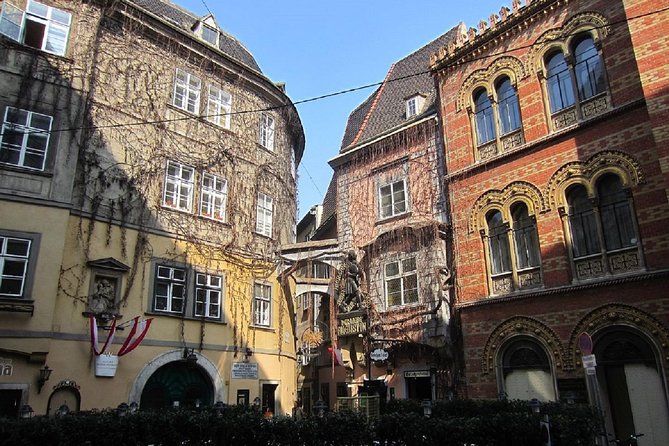
If you have time, this is also where it helps to look beyond the mural. The street is described as having charming interior courtyards and 17th and 18th century façades, including places like No. 8 with the Palace of Count Seilern (1722) and No. 16, the Schwanenfeld Haus, with a Renaissance courtyard, arcades, and galleries. The game turns what could be a quick glance into a mini walking tour of the neighborhood’s character.
Still the same country, a very different afternoon:
- Vienna: Schönbrunn Palace & Gardens Skip-the-Line Tour
★ 4.7 · 7,739 reviews - Vienna: Light of Creation Votive Church Immersive Light Show
★ 4.8 · 6,779 reviews - Vienna Spanish Riding School Guided Tour
★ 4.7 · 6,765 reviews - Vienna: Classical Concert in the World-Famous Musikverein
★ 4.6 · 6,673 reviews
Stephansplatz: clue solving at the city’s center
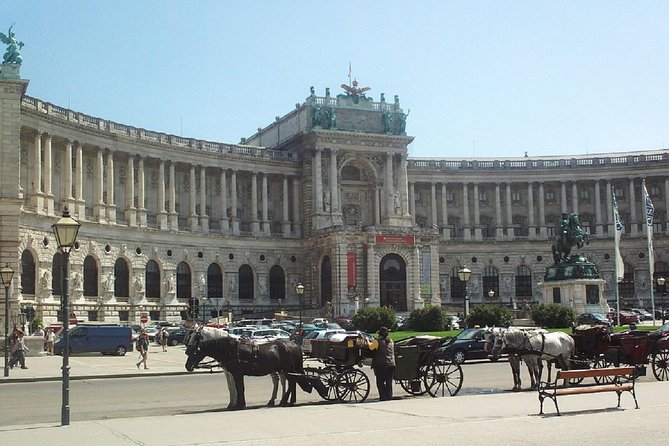
Stephansplatz is the central stage where your phone keeps you moving. You reach it by following a clue and solving a puzzle, and then you get indications for where to go next. Even if you already know the area, this kind of “prove you’re paying attention” moment makes you look at the space differently.
This is also a smart mid-route break point, because it gives you a mental checkpoint. At this stage, you have already seen churches and taverns through a detail-focused lens. So by the time you are at Stephansplatz, the game can train your eyes for more architectural and symbolic clues.
The main thing to remember here is pacing. It is easy to sprint between landmarks. Resist that urge. Spend a few minutes where the clue points, then move on when you are ready, not when you feel rushed.
Stock im Eisen: the nails that started a superstition
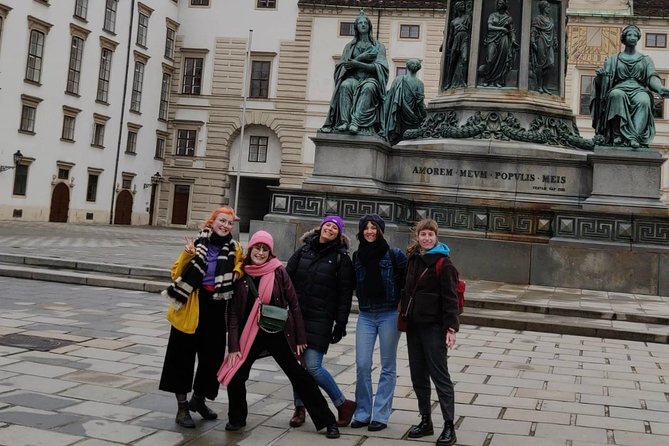
Stock im Eisen, the Nails Tree at the corner of Karntner Strasse, is probably the most immediately surprising stop on the route. The description notes it was once thought to be the work of Satan, which is a reminder that people have always tried to explain strange traditions.
What you learn instead is the practical meaning behind the nails. Hundreds of nails have been stuck into the trunk over generations, and the tradition is that hammering nails into the tree brings good luck. The medieval trunk stands on a 1.5-meter high pedestal, and it is surrounded by an iron ring with a lock dummy.
This is one of those places where the game structure is a little different. You reach it via a clue and puzzle, then you can spend as much time as you want before starting the next clue. That flexibility is valuable here, because the tree is visual. You will want a minute just to take in the details, then another minute to read the story the game is giving you.
St. Stephen’s Cathedral plus Frauenhuber coffee: sights and a reset
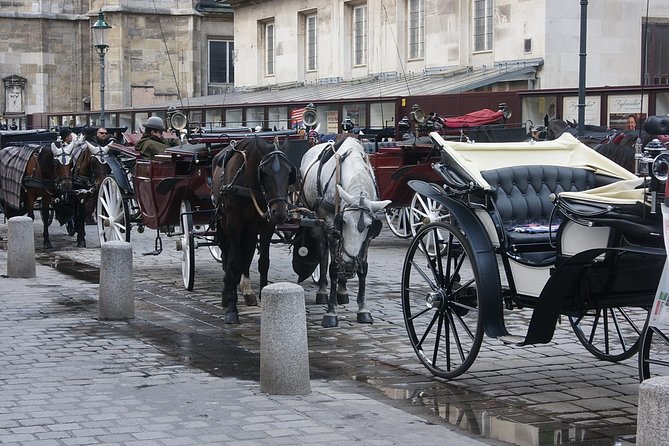
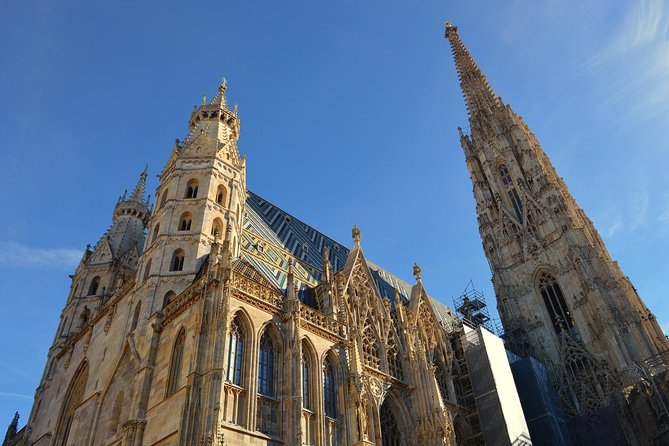
St. Stephen’s Cathedral, or Stephansdom, is the big icon on this route, and the game treats it with respect. The cathedral is described as standing since the 12th century and as one of Austria’s most important Gothic buildings. You are also guided toward the tower room, which includes 13 bells and offers a breathtaking view of Vienna.
The roof is another headline feature you get context for. It is 38 meters high and made of 230,000 glazed tiles, arranged into patterns. The mosaics include the double-headed eagle symbol from the Austrian empire during Habsburg rule, with other eagles on the north side representing the City of Vienna and the Republic of Austria.
Practical note: the cathedral admission ticket is not included. If you want the tower room or other paid areas, budget extra. If you prefer to keep costs down, you can still enjoy the outside and focus on what the clue asks you to notice.
Right after, you get a coffeehouse stop at Café Frauenhuber on Rauhensteingasse. This is where the pace softens. Frauenhuber is described as the oldest coffeehouse in Vienna, dating back to 1746, and it has a reputation for a peaceful atmosphere. It is also known for Mozart and Beethoven playing table music for dining guests between 1782 and 1791.
This coffee stop is more than a snack break. It connects the city’s “serious buildings” to everyday social life. You finish a dramatic Gothic landmark, then switch to a human-scale tradition that is still alive.
Albertina in the Hofburg area: art after the walking game
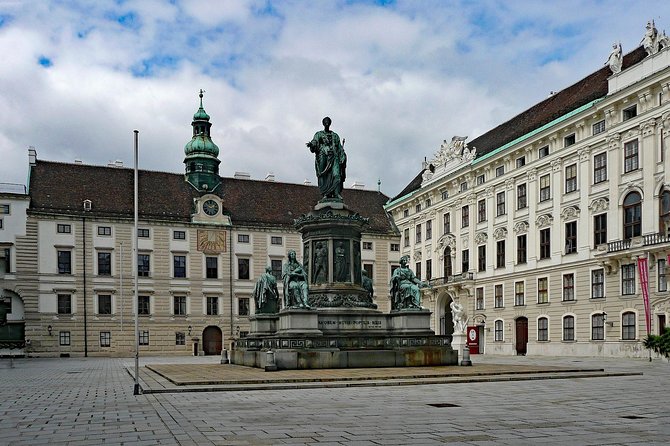
After the cathedral area, you head toward Albertina, a museum described as holding over 50,000 drawings and over 1 million master prints on a rotational display. The museum has been part of Vienna’s cultural scene since 1805 and sits in the Hofburg Palace, the largest Habsburg residential palace.
The Albertina part of the game has you look for another puzzle answer to move forward. Once there, the museum concept is built for people who like art but do not want a forced tour. Four collections are named: modern art, graphic art, architecture, and photography. If you are interested in cross-media art, that spread is helpful.
A specific highlight mentioned is Monet’s The Water Lily Pond, which is a great “anchor work” if you want at least one familiar name. Practical note: Albertina admission is not included. If you are budget-conscious, you can decide how much museum time you want to add after the quest finishes.
Hofburg power walk: where the game ends
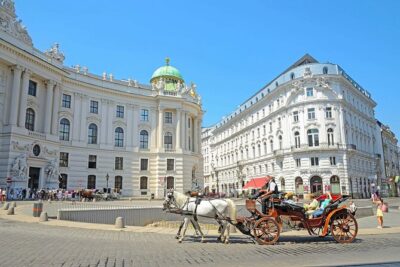
Your final stop is the Hofburg, described as the current home and workplace of the President of Austria. It has been the heart of power in Vienna since the 13th century and served as the residence and seat of government of the Habsburg emperors until 1918. That means you are ending the game in a place that has been political center stage for centuries.
The description points out that the imperial past is still visible through richly decorated Imperial apartments, with a total of 24 rooms, plus the Sisi Museum dedicated to Empress Elizabeth. You also get the National Library located within the Hofburg and the Hall of Ceremonies, still used today for Viennese balls.
This is also where the game ends, and you get the freedom to continue exploring at your own pace. Admission for Hofburg is not included, so if you want specific rooms or museum areas, you will need to plan for that extra cost.
Price and timing that actually fit real travel days
At $7.23 per person for about 1 hour 30 minutes, the value is strong, mainly because you are not paying for a human-led tour. Instead, you pay for the game structure, audio stories, and the route that strings together multiple meaningful stops.
It is also scheduled to be easy to fit into your trip. The experience can be played anytime after booking, without rescheduling. Opening hours run from 7:00 AM to 10:00 PM every day, so you can choose the time that matches your energy level.
In terms of demand, the experience is often booked about 10 days in advance on average. If you are traveling in peak season or on a busy weekend, I would book earlier so you have more flexibility.
Group size matters too. It is private for your party, and if your group is larger than 15 people, you book multiple bookings to keep it private. That can be a plus for families and small groups who want the same puzzle flow without merging into strangers.
Who should book, and who might not love it
This experience is best for people who enjoy walking, noticing details, and solving clues. If you like the idea of getting the story with prompts instead of lectures, you will probably have a great time.
It is especially suitable for families. The experience is described as free for kids, and it is ideal for children who get easily distracted, because the game gives them a job. I also think it works well for teens and adults who want something more active than a standard museum afternoon.
The main reason you might hesitate is also simple: there is no physical guide. If you want deeper, open-ended explanations, more history facts, and a lot of spontaneous Q and A, you may find the audio stories and puzzles do not fully replace that. The game is designed to guide your attention, not to flood you with extra lectures.
One more practical consideration: app setup. Some people found the app installation and unlocking the game a bit tricky, though support resolved issues quickly in at least one case. My advice is to start early enough that you have wiggle room. If something goes wrong, use the provided support email ([email protected]) rather than trying to brute-force the app.
Should you book this Vienna Great Plague Exploration Game?
Book it if you want a low-cost, self-paced way to see Vienna’s icons plus quieter details in between. You will get a clear route, a strong attention hook, and audio stories that keep the experience moving without needing a guide to talk for hours.
Skip it or approach with lower expectations if you primarily want a guide-driven history lecture. This is a puzzle walk with short stops and look-around moments. It is not a long-form guided deep dive.
If your ideal day in Vienna includes walking, playful problem solving, and a coffee break in classic coffeehouse style, this fits nicely.
FAQ
How long does the Vienna plague exploration game take?
It is approximately 1 hour 30 minutes.
Is this experience private?
Yes. It is a private tour or activity, and only your group participates.
Do I need a physical guide?
No. There is no physical tour guide. You use your own smartphone, along with audio stories.
What language is it offered in?
It is offered in English.
Are admission tickets included?
Several stops list admission as free, but some are not included. St. Stephen’s Cathedral, Albertina, and the Hofburg are listed as not included for admission.
Is it family-friendly?
Yes. It is described as ideal for families with easily distracted children, and it is free for kids.
Can I play it at any time after booking?
Yes. You can play anytime after booking without rescheduling, and it can be started between 7:00 AM and 10:00 PM.
What is the cancellation policy?
Free cancellation is available. You can cancel up to 24 hours in advance for a full refund, and refunds are not available if you cancel less than 24 hours before the start time.
Fresh on the site in Vienna
- World War II History Vienna Old Town Private Walking Tour★ 4.8 · 9 reviews
- Vienna/Bratislava: Traunkirchen, Hallstatt & Salzburg Tour★ 4.8 · 53 reviews
- Vienna: Winery and Wine Tasting Tour with a Wine Expert★ 5.0 · 5 reviews
- Vienna: Wine Tasting Tour★ 4.8 · 61 reviews
- Vienna/Bratislava: Day Trip to Hallstatt & Salzburg★ 4.8 · 21 reviews
- Vienna: Wiener Schnitzel and Strudel Cooking Class★ 4.9 · 126 reviews
- Vienna: Waltz into the Ball Season★ 4.7 · 3 reviews
- Vienna: Wine Tasting E-Bike Tour★ 4.9 · 46 reviews
Self-Guided Tours, compared.
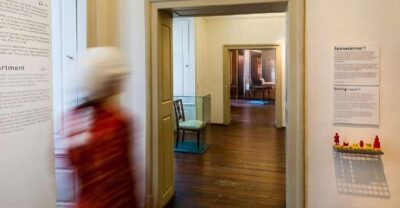
Tickets for Mozarthaus Vienna with Audio Guide
Read our review →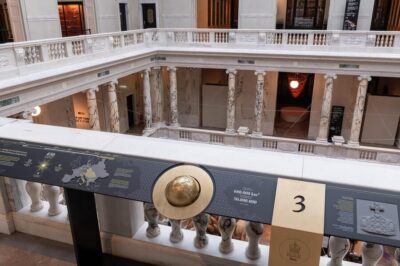
New Hofburg Palace Audio-Guided Tour & Entry Ticket
Read our review →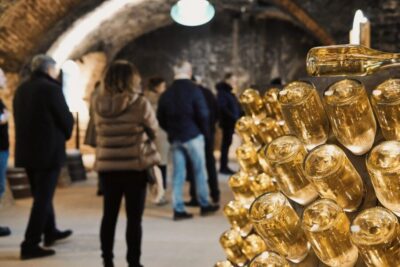
Schlumberger Wine Cellar Guided or Self-Guided Tour
Read our review →
Vienna Walking Tour with Audioguide on Your Smartphone
Read our review →
Browse the lists this tour appears in