REVIEW · GUIDED
Vienna – the making of a Weltstadt – guided Citytour
Vienna only feels big until someone explains it. On this guided city tour, you connect the dots from a small Roman fort to the 19th century, while you walk the most central stops. I especially liked how Christian Grausam ties architecture to the people who lived here, and how you get a clear sense of why the city is a “world-class capital,” not just a pretty backdrop.
Two sights anchor everything: the Vienna Hofburg and St. Stephen’s Cathedral. The Hofburg helps you understand Vienna as a residential power center, while St. Stephen’s feels like both the geographic and emotional center of the city. One thing to consider: this is a German-language live guide, and it runs rain or shine, so plan accordingly.
If you want, you can think of this as a fast way to get your bearings and then explore on your own with far better context.
In This Review
- Key highlights you will feel on this walk
- Why this tour makes Vienna click in two hours
- Getting started near the city’s historical spine
- Schottenkirche: first time you meet Vienna’s layers
- Freyung and Am Hof: where the old city feels tangible
- Hofburg and Heldenplatz: learning Vienna as a power home
- Burggarten, Josefsplatz, and Albertina: culture meets city planning
- Capuchin Crypt: the emotional hinge of royal Vienna
- Franziskanerplatz, Domgasse, and St. Stephen’s Cathedral: the emotional center
- What you learn about Vienna that you can use right away
- Price and what $35 buys you in real terms
- Who should book this Vienna city tour
- Should you book this guided Citytour?
- FAQ
- How long is the Vienna guided Citytour?
- What is the price per person?
- What language is the guide?
- Does the tour run in bad weather?
- Where is the meeting point?
- What time should I arrive at the meeting point?
- Is luggage allowed?
- Is the tour suitable for people with mobility impairments?
- Can I cancel for a refund?
Key highlights you will feel on this walk
- A local, certified guide who connects eras to buildings, not just dates
- Hofburg focus on why Vienna functioned as a residential seat of power
- St. Stephen’s Cathedral as the center you keep coming back to, emotionally and geographically
- 2,000 years on foot, from Roman beginnings to 19th-century Central European importance
- Music and art context, with Vienna tied to Mozart, Beethoven, and Joseph Haydn
- A mix of busy squares and quieter corners, so you do not just speed from landmark to landmark
Why this tour makes Vienna click in two hours
Vienna can be confusing in a good way. You see palaces, churches, grand boulevards, and museums, but your brain keeps asking, what era is this, and why does it matter? That is exactly what this tour solves.
I like that the walk is built around understanding, not just collecting photos. You cover a long sweep of time, and you learn how different architectural styles show up in the cityscape, including traces and memories of the Middle Ages. The goal is practical: after the tour, you should feel oriented, like you finally know how the city “works.”
The other thing I appreciate is that Vienna is treated as a living cultural center. You get art and music framed as part of power and everyday life, not as museum topics you study later. Mozart and Beethoven lived and worked here, and Joseph Haydn composed a melody that is important for Germany today. When a guide links culture to place, the city becomes easier to remember.
A few more Vienna options worth a side-by-side
- Vienna: Vivaldi’s Four Seasons Concert in Karlskirche
★ 4.7 · 14,951 reviews - Vienna: Spanish Riding School Training
★ 3.9 · 9,281 reviews - Vienna: Skip-the-cashier-desk-line Giant Ferris Wheel Ride
★ 4.5 · 7,859 reviews
Getting started near the city’s historical spine
The exact meeting point can vary by option, and it may be at Freyung in some cases. Either way, you start close enough to the center that the first minutes already feel like Vienna’s story is unfolding in front of you.
Expect a walking pace that suits a focused overview. This is not a long sit-down lecture tour. It is more like, walk, look, explain, move on. That keeps it lively, and it also means you get practical orientation fast.
Logistics matter here: the tour runs rain or shine, and you should show up about 10 minutes early so you are ready to go when the group starts. Also note that luggage or large bags are not allowed. If you are traveling light, you will enjoy the flow more.
Finally, one simple reality check: the tour is not suitable for people with mobility impairments. Since it is a city-center walking route, you will want to plan for that before you book.
Schottenkirche: first time you meet Vienna’s layers
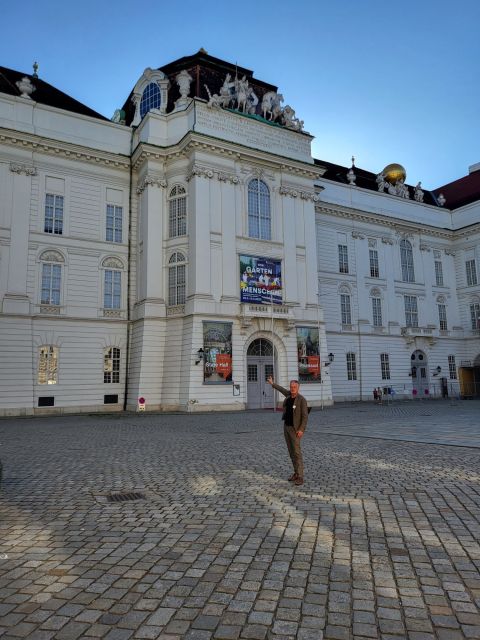
One of the early stops on the route is Schottenkirche. This is where I’d expect many visitors to just register a beautiful church and move on. On this tour, it is treated as an early clue in Vienna’s timeline.
You learn how the city grew and reshaped itself. The guide keeps bringing it back to the theme of Vienna changing across centuries, while still keeping recognizable threads. Even if you are not an architecture expert, this is the kind of stop where the explanation helps you see patterns.
It also sets expectations for the rest of the walk. You will keep noticing how Vienna’s style changes depending on the period, but you will also start recognizing recurring motifs, and how older foundations influenced later grandeur.
Freyung and Am Hof: where the old city feels tangible
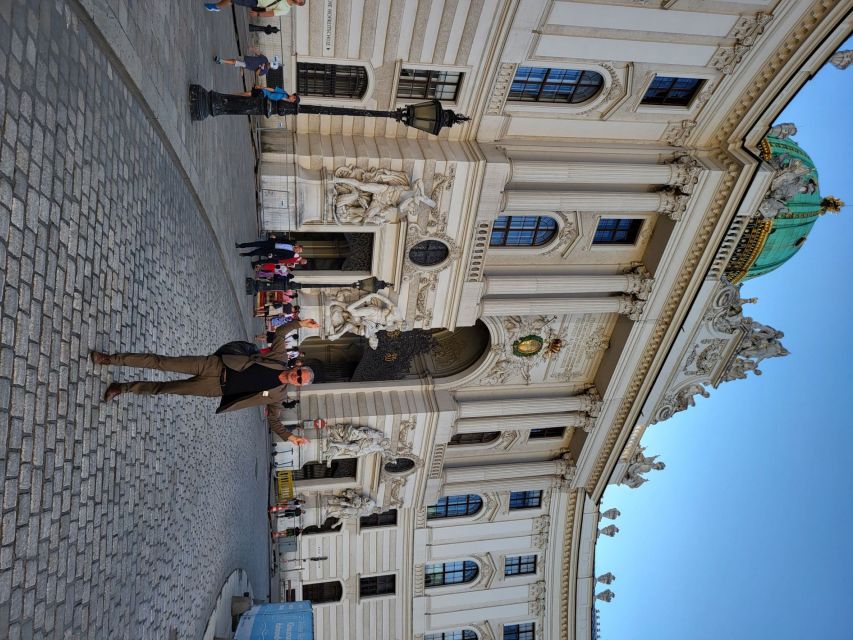
After Schottenkirche, you head toward Freyung and then Am Hof. This stretch is ideal for what I consider the best kind of sightseeing: you get both atmosphere and context.
Freyung is close enough to the center that the surroundings feel active, but you are also able to notice details at a human scale. That matters because the tour is trying to teach you how the city is structured. Squares like this are not just pretty spaces. They are social stages where decisions and daily life overlap.
At Am Hof, the vibe shifts again. You start seeing how the city’s identity is tied to the major institutions and their influence. The guide’s job is to connect that influence to the buildings you can actually see.
If you like walking through places that feel like they existed before you arrived, you will enjoy this part. It is the moment when the tour moves from “history facts” to “I can see how it shaped daily life.”
Still the same country, a very different afternoon:
- Vienna: Schönbrunn Palace & Gardens Skip-the-Line Tour
★ 4.7 · 7,739 reviews - Vienna: Light of Creation Votive Church Immersive Light Show
★ 4.8 · 6,779 reviews - Vienna Spanish Riding School Guided Tour
★ 4.7 · 6,765 reviews - Vienna: Classical Concert in the World-Famous Musikverein
★ 4.6 · 6,673 reviews
Hofburg and Heldenplatz: learning Vienna as a power home
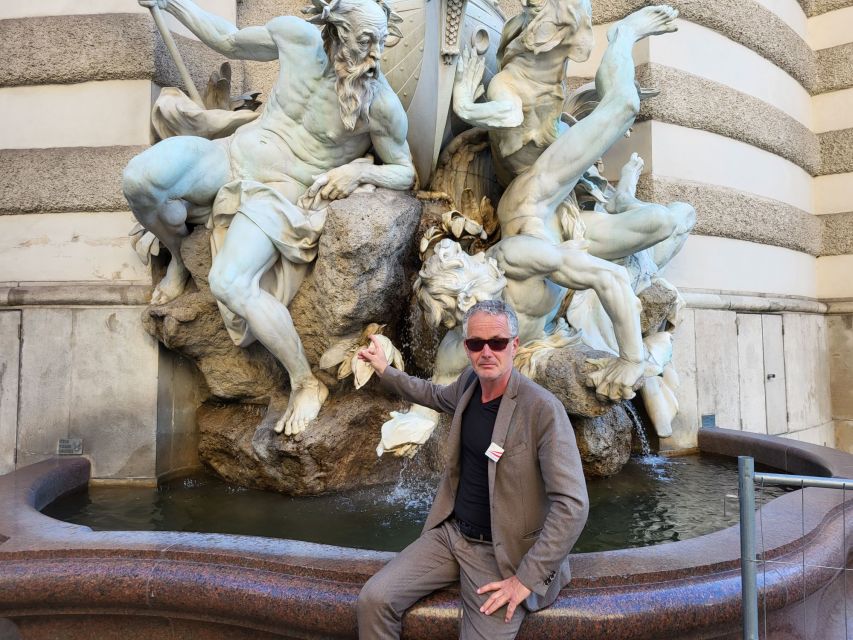
Then you reach the heart of the story: the Vienna Hofburg. This stop is a highlight for a reason. You are not just looking at walls. You are learning why the Hofburg mattered as a residential city seat of power.
Vienna’s importance in Central Europe did not come only from politics on paper. It came from rulers living here, institutions operating here, and decisions being shaped here. The Hofburg gives you a physical way to understand that.
On this tour, you also connect the Hofburg area to the broader theme of rulers across eras. The route highlights rulers from Charles V to Franz Josef and his Elisabeth. That storyline helps you make sense of why the architecture feels so serious and why it is built to project authority.
Heldenplatz is the next big “read the space” moment. It helps you understand the civic theater aspect of the capital. You can treat it like a stage where history and power were displayed, not hidden.
A possible drawback here is that if you are expecting heavy museum-style detail inside the buildings, this tour is not that kind of experience. You get meaning through sights and explanations while walking. If you want interiors, plan a separate visit later.
Burggarten, Josefsplatz, and Albertina: culture meets city planning
After Heldenplatz, the walk continues through Burggarten and toward Josefsplatz and Albertina. This is where Vienna’s identity as a center of art and music becomes more than a slogan.
Burggarten is a useful contrast. It gives your feet and eyes a break from the most monumental facades. It also reminds you that the city planned space for culture, leisure, and representation. Even if you just watch how people move through it, you start to understand why Vienna feels like a designed capital.
Josefsplatz and the Albertina area keep the cultural thread going. If you have even a light interest in museums, this part makes you want to linger later and see what you learned during the walk. The guide’s context on art and music helps you place why institutions like these matter.
This section also supports the tour’s bigger theme: Vienna’s grandeur is not only about wealth. It is about culture operating close to power. That is why the Mozart and Beethoven angle is woven into the route. It makes the city feel like a place where creative life and political life overlapped.
Capuchin Crypt: the emotional hinge of royal Vienna
Then comes one of the most emotionally pointed stops: the Capuchin Crypt. This is not the type of sight you forget easily once someone explains its role in the city’s story.
You are following the footsteps of rulers, and at this point the tone of the walk turns more personal, in the sense that you start thinking about legacy rather than just architecture. The crypt connects your earlier understanding of the Hofburg to the human cost and enduring memory of rule.
If you are the type who likes history to feel grounded, this is likely to land well. And even if you are not, it is still one of the strongest stops for making the tour’s “why” click.
Do keep in mind that this tour’s format is about overview. So if you want a long, quiet moment inside, you might feel slightly rushed. But as a way to understand where the story turns, it works.
Franziskanerplatz, Domgasse, and St. Stephen’s Cathedral: the emotional center
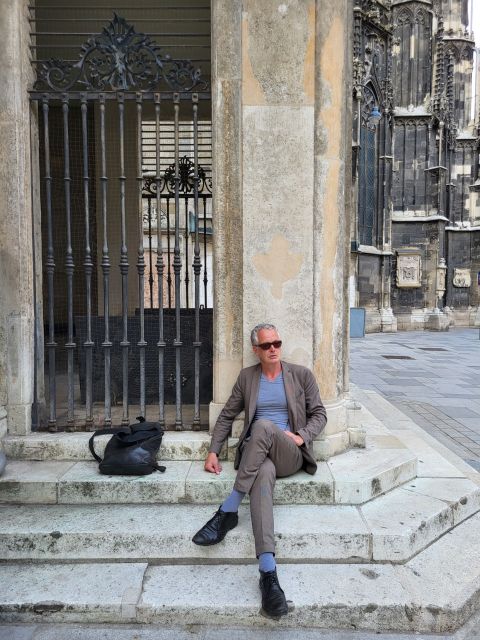
Near the end of the route, you pass Franziskanerplatz and then through Domgasse on your way to St. Stephen’s Cathedral. St. Stephen’s is described as the geographical and emotional center of Vienna, and the tour treats it like that.
By the time you arrive, you already have context. You have learned how Vienna grew from early beginnings and how power and culture shaped the city. So when you see the cathedral, it is not just a landmark. It becomes a focal point that ties the whole walk together.
Domgasse helps with that build-up. It acts like a corridor to a bigger moment, and it gives you a final chance to feel the shift from earlier imperial stories to a more central, city-wide symbol.
St. Stephen’s Cathedral is where I’d expect many visitors to take photos. The better approach is to pause and look around, not just up. When the guide explains how it functions as an emotional center, you start to see why Vienna’s identity often seems to revolve around this kind of landmark.
What you learn about Vienna that you can use right away
This tour is built around more than sightseeing. It gives you a set of mental labels, so you stop getting lost in Vienna’s abundance of beautiful buildings.
Here are a few ways the knowledge becomes useful quickly:
- You start matching architectural styles to eras. Instead of “pretty old building,” you think “this looks like this period because…”
- You connect power to place. Hofburg and its surrounding institutions make the city feel like a functional capital, not just an artistic postcard.
- You understand Vienna’s cultural engine. When you hear about Mozart, Beethoven, and Joseph Haydn while standing in central areas tied to institutions, it feels more real.
- You follow rulers through a coherent route. The Charles V to Franz Josef and Elisabeth thread helps you remember names and eras in order.
That is the real value for your money. The guide’s explanations help you spend less time guessing, and more time enjoying what you see after the tour.
Price and what $35 buys you in real terms
$35 for a 2-hour guided city tour is a solid deal for a city like Vienna, especially when the guide is local, certified, and able to connect major sights in one walk. The pricing makes sense because you are paying for orientation, context, and a live person who can answer the real questions you will have while you are standing in the street.
If you are a traveler who likes unguided wandering, you could also do Vienna independently. But you would miss the connective tissue: why the Hofburg matters as a residential power home, why the cathedral is the emotional center, and how the city’s architectural styles reflect history.
Where the value might feel less strong is if you want a long, deep tour of interiors or museums. This is a walk-focused overview. You get context fast, then you decide what to explore deeper.
Who should book this Vienna city tour
I think this tour fits best if you:
- want a clear overview of Vienna’s central sights in a short time
- enjoy history explained through architecture and city layout
- like the idea of Vienna as both an imperial capital and a music and art center
- speak German or are comfortable with a German-language guide
It might not be the best fit if:
- you need accessibility support for mobility impairments
- you rely on bringing large bags
- you prefer slow, quiet sightseeing with lots of interior time
Should you book this guided Citytour?
Yes, if you want Vienna to make sense fast and you like your history tied to what you can see. I would book it when you first arrive, because it gives you the framework to explore confidently afterward. The Hofburg and St. Stephen’s Cathedral are worth building your understanding around, and the guide, Christian Grausam, is clearly strong at linking epochs to landmarks while keeping things lively.
If your plan is mostly to take photos with minimal reading, you might feel the time is short for the amount of walking. But if you want a smart way to understand the city, this is a strong choice.
FAQ
How long is the Vienna guided Citytour?
The tour lasts 2 hours.
What is the price per person?
The price is listed as $35 per person.
What language is the guide?
The live tour guide speaks German.
Does the tour run in bad weather?
Yes, the tour takes place rain or shine.
Where is the meeting point?
The meeting point may vary depending on the option booked.
What time should I arrive at the meeting point?
Please arrive at the meeting point 10 minutes prior to the start of the tour.
Is luggage allowed?
No luggage or large bags are allowed.
Is the tour suitable for people with mobility impairments?
No, it is not suitable for people with mobility impairments.
Can I cancel for a refund?
You can cancel up to 24 hours in advance for a full refund.
Fresh on the site in Vienna
- World War II History Vienna Old Town Private Walking Tour★ 4.8 · 9 reviews
- Vienna/Bratislava: Traunkirchen, Hallstatt & Salzburg Tour★ 4.8 · 53 reviews
- Vienna: Winery and Wine Tasting Tour with a Wine Expert★ 5.0 · 5 reviews
- Vienna: Wine Tasting Tour★ 4.8 · 61 reviews
- Vienna/Bratislava: Day Trip to Hallstatt & Salzburg★ 4.8 · 21 reviews
- Vienna: Wiener Schnitzel and Strudel Cooking Class★ 4.9 · 126 reviews
- Vienna: Waltz into the Ball Season★ 4.7 · 3 reviews
- Vienna: Wine Tasting E-Bike Tour★ 4.9 · 46 reviews
Guided, compared.
Guided Walking Tour of City Center Highlights
Read our review →
Bus & Schönbrunn Palace Skip-the-Line Guided Tour
Read our review →
Tickets for Mozarthaus Vienna with Audio Guide
Read our review →
Day trips from Vienna: Hallstatt & Salzburg Guided Tour
Read our review →
Guided Walking Tour of City Highlights & Hidden Gems
Read our review →