REVIEW · TOURS
Vienna: Time Traveling Virtual Reality Sightseeing Tour
Vienna gets a lot more fun when history feels like a present-day street scene. This 100-minute VR sightseeing walk strings together six key moments across centuries, then pairs them with a live guide and a 360-degree view. I love the instant sense of place, because you are walking real streets while the headset pulls you into the past. I also love the practical way the tour works, with a multilingual audioguide plus clear setup for the gear.
One drawback to consider is that the VR visuals can feel a bit dated compared with today’s newest headsets, so if you’re picky about sharpness and animation, set expectations ahead of time.
In This Review
- Key Highlights You’ll Actually Notice
- A 100-Minute Time Machine for Vienna
- Start at Neuer Markt, End at Albertina
- How the VR Works on the Street
- Scene One: White Sunday in 1483 and Vienna’s Public Ornamental Moment
- Ottoman Sieges and the 1683 Second Siege Reality Check
- Plague Darkness and Augustin’s Humor and Music
- Hofburg on a Sunny Day: Empress Sisi and Emperor Franz Joseph II
- The Opera House Era: Golden 20s Preparation
- St. Stephen’s Square at War’s End: A Cathedral Burn and Soviet Advance
- Live Guide Matters More Than You Think
- Price and Value: Is $45 Reasonable?
- Weather, Visual Sharpness, and Language Setup
- Who Should Book This VR Vienna Tour?
- Should You Book This Tour?
- FAQ
- Where does the tour start?
- What time should I arrive?
- How long is the experience?
- How much does it cost?
- What is included with the tour?
- Is food or drink included?
- What languages are available?
- Is the tour wheelchair accessible?
- Is it suitable for children or people with epilepsy?
Key Highlights You’ll Actually Notice
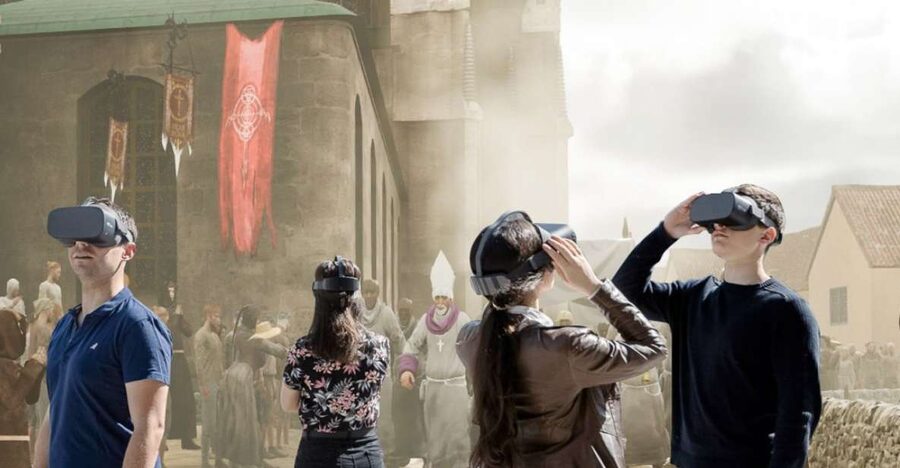
- Six VR scenes that range from 1483 to the end of World War II, tied to real Vienna corners
- 360-degree, all-round viewing that makes each moment feel like you can look around the scene
- Live English or German guidance plus a multilingual audio guide in multiple languages
- A flat, easy route that covers about 3.2 kilometers without steep climbs
- A fun walking rhythm that mixes audio narration with short headset moments
- Strong guide support, including experiences guided by Julian or Dr. Reiner
A 100-Minute Time Machine for Vienna
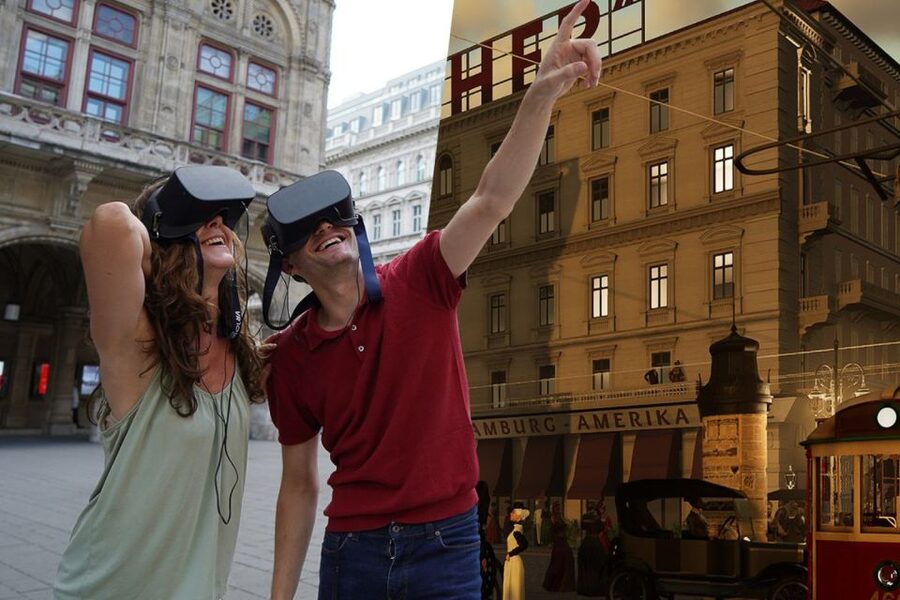
If you want a fast first look at Vienna’s layers, this is an efficient way to get your bearings. You are not just hearing about the city. You are standing in the same neighborhoods while scenes from different eras play out around you.
The format is simple: you walk, listen, and then pause for a headset moment when the story changes. It’s a nice mix when you want history without getting stuck in a museum line for hours.
A few more Vienna options worth a side-by-side
- Vienna: Vivaldi’s Four Seasons Concert in Karlskirche
★ 4.7 · 14,951 reviews - Vienna: Spanish Riding School Training
★ 3.9 · 9,281 reviews - Vienna: Skip-the-cashier-desk-line Giant Ferris Wheel Ride
★ 4.5 · 7,859 reviews
Start at Neuer Markt, End at Albertina
The tour begins at Neuer Markt 6. Plan to arrive about 15 minutes early and look for the turquoise entrance.
You finish at Albertina. That matters because it can help you plan the rest of your day, especially if you like to keep moving rather than backtracking for transit.
The route is about 3.2 kilometers and mostly flat. This is the kind of walk that works well for people who want to see a lot without steep stairs or long climbs.
How the VR Works on the Street
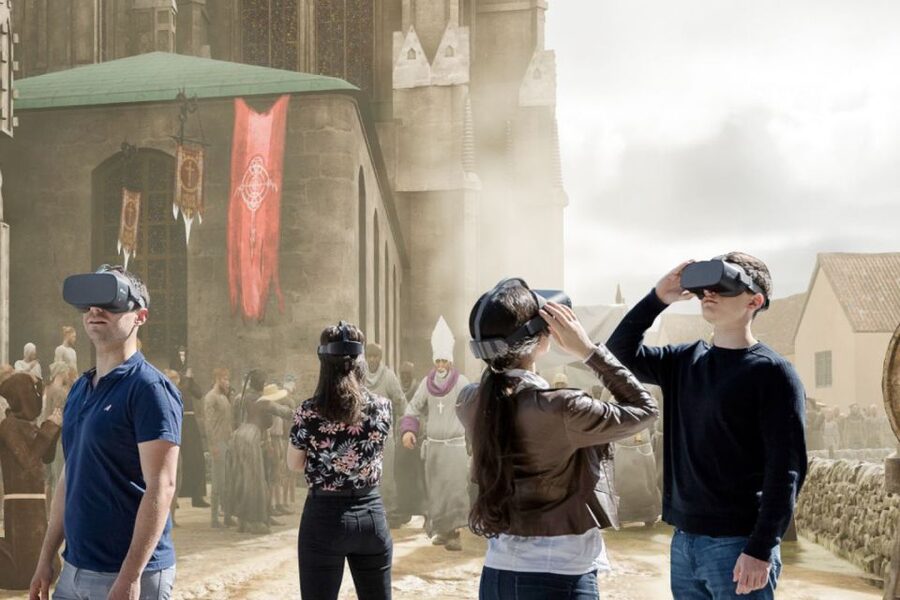
You get VR glasses plus earphones for the audio guide. The audio guide languages include English, Spanish, Dutch, French, Italian, and Russian, while the live tour guide is offered in English or German.
The best part is that the VR is used at specific points. So you are not wearing the headset nonstop. You walk through Vienna with the guide, then switch into the VR scene when it clicks with where you are standing.
The VR is described as 360-degree all-round view. In practice, that means you can look around during each recreated moment, which helps the scenes feel less like a flat screen and more like you are inside the location.
Scene One: White Sunday in 1483 and Vienna’s Public Ornamental Moment
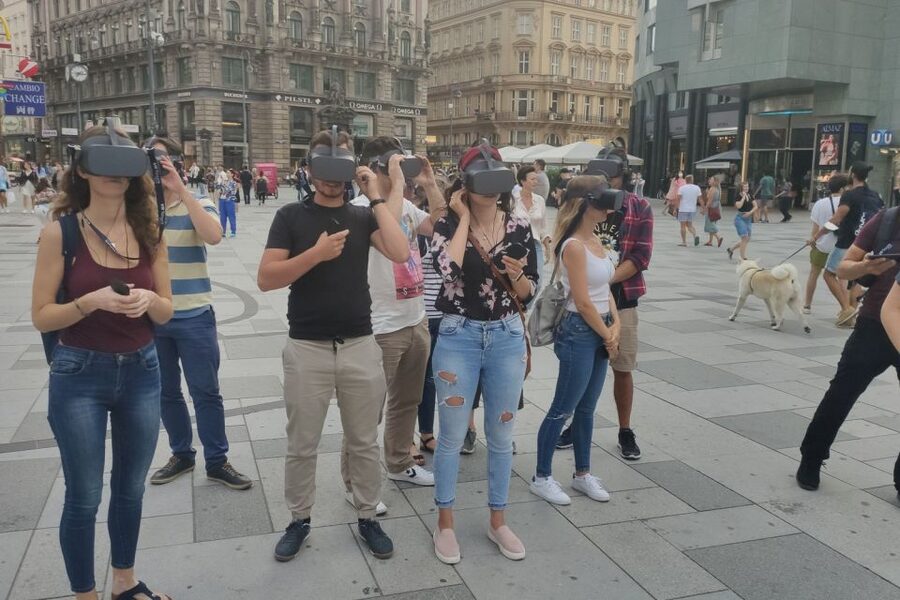
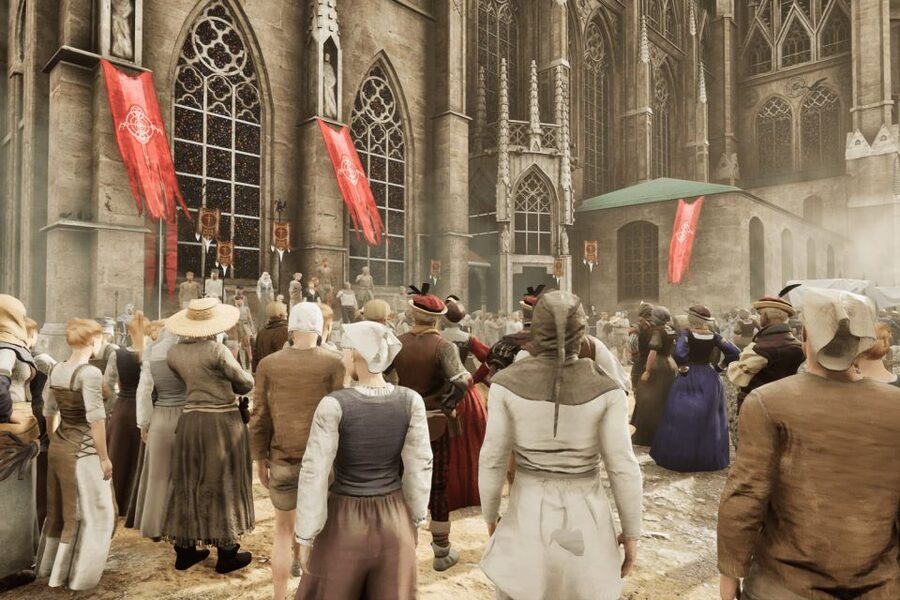
The tour kicks off with a procession on White Sunday in 1483. It’s one of those events that only happens occasionally, and you get to see how ornaments were brought out and shown to the public.
What makes this scene valuable is the angle. Instead of jumping straight into battles and politics, you start with a civic, public-facing moment. It helps you understand Vienna as a city people gathered in, not only a place that suffered.
When you hear the narration while you are near the old-town atmosphere, the story lands better. You’re learning the why behind the city’s look, not just collecting dates.
Still the same country, a very different afternoon:
- Vienna: Schönbrunn Palace & Gardens Skip-the-Line Tour
★ 4.7 · 7,739 reviews - Vienna: Light of Creation Votive Church Immersive Light Show
★ 4.8 · 6,779 reviews - Vienna Spanish Riding School Guided Tour
★ 4.7 · 6,765 reviews - Vienna: Classical Concert in the World-Famous Musikverein
★ 4.6 · 6,673 reviews
Ottoman Sieges and the 1683 Second Siege Reality Check
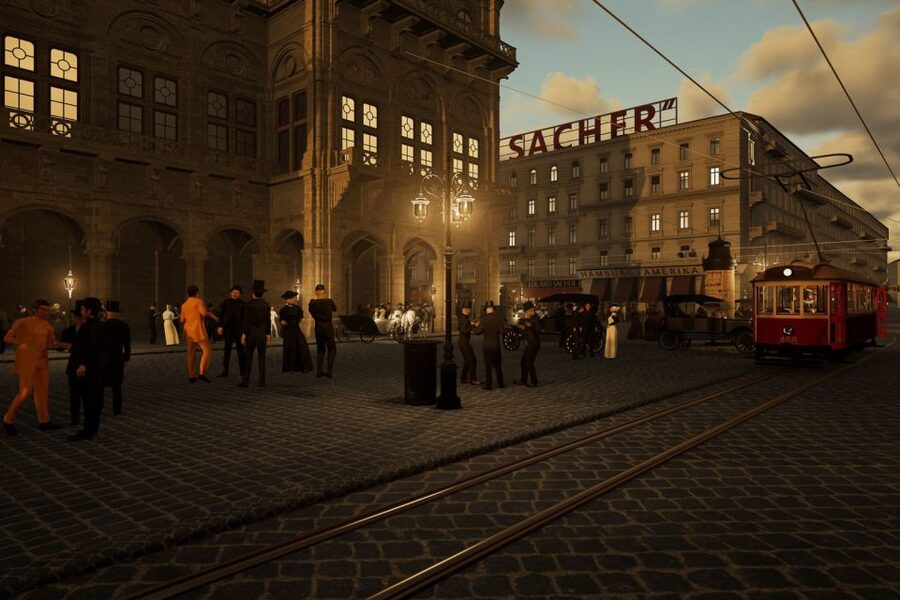
Next comes the Ottoman Empire and another siege during the second siege in 1683. This is where the tone shifts.
This part works well because it’s not just dramatic. You learn how such events shaped what Vienna became, and why certain historical pressures mattered for centuries afterward.
If you’re the type who thinks you already know Vienna history, this is where you can get surprised. The tour frames these events as turning points, the kind that influenced streets, power, and the city’s future direction.
Plague Darkness and Augustin’s Humor and Music
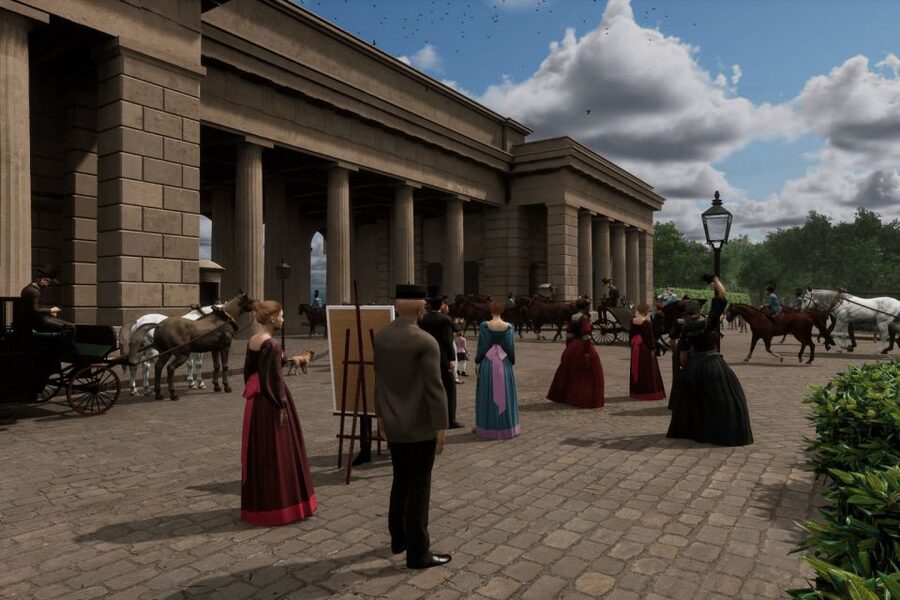
Then you hit one of the hardest topics: the darkness during the plague that killed half of Europe. The tour also introduces Augustin, a singer who demonstrated that Vienna could survive such terrible times with humor and music.
That pairing is smart. It avoids a one-note, doom-and-gloom retelling. You get tragedy, and then you get a human response.
It also gives you a different way to think about resilience. You are not only learning how difficult times changed people. You’re learning how culture and performance helped carry communities through.
Hofburg on a Sunny Day: Empress Sisi and Emperor Franz Joseph II
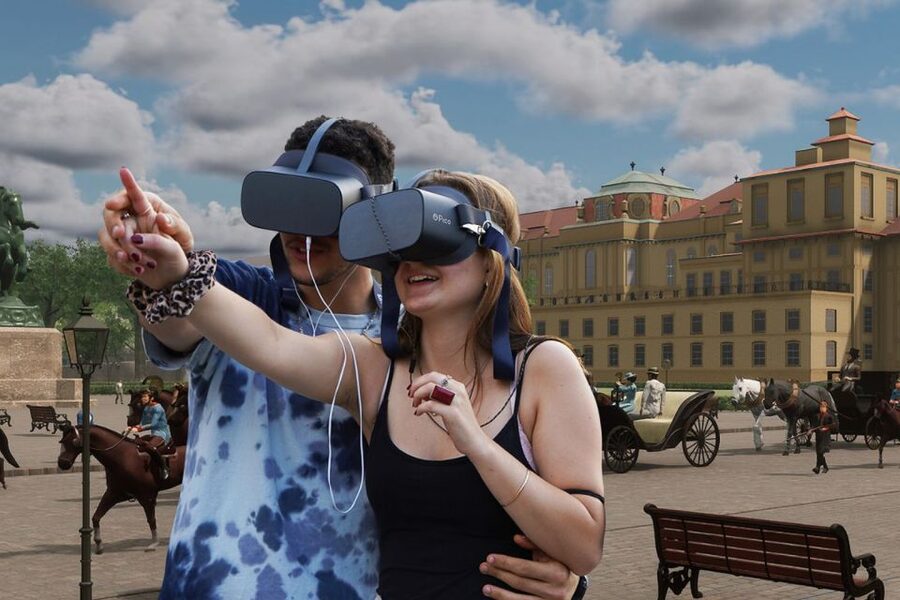
On a sunny day, the tour focuses on the Hofburg area and brings you into a hunting trip featuring Empress Sisi and Emperor Franz Joseph II. There’s even a playful bit tied to where you are standing, so don’t forget to wink.
This scene is a good reset after the heavier history. It also helps you connect Vienna’s grand imperial settings to everyday street-level viewpoints.
When you’re physically close to where the story is placed, the royal figures feel less like distant statues and more like people who were part of city life.
The Opera House Era: Golden 20s Preparation
At the Opera, you experience Vienna in the golden 20s. You see how people prepared for an opera performance, which is a refreshing change of pace from wars and pandemics.
This is where the VR adds value beyond storytelling. It visualizes routines and the social mood of an era, the kind that’s hard to fully grasp from photos or guidebook paragraphs.
If you love culture that’s tied to real places, this is one of the scenes you’ll remember after you’ve left the headset.
St. Stephen’s Square at War’s End: A Cathedral Burn and Soviet Advance
The last VR stop is at St. Stephens square. The scene focuses on the cathedral burning in the last month of the terrible Second World War, and it also shows the Soviet army driving the last German soldiers out.
This is emotionally heavy, and it is meant to be. The tour doesn’t soften it, which is why this ending can hit hard in a good way.
It also makes the walking tour feel like a full timeline of Vienna’s transformation. You start with public ceremonial life, pass through siege and plague, then cycle through imperial glamour, cultural celebration, and finally wartime destruction.
Live Guide Matters More Than You Think
One reason people give this tour high marks is the human layer. The live tour guide in English or German guides the pacing and explains how the headset and earphones work so you are not wasting time fiddling with gear.
In past groups, guides like Julian (English and German fluency) and Dr. Reiner have been praised for knowledge and help. You can feel the difference when a guide can answer questions on the spot instead of reading at you.
So if you’re deciding whether to choose this or a standard walking tour, think about how you learn best. If you like guided narration plus a visual hook, the live guide is part of the value.
Price and Value: Is $45 Reasonable?
At $45 per person for about 100 minutes, the price makes sense if you see the VR glasses and earphones as part of the deal, not as an extra add-on.
The value comes from three areas:
- You get a time span across major eras in a single outing, without needing to hop between multiple museums.
- You get a guided walk plus headset moments, which keeps the experience from turning into just a long lecture.
- You finish near Albertina, which can help with practical planning after the tour.
If you are on a tight schedule, this can be a strong buy for a first day in Vienna. It’s also a nice option if you want something different from the usual church-to-palace route.
Weather, Visual Sharpness, and Language Setup
A few practical points can make your experience smoother.
First, the tour might be canceled due to poor weather such as heavy rain or storms. The decision can happen at the last minute, so keep your day flexible if you can.
Second, about VR quality: some people feel the headset scenes could be sharper, and a couple of scenes may not feel as lively or detailed as they hoped. That doesn’t mean the tour is bad. It just means the VR is doing its job as a historical storytelling tool, not as the newest, ultra-cinematic tech.
Third, language can affect how smoothly the tour feels. Because the live guide is English or German, you should match your group to your language. If you end up in mixed situations, you might notice translation becomes harder during certain parts.
Who Should Book This VR Vienna Tour?
This tour is a great fit if you:
- Want a guided introduction to Vienna with a built-in “wow” factor
- Like history stories that explain cause and impact, not only dates
- Prefer short VR moments instead of an all-day museum experience
- Want an easy walking route around old-town sights
It might be less ideal if you:
- Are very sensitive to epilepsy, since the tour is not suitable for people with epilepsy
- Are traveling with kids under 8, since it’s not suitable for children under 8
- Expect cutting-edge VR graphics, since some scenes may look a little rough
Also note you will not have food or drinks included. Plan a meal before or after, especially if you like to eat on a schedule.
Should You Book This Tour?
Book it if you want a smart, time-efficient way to understand Vienna’s big turning points, with a guided walk and 360-degree scenes that make history feel immediate. At $45 for around 100 minutes, it’s one of those activities that can pay off quickly, especially on your first day.
Skip it or rethink timing if weather could wreck your plans, or if you are very demanding about VR image quality. If you can accept that the headset is more storytelling tool than movie-grade graphics, you’ll likely have a fun way to see Vienna as it changes through time.
FAQ
Where does the tour start?
The tour starts at Neuer Markt 6. The meeting point is the turquoise entrance.
What time should I arrive?
Arrive about 15 minutes before the beginning of the visit.
How long is the experience?
The tour runs for 100 minutes.
How much does it cost?
The price is $45 per person.
What is included with the tour?
You get virtual reality glasses and earphones for the audio guide.
Is food or drink included?
No. Food and drinks are not included.
What languages are available?
The live tour guide is available in English and German. The audio guide is available in English, Spanish, Dutch, French, Italian, and Russian.
Is the tour wheelchair accessible?
Yes, the tour is wheelchair accessible.
Is it suitable for children or people with epilepsy?
It is not suitable for children under 8. It is also not suitable for people with epilepsy.
Fresh on the site in Vienna
- World War II History Vienna Old Town Private Walking Tour★ 4.8 · 9 reviews
- Vienna/Bratislava: Traunkirchen, Hallstatt & Salzburg Tour★ 4.8 · 53 reviews
- Vienna: Winery and Wine Tasting Tour with a Wine Expert★ 5.0 · 5 reviews
- Vienna: Wine Tasting Tour★ 4.8 · 61 reviews
- Vienna/Bratislava: Day Trip to Hallstatt & Salzburg★ 4.8 · 21 reviews
- Vienna: Wiener Schnitzel and Strudel Cooking Class★ 4.9 · 126 reviews
- Vienna: Waltz into the Ball Season★ 4.7 · 3 reviews
- Vienna: Wine Tasting E-Bike Tour★ 4.9 · 46 reviews
Tours, compared.
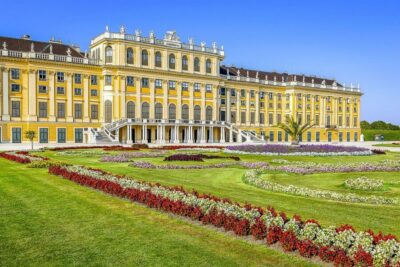
Schönbrunn Palace & Gardens Skip-the-Line Tour
Read our review →
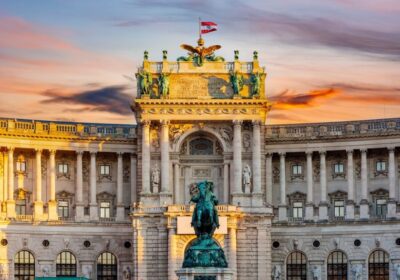
Skip-the-Line Sisi Museum, Hofburg and Gardens Tour
Read our review →
Skip-the-Line Schönbrunn Palace & Gardens Tour
Read our review →
Guided Walking Tour of City Center Highlights
Read our review →