
REVIEW · HISTORICAL TOURS
Historical Hitler Walking Tour of Vienna
A dark chapter of Vienna comes into focus fast. I like the Holocaust memorial stops and the way the route ties Vienna landmarks to what changed after 1938. The one drawback is the subject matter is heavy, so it can feel emotionally intense if you want something more light and scenic.
You’ll walk about 2 hours 30 minutes, meet at Albertinaplatz, and finish near Schwedenplatz, with a licensed guide leading the story in English. I also like that the tour keeps moving at a relaxed pace, with occasional breaks that help on cold or wet days.
In This Review
- Key things I’d bet on before you book
- A 2.5-hour walk that connects Nazi power to Vienna’s art streets
- Where you start at Albertinaplatz, and why the ending at Schwedenplatz helps
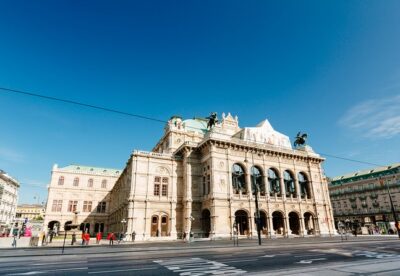
- Vienna State Opera: from Mozart-era grandeur to 1938 cultural damage
- Memorial Against War & Fascism at Albertinaplatz: a public reminder, not a side note
- Akademie der bildenden Kunste: the art school that rejected Hitler
- Heldenplatz and the 1938 speech: why the location is trauma, not just history
- Judenplatz Holocaust Memorial: paying attention to what survived and what was taken
- Morzinplatz: the former Metropole and Gestapo power in a familiar street
- Seitenstettentempel and the hidden synagogue: religion forced out of view
- Guides, pacing, and real-world comfort tips (Dieter, Wolfgang, Stephan, and more)
- Price and value: $32.65 for 7 major stops of meaning
- Who should book this tour, and who should skip it
- Should you book the Historical Hitler Walking Tour of Vienna?
- FAQ
- How long is the Historical Hitler Walking Tour of Vienna?
- What is the price per person?
- What time does the tour start?
- Where do I meet the guide, and where does the tour end?
- Is the tour offered in English?
- Do I get a mobile ticket?
- Are any admissions included or free at the stop locations?
- What should I bring for the weather?
- Is food and drink included?
- Is there free cancellation?
Key things I’d bet on before you book
- Albertinaplatz to Schwedenplatz route that links arts, politics, and memory across central Vienna
- Holocaust commemoration at Judenplatz and other reminder sites you won’t spot on your own
- Vienna State Opera context for how the Nazi takeover shifted cultural life and employment
- Heldenplatz stop for the 1938 speech and how it shaped the city’s political trauma
- Hidden synagogue context at Seitenstettengasse and why it had to be out of sight
- Guides like Dieter, Wolfgang, and Stephan bring extra context, sometimes with indoor warmth stops
A 2.5-hour walk that connects Nazi power to Vienna’s art streets
This is not a movie-style tour. It’s an educational walk through central Vienna, focused on the environment that shaped Adolf Hitler’s thinking and the impact of his rise on Austria’s culture and society. You get the main Hitler-linked locations, but the tour keeps widening the lens, from public speeches to institutions, from architecture to persecution.
Two things make it especially useful for planning. First, you’re shown how Vienna’s famous cultural world was affected, not just what happened afterward. Second, the route includes major memory sites, including places tied to the Austrian Jewish victims of the Holocaust, where the guide explains what you’re looking at and why it matters.
The route also has an important pacing reality check. You’ll be outside for most of the experience, and you’ll be walking in winter conditions sometimes. Wear warm layers and plan to feel the cold, then use the guide’s breaks when they happen.
More Walking Tours in Vienna
- Vienna: Guided Walking Tour of City Center Highlights
★ 4.7 · 4,989 reviews - Vienna: Vienna Central Cemetery Guided Walking Tour
★ 4.8 · 3,307 reviews - Vienna: Guided Walking Tour of City Highlights & Hidden Gems
★ 4.9 · 2,180 reviews
Where you start at Albertinaplatz, and why the ending at Schwedenplatz helps
You’ll meet at Albertinaplatz (Albertinapl., 1010 Wien, Austria). The tour begins at 2:30 pm and ends a few minutes’ walk from Schwedenplatz, a convenient transit hub with U line 1 and 4 and lots of dinner options nearby.
That start and finish make a difference if you’re structuring your day. Meeting near the Albertina area is an easy add-on to other central sights. Finishing near Schwedenplatz also means you’re not stranded far from food or public transport when you’re done.
A practical tip for avoiding stress: arrive a few minutes early at Albertinaplatz. One review described a moment where a group didn’t form in time at a busy meeting point, so your best move is to be at the right spot before the guide moves off.
Vienna State Opera: from Mozart-era grandeur to 1938 cultural damage
The walk opens at the Vienna State Opera area. The guide connects the opera house’s 19th-century spotlight moment with what changed after Austria’s political shift in 1938.
You’ll hear the contrast. The opening of the opera house was celebrated in the presence of Emperor Franz Joseph and Empress Elisabeth, with Mozart’s Don Juan as the premiere. Then, after the Anschluss, the cultural atmosphere was forced into a new and brutal reality. Adolf Hitler visited the State Opera on June 19 and October 27, 1938.
This stop matters because it explains how totalitarian power doesn’t just target people. It targets the arts ecosystem too, through departure, persecution, and murder of artists and employees. The guide also points out that some works were banned from performance, which helps you understand why cultural life felt like it shrank overnight.
If you’re the kind of visitor who usually breezes past famous buildings, this is a good way to slow down. You’ll be staring at the same landmark, but with a new set of questions in your head.
Memorial Against War & Fascism at Albertinaplatz: a public reminder, not a side note
Next you’ll stop at the Memorial Against War & Fascism, a work by Austrian sculptor Alfred Hrdlicka. It has stood since 1988, and it sits on Vienna’s Albertinaplatz area.
This is one of those stops that helps you “read” the city. The memorial is intended as a reminder of Austria’s darkest era, dedicated to all victims of war and fascism. You’re not just passing through a pretty square. You’re stepping into a designed space of remembrance.
It’s also a useful transition point. From here, you move from broad cultural impacts toward specific institutions and locations connected to Hitler’s early life and the mechanisms of power.
More history tours in Vienna:
- Vienna: Time Travel and Magic Vienna History Tour
★ 4.6 · 3,879 reviews - Vienna: World War II Historical Walking Tour
★ 4.8 · 1,772 reviews - Vienna Historic Center Small Group Walking Tour
★ 5.0 · 1,746 reviews - Time Travel-Magic Vienna History Tour Ticket
★ 4.5 · 1,099 reviews
Akademie der bildenden Kunste: the art school that rejected Hitler
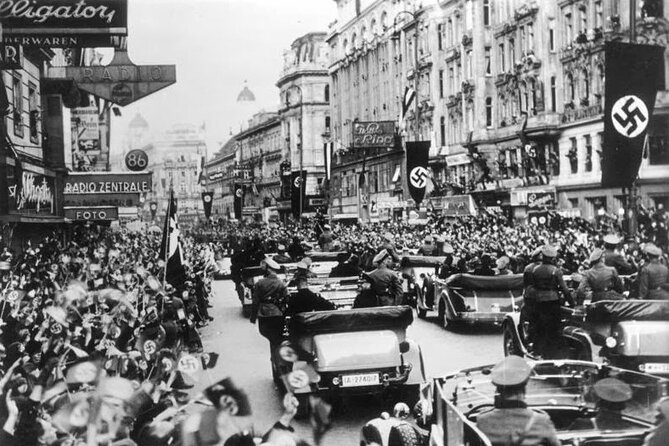
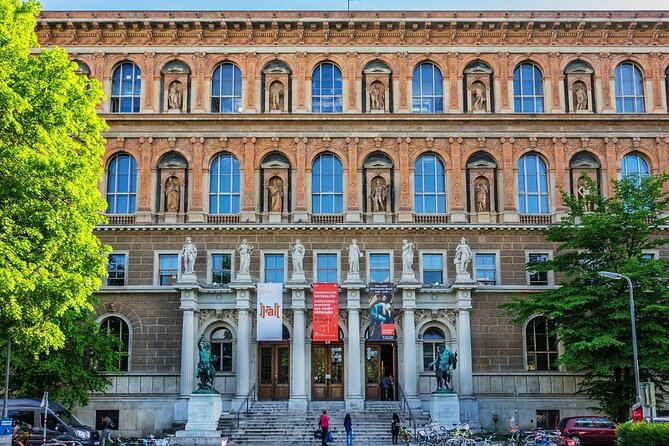
You’ll reach the Akademie der bildenden Kunste, described as the art school that did not accept Hitler as a student.
This stop can feel small on a map, but it’s powerful in the logic of the tour. It helps you understand the early timeline, not only the later rise. The guide frames it in terms of Hitler’s early days in Vienna and the social atmosphere that shaped what came next.
In a tour like this, details matter because they explain cause and effect, not just dates. This is where you start to see how Vienna functioned as both a refuge and a pressure cooker for ideas spreading in Europe at the time.
Heldenplatz and the 1938 speech: why the location is trauma, not just history
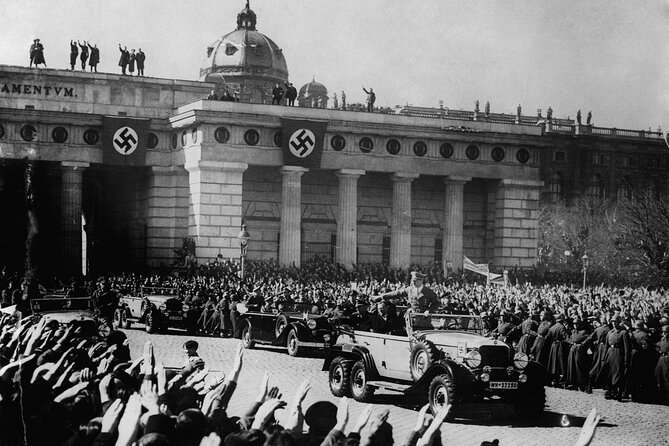
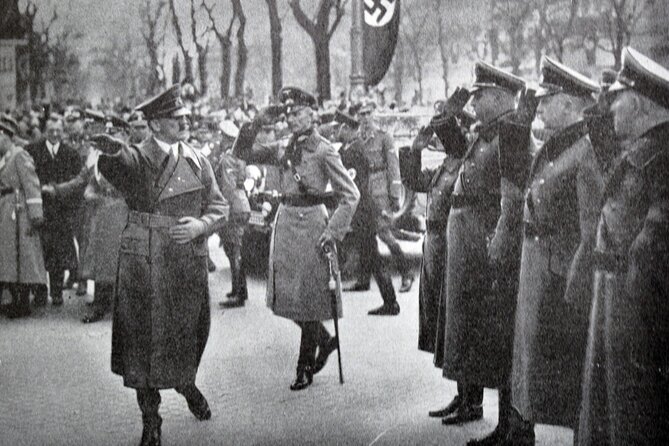
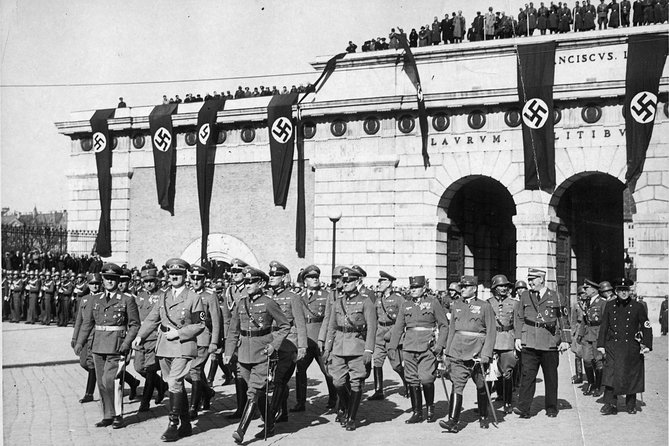
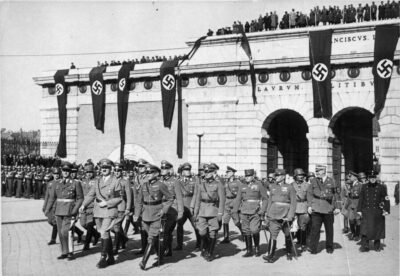
Then comes Heldenplatz, where the guide addresses the March 15, 1938 events and the infamous speech delivered from the balcony of the Neue Hofburg.
Heldenplatz is presented as a kind of historical stage, and the tour doesn’t treat it like a neutral viewpoint. The guide explains how the speech became an epitome of the National Socialist seizure of power and also the shock and trauma it left behind for Austria’s Second Republic.
This is the stop where many people realize the tour name can be misleading. It’s not only about “Hitler facts.” It’s about how his actions and Vienna’s responses shaped the city’s later identity and memory.
You’ll likely stand and look in the direction the guide describes. It’s one of those moments where the building and the square become part of the story, not just a backdrop.
Judenplatz Holocaust Memorial: paying attention to what survived and what was taken
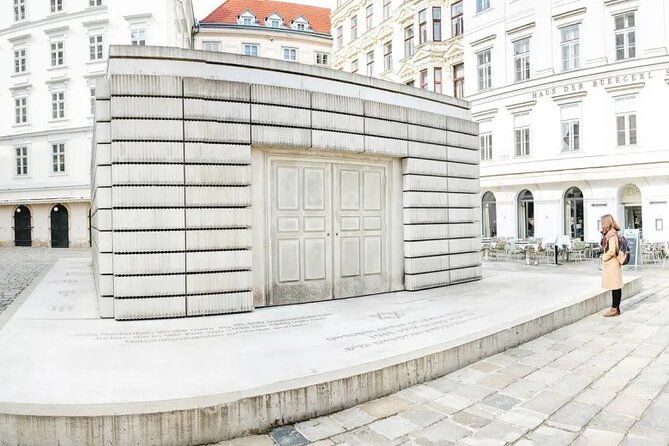
Across the historical center, you’ll visit the Judenplatz Holocaust Memorial. The stop is titled as a memorial for Austrian Jewish victims of the Shoah, and the guide focuses on the scale of the tragedy: more than 65,000 Austrian Jews murdered by National Socialists between 1938 and 1945.
This location is especially important because it ties directly to the question the tour keeps returning to: what Vienna did, what Vienna failed to resist, and how those choices echoed into mass murder.
The way the guide frames architecture and memorial design helps you notice something you might otherwise miss. You’re not just looking at a plaque. You’re looking at a deliberate public memory space in the heart of the city.
Emotion-wise, this stop can hit hard. If you feel overwhelmed, take your time and don’t rush the pace. The tour is designed to keep moving, but you can pause with intention.
Morzinplatz: the former Metropole and Gestapo power in a familiar street
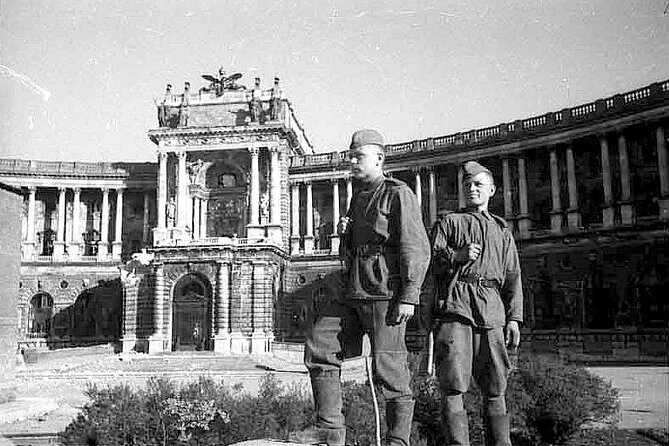
At Morzinplatz, you’ll learn about a former luxury hotel, the Metropole, which later became one of the most brutal Gestapo headquarters in the Third Reich.
This is one of the tour’s stealth lessons. It shows how violence can occupy ordinary-looking corners. The guide’s job here is to pull the historical meaning out of the present-day scenery so you understand why this place is not just “old Vienna,” but a site of fear and coercion.
If you tend to think of WWII history only in terms of far-off camps or battlefields, Morzinplatz helps you grasp how the machinery of terror worked locally, in cities like Vienna.
Seitenstettentempel and the hidden synagogue: religion forced out of view
Near the end, you’ll learn about the Seitenstettentempel, the synagogue also described as hidden from sight behind a tenement building. The tour explains that Vienna’s main synagogue is located at Seitenstettengasse 4, and that historical regulations required non-Catholic places of worship to be hidden and not visible from the street.
That’s why the synagogue sits behind an apartment building. The tour points out the inscription above the entrance gate: Come to his gates with thanksgiving, to his courts with praise!
This stop adds a layer many visitors don’t expect. It’s not only about Nazi-era violence, it’s also about older constraints and the way visibility, power, and social tolerance intersect. Seeing how a building is physically concealed is a tangible way to understand discrimination that isn’t always spelled out in textbooks.
Guides, pacing, and real-world comfort tips (Dieter, Wolfgang, Stephan, and more)
The human factor is a big part of why this tour scores so well. Multiple guides get singled out for being clear, warm, and able to answer questions without shutting people down.
For example, Dieter is repeatedly praised for organized storytelling, taking the right pace, and even adding a couple indoor stops to help people warm up. Wolfgang also shows up in reviews as personable and effective at explaining the subject clearly while keeping the walk moving. Stephan is mentioned for using an iPad with maps or pictures to add context.
Two practical notes from the experience style help you prepare:
- Some indoor breaks may happen, so it’s smart to wear layers you can take on and off.
- One participant noted it could be hard to hear through the device at times, so keep close to the guide, especially at major photo stops.
Finally, the group size is capped at 25, which usually helps the guide keep everyone together without constantly losing people in crowds.
Price and value: $32.65 for 7 major stops of meaning
At $32.65 per person for about 2 hours 30 minutes, this is priced like an affordable education tour, not a premium niche experience. The value comes from what’s included.
Your tour includes a licensed guide and uses a mobile ticket. Most listed stops are marked as free admission, so you’re not paying separate entry fees just to stand in front of buildings and memorials. The guide’s interpretation is the main cost you’re covering.
What you should plan for yourself:
- Food and drinks are not included.
- Gratuities are optional.
- You’re walking outdoors most of the time.
In plain terms, this isn’t a luxury sightseeing loop. It’s a structured route through central Vienna’s most emotionally charged places, and the price makes sense if you want context rather than just photographs.
Who should book this tour, and who should skip it
This tour fits best if you:
- care about Vienna’s 20th-century history and want the connection between politics, arts, and society
- want a route that includes Holocaust memorials and not just the most famous landmarks
- like guided storytelling that explains why specific locations matter
It’s not a perfect match if you:
- want a mostly relaxed, scenic stroll with minimal heavy content
- get uncomfortable with Holocaust-related stops and details
- need something purely focused on Hitler as a biographical subject, because the tour is also about Vienna’s social context and institutions
If you’re unsure, treat it like a walking primer for understanding Vienna in the 1938 era. Then pair it with lighter sights later in your trip.
Should you book the Historical Hitler Walking Tour of Vienna?
If you can handle an educational and emotionally serious theme, I think this is a smart booking. The route is efficient, the guide-led context turns famous places into meaningful lessons, and the stopping points include major memory spaces like Judenplatz and reminders tied to Gestapo activity.
I’d book it if you’re the type who wants to understand the city, not just see it. I’d hold back if you’re looking for comfort above all, because you’re walking through Vienna’s reminders of fascism, war, and persecution.
FAQ
How long is the Historical Hitler Walking Tour of Vienna?
It’s approximately 2 hours 30 minutes.
What is the price per person?
The price is $32.65 per person.
What time does the tour start?
The start time is 2:30 pm.
Where do I meet the guide, and where does the tour end?
You start at Albertinaplatz (Albertinapl., 1010 Wien, Austria) and end at Schwedenplatz (Schwedenpl., 1010 Wien, Austria), with the tour ending a few minutes walk from there.
Is the tour offered in English?
Yes, the tour is offered in English.
Do I get a mobile ticket?
Yes, the tour offers a mobile ticket.
Are any admissions included or free at the stop locations?
The itinerary lists each stop with admission ticket free.
What should I bring for the weather?
Vienna weather can be unpredictable, so bring water and sunblock, and consider a raincoat or umbrella.
Is food and drink included?
No, food and drinks are not included.
Is there free cancellation?
Yes. You can cancel up to 24 hours in advance for a full refund.
Fresh on the site in Vienna
- World War II History Vienna Old Town Private Walking Tour★ 4.8 · 9 reviews
- Vienna/Bratislava: Traunkirchen, Hallstatt & Salzburg Tour★ 4.8 · 53 reviews
- Vienna: Winery and Wine Tasting Tour with a Wine Expert★ 5.0 · 5 reviews
- Vienna: Wine Tasting Tour★ 4.8 · 61 reviews
- Vienna/Bratislava: Day Trip to Hallstatt & Salzburg★ 4.8 · 21 reviews
- Vienna: Wiener Schnitzel and Strudel Cooking Class★ 4.9 · 126 reviews
- Vienna: Waltz into the Ball Season★ 4.7 · 3 reviews
- Vienna: Wine Tasting E-Bike Tour★ 4.9 · 46 reviews
Historical Tours, compared.
Vienna Historic Center Small Group Walking Tour
Read our review →
Skip-the-Line Schonbrunn Palace Guided Tour and Vienna Historical City Tour
Read our review →
Vienna Mozart Concert in Historical Costumes at the Musikverein
Read our review →
Browse the lists this tour appears in