
REVIEW · HISTORICAL TOURS
Time Travel-Magic Vienna History Tour Ticket
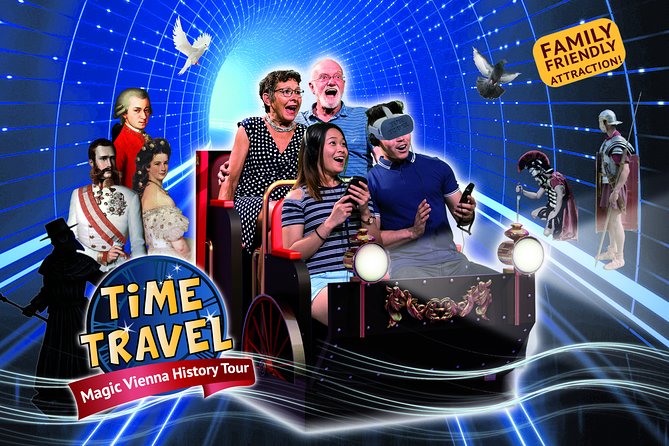
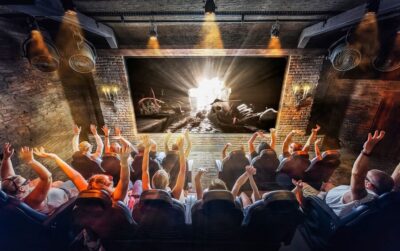
Vienna gets futuristic in one hour. I love the 5D cinema plus VR headsets that make big eras feel immediate, and I also like that the show stays easy to follow from Roman Vienna to Habsburg courts to WWII. My only caution is that this is a multimedia performance, not a quiet, realistic history lecture.
The setting helps. The tour runs in the historic vaults of the 400-year-old Michaelerkloster, so it feels like you’re stepping into the city’s backstage, not just watching screens. The experience is led by live guidance (one host named Marie stood out for being friendly and helpful in people’s memories), and you can choose English or German, with full translation in 10 languages via audio.
In This Review
- Key things to know before you go
- Inside the Michaelerkloster vaults, where Vienna history becomes theatre
- From Roman Vindobona to plague streets: the show’s story arc
- Habsburgs to composers: meeting Mozart and Strauss in Vienna
- 5D cinema, VR headsets, and the spinning waltz car
- The WWII air raid shelter and Leopold Figl’s Austria is free moment
- Virtual fiaker ride and Vienna landmarks you can recognize immediately
- Price and time: why the value works for some days, and not for others
- Who should book Time Travel Vienna History Show?
- Should you book Time Travel Vienna?
- FAQ
- Is this experience offered in English?
- How long is the Time Travel Vienna History Tour?
- What ticket do I get?
- Are audio guides available in languages besides English?
- Can I listen in German?
- Does the tour include hotel pickup and drop-off?
- Is food or drinks included?
- What is the cancellation policy?
- Is there a group size limit?
Key things to know before you go
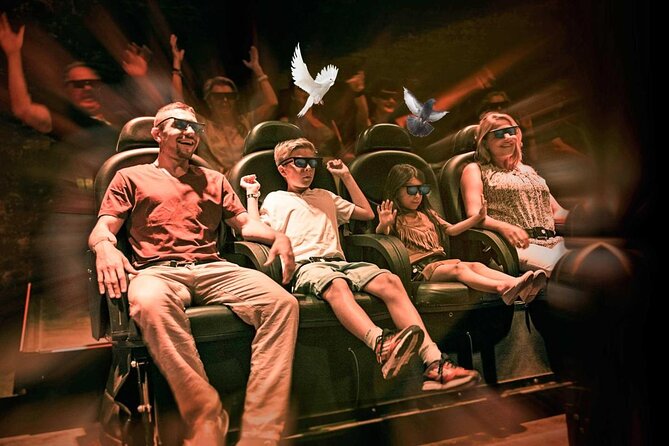
- 5D cinema, VR, and animatronics in a single indoor route, built for short attention spans and big curiosity.
- Roman Vindobona, plague streets, and Habsburg power get packed into a clear, scene-by-scene timeline.
- Audio in 10 languages plus an option to listen in German with live translation through headphones.
- A spinning waltz car ride that targets Vienna’s musical identity, not just its politics.
- Shared show energy helps some people learn faster, but it can be harder if others in your group are noisy.
Inside the Michaelerkloster vaults, where Vienna history becomes theatre
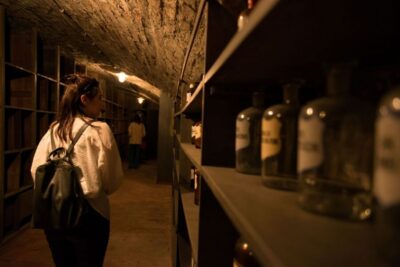
You start in the historic Michaelerkloster vaults, and that matters more than you might think. Vienna can feel like a museum city where you move from place to place all day. This show gives you a different pace. In about an hour, you move through multiple themed rooms that use high-tech effects, visuals, and animatronics to tell the story of Vienna’s changing eras.
The format is designed to be straightforward. There’s a live guide or audio commentary to keep you oriented, and the translation support is built in. If your group includes different language levels, this is one of those rare attractions where most people can stay synced.
It’s also a small-to-mid size operation. The experience has a maximum group size of 32, which helps compared with big coach-style tours. It’s still a shared attraction, though, so if you’re sensitive to interruptions, know that other languages and ages can create extra noise in the rooms.
Finally, it’s a true ticketed show. Admission to Time Travel: The Vienna History Show is included, and you’ll use a mobile ticket. That makes it easy to fit into a day of sightseeing, especially if weather or tired feet are pushing you toward an indoor plan.
More history tours in Vienna:
- Vienna: Time Travel and Magic Vienna History Tour
★ 4.6 · 3,879 reviews - Vienna: World War II Historical Walking Tour
★ 4.8 · 1,772 reviews - Vienna Historic Center Small Group Walking Tour
★ 5.0 · 1,746 reviews
From Roman Vindobona to plague streets: the show’s story arc
The core of Time Travel Vienna is its rapid tour through major moments, using dramatic scenes to help the timeline stick.
One of the first big jumps is to Roman Vindobona, the Roman camp tied to what would become Vienna. You’re not just told facts. You follow the narrative through set pieces that suggest daily life and the feeling of being in a different era.
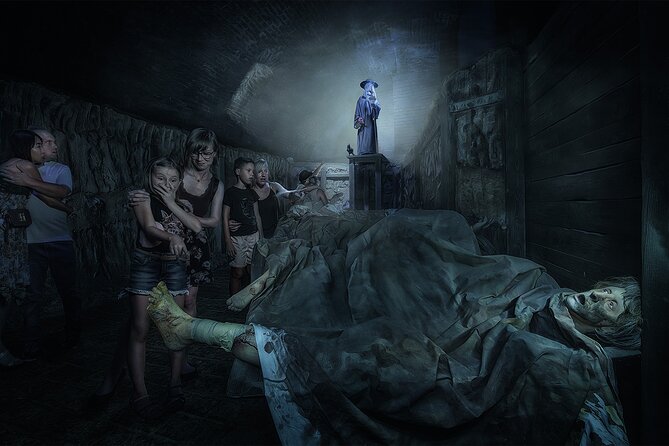
Next comes the darker turn into medieval Vienna. You travel through plague-hit streets, including time in a plague pit. It’s the kind of subject you’d normally spend time reading about in a library. Here, it’s presented as a scene, with the show’s technology used to keep you engaged. You’ll come out with a stronger sense of how fear and hardship shaped everyday life, even if you don’t walk away with a historian’s level of detail.
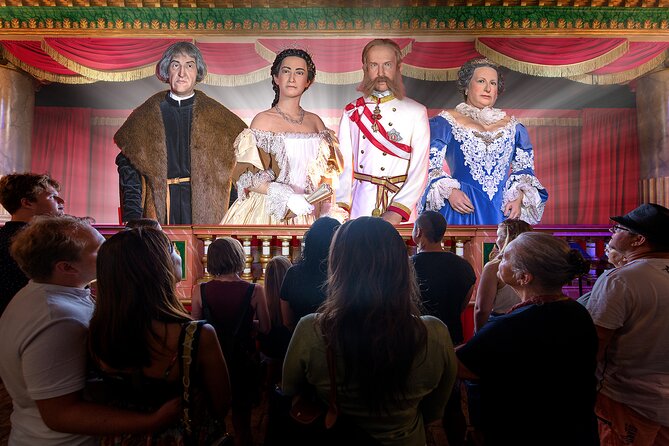
Then the story moves forward toward the Habsburg emperors. You meet major figures connected to the court, and you get a sense of how power, culture, and the city’s identity developed over time.
Is it all deep and nuanced? No. The show is built for speed and clarity. If you already know Austrian history well, you might wish for more time in the WWII period and fewer quick transitions. If you don’t know much yet, that same speed can be a big plus, because you get a useful overview fast.
Habsburgs to composers: meeting Mozart and Strauss in Vienna
One reason this show works so well for families and first-timers is that it mixes political history with pop-history characters people recognize. You’ll encounter Mozart and Strauss during the journey, and they’re used as entry points into Vienna’s cultural identity.
The Habsburg section is where that cultural angle starts to make sense. You don’t need to be an expert to follow the basic thread. The show connects rulers and major events to the way Vienna became known for arts, ceremony, and music.
There’s also a musical moment that comes later in a very physical way, but it helps to know the show is constantly steering you back to Vienna’s personality. It’s not only “who ruled when.” It’s also “why did Vienna become Vienna.”
If you want to maximize the experience, arrive with at least a tiny mental checklist. Knowing that Vienna is famous for music and the Habsburg legacy helps the scenes land. If you’re coming in completely blank, you’ll still get oriented by the guide and audio narration, but some details may feel simplified.
5D cinema, VR headsets, and the spinning waltz car
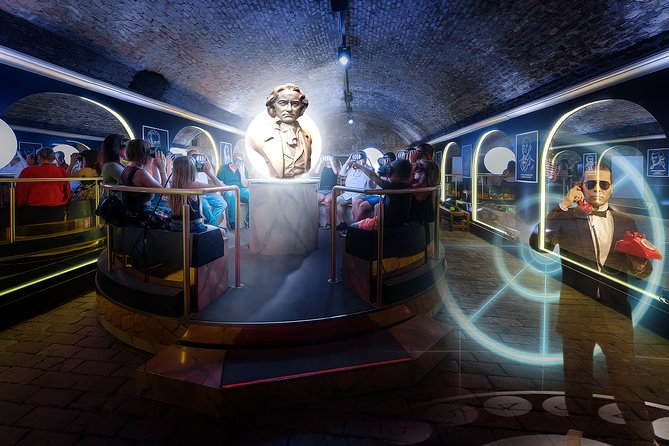
A big part of the appeal is the mix of media used back-to-back. You’ll see 5D cinema effects, and you’ll also get VR headsets for key moments. Reviews consistently praise the variety, because it prevents the “one screen, one mood” problem that happens at some indoor attractions.
This is the part that many people end up calling the most memorable. It’s also where you can get the best sense of what the show is trying to do: use technology to make history feel less distant.
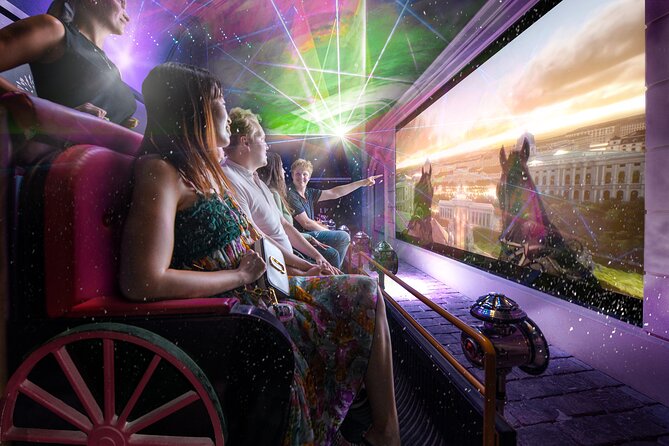
Then you get something physical, not just visual. There’s a spinning waltz car ride meant to echo Vienna’s musical heritage. It’s playful, but it’s also a clever way to turn music history into movement. You don’t need to be a dancer to enjoy it.
One practical note: because multiple rooms rely on shared pacing and audio equipment, the experience depends on group flow. If you land with a group that has energetic kids who can’t settle, it can make it harder to hear translation well. That doesn’t mean the attraction is poorly run, but it is something to consider if you’re planning this as a quieter, calmer activity.
A few more Vienna options worth a side-by-side
- Vienna: Vivaldi’s Four Seasons Concert in Karlskirche
★ 4.7 · 14,951 reviews - Vienna: Spanish Riding School Training
★ 3.9 · 9,281 reviews - Vienna: Skip-the-cashier-desk-line Giant Ferris Wheel Ride
★ 4.5 · 7,859 reviews - Vienna: Schönbrunn Palace & Gardens Skip-the-Line Tour
★ 4.7 · 7,739 reviews
The WWII air raid shelter and Leopold Figl’s Austria is free moment
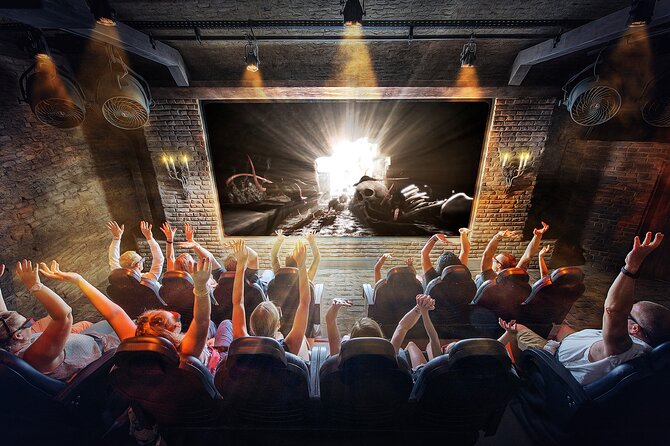
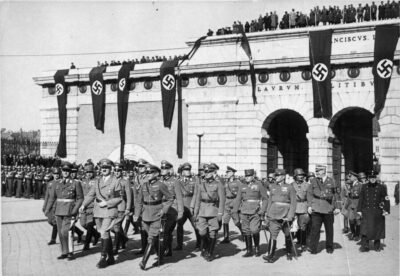
The show doesn’t avoid the heavy chapters. One standout scene is a visit to an original-style air raid shelter, plus time focused on a WWII bombing raid.
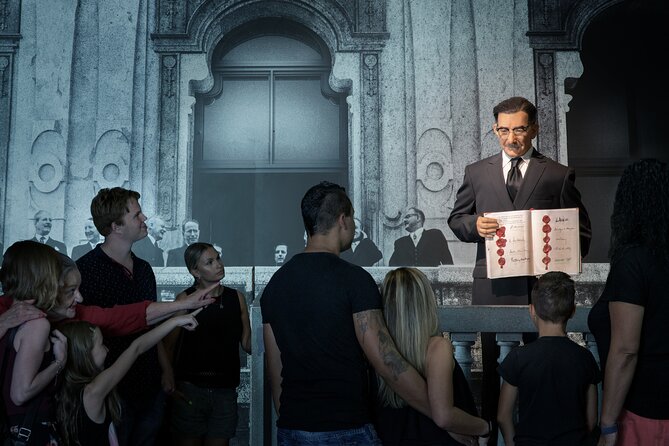
This section tends to be thought-provoking because it turns a concept you might read about into something you experience as a room and a sequence. You’ll also hear about Leopold Figl and his famous line Austria is free. The wording matters here. It’s presented as a living moment, not just a date in a timeline.
In a short show, the challenge is always balance. For some people, the WWII portion may feel shorter than they want. For others, that brevity is exactly why it works. In an hour, you can get a strong emotional outline without spending half a day in museums.
If your goal is a deep WWII study, treat this as an emotionally guided introduction, then pair it with other sites that go more slowly. If your goal is to get your bearings on Vienna’s 20th-century story, this delivers.
Virtual fiaker ride and Vienna landmarks you can recognize immediately
Vienna is full of landmarks, but on your first visit it can be hard to connect them to history in a meaningful way. Time Travel Vienna uses a virtual fiaker ride to solve that.
A fiaker is the traditional horse-drawn carriage associated with Vienna. In this show, the virtual carriage format helps you see top landmarks from a new angle while you’re still in the story mode. It’s less about spotting every detail and more about getting a “now I see why that matters” feeling.
You also end with a sense of returning to the present. There’s a magical carriage ride back to your own time, which is a nice way to close the loop. If you like tying history to what you’ll walk past later, this ending helps.
Price and time: why the value works for some days, and not for others
At $27.76 per person, Time Travel Vienna is priced like a ticketed indoor attraction. What makes the value feel fair is that it includes admission to the show and gives you the audio tools (English and other language options) without making you buy extras.
You also get a lot of “different things in one visit.” You’re not just watching a slideshow. You’re moving through themed stops, with 5D cinema, VR, and animatronics mixed in. For an hour-long plan, that variety helps justify the cost.
A few practical realities to keep in mind:
- The tour is about 1 hour approx, though people sometimes report it feeling closer to 90 minutes depending on pace and headsets.
- There is no hotel pickup or drop-off, and food and drinks aren’t included. Plan to eat before or after.
- It’s near public transportation, so it’s easy to slot into a day without a long commute.
It also has a simple rule set: bringing animals isn’t allowed. That’s typical for indoor attractions, but it matters if you’re traveling with pets.
Best use case: you’re short on time, you want an indoor break, and you want a clear overview of Vienna through multiple eras. Less ideal use case: you want strict realism and deep historical analysis, or you already know the timeline perfectly and you’re hunting for the last details.
Who should book Time Travel Vienna History Show?
Book it if you want a guided, high-tech way to understand Vienna fast. This show is especially friendly for families, people on a rainy day, and visitors who like learning while they’re doing. The pace is built for attention, and the translation options make it manageable across language needs.
If you’re traveling as a couple or solo, it’s still a solid choice, particularly if you want something different from churches, palaces, and long museum hallways. The combination of Roman Vienna, Habsburg scenes, music moments, and WWII context gives you a balanced orientation.
I’d think twice if you need a deeply realistic portrayal or you’re hoping for a long WWII-focused explanation. The show moves quickly, and some people looking for more depth in that era have found the presentation a bit brief.
Should you book Time Travel Vienna?
I’d book it if your Vienna trip includes only a few hours for history learning, or if you want a fun, structured introduction that connects names, eras, and landmarks. The 5D cinema, VR, and animatronics are genuinely the main draw, and the language support is a big quality-of-life feature.
Skip it if you’re picky about historical realism, or if your group includes people who get restless with multimedia, short timelines, and crowd energy. In that case, put your time into museums where you can go slow at your own pace.
FAQ
Is this experience offered in English?
Yes. The experience is offered in English, and audio guides are also available in multiple languages.
How long is the Time Travel Vienna History Tour?
The duration is approximately 1 hour.
What ticket do I get?
You get admission to Time Travel: The Vienna History Show in Vienna, and the ticket is a mobile ticket.
Are audio guides available in languages besides English?
Yes. Audio guides are available in English, Spanish, Italian, French, Japanese, Chinese, Russian, Hungarian, Polish, and Czech.
Can I listen in German?
Yes. The experience can be listened to in German, with simultaneous translation via headphones.
Does the tour include hotel pickup and drop-off?
No. Hotel pickup and drop-off is not included.
Is food or drinks included?
No. Food and drinks are not included.
What is the cancellation policy?
Free cancellation is available up to 24 hours in advance for a full refund. If you cancel less than 24 hours before the start time, you will not be refunded.
Is there a group size limit?
Yes. The tour has a maximum of 32 travelers.
Fresh on the site in Vienna
- World War II History Vienna Old Town Private Walking Tour★ 4.8 · 9 reviews
- Vienna/Bratislava: Traunkirchen, Hallstatt & Salzburg Tour★ 4.8 · 53 reviews
- Vienna: Winery and Wine Tasting Tour with a Wine Expert★ 5.0 · 5 reviews
- Vienna/Bratislava: Day Trip to Hallstatt & Salzburg★ 4.8 · 21 reviews
- Vienna: Wine Tasting Tour★ 4.8 · 61 reviews
- Vienna: Wiener Schnitzel and Strudel Cooking Class★ 4.9 · 126 reviews
- Vienna: Waltz into the Ball Season★ 4.7 · 3 reviews
- Vienna: Wine Tasting E-Bike Tour★ 4.9 · 46 reviews
Historical Tours, compared.
Vienna Historic Center Small Group Walking Tour
Read our review →
Skip-the-Line Schonbrunn Palace Guided Tour and Vienna Historical City Tour
Read our review →
Vienna Mozart Concert in Historical Costumes at the Musikverein
Read our review →
Browse the lists this tour appears in