
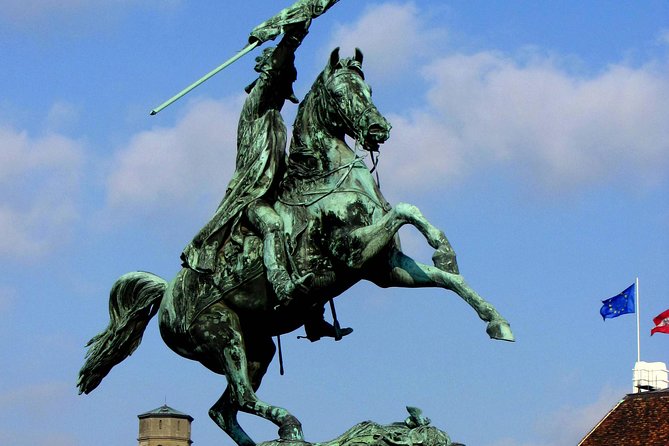
REVIEW · HISTORICAL TOURS
Private Vienna Highlights History Walk — WWII and Post War Vienna
Vienna tells its WWII story in stone. This private 3-hour highlights walk strings together key places from the Belvedere area to the Judenplatz Holocaust Memorial, with hotel pickup to help you start on time. I especially like the flexible rhythm, you can move mostly by foot with help from public transport as needed, which keeps the tour comfortable even when you stop for photos. One drawback to plan around: you will be walking and standing for a few hours, so wear good shoes and don’t schedule the rest of your day too tight.
You’ll meet your guide at 09:30 or 14:00, either at hotels and vacation rentals in town, at major stations like Vienna Hbf or Vienna West, or at the Reichsbruecke pier. It’s private, small enough that your guide can adjust to your interests, and it’s offered in English with a mobile ticket.
In This Review
- Key highlights you will feel fast
- How this WWII and post-war route works in 3 hours
- Belvedere Gardens: from Prince Eugene to 1955 neutrality
- Schwarzenbergplatz Soviet monument and the memory problem
- Hochstrahlbrunnen, French Embassy, and the Ringstraße tram reset
- Burggarten and the Mozart court, with Hitler as a footnote
- MuseumsQuartier: Maria Theresa’s square and FLAK tower reminders
- Heldenplatz and Hofburg: power up close, from imperial ceremony to Anschluss
- Judenplatz Nameless Library and St. Stephen’s Cathedral, heavy but essential
- The kind of guide that makes the story click
- Cost and value: paying $342.40 per group makes sense
- Who this Vienna highlights WWII walk is best for
- Should you book this tour?
- FAQ
- What is the duration of the private Vienna highlights history walk?
- How much does the tour cost?
- Is the tour private?
- What language is the tour offered in?
- Are hotel pickup and mobile tickets included?
- Where does the meeting happen if I am not getting picked up at my hotel?
- Do I need to pay entry fees for the sites?
- Is food included?
- Is public transport included?
- What is the cancellation window?
- FAQ
- Is the tour suitable for people with moderate physical fitness?
- Are service animals allowed?
- Are pets allowed?
Key highlights you will feel fast
- WWII to post-war Vienna, in one logical route that connects the political message of each site
- Hotel pickup plus a guide who helps you get around smoothly without stress
- Belvedere terrace and gardens framed as a shift from imperial ambition to Austria’s Second Republic
- Soviet and Allied memory, including the Schwarzenbergplatz memorial and the French Embassy fountain setting
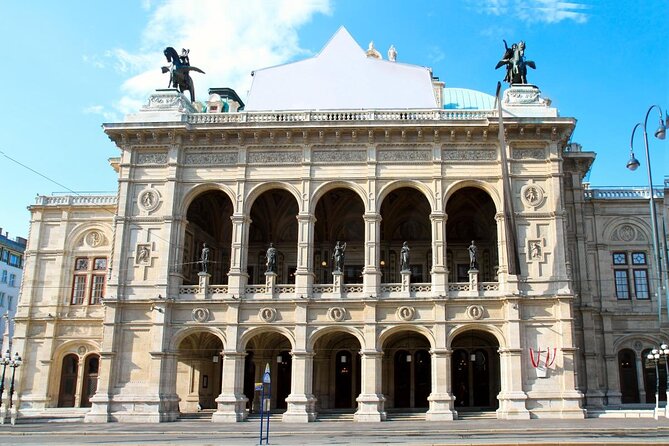
- Ringstraße by tram, including a pass by the rebuilt State Opera and 19th-century grandeur
- Judenplatz Nameless Library and St. Stephen’s Cathedral aftermath, handled with care and context
How this WWII and post-war route works in 3 hours
This tour is built for people who want the big picture, not just a photo list. In about three hours, you cover places that tell you how Vienna was reshaped after Nazism, how occupation and liberation became part of public memory, and how Austria tried to define itself again. The secret is the order of stops. You move from symbolic power sites to blunt memorials, then back into everyday city landmarks where the war’s effects still show up.
I like that you get a private guide, which means the pace can fit your group. If you want more time at a memorial moment or more time scanning architecture details, your guide can steer the route. Guides in this team are known for being warm and organized, and you can often count on humor to keep the mood from getting too heavy.
The timing also helps first-timers. Vienna is a big city, and most highlights are spread out. Here, you get a compact walk with one short tram ride to bridge neighborhoods and keep the story moving.
More Walking Tours in Vienna
- Vienna: Guided Walking Tour of City Center Highlights
★ 4.7 · 4,989 reviews - Vienna: Vienna Central Cemetery Guided Walking Tour
★ 4.8 · 3,307 reviews - Vienna: Guided Walking Tour of City Highlights & Hidden Gems
★ 4.9 · 2,180 reviews
Belvedere Gardens: from Prince Eugene to 1955 neutrality
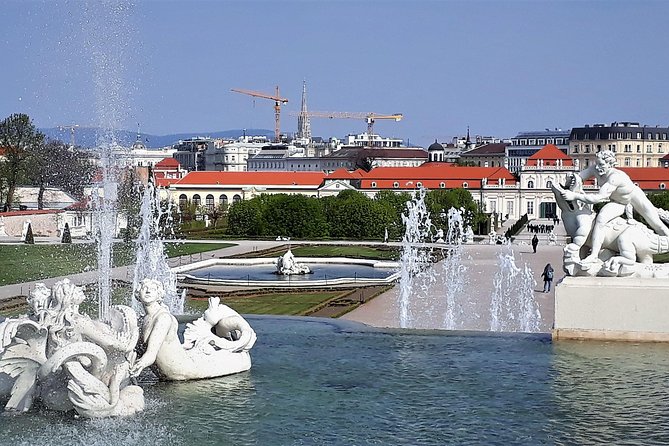
The tour starts at the Belvedere Gardens area, with a focus on the Upper Belvedere terrace viewpoint. This matters because Belvedere is not just pretty. It’s connected to political change in a very direct way. The palace was built by Prince Eugene, a military genius who never ruled, and later it became symbolic as Austria’s Second Republic is associated with 1955. Standing in the right spot, you can feel how imperial ambition and post-war neutrality are both part of the same landscape.
Next you head down the baroque garden axis at Belvedere Gardens and Lower Belvedere. The guide reads the gardens like a political statement, order, hierarchy, and the aesthetics of power. You’ll see how Vienna used design to communicate control, and then you’ll notice how the city later tries to redefine power through different messaging.
What to watch for on your visit:
- The terrace views where the palace feels like a stage
- The way the garden axis pulls your eye in a controlled line
- How the architecture changes your sense of who is in charge, then and now
This stop is listed as about 20 minutes, and it’s marked as admission ticket free for the garden parts. That means you can spend time absorbing the setting without feeling like you are rushing through a paid interior.
Schwarzenbergplatz Soviet monument and the memory problem
At Schwarzenbergplatz, the story turns sharper. You’ll see the Soviet War Memorial, honoring the Red Army soldiers who died ending Nazi rule in Vienna in 1945. It’s a reminder that liberation and occupation can coexist in memory. That’s not a comfortable idea, but it’s one of the most honest ways to understand post-war Vienna.
Why I like this stop: it keeps you from thinking history is one clean line of heroes and villains. The memorial exists to honor sacrifice, but it also sits inside the wider reality that Vienna was not suddenly free in a simple way. Your guide should help you connect that tension to what you’re seeing elsewhere on the route.
In the itinerary, this is a 10-minute stop, also admission ticket free.
Hochstrahlbrunnen, French Embassy, and the Ringstraße tram reset
From there, you move to Hochstrahlbrunnen and the French Embassy. The fountain is monumental, celebrating Vienna’s alpine tap water. Put that beside the French Embassy, and you get a neat contrast of Allied presence and architectural messaging. It’s not just a pretty corner. It’s a visual reminder that the post-war Allies were present in Vienna in many forms, not only in politics.
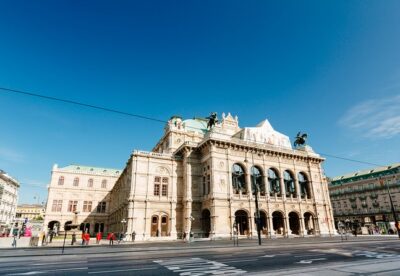
Then comes the short tram ride along the Ringstraße. This is one of the smartest parts of the tour if you want to cover ground without leg fatigue. The Ringstraße is Vienna’s 19th-century prestige project, and the ride gives you a quick sense of what the city tried to display before, during, and after wartime disruption. You pass the rebuilt State Opera, a symbol of cultural continuity after destruction.
On a day when you might be tempted to hop transit on your own, having the guide manage the “move” is a real time saver. You still get your bearings. You just don’t have to plan every hop.
More history tours in Vienna:
- Vienna: Time Travel and Magic Vienna History Tour
★ 4.6 · 3,879 reviews - Vienna: World War II Historical Walking Tour
★ 4.8 · 1,772 reviews - Vienna Historic Center Small Group Walking Tour
★ 5.0 · 1,746 reviews - Time Travel-Magic Vienna History Tour Ticket
★ 4.5 · 1,099 reviews
Burggarten and the Mozart court, with Hitler as a footnote
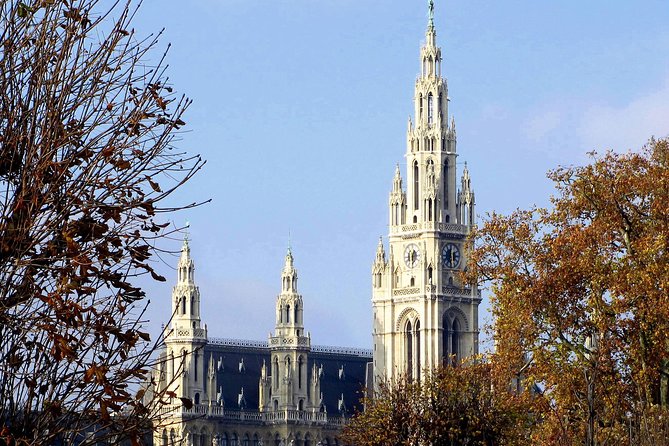
Next you reach Burggarten, where Mozart presides over a garden that once belonged to the imperial court. This is a different tone from the Soviet memorial. It’s about cultural authority, old power presented through art and public space. You’re not just seeing a garden statue. You’re stepping into how Vienna frames itself through culture.
Right nearby is another history note that can feel strange in a garden setting: the Academy of Fine Arts famously rejected a young Adolf Hitler. Your guide uses it as a footnote, but it lands because it’s so human and so chilling. It’s one of those moments where you realize how small decisions and institutions can ripple forward into world events.
This stop is listed as about 5 minutes and admission ticket free. It’s short, which means you should treat it like a punch of context, not a deep museum visit.
MuseumsQuartier: Maria Theresa’s square and FLAK tower reminders
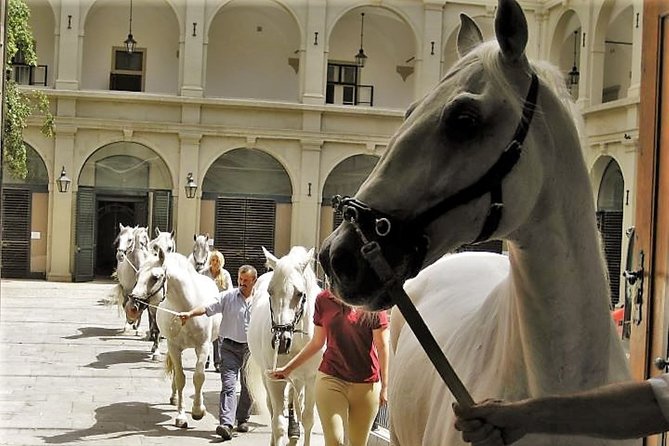
At MuseumsQuartier Wien, the square is dominated by Maria Theresa, flanked by twin museums. It’s a classic Vienna scene, formal and symmetrical, but the guide points your attention toward something you could easily miss: one of Vienna’s six FLAK towers in the background.
Those concrete structures matter because they are physical witnesses to the city’s militarized final months. You are looking at a place that today feels like culture and leisure, but the skyline holds scars. The tour keeps you looking up as much as you look at facades, which I think is key to understanding Vienna after WWII. The war is not only in memorial plaques, it is in the built environment you walk past.
This segment is about 10 minutes and marked admission ticket free.
Heldenplatz and Hofburg: power up close, from imperial ceremony to Anschluss
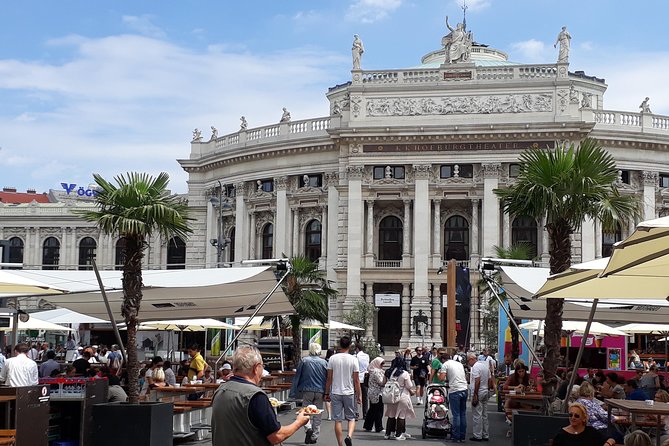
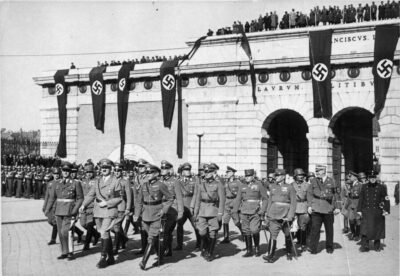
After MuseumsQuartier, you arrive at Heldenplatz. The square is described as a stage for imperial ceremony and military pride, and you’ll connect it directly to the moment in March 1938 when Hitler delivered the Anschluss speech there. Today the square is framed by institutions of government and culture, parliament, city hall, museums, and the Burgtheater. That contrast is the point: the same city spaces can be used to project radically different agendas.
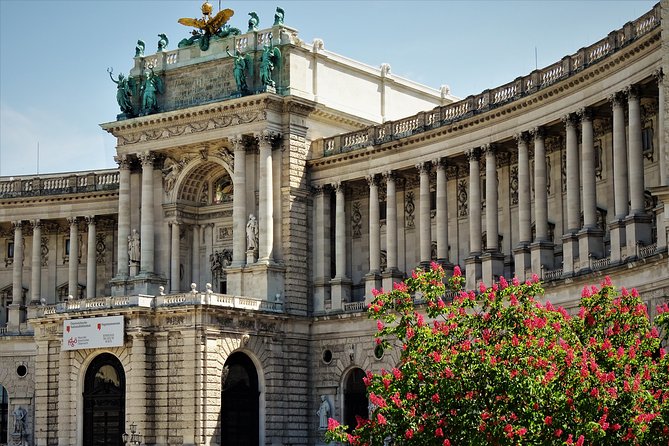
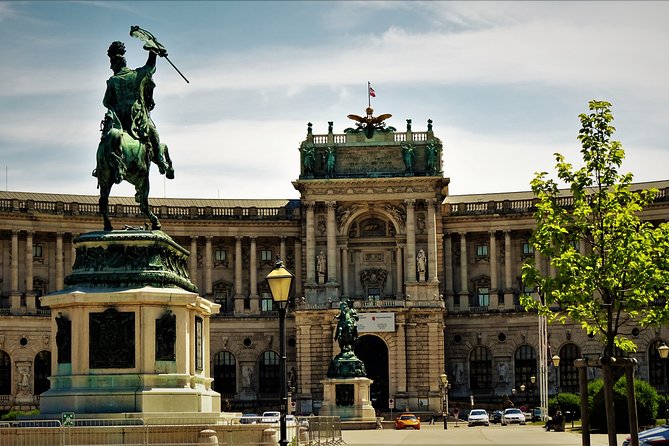
Then you continue to the Hofburg, the palace-city that served as the seat of power for seven centuries. The guide links dukes, emperors, and the modern presidency to the same overall building complex. If you only know Vienna through imperial photos, this stop helps you understand continuity. The city didn’t erase power. It changed the uniform.
Right after, the itinerary includes a gentle transition where imperial façades meet ecclesiastical grandeur and today’s luxury boutiques. This isn’t about shopping for shopping’s sake. It’s about how Vienna balances ceremony, commerce, and spirituality. Even after a world war, the city’s main trick is keeping different layers visible at once.
Heldenplatz is listed as 15 minutes, and Hofburg as 15 minutes, both marked admission ticket free.
Judenplatz Nameless Library and St. Stephen’s Cathedral, heavy but essential
At Judenplatz, the tour becomes quiet. You’ll visit the Holocaust Memorial, the Nameless Library, at the site of Vienna’s medieval Jewish community, destroyed in 1421. The memorial commemorates 65,000 Austrian Jews murdered in the Shoah. A good guide keeps this stop respectful and paced. You are not trying to “see it fast.” You’re absorbing what the memorial says and what it refuses to forget.
This is listed at about 15 minutes, admission ticket free.
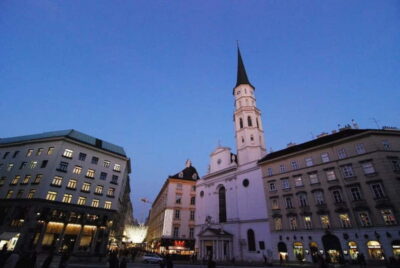
Then you end at St. Stephen’s Cathedral, Vienna’s Gothic heart. The guide adds a grim wartime note from April 1945. Parts of the cathedral burned when looters set fire to nearby shops. It’s a painful reminder that the end of war did not mean the end of destruction, and that chaos can extend even after the fighting is done.
This stop is about 10 minutes, also admission ticket free.
If you like history that is emotionally honest, these two final stops are the reason to do the walking tour at all. They turn the earlier “politics in architecture” theme into something human.
The kind of guide that makes the story click
A walking tour is only as good as the guide’s timing, tone, and organization. The team behind this experience has a pattern: guides who are warm, funny when appropriate, and quick to answer questions.
In past tours, I’ve seen names like Brigitte, Walter, Alex, Andrea, and Hannes associated with excellent experiences. People describe them as friendly, organized, and tuned into what you already know and what you still want to see. One guide even creates time for coffee without derailing the schedule. Another takes questions beyond the tour topic and still has a good answer ready.
For your planning, that translates into a useful strategy: ask what you have already seen before the tour starts. With a private guide, that question can turn into a faster, better route for your specific Vienna itinerary.
Cost and value: paying $342.40 per group makes sense
The price is $342.40 per group, with space for up to 10 people. That’s the key detail for value. This isn’t priced per person, so the cost can drop quickly if you travel with family or friends. Even if it’s just a small group, you’re buying two things you normally pay extra for on separate tours: a private guide and hotel pickup.
Also, many of the stops are marked admission ticket free, so you are not stacking entry fees on top. You’re paying for interpretation and route logic, not just access.
What you should consider:
- Food and drinks are not included, so plan for a snack or coffee break on your own.
- There is no hotel drop-off, so you’ll need to handle your way back after the walk.
This tour is best for people who want a structured overview fast, and people who prefer meaning and context over only looking at buildings.
Who this Vienna highlights WWII walk is best for
Book this if you:
- Want a first serious history walk in Vienna
- Like WWII and post-war politics connected to real locations
- Enjoy memorials and architecture with context, not just a quick stop
- Travel as a group and want a private guide without paying per person prices
You might not love it if you:
- Want long museum time at indoor exhibitions, this is a walking-focused highlights format
- Have limited stamina, because it is still a moderate walking day even though the pace can be managed
Should you book this tour?
Yes, if you want Vienna to make sense quickly. This is one of those tours where the route itself is the lesson. You start at Belvedere with political symbolism, you move into competing memories at Schwarzenbergplatz, you connect the city’s post-war identity through Ringstraße and cultural landmarks, and you end with Judenplatz and St. Stephen’s Cathedral, where the story becomes human and heavy.
If your Vienna trip is short, or if you want the WWII and post-war angle without piecing it together yourself, this private format is a smart choice. It also works well because the guide can tailor what you pay attention to, and you get hotel pickup to remove friction from the start of the day.
FAQ
What is the duration of the private Vienna highlights history walk?
It runs for about 3 hours.
How much does the tour cost?
The price is $342.40 per group, up to 10 people.
Is the tour private?
Yes. It is a private tour, so only your group participates.
What language is the tour offered in?
The tour is offered in English.
Are hotel pickup and mobile tickets included?
Yes. Hotel pickup is included, and you receive a mobile ticket.
Where does the meeting happen if I am not getting picked up at my hotel?
You can meet at major train stations (Vienna Hbf, Vienna West) or at the Reichsbruecke pier. Other meeting points can be arranged, and A’Rosa guests meet at Pier Handelskai 265, 1020 Wien.
Do I need to pay entry fees for the sites?
The listed stops are marked as admission ticket free in the itinerary, so you should not expect to pay entrance fees for those specific stops.
Is food included?
No. Food and drinks are not included.
Is public transport included?
Public transport to and from attractions is not included, though you can navigate Vienna via public transport or explore by foot with the guide’s help. The itinerary also includes a short tram ride along the Ringstraße.
What is the cancellation window?
You can cancel up to 24 hours in advance for a full refund.
FAQ
Is the tour suitable for people with moderate physical fitness?
The tour notes a moderate physical fitness level. Plan on walking and some standing.
Are service animals allowed?
Service animals are allowed.
Are pets allowed?
Pets are not permitted in certain areas visited.
Fresh on the site in Vienna
- World War II History Vienna Old Town Private Walking Tour★ 4.8 · 9 reviews
- Vienna/Bratislava: Traunkirchen, Hallstatt & Salzburg Tour★ 4.8 · 53 reviews
- Vienna: Winery and Wine Tasting Tour with a Wine Expert★ 5.0 · 5 reviews
- Vienna: Wine Tasting Tour★ 4.8 · 61 reviews
- Vienna/Bratislava: Day Trip to Hallstatt & Salzburg★ 4.8 · 21 reviews
- Vienna: Wiener Schnitzel and Strudel Cooking Class★ 4.9 · 126 reviews
- Vienna: Waltz into the Ball Season★ 4.7 · 3 reviews
- Vienna: Wine Tasting E-Bike Tour★ 4.9 · 46 reviews
Historical Tours, compared.
Vienna Historic Center Small Group Walking Tour
Read our review →
Skip-the-Line Schonbrunn Palace Guided Tour and Vienna Historical City Tour
Read our review →
Vienna Mozart Concert in Historical Costumes at the Musikverein
Read our review →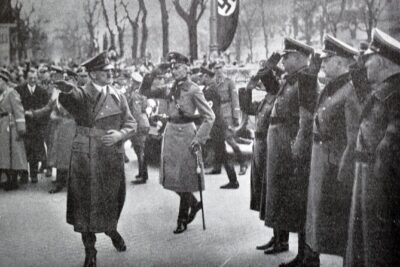
Browse the lists this tour appears in