
REVIEW · HISTORICAL TOURS
Private tour of historical Vienna with Jan
Vienna clicks into place fast. This private tour with Jan strings together major Habsburg landmarks in Vienna’s old center, then carries you to the open-air Naschmarkt food market. You skip the impersonal big-group feeling and instead get local-style guidance around the historic core.
I love Jan’s storytelling approach and how the pacing keeps the walk moving without feeling rushed, including a planned break at Conditorei SLUKA for classic Viennese cake and coffee. One thing to consider: it is a tight 2 to 3 hour route focused on key sights and courtyards, so if you want deep time inside big-ticket museums, you’ll still need to plan that separately.
In This Review
- Key highlights to know before you go
- Private historical Vienna with Jan: the value is in the flow
- Price and what you actually get for $432.53 per group
- Where the tour starts: Stephansplatz to Naschmarkt
- Stop 1: Historic Center of Vienna, the orientation that saves you later
- Stop 2: Hofburg Palace courtyards and the Habsburg patchwork story
- Stop 3: Heldenplatz, National Library views, and empire-scale drama
- Stop 4: Maria Theresien Square and the “why” behind modernization
- Stop 5: Conditorei SLUKA coffee-house break, Art Nouveau and comfort
- Stop 6: St. Stephen’s Cathedral, the city’s heart in 10 minutes
- Stop 7: Church of the Jesuits, baroque you might miss
- Stop 8: Stadtpark, Ringstrasse relief, and Vienna’s golden age
- Stop 9: Graben and Kohlmarkt, shopping streets plus the plague column story
- Ending at Naschmarkt: your food-friendly finish
- How Jan keeps the tour engaging and flexible
- What you should bring and how to plan your day
- Who this tour is best for
- Should you book this private historical Vienna tour?
- FAQ
- What is the duration of the tour?
- How much does it cost?
- Is pickup offered?
- What language is the tour in?
- Where does the tour start and end?
- What is included in the tour?
- Are admission tickets required for the stops?
- Is gratuity included in the price?
- What is the cancellation policy?
Key highlights to know before you go
- Private group up to 10: you get a tour that stays flexible for your group size.
- Hofburg courtyards and Habsburg context: you see the palace as a patchwork of eras, not just one building.
- St. Stephen’s Cathedral as the spiritual and geographic center: the tour gives you the why behind what you’re looking at.
- Coffee-house stop at Conditorei SLUKA: an Art Nouveau interior break built into the route.
- Baroque color at the Church of the Jesuits: a fine church that many people overlook.
- Easy city navigation ending at Naschmarkt: you finish at one of Vienna’s most fun food stops.
Private historical Vienna with Jan: the value is in the flow
A good Vienna day can go two ways. Either you wander and hope it all connects, or you get a guided route that helps you understand what you’re seeing. This tour is built for the second option. Jan leads you through the historical downtown area, moving from landmark to landmark in a way that helps you build a mental map fast.
The “private” part matters more than you might think. With only your group, you can ask questions on the spot, and the guide can keep things moving without waiting for a slow-moving crowd. That usually means a better vibe, especially on a walking tour where fatigue can sneak up.
More history tours in Vienna:
- Vienna: Time Travel and Magic Vienna History Tour
★ 4.6 · 3,879 reviews - Vienna: World War II Historical Walking Tour
★ 4.8 · 1,772 reviews - Vienna Historic Center Small Group Walking Tour
★ 5.0 · 1,746 reviews
Price and what you actually get for $432.53 per group
The price is $432.53 per group (up to 10), for about 2 to 3 hours. That sounds like a lot until you do one quick bit of math: the per-person cost drops a lot when you have a small group.
What makes this feel like real value is the mix of:
- A licensed guide
- A route that hits major Vienna highlights in the historic center
- Built-in time for a café break (not just a photo stop)
- Stops that are listed as admission ticket free (so you are not getting nickeled-and-dimed)
If you’re traveling solo, you might find a cheaper option exists, but you lose the flexibility that makes this kind of tour shine. If you’re a couple, family, or small group, this often turns into one of the most efficient ways to get oriented in Vienna.
Where the tour starts: Stephansplatz to Naschmarkt
You begin at Stephansplatz (1010 Wien), and the tour ends in the area of Naschmarkt (1060 Wien), the famous open-air food market. That start-and-finish pairing is smart. Stephansplatz puts you near the city’s historic heart, and Naschmarkt gives you a satisfying payoff, with food and atmosphere that feels distinctly Vienna.
You should plan for walking throughout. The itinerary is designed as a steady stroll through central sights, including squares, palaces’ courtyards, churches, and shopping streets. If you want a low-walking day, ask about pace and stops in advance.
Stop 1: Historic Center of Vienna, the orientation that saves you later
The tour kicks off by exploring Vienna’s history through the monuments and buildings in the old town. This is not just a list of names. The guide frames what you’re seeing in terms of how Vienna grew into the city people praise for its livability.
This first segment is about getting your bearings:
- You learn what areas and architectural styles mean.
- You get context for the places you’ll see again later.
- You also get practical suggestions about eating and shopping, which helps your next day planning.
Possible downside: early on, you may feel like you’re getting “the big picture” rather than going deep into one site. That is normal for a first orientation stop, and it pays off once later landmarks start making more sense.
A few more Vienna options worth a side-by-side
- Vienna: Vivaldi’s Four Seasons Concert in Karlskirche
★ 4.7 · 14,951 reviews - Vienna: Spanish Riding School Training
★ 3.9 · 9,281 reviews - Vienna: Skip-the-cashier-desk-line Giant Ferris Wheel Ride
★ 4.5 · 7,859 reviews - Vienna: Schönbrunn Palace & Gardens Skip-the-Line Tour
★ 4.7 · 7,739 reviews
Stop 2: Hofburg Palace courtyards and the Habsburg patchwork story
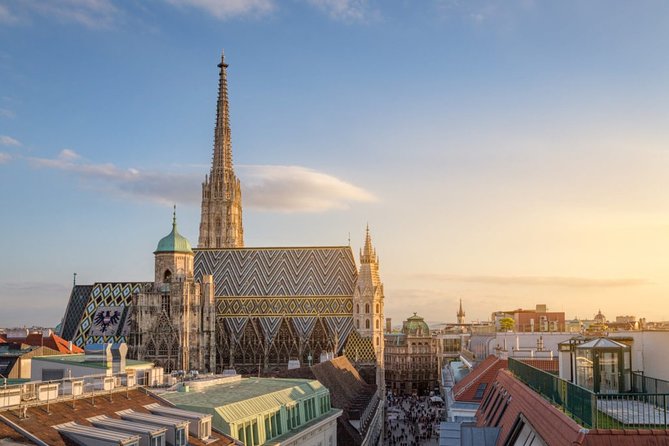
Next comes the Hofburg, the former grand palace of Austria’s rulers. The Hofburg is described as a patchwork of wings and palace buildings from different periods. That detail is key because it explains why the complex looks the way it does. Vienna’s royal architecture didn’t freeze in time, it evolved.
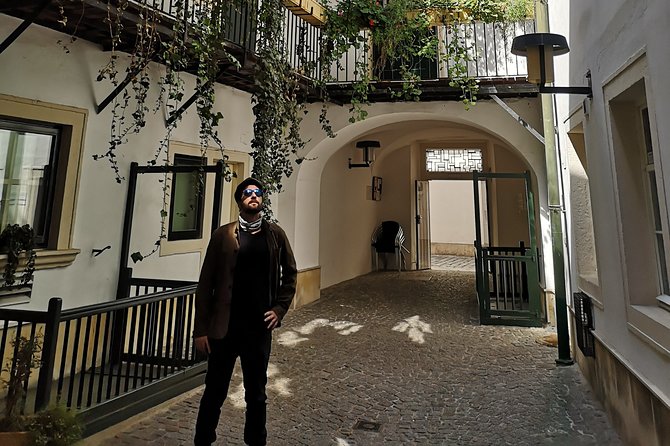
In this stop, the tour focuses on outer courtyards and the story of the Habsburg dynasty. Courtyards are a good choice for a walking tour because they deliver atmosphere and architectural variety without requiring you to carve out a long museum session.
What I’d watch for: look for how the buildings transition from one era to another. Even if you do not read every inscription, the mix of styles tells you the story of a long-lived dynasty and changing political needs.
Stop 3: Heldenplatz, National Library views, and empire-scale drama
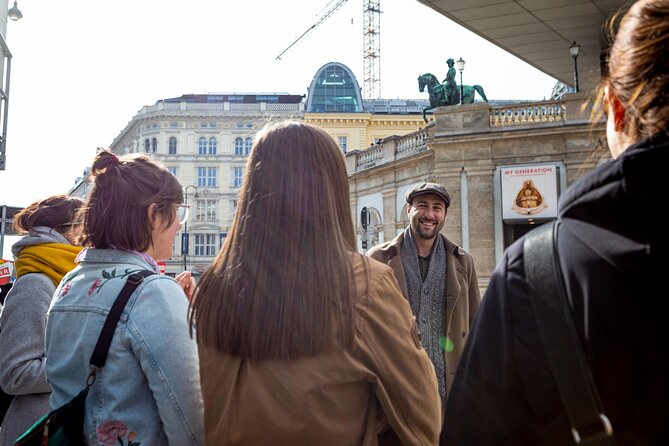
Then you head to Heldenplatz, the Hero’s square. This is one of the best places on the route for capturing the grandeur of Viennese historic architecture.
The guide ties it to stories of the Austrian Empire’s heroes and points you toward the impressive National Library palace, including its sheer size. That combination is useful. It helps you move past the postcard view and understand why these spaces were designed to feel monumental.
This stop is shorter, but it works as a visual reset. After the Hofburg courtyards, Heldenplatz lets you widen your view and see the city’s scale.
Stop 4: Maria Theresien Square and the “why” behind modernization
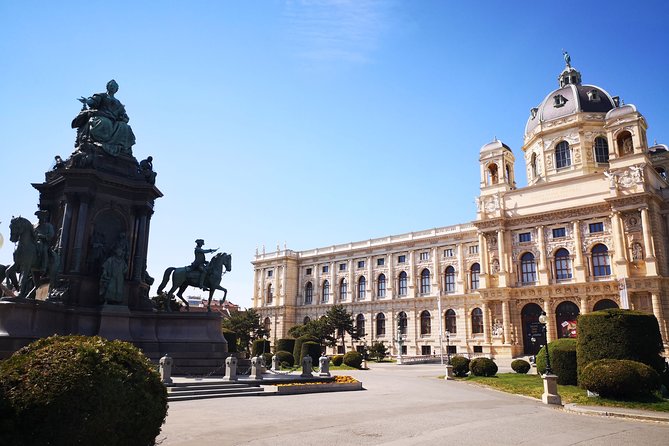
At Maria Theresien Square, you’ll find a memorial to Maria Theresia, flanked by two twin museums: Natural History and Art History. The tour uses her reign to explain a turning point, including how Austria began a long modernization process under her rule.
A particularly useful angle here is the link to centralized government and the rise of a middle-class of bureaucrats. If you’re the kind of person who likes to understand how politics shapes everyday life, this stop is for you.
Small consideration: you’ll spend limited time here, so treat it as context-setting. If the museums themselves interest you, you can decide later whether you want a dedicated museum visit.
Stop 5: Conditorei SLUKA coffee-house break, Art Nouveau and comfort
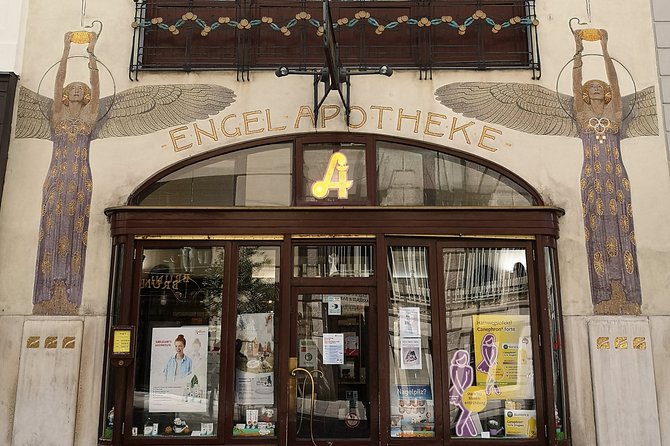
Here’s where Vienna slows down a bit. The tour includes Conditorei SLUKA, a traditional Viennese coffee house with an end-of-century Art Nouveau interior. This is built into the route, not an optional detour, so you do not waste your energy trying to find a good place on the fly.
A coffee-house stop is also a cultural cheat code. Vienna’s pastry tradition is not just dessert, it’s a social ritual. Taking this break during your walking tour helps you stay energized for the rest of the day.
Practical tip: if you’re traveling with kids or you want a breather, this is a good time to reset. Even a short break can make the difference between enjoying the last churches and feeling cranky.
Stop 6: St. Stephen’s Cathedral, the city’s heart in 10 minutes
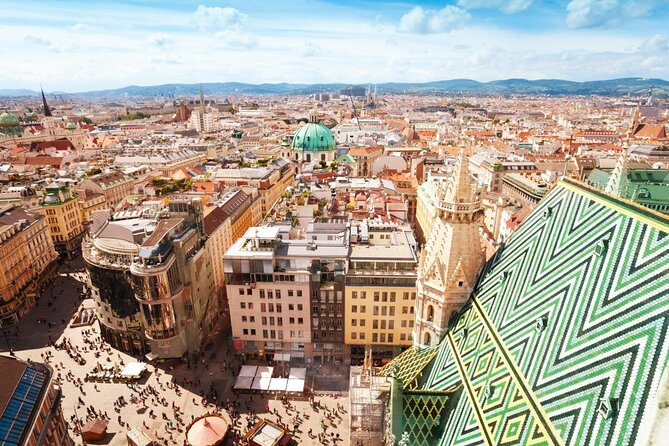
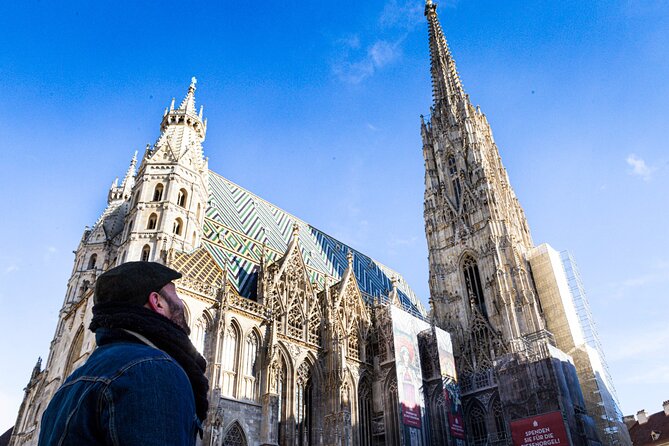
Next is St. Stephen’s Cathedral, described as both the spiritual and geographic heart of Vienna. The tour highlights how its construction spans many decades and different styles. That matters because the cathedral looks like it has layers of time built into it, not one uniform design.
This stop also includes the story of post-war reconstruction and the cooperation spirit behind it. The point is not just historical trivia. It gives the cathedral a human angle, showing it as a place people rebuilt to move forward.
Watch for: the cathedral is huge. Even with a short stop, you can still pick one detail to focus on, like how styles change across sections.
Stop 7: Church of the Jesuits, baroque you might miss
Then you’ll see the Church of the Jesuits, noted as one of Vienna’s finest baroque churches and also among the least visited. That pairing is a gift. You get to enjoy serious baroque drama without the kind of crowds that can suck the energy out of indoor sights.
This stop is brief, but it’s designed to give you the wow factor of Austrian baroque. If you only see the famous cathedrals and palaces, you can miss this side of Vienna. This is your chance to see it.
Stop 8: Stadtpark, Ringstrasse relief, and Vienna’s golden age
After the old-town density, the tour heads to Stadtpark, along the southern edge of the Ringstrasse boulevard. It’s a break in more ways than one. It’s green space, and it also shifts the tone from imperial buildings to the creative and political figures of Vienna’s golden age.
The park is dedicated to painters, musicians, and politicians. That means your walk has a cultural beat, not only an architectural one. It also helps you breathe after the concentrated sightseeing around the core.
If you’re tired: this is the best place to take a breath and get your legs back.
Stop 9: Graben and Kohlmarkt, shopping streets plus the plague column story
The final stretch before the end moves into Graben and Kohlmarkt, high-end shopping streets in Vienna’s old town. They are lined with luxury brands and coffee houses, but the tour adds a deeper reason to care.
On Graben Street, you’ll see a baroque plague column commemorating the end of a devastating plague across the country at the end of the 17th century. That’s the kind of story that turns a street walk into something memorable. You start noticing monuments and meanings rather than only storefronts.
Even if you are not shopping, this segment is a good way to understand how Vienna marks survival and recovery through public art and monuments.
Ending at Naschmarkt: your food-friendly finish
The tour ends at Naschmarkt, an open-air food market. Ending here is smart because you finish with an activity that is easy to enjoy immediately. If you want a quick bite, a sit-down meal, or just to wander and snack, the location makes it simple.
Think of this as your transition from guided sightseeing to your independent time. You’ve learned the big architectural and historical threads, and now you can enjoy Vienna in the everyday way.
How Jan keeps the tour engaging and flexible
A standout theme from the experience is that Jan is a storyteller who explains history in an accessible, human way. That kind of guide makes it easier to remember names and dates, but more importantly, it helps you understand why the city feels the way it does.
You can also expect practical help beyond the script. Some groups are helped with finding public transportation and getting weekly subway passes, and Jan can tailor pacing and focus when needed. If you have a family schedule, tight interests, or you want to optimize your first day, that flexibility is part of the value.
This is also a tour with a real break built in. That sounds small until you have been on a walking tour that never stops. Here, the coffee-house stop gives you a reset point.
What you should bring and how to plan your day
Since the tour is a walking route through central Vienna, plan like it’s a normal city walk with a few stops to linger. Wear comfortable shoes, and keep your day structure light enough that you can enjoy the ending at Naschmarkt rather than rushing off.
If you are visiting on a first day, this can be a great way to get your bearings, especially because you end in a lively food market area. If you’re visiting later in your trip, it still helps you connect landmarks to a bigger story, which makes independent sightseeing more satisfying.
Who this tour is best for
This tour is a strong match if you want:
- A private guide experience without getting stuck in museum lines for hours
- A structured route through classic Vienna highlights
- Stories that connect architecture, politics, and daily life
- A built-in café break that feels like part of the journey
It may be less ideal if you want long interior time in multiple museums, or if your group has trouble with walking distances in a tight schedule.
Should you book this private historical Vienna tour?
Yes, if your goal is to understand Vienna fast and see key historic areas in a way that feels personal. The route covers major Habsburg landmarks, the cathedral area, baroque detail at the Church of the Jesuits, and it finishes in Naschmarkt where you can keep the day going without planning your next move.
Book it with confidence if you value a private experience, like historical storytelling, and appreciate a plan that includes a real break at a proper Viennese coffee house. If you want deep museum time and quiet, slow pacing, you might choose a different style of tour or pair this with separate museum tickets later.
FAQ
What is the duration of the tour?
The tour lasts about 2 to 3 hours.
How much does it cost?
It costs $432.53 per group, for groups up to 10 people.
Is pickup offered?
Pickup is offered, but the exact pickup details are not specified in the information provided.
What language is the tour in?
The tour is offered in English.
Where does the tour start and end?
It starts at Stephansplatz, 1010 Wien, Austria and ends at Naschmarkt, 1060 Wien, Austria.
What is included in the tour?
The tour includes a guided experience by a qualified and state licensed guide. Mobile tickets are also part of the experience.
Are admission tickets required for the stops?
The itinerary lists admission ticket free for the stops described.
Is gratuity included in the price?
No, gratuity is not included.
What is the cancellation policy?
You can cancel for a full refund if you cancel up to 24 hours in advance of the experience’s start time. If you cancel less than 24 hours before, the amount paid is not refunded.
Fresh on the site in Vienna
- World War II History Vienna Old Town Private Walking Tour★ 4.8 · 9 reviews
- Vienna/Bratislava: Traunkirchen, Hallstatt & Salzburg Tour★ 4.8 · 53 reviews
- Vienna: Winery and Wine Tasting Tour with a Wine Expert★ 5.0 · 5 reviews
- Vienna: Wine Tasting Tour★ 4.8 · 61 reviews
- Vienna/Bratislava: Day Trip to Hallstatt & Salzburg★ 4.8 · 21 reviews
- Vienna: Waltz into the Ball Season★ 4.7 · 3 reviews
- Vienna: Wine Tasting E-Bike Tour★ 4.9 · 46 reviews
- Vienna: Wiener Schnitzel and Strudel Cooking Class★ 4.9 · 126 reviews
Historical Tours, compared.
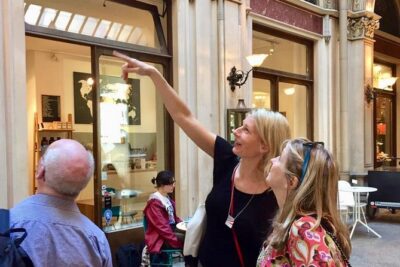
Vienna Historic Center Small Group Walking Tour
Read our review →
Skip-the-Line Schonbrunn Palace Guided Tour and Vienna Historical City Tour
Read our review →
Vienna Mozart Concert in Historical Costumes at the Musikverein
Read our review →
Browse the lists this tour appears in